CITES again ignores Great Apes

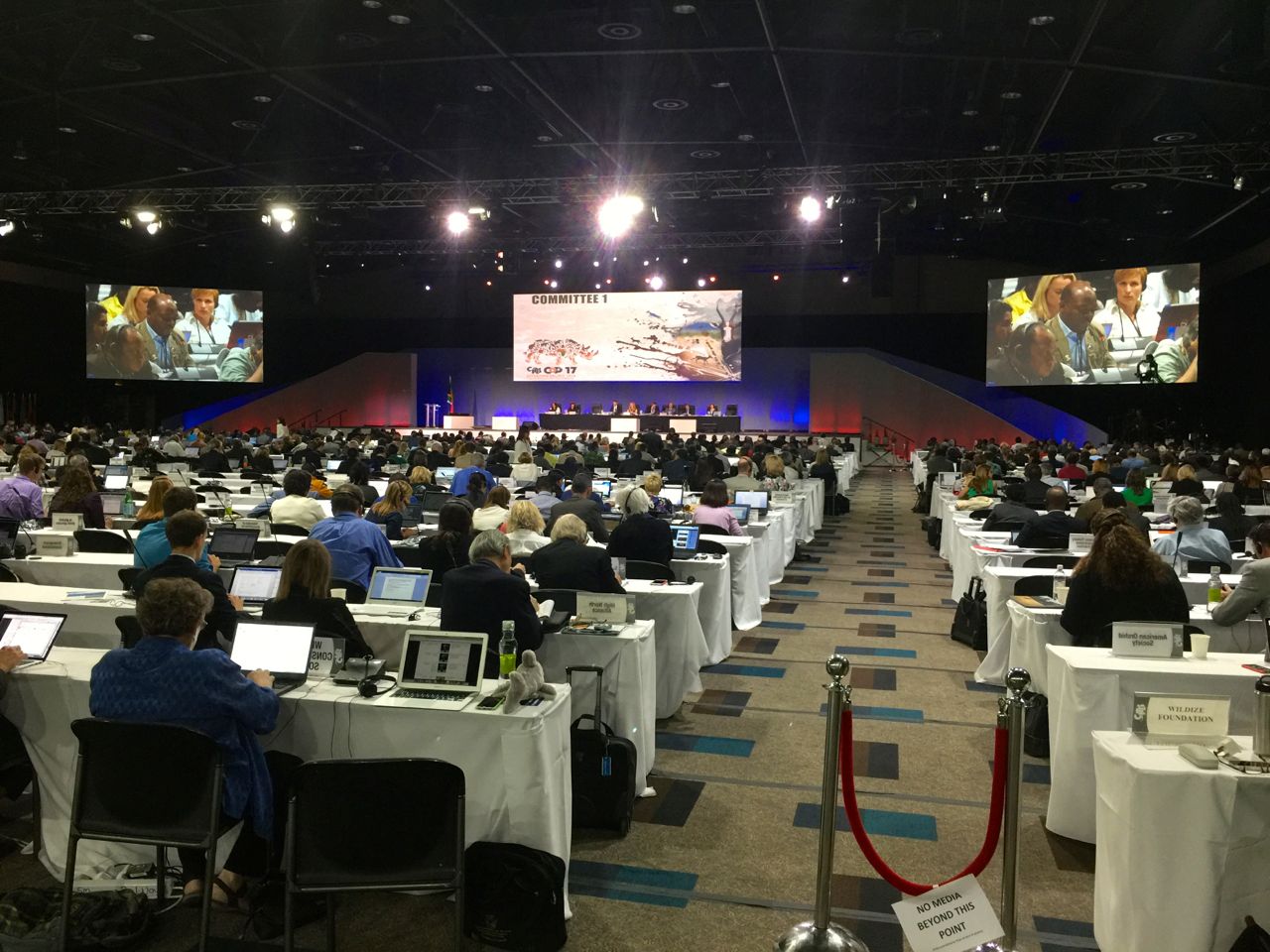
The 69th meeting of the CITES Standing Committee just wrapped up and again nothing was done to address the lax trade regulations that currently allow live great apes to be illegally traded for the exotic pet and commercial zoo industries.

In fact, the CITES Secretariat itself ignored an instruction addressed to it in CITES Resolution Conf. 13.4 ‘Great Apes’, which states in part, “2. DIRECTS the Secretariat to: (d) report to the Standing Committee on the implementation of this Resolution at each of its regular meetings.”

The Secretariat did not prepare a report on Great Apes for this meeting, the only species ignored in this way. If the CITES Secretariat does not follow its own resolutions how can we expect governments to do so?

No report for Great Apes, unlike other species. Why this neglect by CITES?

The Great Apes resolution is desperately in need of wording that would require governments to register all great apes immediately upon importation. Some form of identification should also be employed, such as a DNA profile or inserted microchip. In addition, all individuals and facilities possessing great apes should be required to register each one, with identification, age and sex. Any changes in number should be reported to the government agency responsible for maintaining the registry. Updates on the registries should be reported to CITES, or to an approved entity such as UN-GRASP, at agreed intervals (e.g. annually or at each Conference of the Parties).

If these simple steps were carried out it would be impossible for traffickers to smuggle in apes to a country and claim that they were bred domestically in captivity, which is a common ploy used by traffickers.

One bright spot in an otherwise dim meeting for apes was the creation of a working group for review of the report on the status of and trade in great apes mandated in Decision 17.232. This long-delayed report is now scheduled to be submitted to the CITES Animals Committee (AC30) in July 2018 for initial review.

If the will is there, the members could use this working group to widen the mandate to include the revision of the Resolution 13.4 on Great Apes. Their report from the Animals Committee could then be submitted to the 70th Standing Committee meeting and a draft resolution could be agreed for review at the CITES 18th Conference of the Parties in Sri Lanka in 2019.

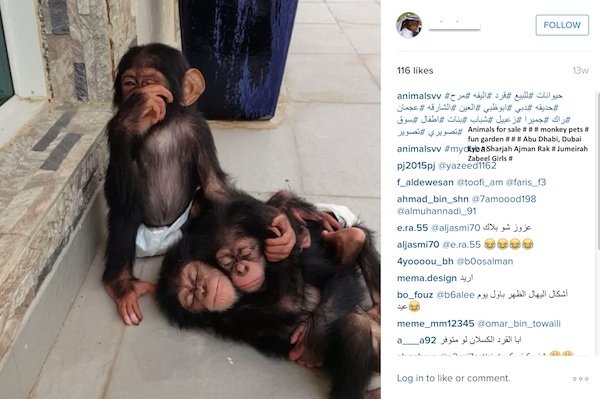
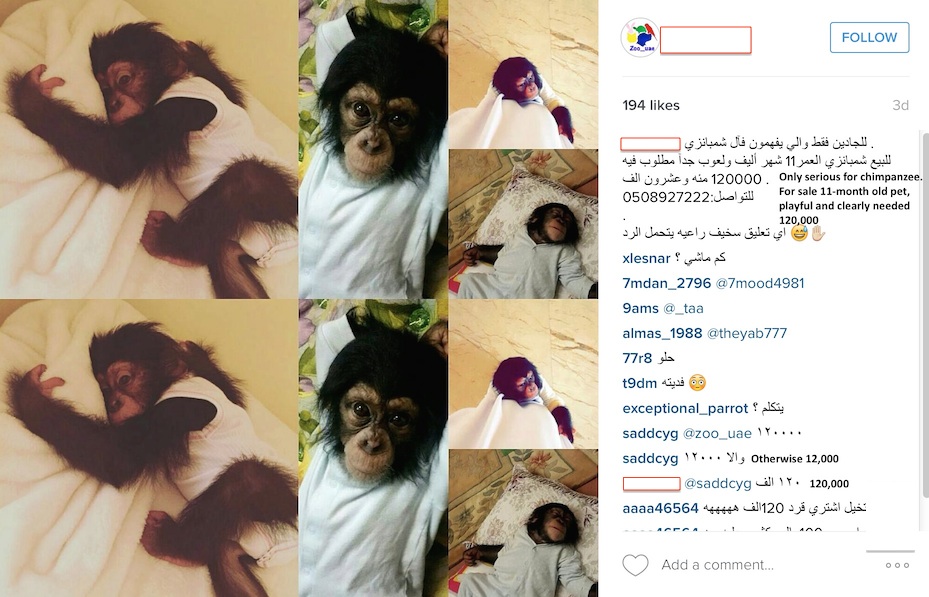
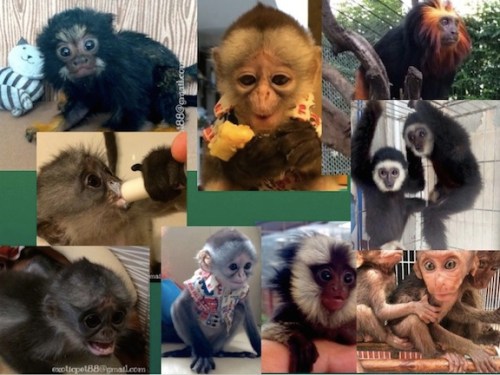
While the Standing Committee was busy ignoring great apes, PEGAS found more of the suffering creatures for sale online.

Abraham Foundation provides bridging funding

The Abraham Foundation, based in New York City, USA, kindly responded to a PEGAS request for funding to allow the project to continue operating into the new year, when hopefully PEGAS can obtain sufficient funds to continue its important work.


PEGAS has targeted a number of high profile wildlife traffickers that it will try to put out of business, and there are a number of captive great apes that are in dire need of a sanctuary. The work will carry on, thanks to Nancy Abraham and the Foundation. Thank you.

Smuggled, Beaten and Drugged: The Illicit Global Ape Trade

This will be the last post for this year, maybe forever. The PEGAS project has run its course, in fact it has run beyond its initial 3-year time frame. If additional funding is secured the project will continue.

This article on great ape trafficking and the project’s work just appeared in The New York Times .

The New York Times tracked international ape smugglers from Congolese rain forests to the back streets of Bangkok. Here is what unfolded.

By JEFFREY GETTLEMAN NOV. 4, 2017

MBANDAKA, Democratic Republic of Congo — The sting began, as so many things do these days, on social media.

Daniel Stiles, a self-styled ape trafficking detective in Kenya, had been scouring Instagram, Facebook and WhatsApp for weeks, looking for pictures of gorillas, chimps or orangutans. He was hoping to chip away at an illicit global trade that has captured or killed tens of thousands of apes and pushed some endangered species to the brink of extinction.

“The way they do business,” he said of ape traffickers, “makes the Mafia look like amateurs.”

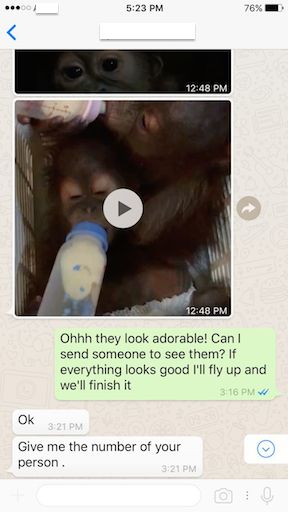
After hundreds of searches, Mr. Stiles found an Instagram account offering dozens of rare animals for sale, including baby chimpanzees and orangutans dressed in children’s clothes. He sent an email to an address on the account — “looking for young otans” (the industry standard slang for orangutans) — and several days later received a reply.

“2 babies, 7.5k each. Special introductory price.”

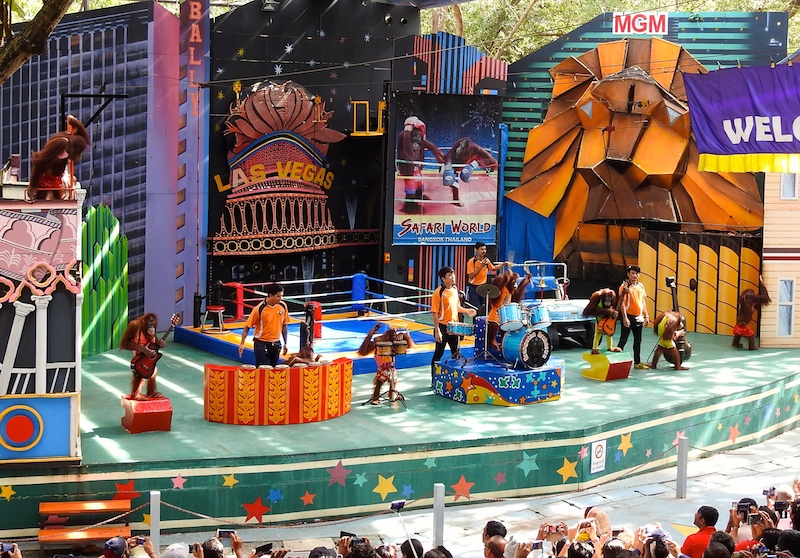
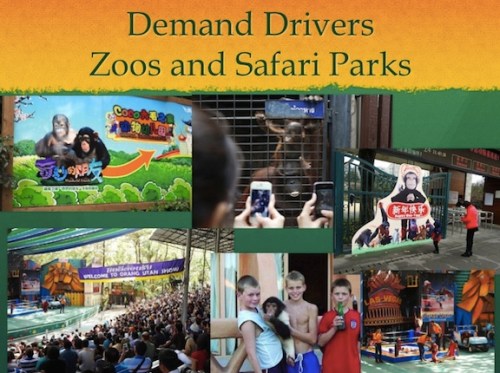
The trafficker identified himself only as Tom and said he was based in Southeast Asia. Mr. Stiles knew what Tom was hoping for: to sell the infant orangutans to a private collector or unscrupulous zoo, where they are often beaten or drugged into submission and used for entertainment like mindlessly banging on drums or boxing one another. Such ape shows are a growing business in Southeast Asia, despite international regulations that prohibit trafficking in endangered apes.

Several weeks later, after a few more rounds of text messages with Tom to firm up the details, Mr. Stiles decided to fly to Bangkok.

“I was way out on a limb,” Mr. Stiles admitted later. But he was eager to bring down Tom, who indicated that he could find orangutans and chimps with only a few days’ notice, the mark of a major dealer.

Employees of the reserve, Lola Ya Bonobo, with young rescued bonobos in its nursery.
Credit Bryan Denton for The New York Times

‘Endgame Conservation’

Ape trafficking is a little-known corner of the illicit wildlife trade, a global criminal enterprise that hauls in billions of dollars. But unlike the thriving business in elephant ivory, rhino horns, tiger bone wine or pangolin scales, ape smuggling involves live animals — some of the most endangered, intelligent and sensitive animals on Earth.

Mr. Stiles, 72, grew intrigued by apes decades ago as a graduate student in anthropology. Since then, he has plunged deeper and deeper into the ape world, becoming the lead author of “Stolen Apes,” a report published by the United Nations in 2013 that was considered one of the first comprehensive attempts to document the underground ape trade. He and the other researchers estimated that the smuggling had claimed more than 22,000 apes — either trafficked or killed.

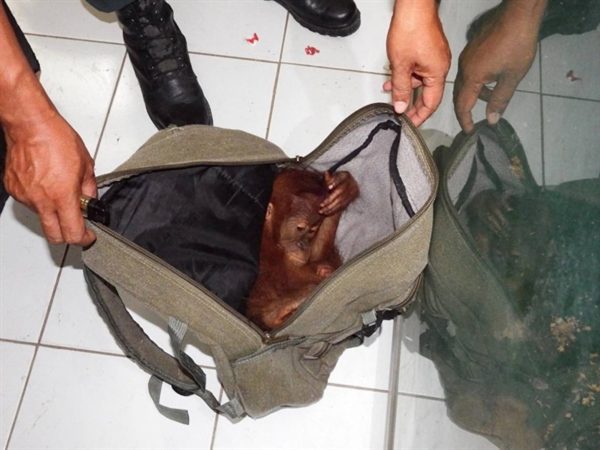
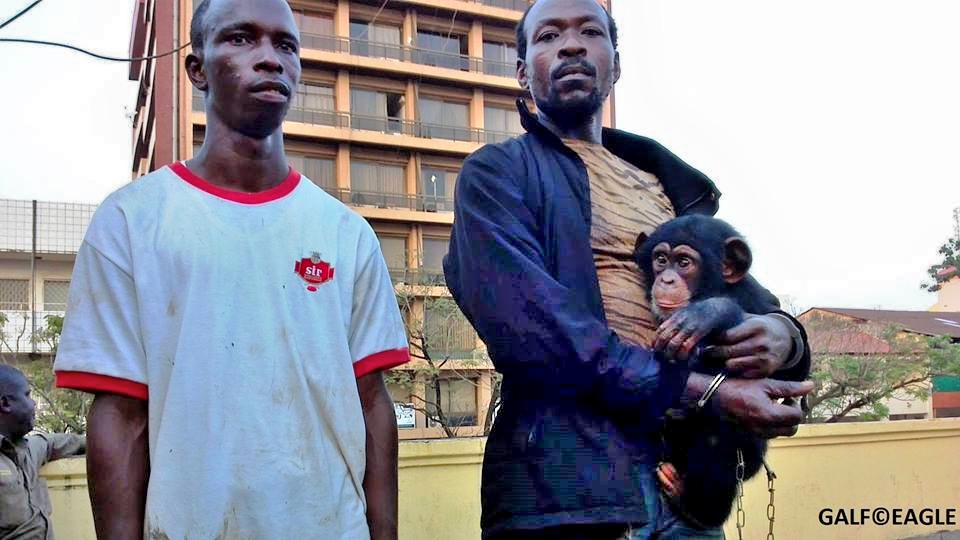
Malnourished and terrified apes have been seized across the world, in undercover busts or at border checkpoints, in countries as varied as France, Nepal, Thailand, the Democratic Republic of Congo and Kuwait. Two years ago, at Cairo’s international airport, the Egyptian authorities discovered a baby chimp curled up into a ball and stashed in a piece of hand luggage. Just this summer, the authorities in Cameroon stopped a smuggler at a roadblock who was trying to move 100 pounds of pangolin scales and a tiny chimp, not even a month old, hidden in a plastic sack.

But for every successful bust, wildlife specialists say, five to 10 other animals slip through. And for every smuggled ape, several more may have been killed in the process. Most species of apes are social and live in large groups, and poachers often wipe out entire families to get their hands on a single infant, which is far easier to smuggle.

“Transporting an adult chimp is like transporting a crate of dynamite,” said Doug Cress, who until recently was the head of the Great Apes Survival Partnership, a United Nations program to help great apes. “The adults are extremely aggressive and dangerous. That’s why everyone wants a baby.”

Wildlife researchers say that a secret ape pipeline runs from the lush forests of central Africa and Southeast Asia, through loosely policed ports in the developing world, terminating in wealthy homes and unscrupulous zoos thousands of miles away. The pipeline, documents show, is lubricated by corrupt officials (several have been arrested for falsifying export permits) and run by transnational criminal gangs that have recently drawn the attention of Interpol, the international law enforcement network.

Apes are big business — a gorilla baby can cost as much as $250,000 — but who exactly is buying these animals is often as opaque as the traffickers’ identity. Many times, researchers say, they can only begin to track where the apes have ended up by stumbling across the Facebook posts and YouTube videos of rich pet collectors.

A bushmeat market along the Congo River. Many endangered apes disappear each year into the trade of bushmeat, a source of protein. Credit Bryan Denton for The New York Times

Wildlife officials said that a handful of Western businessmen had also been arrested. But the majority of recent busts, they added, have been in Africa or Southeast Asia, usually of low-level traffickers or poorly paid underlings, not the bosses who control underground exports and travel abroad to make deals.

For years wildlife officials suspected that a mysterious American known simply as “Joe” was running a large trafficking ring out of Thailand, one of the world hubs for smuggled apes. According to “Tom,” the trafficker Mr. Stiles discovered, “Joe” had recently retired.

And it’s not as if smuggling is the only threat apes face. The world’s hunger for biofuels and palm oil — a cheap food product used in things like lipstick, instant noodles and Oreos — is leveling tropical rain forests and turning them into farms.

According to the Arcus Foundation, a nonprofit group that studies apes, Indonesia and Malaysia have tripled their palm oil production in the past 15 years, wiping out the habitats of thousands of orangutans. In Africa, it’s the same, with new rubber plantations, new roads and new farms cutting deeply into gorilla areas. One species, the Cross River gorilla, is now so endangered that scientists think there are only 200 or 300 left.

“In living memory, there were millions of apes,” said Ian Redmond, a well-known primatologist. “Now, there’s just a few hundred thousand and falling.”

“What we’re looking at,” he added, “is endgame conservation.”

The Apes’ World

Most apes, which include gorillas, gibbons, orangutans, chimpanzees and bonobos, live deep in the rain forest. The Basankusu region of Congo, lying along a tributary of the legendary Congo River, is one of the last bonobo refuges and a source of many trafficked apes.

It’s not easy getting here. We flew from Congo’s capital, Kinshasa, to Mbandaka, a river town where 50-foot dugout canoes arrive every morning, edging into shore crammed with products of the forest: onions, eggplants, buckets of red-skinned peanuts, dead pangolins, dead turtles, dead monkeys and, occasionally, live apes.

From Mbandaka, we hired a canoe and motored upriver, our long, narrow boat slicing through the tannin-rich water like a pencil. We made it to the bonobo habitat, amazed to see wild bonobos quietly staring down at us from the highest branches of the trees.

“They have consciousness, empathy and understanding,” said Jef Dupain, an ape specialist for the African Wildlife Foundation. “One day we will wonder how did we ever come up with the idea to keep them in cages.”

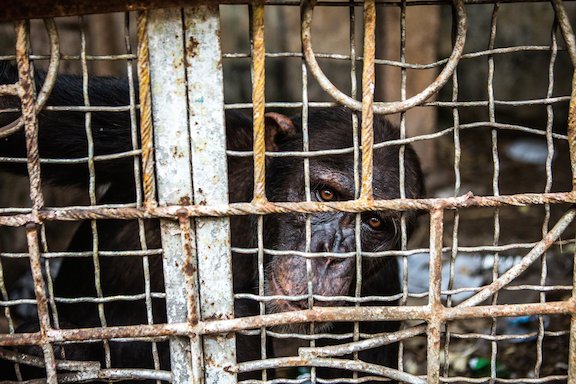
In central African towns (as elsewhere in the world), many chimpanzees are kept as pets. Congo’s president, Joseph Kabila, who lives in a riverside mansion in Kinshasa, the capital, has a large chimp locked up in a cage. At the Hotel Benghazi in Mbandaka, the owner had kept a muscular mascot for years: Antoine, a large male chimp who scraped an empty soda bottle against the iron bars of his garbage-strewn cage, like an inmate. (Antoine escaped in January and, after sowing disorder in Mbandaka, was hunted down by police officers, shot 10 times and left dead on a city street.)

Antoine, a captive chimpanzee at a hotel in Mbandaka, Congo. He escaped in January and was shot by the police.
Credit Bryan Denton for The New York Times

As one leaves the towns and travels into the thick forests, the use of apes changes. Out here, as in remote parts of Southeast Asia, where many people are poor and desperate for protein, apes are also food.

Jonas Mange, who now works on education projects for the African Wildlife Foundation, used to hunt bonobos in Congo, venturing into the shadowy recesses of the forest and laying snares made from loops of twisted wire. If he discovered an adult bonobo in one of his traps, he would quickly shoot it with a shotgun and sell the meat, usually for a few dollars per carcass, if that.

But a baby was different, he said. There was a specific market for infant apes, so he would sell them alive, for at least $10 each, to local traders who would then smuggle them to Kinshasa and sell them to foreigners for many times that amount.

“Bonobos are clever,” Mr. Mange said. If they get their feet stuck in a trap, they don’t screech wildly in panic, like pigs or other animals, which would reveal their location to the hunters. Instead, he said, bonobos quietly try to untangle the snare without being detected.

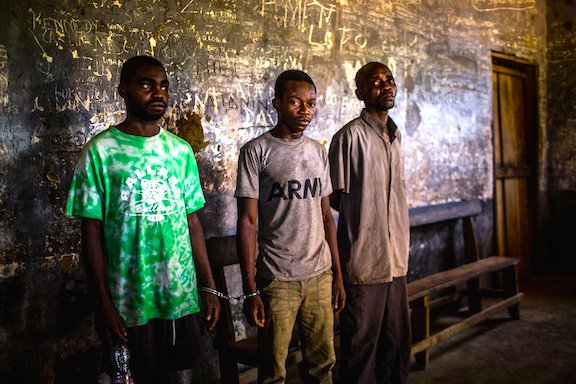
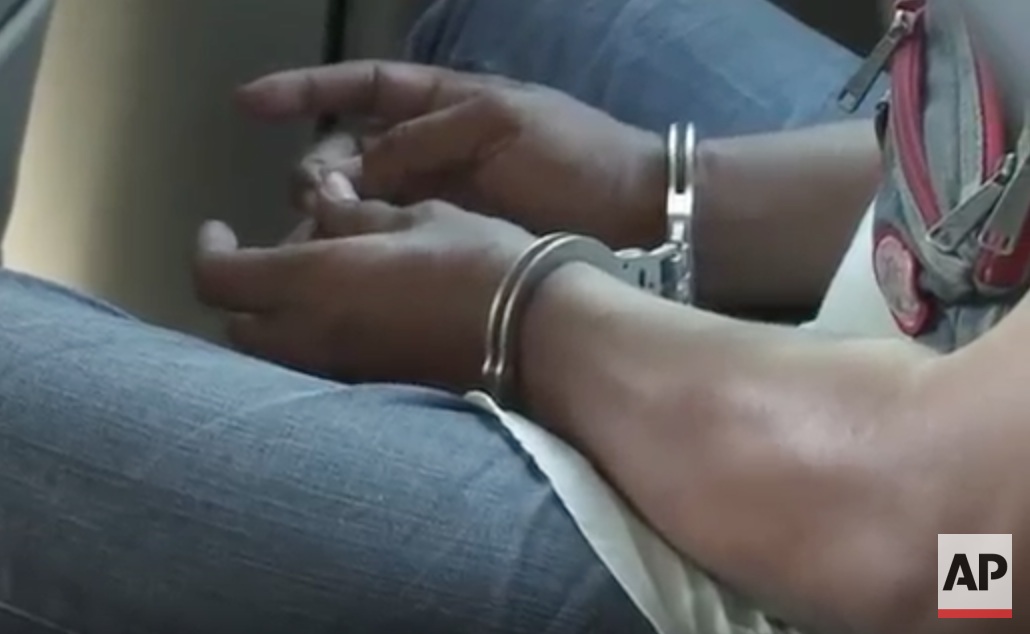
In Boende, a small town up another tributary of the Congo River, three hunters were recently caught with bonobo carcasses and sentenced to several years in a stifling colonial-era prison. The men said they were simply trying to feed their families by selling bonobo meat. But poaching an ape is a serious crime in Congo, and nonprofit wildlife groups have been assisting the Congolese authorities in prosecuting offenders.

“There is a culture here to eat meat, meat from the forest,” said the town’s prosecutor, Willy Ndjoko Kesidi. “Me, I like fish.”

Mr. Kesidi expressed some sympathy for the hunters he had just jailed, saying that the prison where they were housed was a horrible place where many prisoners had died.

“If you spend a lot of time in there,” Mr. Kesidi said, “the color of your skin changes.”

Men suspected of poaching bonobos, handcuffed together at a prison in Boende, Congo. Credit Bryan Denton for The New York Times

The Sting

For years, Mr. Stiles has performed undercover research on wildlife trafficking across Africa, but recently his work has taken him off the continent. A big, freckled, gregarious man, he favors wearing baggy shorts and wrinkled safari shirts. He has also invented several false online identities, with webpages that depict him as an active buyer of rare animals.

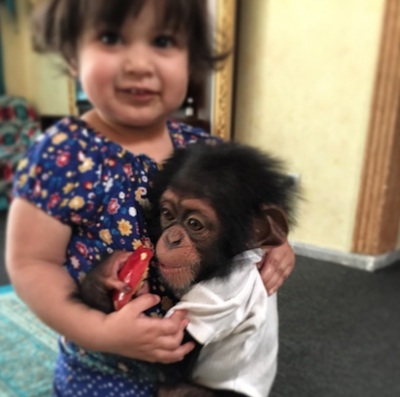
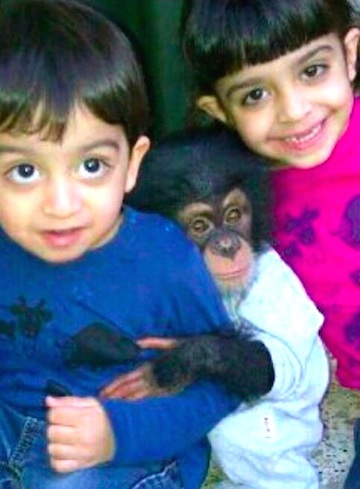
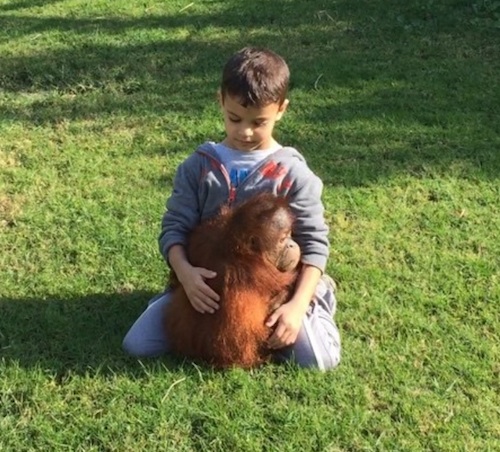
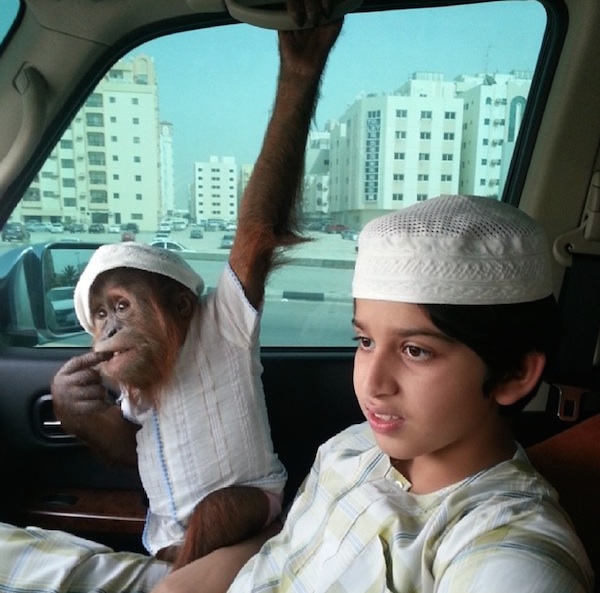
Many illegal wildlife transactions start online, specifically through Instagram or WhatsApp. Mr. Stiles has made several trips to the United Arab Emirates, which he considers a new hub for the illegal online wildlife business. Dealers in the Middle East have posted many pictures of apes for sale, sometimes advertising them as friendly pets for children.

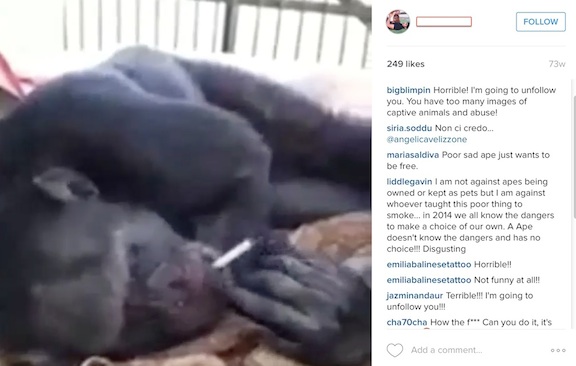
Disturbing stories often lie behind those pictures. Many chimps have been drugged with muscle relaxers or alcohol to make them easier to handle. Some are trained to smoke cigarettes and guzzle beer.

Orangutans are gentler than chimps, but still, they are not always gentle, and investigators say zoo trainers sometimes beat them with lead pipes wrapped in rolled-up newspapers to force them to perform tricks. Several years ago, the Indonesian police rescued a female orangutan who had been shaved and was being used as a prostitute at a brothel.

“Even if we can rescue them, it’s very difficult reintroducing them to the wild,” said Mr. Cress, the former head of the United Nations Great Apes program. “They’re all goofed up. They need serious rehab. The ones who have been given alcohol, their hands shake. They have the same withdrawal symptoms we do.”

International wildlife regulations prohibit the trade of endangered apes for commercial purposes. While zoos and other educational institutions are allowed to acquire apes, they need permits showing, among other things, that the apes were bred in captivity, not captured in the wild. (All great ape species are endangered; most gibbons species are as well.)

It’s relatively easy to falsify permits, though, and wildlife investigators have tracked illegally sold apes to Iraq, China, Dubai and Bangkok’s Safari World zoo, where orangutans have been trained to wear boxing gloves and spar with each other to howls of laughter.

Safari World was outed more than 10 years ago for using orangutans that had been smuggled from Indonesian jungles. Dozens of animals were seized from the park and flown home, where the wife of Indonesia’s president welcomed them.

But the boxing shows continue, with a new set of animals, despite an outcry from wildlife groups. Safari World executives said that none of their animals were abused and that the orangutans were fed “human-grade fruits” and lived in air-conditioned rooms.

They also said it wasn’t their fault that the authorities had discovered that some of their orangutans had been improperly acquired from Indonesia. Safari World said it relied on third-party suppliers, and the zoo insisted that most of its apes had been born in Thailand.

“When you come to our park,” said Litti Kewkacha, its executive vice president, “you will only see smiles on our orangutans.”

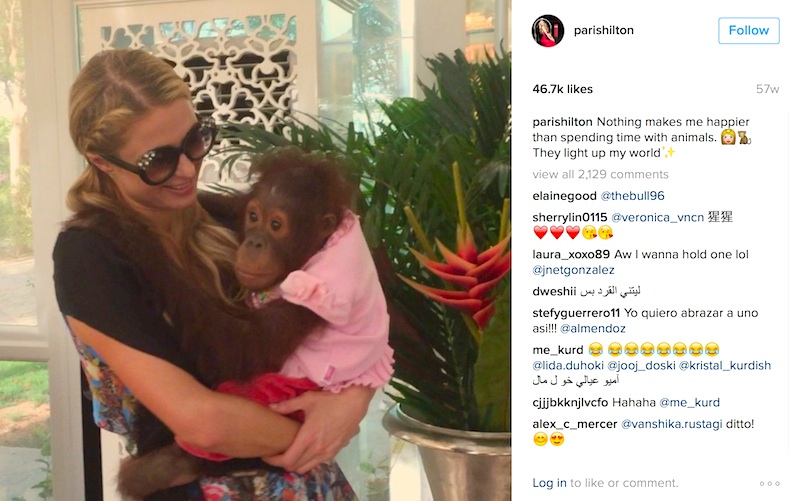
Constantly on the lookout for mistreated apes, wildlife activists have been frustrated with some celebrities as well. Last year, the United Nations program, Grasp, publicly chastised Paris Hilton for circulating pictures of herself cuddling an infant orangutan dressed in baby clothes. Saying that “apes are neither playthings nor pets,” it called Ms. Hilton’s behavior “appalling.”

To arrange his orangutan sting, Mr. Stiles checked into the Landmark hotel in Bangkok. From a quiet room overlooking clogged arteries of traffic, he began sending the wildlife trafficker Tom messages on WhatsApp.

Daniel Stiles, a self-styled ape detective who lives in Kenya.
Credit Georgina Goodwin for The New York Times

Mr. Stiles knew it was dangerous to flirt with a known smuggler. So he brought his investigation to Freeland, a nonprofit group that combats wildlife and human trafficking from a large office in central Bangkok. Freeland works in secrecy, with undercover agents based in a sealed room that other employees are not allowed to enter. It also works closely with the Thai police services, including one cheerful undercover officer who goes by the name Inspector X.

Over the next few days, with Inspector X and other agents lurking in his high-rise hotel room, Mr. Stiles exchanged more WhatsApp messages with Tom, trying to arrange a meet-up. A couple of times, they even talked on the phone. Tom’s real identity remained a mystery. He had a Malaysian or Indonesian accent, spoke English fluently and was never at a loss for words.

“Oh man, you’re going to have some fun,” Tom said about the orangutan babies. “Getting ready for some sleepless nights?”

In late December, the day of the meet-up, Inspector X and the other Thai agents staked out the appointed location — a supermarket parking lot in central Bangkok. A taxi pulled up.

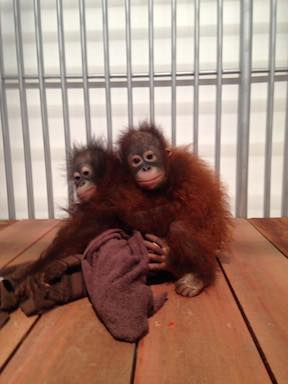
Inspector X and the agents pounced, arresting the driver and discovering two baby orangutans in the back seat, clutching each other. They appeared scared but healthy, and have since been sent to a Thai wildlife sanctuary. But Tom was nowhere to be found.

Mr. Stiles was overjoyed that the orangutans were rescued, but he was frustrated, too. “We got to get to the dealers,” he said.

Since the sting, he has been back on Instagram, looking for more apes. And more Toms.

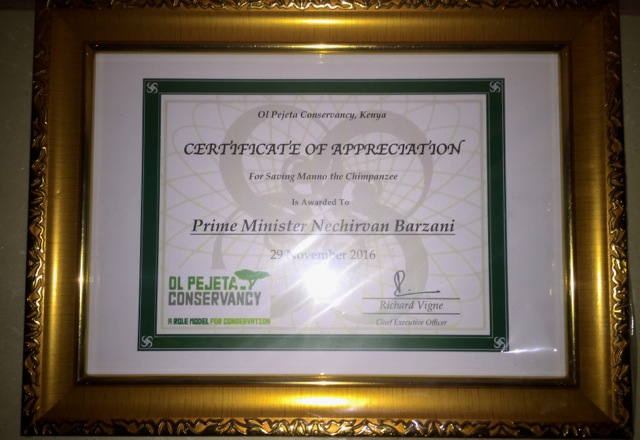
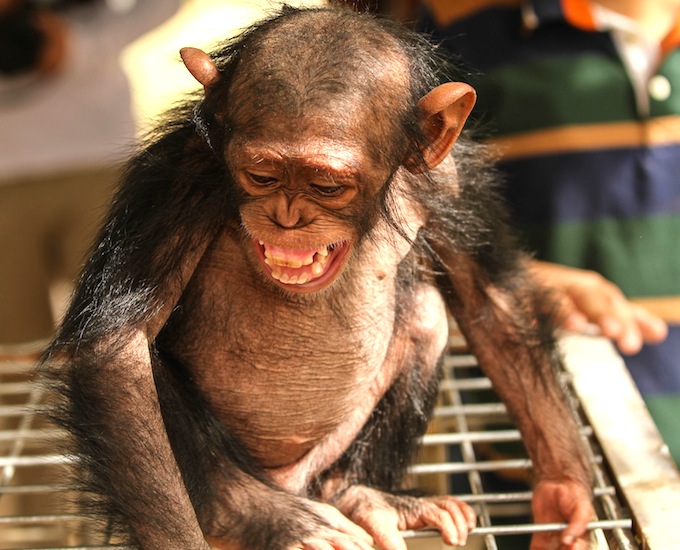
Update on Manno

Manno, the chimpanzee rescued from a private zoo in Iraqi Kurdistan, is doing extremely well at Sweetwaters Chimpanzee Sanctuary. The last update was on 1st June, which saw Manno integrated with three females, Jane, Akela and Bahati. The integration is being conducted in a small enclosure next to the sleeping quarters. A barred corridor connects the sleeping quarters with the outdoor enclosure.

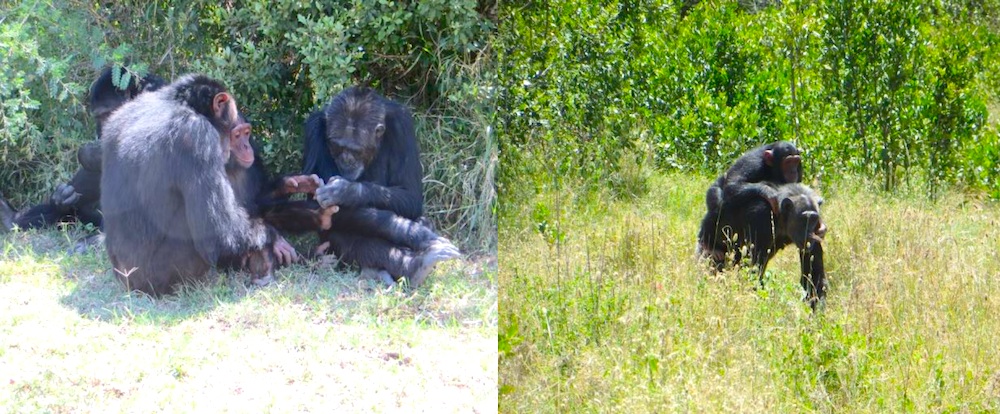
Greeting Manno in the barred corridor that connects the sleeping quarters to the integration enclosure, Bahati looking on.

Since then Manno has made friends with all of the other females in the New Group, eight in all. More importantly, three adult males have now accepted Manno – the former alpha of the group, Niyonkuru, Romeo and Roy. Roy and Romeo are good friends and now they are trying to include Manno in their bromance alliance. Manno is still afraid of Niyonkuru, a rather imposing chimpanzee whose name means ‘God is the highest’ in Kirundi, but Niyon, as he is called, has accepted Manno. Niyon was confiscated in Burundi when a trafficker tried to sell him to the Jane Goodall Institute! Not a smart move by the trafficker, but it saved Niyon from the pet trade.

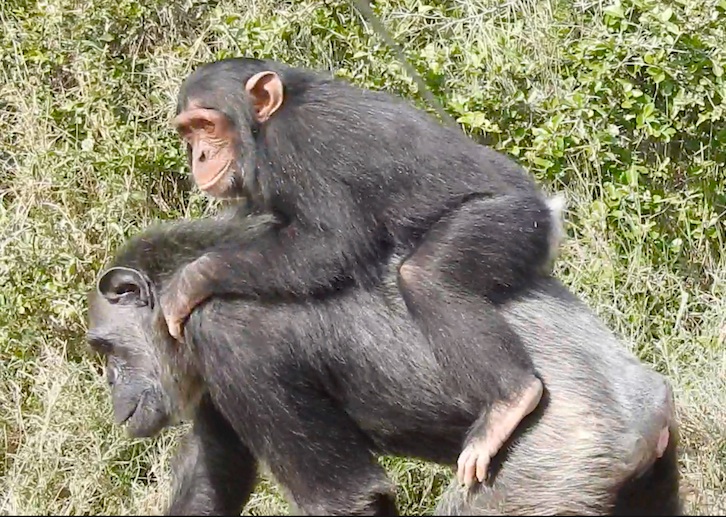
Akela even lets Manno ride on her back, like a good foster mum should

The next male to be introduced will probably be Kisazose, or Kiza for short, who also came to Sweetwaters from Burundi. He was confiscated from a Congolese trafficker and arrived at Sweetwaters in 1994 as an infant, ill and undernourished. After him will come Uruhara, a favourite of Jane Goodall’s, seen with her in a well-known photograph of them hooting together.

Jane Goodall with the photograph of her and Uruhara hooting.

Uruhara today, living up to his Kirundi name, which means ‘bald’.

Last but not least will be William, the current alpha male of the New Group. He is aggressive and strong. If William accepts Manno then the little guy from Kurdistan will be home free and he can be released into the main area, which includes a lovely spot on the banks of the Uaso Nyiro river with towering acacia trees. It will be wonderful to watch Manno mix freely with the whole group in natural interaction. There could still be moments of danger for him, however, from the large males, so hopefully Akela and other large females can protect him.

Manno has gone from living with people in Iraq…

… to living with his own kind in Africa.

New Chimpanzee Sanctuary in Liberia

Jenny and Jim Desmond arrived in Liberia in 2015 with a big job to do – overseeing the care of the 66 chimpanzees abandoned on six Marshall Islands by the New York Blood Center. They had come from Kenya where they had been assisting in looking after monkeys at Diani Beach’s Colobus Conservation, where the PEGAS project manager first met them. Within weeks of their arrival in Liberia, the government would be adding to their workload by bringing them orphaned baby chimpanzees who needed sanctuary, amongst them Guey and Sweetpea, which PEGAS had helped rescue from appalling circumstances of captivity.

Guey, found in appalling circumstances

Sweetpea was caged up by a Chinese woman who had tried to sell her

Liberia has a maximum of 2,000 wild chimpanzees remaining in its forests, made up of the critically endangered Pan troglodytes vera, the highest level of threat of extinction on IUCN’s Red List. The fact that these great apes are critically endangered doesn’t stop poachers from illegally hunting them for their meat.  The baby chimps, orphaned when their mothers are killed for their meat, are then sold as exotic pets.

Chimps rescued from the illegal exotic pet trade in Liberia are brought to Jenny and Jim Desmond with Liberia Chimpanzee Rescue & Protection (LCRP).

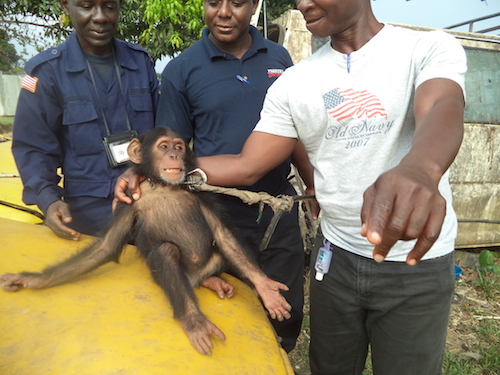
Before the Desmonds arrived in Liberia, the government turned a blind eye to the illegal chimp trade because authorities had no place to put chimps confiscated from their captors or new “owners.” Because the Desmonds have experience rescuing and rehabilitating great apes, authorities began to bring them babies – some just weeks old.

Jenny Desmond shows care and affection for orphaned chimps

Jim Desmond, a qualified veterinarian, looks after their health care

Baby chimps rescued by LCRP are raised by surrogate mothers until they are old enough to be integrated with a group of juveniles who no longer need around-the-clock attention.

The Desmond’s use the Liberia Institute of Biomedical Research grounds for their temporary sanctuary, not ideal for raising orphaned chimps. Ironically, LIBR was the institute that conducted research on the Marshall Island chimps for so many years. Jenny and Jim are therefore now looking for land in a nearby forest to build a proper sanctuary with all of the facilities needed to care for the chimps, including an infirmary, overnight housing for the babies, a kitchen, offices and housing for caregivers and volunteers. Now, they need to raise money for the LCRP in order to build the sanctuary.

PEGAS has adopted Sweetpea as a small contribution towards her upkeep.

People wishing to help LCRP can adopt a chimpanzee on their website

Jenny Desmond points out that providing sanctuary for rescued chimps is only part of their mission. One of their biggest priorities is using the sanctuary as a platform to educate the public about the importance of conserving chimpanzees in their natural habitat. “We’ll know that our efforts are having an impact when we stop receiving chimps,” said Desmond. “Our ultimate goal is to not need to exist at all.”

Please follow Liberia Chimpanzee Rescue & Protection (LCR) on Facebook and Twitter.

Research on lab chimps is over. Why have so few been retired to sanctuaries?

On 12th June, 2015, the United States Fish and Wildlife Service classified chimpanzees as Endangered, effectively ending biomedical studies on them. Two years later only 73 chimps have been moved to sanctuaries, leaving almost 600 still caged up in research facilities. They say there is a problem with finding space to house them all. Ol Pejeta Conservancy can help, the Sweetwaters Chimpanzee Sanctuary can take 30 right now, if anyone is interested. There is potential to accept many more.

This article published in Science , authored by David Grimm, explains the issue.

A chimpanzee waits for lunch at the National Center for Chimpanzee Care in Bastrop, Texas. (Photo: Shelby Knowles)

Hercules and Leo are only 11 years old, but they’ve already come close to retiring twice. The two chimpanzees, born and raised at Louisiana’s New Iberia Research Center, became lab animals at the State University of New York in Stony Brook in 2011. There they shared a three-room enclosure, where scientists inserted small electrodes into their muscles to study the evolution of bipedalism. In 2013, they were the subject of an unusual legal gambit. An animal rights group sued to declare the pair legal persons and retire them to a Florida sanctuary, but the effort failed.

Two years later, Hercules and Leo returned to New Iberia, where they mingled with other chimps in outdoor domes with ladders and ropes. But retirement to a sanctuary, where they could climb real trees and have more room to roam, again seemed imminent: The U.S. government had just effectively ended invasive work on chimpanzees, and many observers expected all lab chimps to move to sanctuaries in short order. Yet today, Hercules and Leo, along with nearly 600 of their kind across the country, remain at research facilities. It’s unclear when—or whether—they’ll leave.

In the past 2 years, only 73 chimps have entered sanctuaries, and the slow pace has heightened tensions between the laboratory and sanctuary communities. There’s plenty of blame to go around. Labs have dragged their feet, sanctuaries haven’t expanded quickly enough, and the government itself didn’t have a concrete plan for retirement, despite setting the process in motion in the first place.

Chimps freely roam around an artificial termite mound at Chimp Haven in Keithville, Louisiana. (BRANDON WADE/AP IMAGES FOR THE HUMANE SOCIETY OF THE UNITED STATES)

The biomedical community has spent years defending the use of chimpanzees in research … instead of figuring out how to retire them,” says Brian Hare, an evolutionary anthropologist at Duke University in Durham, North Carolina, who has studied chimpanzee behavior at sanctuaries around the world. “Now we’re scrambling to do something about it.”

Some labs have argued that their animals would be better off staying where they are. Retirement to a sanctuary is a “silly decision,” says William Hopkins, a neuroscientist at Georgia State University in Atlanta who has studied chimp cognition at research facilities for decades. “I don’t think that’s really helping the chimps, and I think it’s going to take a really long time.”

The National Institutes of Health (NIH) in Bethesda, Maryland, acknowledges the delay. “We share others’ frustration,” says Deputy Director James Anderson, whose division of strategic initiatives oversees the NIH Chimpanzee Management Program. “But we’re moving as quickly as we can for the safety of the chimps.”

For advocates of Hercules and Leo, and hundreds of other chimps stuck in limbo, that may not be quick enough.

Ambling into retirement

Movement from lab facilities to sanctuaries has been slow. (G. GRULLÓN/SCIENCE; (DATA) CHIMPCARE.ORG,OTHER SOURCES)

What to do with all the chimps?

The U.S. government has been in the chimpanzee business since 1960. That year, Congress created a national network of primate centers to conduct research on these animals—some bred in captivity, most taken from Africa. The country stopped importing wild chimps in 1973, but 13 years later, when the AIDS epidemic created a demand for humanlike models of infection, NIH launched a chimp breeding boom. By 1996, 1500 of the apes lived in research labs, an all-time high. Some were owned outright by NIH, whereas others belonged to universities, foundations, and companies.

Just 4 years later, the government began talking about retirement. A law passed in 2000 created a national chimpanzee sanctuary, Chimp Haven in Keithville, Louisiana. The nonprofit sanctuary’s founders, who had worked with chimps in laboratories, felt that the highly intelligent animals—who, like humans, use tools, have some form of culture, and live in complex social groups—deserved to live out their lives in a setting designed wholly around their needs.

NIH got on board, pledging up to 75% of the cost of lifetime care for its chimpanzees that entered the refuge. (Other sanctuaries take privately owned research chimps.) But labs themselves decided whether the apes were ready for retirement.

That changed in 2013, when—in response to an Institute of Medicine report that concluded most invasive studies on chimpanzees were unnecessary—NIH announced it would phase out support for this type of research and retire most of its chimpanzees. Then in 2015—2 years ago today—the U.S. Fish and Wildlife Service classified all U.S. chimps as endangered, effectively ending biomedical studies on them. NIH followed by declaring that all of its approximately 300 chimpanzees would be retired, though it gave no time frame. Experts assumed that the remaining 340 or so in private hands would follow suit.

Since then, however, only 51 government chimps and 22 privately owned chimps have entered sanctuaries—a pace far slower than anyone had anticipated. “Large numbers are still languishing in laboratories,” Representative Lucille Roybal-Allard (D–CA) complained to NIH head Francis Collins last month at a congressional hearing. Collins said his agency was committed to chimpanzee retirement, but that the process had been “challenging.” “Realistically,” he said, “it’s going to take us several more years.”

The reasons are complex—and contentious.

Where are all the research chimps?

Fewer than half of all former research chimps now live in sanctuaries. The rest are still in scientific facilities.

G. GRULLÓN/SCIENCE; (DATA) CHIMPCARE.ORG, OTHER SOURCES

Sanctuary struggles

On a sweltering day in mid-June, a group of about 20 chimpanzees emerges from a small forest and crowds around an artificial termite mound filled with applesauce and Kool-Aid. They seem to be negotiating over the food: Some scream, some wave their hands, and some climb 20-meter-tall pine trees to avoid the ruckus. When everyone has had their fill, a few disappear back into the forest, while the rest take refuge from the heat in nearby cooling rooms.

Such a scene, which took place at Chimp Haven last summer, buoys the sanctuary community: It’s a picture of what life can be like when chimpanzees are free to roam and interact with each other on their own terms. Not every sanctuary can offer what Chimp Haven does, but many are trying.

One is Project Chimps, a new 95-hectare sanctuary among the wooded hills of Morgantown, Georgia. The nonprofit organization made headlines last year when it announced it would take all 220 of New Iberia’s chimpanzees—including Hercules and Leo—within 5 years, in the most ambitious chimp retirement ever attempted.

Perhaps too ambitious. Construction has gone more slowly than expected, and Project Chimps has taken only 22 of New Iberia’s apes so far, rather than the 60 it agreed to accept by now. And although the sanctuary hopes to eventually give its animals access to the surrounding forest, they now live in enclosures that aren’t much different from the domes at New Iberia: three “villas” with indoor-outdoor areas for climbing and swinging.

Some say the slow pace and exclusive contract blocked other sanctuaries that could have taken some of New Iberia’s apes. Project Chimps Co-Founder and President Sarah Baeckler Davis left the organization last month, although the sanctuary would not comment on the reasons.

Funding also has been a challenge. Like other sanctuaries, Project Chimps relies on a mix of grants and public donations. Interim President Ben Callison says it will cost about $6.4 million to build new facilities, not to mention the expense of providing food, toys, and veterinary care for the apes; other sanctuaries spend $16,000 to $20,000 per chimp per year on those costs. That could mean more than $3 million in annual expenses for Project Chimps once all New Iberia’s animals are in residence. But New Iberia has only agreed to contribute a one-time payment of $19,000 per chimp, with no funding for lifetime care.

Other sanctuaries are scrambling to raise cash as well. Even Chimp Haven, which has an agreement to take all NIH chimps and so has some guaranteed funding during their lifetimes, pays for all construction out of its own pocket. Accommodating the 250-odd NIH chimpanzees still in research facilities could cost $17 million, says the sanctuary’s president, Cathy Spraetz.

Transportation is another bottleneck. Only four to 10 chimps are typically moved at a time because they can be aggressive and must be housed in individual cages; sanctuaries also prefer to keep them in the same social groups they lived in while at the labs. Once at a sanctuary, chimps are typically quarantined for a couple weeks to make sure they have no transmissible diseases. Keepers then sometimes carefully ease them into larger groups, but reintegration isn’t always easy. (When Hercules and Leo first returned to New Iberia, they didn’t get along with the females they were housed with and had to be resocialized with a group of young males.)

Transporters also have to be mindful of the health of the apes, many of whom are geriatric and have been injected with hepatitis and HIV. “They’re very social and sensitive animals,” says NIH’s Anderson, who notes that many suffer from diabetes, kidney disease, and heart disease. “Retirement has to be done in a safe way, because we owe a lot to these chimps.”

All this slows transfers. The largest one on record—when Save the Chimps, a nonprofit sanctuary based in Fort Pierce, Florida, accepted nearly 260 chimpanzees from a private New Mexico lab—took almost a decade and cost $5 million.

“Primadomes” housing chimps at New Iberia Research Center in Louisiana. (FRANCOIS VILLINGER/NEW IBERIA RESEARCH CENTER)

Retire in place?

But retirement has been a long time coming, and critics say lab facilities should have prepared for it. Duke University’s Hare notes that a 1997 National Research Council report recommended a breeding moratorium, concluding that chimps had not proved as useful as expected for biomedical research. “The writing has been on the wall for 20 years.” Yet, Hare says, labs continued to insist the animals were needed, preventing sanctuaries from launching fundraising and construction. “It’s created a huge challenge for the sanctuary community,” agrees Save the Chimps Executive Director Molly Polidoroff.

Now, after the government has concluded the animals are not necessary for research, some labs still insist chimps are better off staying put. Neither the National Center for Chimpanzee Care (NCCC) at the MD Anderson Cancer Center in Bastrop, Texas, nor the Alamogordo Primate Facility in New Mexico—which together house the 257 government-owned chimps not in sanctuaries—would speak to Science for this story. But NCCC Director Christian Abee told the Houston Chronicle in 2015 that half of his chimps were geriatric and not up to the stress of transport. He has advocated for retiring the animals at NCCC, citing their bond with the facility’s experienced care staff (and vice versa), as well as NCCC’s outdoor treehouses and playgrounds, which aren’t much different than those at some sanctuaries.

Some labs housing privately owned chimps agree. “[Our researchers] strongly believe the chimpanzees currently in our care are in the best possible environment,” Lisa Cruz, a spokesperson for the Texas Biomedical Research Institute in San Antonio, which houses 81 chimps, told the Chronicle in the same story. “Just because it’s a sanctuary, doesn’t mean it’s better for the chimp,” says Georgia State’s Hopkins. “Prove to me you’re making their lives happier.”

Proving happiness is a tall order. Renowned primatologist Frans de Waal of Emory University in Atlanta says the small group housing found at many research facilities, with closely spaced geodesic dome habitats, “is a stress-causing design” because it forces chimps to hang out with, or at least see, animals they may want to avoid. De Waal says NCCC is as good as it gets for research chimps, but still doesn’t compare to facilities like Chimp Haven. “Whether the chimps are happier [at Chimp Haven] than elsewhere is another question,” he says. “They certainly look less agitated.”

NIH’s Anderson says his agency remains committed to transferring its animals. “They’re receiving great care at [NCCC], but we’ve made a commitment to move them to a federal sanctuary, and that’s a path they’re taking.”

Still, some say NIH, too, has lagged. A 2016 Government Accountability Office report found that the agency had not developed a clear plan for the transfer or effectively communicated its plans to lab facilities. Anderson says his agency needed time but now has a concrete plan. It will begin with the Alamogordo center, which now houses 126 chimps, before moving on to the 131 at NCCC. “We think a 10-year time frame for retiring all of these animals is realistic.”

A “villa” at the Project Chimps sanctuary in Morgantown, Georgia. The sanctuary hopes to eventually allow forest access. (PROJECT CHIMPS)

The waiting game

For the chimps in private hands, money rather than a government commitment may shape the future. With research funding no longer available and overhead payments from NIH dwindling, private facilities like Texas Biomed and Yerkes National Primate Research Center in Atlanta, which houses 47 chimps, will have less and less financial incentive to keep their animals. Perhaps they’ll even help pay for sanctuary retirement. Or so people in the sanctuary movement hope.

Financial pressures were certainly at work in New Iberia’s decision. The research center’s director, Francois Villinger, says he sees the appeal of retiring his chimpanzees where they are, noting his facility’s large outdoor play areas and social groups of apes that have been stable for years. “When the Project Chimps staff came down here, they were surprised by how good the conditions were.” Yet New Iberia could no longer afford to pay for hundreds of chimps not being studied, he says, and did not want the public relations headache of keeping the animals.

He says New Iberia will do whatever it can to ease the transfer to Project Chimps. “It’s a beautiful and ideal property,” he says. “We just want to make sure they succeed.”

Project Chimps remains optimistic about the agreement, too. Financially, the sanctuary is now “solidly in the black,” says interim president Callison, and should have room for up to 100 chimpanzees within a year. The final phase of construction, slated for next year, should be able to accommodate the rest, he says. “It’s a balancing act between getting them out as quickly as possible and giving them the best environment,” he says. “We want to grow smart.”

He hopes the arrangement will serve as a model for other lab-sanctuary partnerships. It took many years to build trust with New Iberia, he says. “After decades of being on opposite sides of the issue, we’re finally working together.”

In the end, not all research chimpanzees will make it to a sanctuary. Dozens die every year from old age and illness. But, if all goes according to plan, youngsters like Hercules and Leo should live to move to Project Chimps. Indeed, says Villinger, they should be on their way in a few months.

Short video on Sweetwaters Chimpanzee Sanctuary

PEGAS, working in collaboration with Sam Wolson Media, has produced a short 4-minute video that explains why the Sweetwaters Chimpanzee Sanctuary exists, its history and connection with Dr. Jane Goodall, the renowned chimpanzee expert and conservationist. Jane was kind enough to narrate the video herself. The residents of Sweetwaters are the victims of the illegal pet and zoo trade, as the video explains.

Please view the video here

Update on the Iraqi Kurdistan chimpanzee Manno

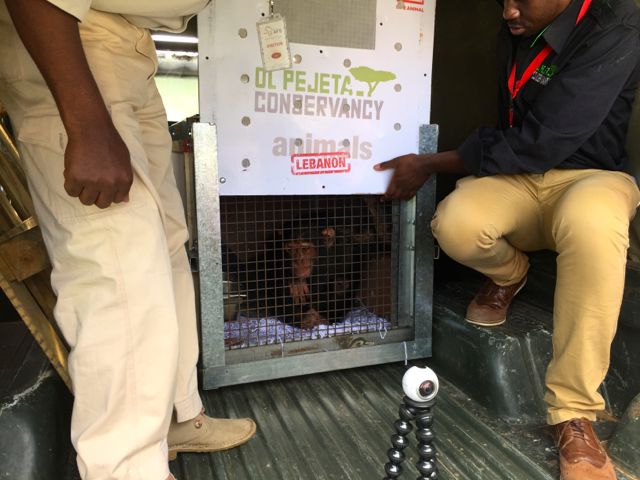
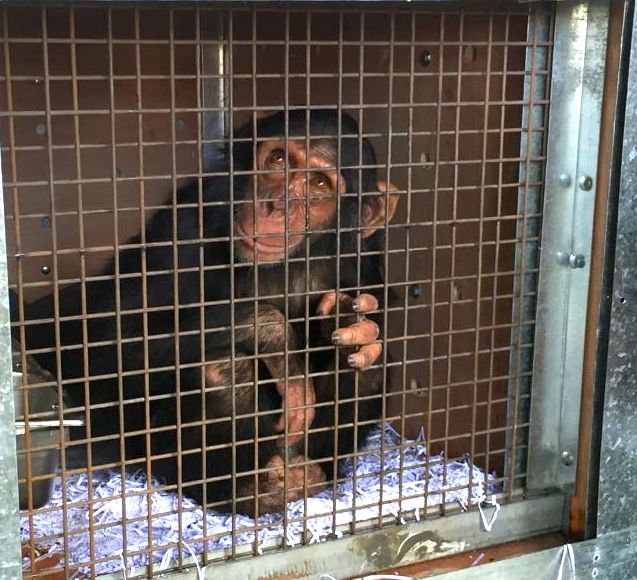
Manno arrived in Nairobi from Erbil, Iraq, the afternoon of 30th November 2016. His rescue and relocation took exactly one year from the time PEGAS heard of Manno to the time of his arrival, giving some indication of the difficulty in rescuing and relocating chimpanzees across national frontiers.

Manno was released from his 4-star quarantine room at Sweetwaters Chimpanzee Sanctuary on 31st March 2017. Many people were there to witness his transfer to the sleeping quarters of the New Group, where his introduction and integration process would begin. Manno remained in good spirits through it all and charmed all onlookers with his sweet disposition and amusing antics.

Manno could swing around to get exercise in his quarantine room

Dr. Edward Kariuki, KWS veterinarian on left, and Sweetwaters sanctuary staff carry Manno out of quarantine on 31st March

Manno’s transport crate, the same one used to ship him from Erbil, Iraq to Ol Pejeta, is loaded onto a small pickup truck.

Manno looks out with curiosity, “What’s going on?” he wonders.

A herd of elephants greets Manno’s transporters on the way to the New Group sleeping quarters.

The New Group sleeping quarters, where Manno will go through his introduction process.

No one was more charmed and happy to see Manno come out of quarantine than Spencer Sekyer, a Canadian ex-school teacher who brought Manno’s plight to the attention first of Jane Goodall, and then of Ol Pejeta Conservancy and PEGAS. Spencer flew all the way from Alberta, Canada, to see Manno’s release from quarantine and enjoy an emotional reunion with ‘the little guy’, as Spencer affectionately calls Manno.

Spencer greets Manno, whom he had not seen since early December.

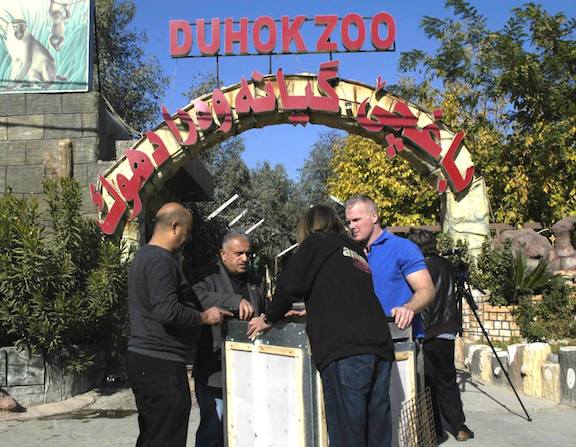
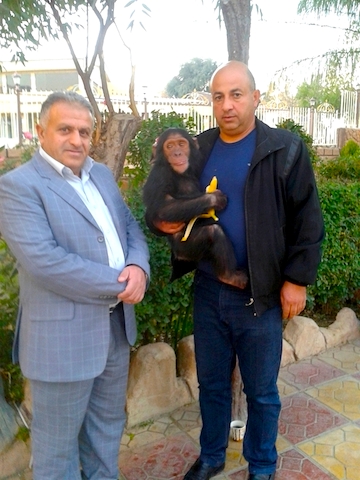
Spencer first encountered Manno in late 2013 while volunteering at the Duhok Zoo, near Mosul in Iraqi Kurdistan. Manno probably arrived in Duhok about July 2013 from Syria and was the only chimpanzee in the zoo. The zoo owner dressed him up in children’s clothes and he generally had free reign to run around and interact with visitors. At night he slept in a small cage, except for the last few months when he was taken into the family home of a Syrian refugee zoo worker. Manno became part of the family.

Manno spent the last few months before he departed Duhok sleeping with Abdul Abde and family, a Syrian refugee who worked at the zoo.

The first step was to find Manno a foster mother, as she would constitute the foundation of a Sisterhood Protection Society, as it were, to shield Manno from aggressive males when eventually he would be introduced outdoors into the full group. The Sweetwaters team, led by Dr. Stephen Ngulu, Manager, and New Group supervisor David Mundia, first tried Akela, a docile senior female who had previously fostered Jane, one of five chimpanzees seized at the Nairobi airport in 2005.

Akela and Manno were first kept in cages with an empty cage in between, so that they could get used to seeing one another. Akela showed interest in Manno, but Manno showed only fear of Akela and of any other chimpanzee. He did not know what these strange, hairy creatures were, and their hooting and screeching frightened him, especially at evening feeding time when all the chimps were brought into the sleeping quarters. For the first four years of his life, Manno had only known human primates and he had worn clothes like them.

Akela

The males in particular eyed Manno with suspicion, but his young age and small size signalled that he posed little threat to the dominance hierarchy. The cage Manno lives in looks bleak, but he is there for his protection. If he were released into the group without a lengthy habituation process, the males would kill him instantly as a foreign intruder.

After a couple of weeks, Akela was put into the cage adjacent to Manno, as she showed no signs of aggression towards him, only of curiosity. Jane, who spends a lot of time with her foster mother, showed even more interest in Manno, so Stephen Ngulu, manager of Sweetwaters sanctuary, on the advice of David Mundia, added Jane to Akela’s cage. Manno continued, however, to reject their attempts to touch through the cage bars and he kept his distance.

The team felt confident enough that Akela posed no danger to Manno, so she was introduced to his cage in early May. Manno ran away from any attempts made by Akela for physical contact. Finally on 13th May, Akela was switched with the much younger Jane, who is about 13 years old. Again, however, Manno would evade any attempts at contact by running away and swinging around the cage bars.

The PEGAS manager just happened to be at Manno’s cage watching on 18th May when the breakthrough occurred. Jane was making repeated attempts to touch Manno and he kept scampering away.

Manno was sitting on the wood platform set against the wall and Jane was on the floor, looking up at Manno. She slowly raised her arms and placed her hands on the platform, just at Manno’s feet. He watched. She gently touched his feet, then reached up and touched Manno’s head. Manno did not run away, but took Jane’s hand and went into a crouching roll off the platform, falling right on top of her. They started playing!

Manno’s first voluntary touch with another chimpanzee. See https://www.youtube.com/watch?v=eodzZRoWIOc

Jane ran off with Manno chasing her. They spent a good part of the rest of the day chasing each other and play wrestling. Now Manno and Jane are like brother and sister.

Manno and Jane chilling together (Photo: David Mundia)

Stephen and David then reintroduced Akela to the cage and Manno accepted her. In late May they introduced Bahati, which means ‘luck’ in Kiswahili, so Manno now has his own little family. Bahati is a female from Burundi who arrived at Sweetwaters in 1996 at the same time as Akela. They were both victims of the illegal pet trade, so share something in common with Manno and Jane.

Manno with his new family – Akela, Jane and Bahati. (Photo: David Mundia)

For the first time in his life Manno is being groomed, a fundamental aspect of social life. Manno is learning to become a chimpanzee.

For the first time in his life Manno is being groomed, a fundamental aspect of social life. Manno is learning to become a chimpanzee. (Photo: David Mundia)

I asked David Mundia on 31st May how Manno was doing. David replied, “He is the happiest chimp ever.”

PEGAS hosts Illegal Wildlife Trade Cyber-crime Workshop


Wildlife conservationists and law enforcement officials are becoming increasingly concerned about the use of the Internet in marketing and trading protected wildlife species. Before the Internet, live wild animals, plants and their products were normally traded in physical market places, auction houses or shops. Sellers and buyers congregated physically to trade, which set certain limits on the numbers of traders who could participate and the quantity of products that could be sold and shipped around the world.

With the arrival of the Internet, thousands of traders can communicate instantaneously with one another in cyber-space and sell millions of items at the touch of a key. Traders can use e-commerce websites and social media platforms, such as Instagram, WeChat, Twitter and Facebook, to advertise wildlife with photographs showing a multitude of items. They all have private messaging functions between users, which can allow illegal trading to take place anonymously. WhatsApp, Snapchat and other private communication applications can also be used to negotiate illegal trades out of sight of law enforcement.

The Project to End Great Ape Slavery (PEGAS) has been investigating online trading of great apes for about two years now, collaborating closely with the Cheetah Conservation Fund. Cheetahs and great apes share the unfortunate distinction of being popular exotic pets of the wealthy in the Middle East, former Soviet Union countries and elsewhere. The exotic pet and rare species industries make extensive use of cyber-space to conduct trade. Critically endangered CITES Appendix I species such as great apes and cheetahs can attract very high prices from buyers for unscrupulous traffickers, and they have organized suppliers in source countries, creating sophisticated wildlife trafficking networks.

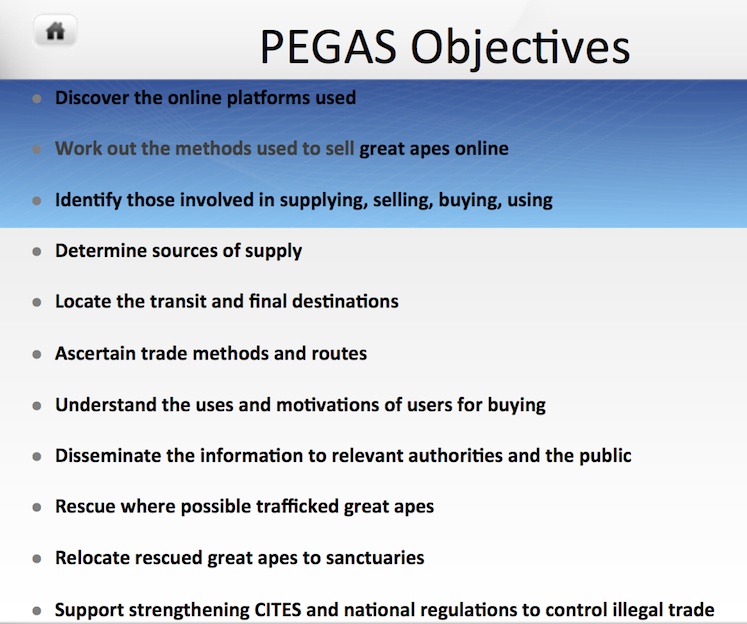
One of the objectives of the PEGAS project is to coordinate actions of organizations and individuals who are engaged in similar work to stop great ape trafficking. With this in mind, PEGAS organized an Illegal Wildlife Cyber-trade Information Exchange Workshop, which was held 21-22 March at Ol Pejeta Conservancy in Kenya.

Those accepting invitations to attend were Tania McCrea-Steele, the Global Wildlife Cybercrime Project Lead of the International Fund for Animal Welfare (IFAW); Pauline Verheij, Senior Legal Investigator, Wildlife Justice Commission (WJC); Sarah Stoner, Senior Wildlife Crime Analyst, WJC; and Patricia Tricorache, Assistant Director for Strategic Communications and Illegal Wildlife Trade, Cheetah Conservation Fund (CCF). Joss Wright, Research Fellow at the Oxford Internet Institute and Co-Director of the Oxford University Cybersecurity Doctoral Training Centre provided information electronically on illegal wildlife trade that he is investigating on the Dark Net.

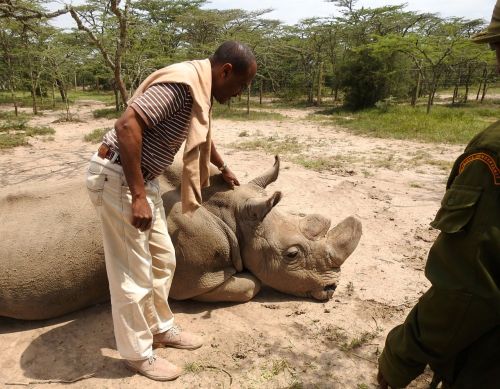
Workshop participants visiting Sudan, the last northern white male rhino on Earth

The workshop focused on reviewing the strategies and tactics used by the participating NGO’s to detect and disrupt wildlife cybercriminals with the aim of increasing our impact by adopting a coordinated and consistent approach to tackling the problem across the NGO community. We presented our respective objectives, methodologies, outputs and outcomes and discussed ways of improving our effectiveness.

Each participant gave one or more PowerPoint presentations summarizing their objectives, methodologies, outputs and outcomes.

IFAW was one of the first to recognize the threat that online sales posed to wildlife. Tania McCrea-Steele explained how up to now IFAW has focused on e-commerce websites. In a recent background paper prepared for the OECD entitled ‘E-commerce and Wildlife Cybercrime: Effective policies and practices to stem the growth of illicit trade’, Tania summarized IFAW’s actions in this growing area. In 2004 IFAW launched an investigation called Caught in the Web that documented massive online marketing of live endangered and protected species and their parts including elephants, rhinos, sea turtles, tigers, lions, falcons, primates, parrots and serval cats. Three years later, another IFAW investigation, Bidding for Extinction, focused on eBay sites in the U.K., U.S., Australia, Canada, Netherlands, Germany, France, and China.

IFAW’s investigation in 2008 (Killing with Keystrokes) found 7,122 online advertisements for CITES Appendix I and II species over a period of just six weeks across eight countries. In response to the report’s findings which highlighted the large amount of ivory available for sale over e-commerce sites, eBay introduced a global ban on the sale of ivory across their marketplaces.

The U.S. Fish and Wildlife Service doesn’t have a cyber crimes unit, but IFAW’s findings inspired it to launch undercover stings in 2011 and 2012 called respectively Operation Cyberwild and Operation Wild Web, an example of using outputs successfully. USFWS charged 154 perpetrators in Operation Wild Web and officials seized a huge variety of illegal wildlife products.

In 2013, IFAW found that ads for endangered wildlife products available for sale in Australia, mostly on eBay, had increased 266 percent since 2008. In 2014 IFAW looked at 280 online markets across 16 countries (Wanted Dead or Alive). In just six weeks it found ads for 33,006 endangered animals and their parts. They found 56 live great apes offered for sale in 40 online ads, plus 8 other ads offering multiple species, including great apes.


Russia and Ukraine posted the most great ape ads (38 total). In 2015 IFAW released Elephant vs Mouse, exposing the illegal ivory trade on Craig’s List, a popular P2P e-commerce website, leading to Craig’s List pledging to monitor wildlife ads more vigorously and delist those that were advertising illegal items.


A growing number of online technology companies are banning the trade in endangered species on their sites. In 2008 Chinese online marketplace Tabao banned species included in China’s Wildlife Protection Law, while eBay’s ban on the sale of ivory across all their platforms came into effect in January 2009. In September 2009 Alibaba, a huge Chinese e-commerce site that provides online trade for individual consumers as well as businesses, banned all online postings of elephant ivory, rhino horn, shark fins and the parts and derivatives of sea turtles, tigers, bears and other protected wild animal and plant species.

More recently Etsy banned the sale of ivory and all other products made from endangered species in July 2013 and Chinese giant Tencent, that owns WeChat and the QQ instant messenger launched “Tencent for the Planet. Say No to Illegal Wildlife Trade” in May 2015. TRAFFIC, WWF and IFAW have been working with online companies to develop a united front against online wildlife crime across the sector. This has resulted in seven companies, including eBay, Etsy, Gumtree, Microsoft, Pinterest, Tencent and Yahoo! adopting a new standardised policy framework in August 2016.

Example of illegal ivory for sale on a Chinese social media site

Enforcement efforts are more challenging to track as prosecution data is not collated; however there have been a number of international and national operations, cross border investigations and successful prosecutions.

INTERPOL’s Project WEB (2013) was the first international enforcement operation investigating the scale and nature of online ivory trade in Europe. The operation found 660 advertisements of ivory items conservatively valued at approximately EUR 1,450,000 for sale during a two-week period on 61 Internet auction sites in nine European countries. Operation Cobra 3, an international law enforcement operation tackling the illegal trade in endangered species which took place in spring 2015, led to over 300 seizures of animals, plants and derivatives in the UK, the majority of which had been sold online.

Most recently Operation Thunderbird, a global wildlife crime operation held over a period of three weeks in January and February 2017, ensured that investigating online marketplaces and social media was an integrated part of the operation. In addition to these operations there have been multiple successful prosecutions.

Online wildlife trafficking has been elevated to the largest international conservation forum, CITES, through the adoption of multiple Decisions and the inclusion of specific text on this issue in a Resolution. This was addressed most recently with Decision 17.92 Combatting Wildlife Cyber-crime which was adopted at CITES Conference of the Parties (CoP) 17 in 2016. The Decision seeks to capture changes to legislation, establish best practise models, develop enforcement guidelines, and engage with online technology companies. In addition there is an obligation to report back at CITES Standing Committees and create a Resolution on the issue for CoP18.


IFAW has developed a standardised methodology for researching online wildlife trade which they have shared with interested enforcement agencies, NGO’s and academics. In addition, IFAW has developed a procedure for identifying scam ads on e-commerce websites. Posting fake adverts for wildlife has become a small industry in its own right. The scammers collect a deposit and shipping costs from the customer for nonexistent animals or products and are never heard from again.

The Wildlife Justice Commission was launched in March 2015 as a non-governmental charity registered in the Netherlands and is based in The Hague. WJC’s mission is to help disrupt transnational, organised wildlife crime by exposing criminal networks and the corruption that enables them to flourish by convincing – or if need be pressuring – governments to enforce the law. Pauline Verheij explained how one of WJC’s first investigations, dubbed ‘Operation Phoenix’, focused on the northern Viet Nam village of Nhi Khe, which is a hub of international wildlife product illegal trade, including ivory, rhino horn and tiger parts sold in the village, plus a much larger range and quantity of products sold online, including bear, pangolin, sea turtle and helmeted hornbill parts.


After gathering evidence for a year using undercover investigator visits to Nhi Khe and monitoring of online social media sites of traders based there (mainly WeChat and Facebook), WJC mapped out a network 51 perpetrators involved in selling over USD 53 million worth of illegal wildlife products. They contacted the Vietnamese government in January 2016 and provided a ‘Map of Facts’ report on their findings, requesting them to take appropriate law enforcement action. The government initially ignored the report.

The value of the illegal wildlife seen for sale by WJC

To apply further pressure, WJC held a public hearing in November 2016 in which the evidence of illegal wildlife trade was presented to the public. An Accountability Panel made up of distinguished legal personalities reviewed WJC’s information and described it as objective and reliable. They determined that Nhi Khe is, and continues to be, a major hub for wildlife crime in protected species. The government made a few token arrests, but has not yet taken the necessary steps to shut down illegal wildlife trade in Nhi Khe and neighbouring villages.

Sarah Stoner described how WJC uses iBase to store, process and analyse data. Both the social media account and a traded species product are recorded entities, provided with an ID code and a screen grab of each ad. The analysis produced links that are relationships between the entities. The analysis showed clearly who were the biggest dealers and determined the quantities of each product sold and the estimated value. Relationships between the various actors were also ascertained. The study concluded:

  • WeChat was the most popular platform and was used by one third of traders and WJC detected at least 8,300 images of illegal wildlife offered for sale on WeChat
  • WJC found that Vietnamese traders are targeting Chinese customers via WeChat
  • The volume and scale of products offered for sale on WeChat by a relatively small number of individuals was unprecedented and was occurring in an organised manner
  • Emerging Trend: WJC identified Chinese customers are using WeChat Wallet, particularly WeTransfer, to transfer funds to their Vietnamese suppliers
  • Facebook was used by a minimum of eight subjects
  • WJC detected a minimum of 200 offences under Article 190 of Viet Nam’s Penal Code
  • The estimated minimum value of products found for sale on Facebook equated to USD 445,356 along with a strong indication of trade occurring on a commercial scale
  • 31 of the 51 dealers (61%) used either WeChat or Facebook to trade illegally; some used both; WhatsApp was also used to communicate.

The illegal items illegally sold in Nhi Khe added up to hundreds of animal deaths

The Cheetah Conservation Fund was founded in 1990 and is an international non-profit organization headquartered in Namibia, with operations in the United States, Canada, Australia, the United Kingdom, and partner organizations in several other nations. Patricia Tricorache explained how she began recording cases of cheetah IWT in late 2005 mainly in the Horn of Africa (Ethiopia, Somaliland/Somalia, Djibouti and northern Kenya), which is the source area for most of the cheetahs going into the pet trade. She also records the illegal trade in parts (skins, bones, etc.) reported from anywhere. CCF uses Excel spreadsheets to both record and analyze the data. Since 2007, CCF has observed 641 live cheetahs in trade and found 406 cases of confiscated live cheetahs. Add to this at least 119 cheetahs represented in traded or confiscated parts totals 1,166 cheetahs taken from the wild in 10 years. CCF estimates that five cubs die for every one that makes it to the pet trade. With the total population in Africa estimated at only 7,100, the loss of so many cheetahs a year in illegal trade is seriously affecting their survival in the wild.


As alarming as the above numbers are, they do not represent the totality of the trade due to the difficulties in obtaining data. CCF’s field associates estimate that 300 cheetahs per year are being smuggled out of Africa for the pet trade. Consequently, in an effort to understand the trade better and obtain a broader picture, in 2014 , Patricia began searching the social media sites for cheetah dealers and mapping relationships between them. She continues to monitor them closely, having recorded well over 1,000 cheetahs offered for sale on the Net since 2012. This figure, which is much higher than the data collected through reports, indicates that the trade may indeed be closer to 300 cubs per year.

CCF collaborates with a number of partners, including IFAW and PEGAS, and its data served to support the inclusion of IWT of cheetahs on the CITES 16th Conference of the Parties agenda. Since then, CCF and has worked within the CITES process to raise awareness about cheetah IWT, which resulted in Decisions 17.124-17.130 being adopted at the CITES 17th Conference of the Parties in 2016. The Decisions call for the creation of a forum on the CITES website where users can exchange information on cheetah IWT and the development of a CITES cheetah trade resource kit that compiles relevant information and tools to assist in implementing the Convention with regard to trade in cheetahs, and addresses inter alia: identification of live cheetahs and parts and derivatives thereof; advice on procedures to be followed in case of seizures including handling, DNA sampling, guidance on the immediate and long-term disposal of live animals (e.g. decision trees based on relevant CITES Resolutions, veterinary care, contact details of experts or potential rescue centres, advice on procedures, reporting on disposal activities); and lists of suitable housing facilities for long-term placement of live cheetahs; and other relevant materials.

CCF also engages in demand reduction through awareness creation materials and campaigns and is in the process of building a cheetah genetics database at its laboratory in Namibia to support forensic investigations.

CCF carries out demand reduction activities

A bit of relatively good news was communicated by Joss Wright of the Oxford Internet Institute, who reported that he has found very little IWT on the Dark Net. It would appear that there is little incentive for traffickers to go to the trouble of establishing themselves on the Dark Net, where transactions have to be made using bitcoin, a virtual currency. Dealing in IWT on the open Net has proven to be low risk, low cost and very efficient. Unless law enforcement becomes much more effective against Internet dealers, it is unlikely that the Dark Net will be used for wildlife trade.

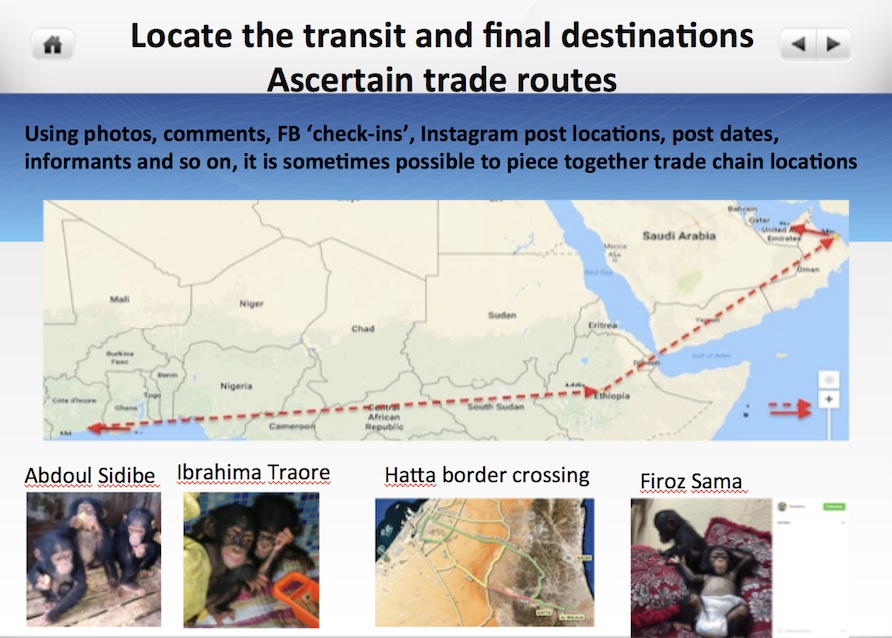
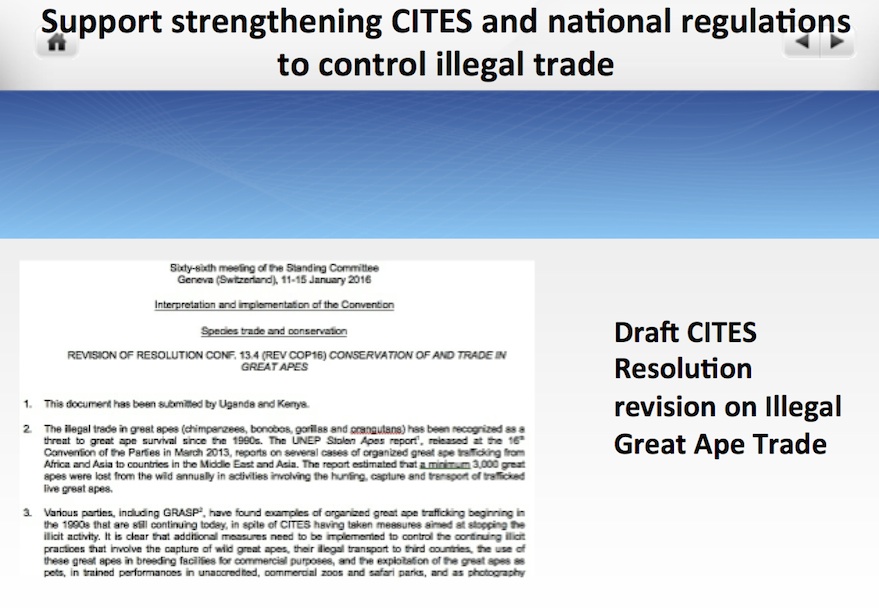
PEGAS made presentations during the workshop outlining its objectives, the methodology used in finding and tracking traffickers and the results achieved thus far, explained in the photos below.


During the workshop participants agreed that we are working towards the following outcomes:

• Disrupt wildlife cybercrime through enforcement actions including arrests, seizures and prosecutions
• Raise awareness with governments at an international and national level on the scale and severity of wildlife cybercrime
• Raise awareness with buyers on the negative impact of illegal wildlife trade on both the conservation and welfare of the animals being traded
• Effect policy and legislative trade at the international (CITES) and national level to specifically target wildlife cybercrime (i.e. adding offering for sale as an offense where this doesn’t exist)
• Ensure online tech companies (particularly social media platforms) pro-actively implement their wildlife trade policies

The participants decided to work together to explore the possibility of developing collaborative projects that would further the goal of reducing IWT, focusing initially on great apes and cheetahs.

The results of the workshop greatly exceeded the expectations that PEGAS initially had of its usefulness, and feedback from the participants has been very positive. We all learned a great deal, and PEGAS has a lot of work ahead to upgrade the way in which data are recorded and processed in its online IWT monitoring work.

Not only was the workshop technically and conceptually valuable, it was also very enjoyable, being held on the beautiful Ol Pejeta Conservancy where the wildlife that we are all working to conserve was seen in great abundance.

Great apes in Asian circus-style shows on rise — so is trafficking

Millie Kerr recently published this article in Mongabay.com dealing with the problem of Great Ape commercial entertainment in safari parks and zoos in Asia. PEGAS provided information for the article.

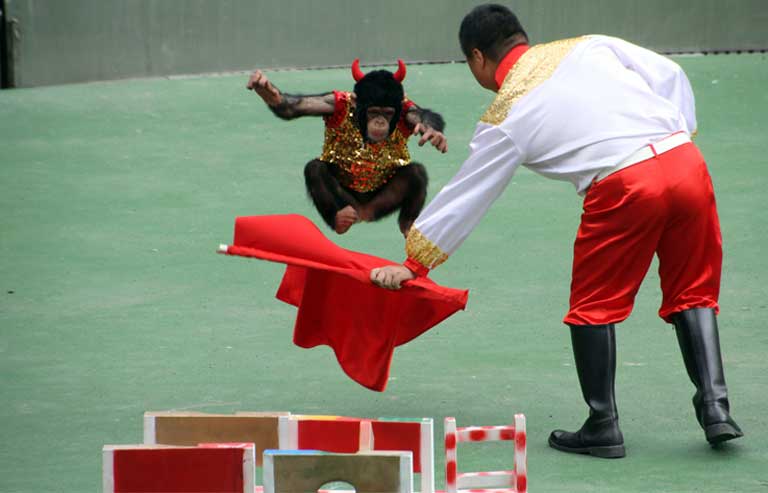
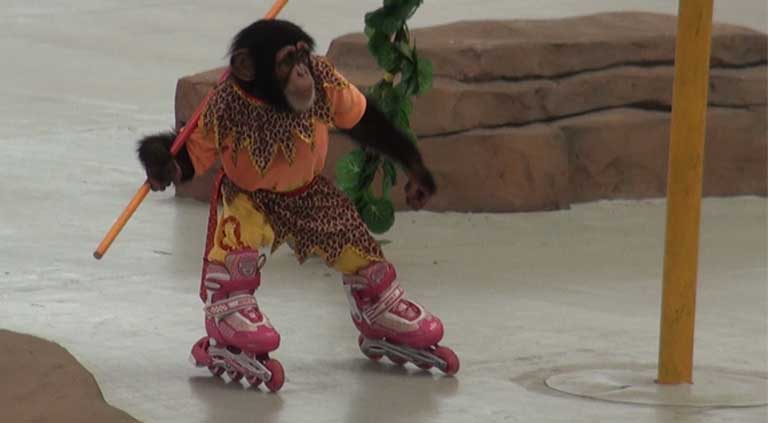
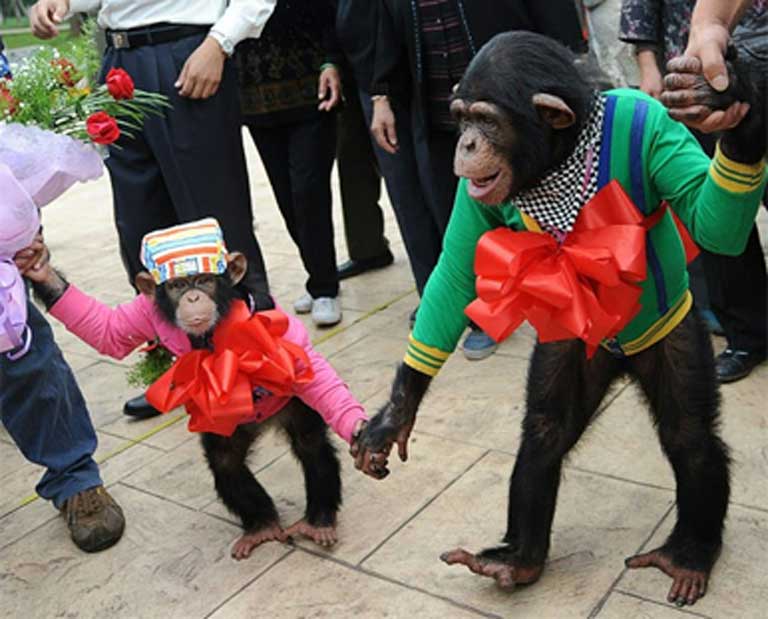
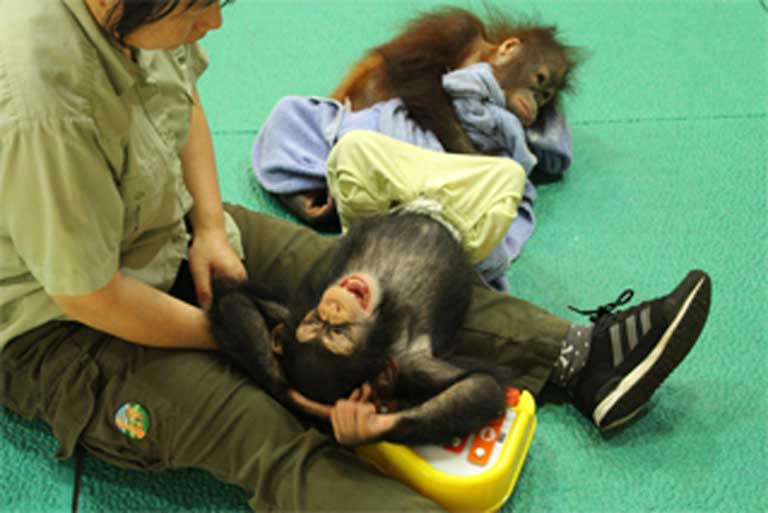
  • Asian zoos, circuses and safari parks are mounting large-scale productions with costumed, dancing, roller-skating great apes. Investigations show that nearly all of these trained primates were not bred in captivity, but illegally traded out of Africa and Indonesia, with destinations in China, Thailand and other Asian countries.
  • The United Nations Environment Program (UNEP) estimates that the illegal trade may have removed as many as 22,218 great apes from the wild between 2005-2011. An estimated 64 percent were chimpanzees, whereas 56 percent of great apes seized by authorities were thought to be orangutans.
  • Wild young apes are traumatized by their capture, and many die along the supply chain, or with their final “owners” by whom they are frequently poorly treated. Young great apes trained in captivity become increasingly unmanageable as they age, and many are “retired” to tiny, solitary cages, or simply disappear.
  • Trafficking arrests are rare. UNEP recorded just 27 arrests in Africa and Asia between 2005-2011, over which time more than 1,800 cases of illegally trafficked great apes were documented, with many more undetected. Solutions are in the works, but time is running out for the world’s great apes if they are to be conserved.
Boxing orangutans at Safari World in Bangkok, Thailand. Video courtesy of PEGAS


After 146 years of operation, Ringling Bros. and Barnum & Bailey is closing its circus, citing dwindling ticket sales. That decline in business reflects a growing sentiment among Americans that circus-style shows involve inappropriate, if not inhumane, treatment of animals, says Julia Galluci, a primatologist who works with People for the Ethical Treatment of Animals (PETA).

That sentiment is not, however, current in many parts of Asia, where certain countries are seeing a rise in circuses and other forms of animal-focused entertainment.

A growing number of Asian zoos and safari parks are mounting large-scale productions that feature great apes — with young chimpanzees and orangutans commonly forced to pose with visitors in clownish costumes, or to “ape” human behaviors, dancing and roller skating to entertain audiences. By contrast, Ringling halted its great ape performances in the early 1990s.

Training techniques and conditions in captivity at these Asian zoos and parks are raising serious animal welfare concerns, while the illegal trade used to procure endangered great apes for Asian entertainment is a red flag for wildlife conservationists.

China’s Shanghai Wild Animal Park. Photo by China-based NGO that asked to remain anonymous

Wild, not captive-bred

In theory, Asian zoos and wildlife parks should be able to breed great apes in captivity or legally acquire captive-bred animals from abroad for their shows. But, as evidence reported below suggests, many of the animals appearing in Asian performances have been, and continue to be, illegally snatched from the wild as infants.

TRAFFIC, the international wildlife trade monitoring network, recently published a report detailing the demand for apes in wildlife attractions in Peninsular Malaysia and Thailand. It shows that a significant proportion of great apes in these attractions come from the wild or are of unknown origin due to sketchy recordkeeping. The authors found, for instance, that while 57 Thai facilities exhibited 51 orangutans, their studbooks only showed records for 21 of the animals.

Likewise, a China-based animal welfare group — that prefers anonymity for the sake of ongoing undercover investigations — believes that the majority of great apes in Chinese animal shows originated in the wild; in fact, some shows even publicize that the chimpanzees they feature began their lives in Africa.

Although two Chinese ministries ban the use of animals in circus shows, the animal welfare group has recorded 11 Chinese safari parks or zoos using chimpanzees in performances. Of these, at least six have featured wild-caught chimpanzees.

Daniel Stiles manages the Project to End Great Ape Slavery (PEGAS), and has been investigating the great ape trade for four years. He’s made several trips to the Middle East, China and Southeast Asia since 2013, where he’s observed an increase in circus-style shows featuring chimpanzees and orangutans.

International Circus in Zhuhai, China. Photo by anonymous source

China’s circus shows are the most sophisticated and large-scale, says Stiles, and they attract massive crowds. Over the recent Chinese New Year, the Chimelong Group reportedly welcomed 30 million visitors to its parks in a single day.

The TRAFFIC study and other undercover investigations in China demonstrate that shows featuring animal performances are indeed widespread, but not necessarily that zoo and circus owners are acting in knowing disregard of international trafficking laws. Chinese importers are probably complicit, but even they could, theoretically, be ignorant of breaking the law because falsification of records has only been proven on the African end of the supply chain. Chinese and Thai officials did not respond to requests for comment for this story.

Traumatized “photo props” and performers

Young great apes are initially traumatized when captured in Africa, then again by being trafficked (often without adequate food or care) to Asia. They are subsequently housed at zoos, circuses and animal parks in reportedly appalling conditions — deprived of proper attention, affection, and the company of other apes, something that is required for healthy development among these social species. Severe training regimens only compound the trauma.

Great apes taken from the wild as infants are exceptionally vulnerable. And their first year of life is critical to their healthy development, explains Stephen Ross, Director of the Lester E. Fisher Center for the Study and Conservation of Apes at the Lincoln Park Zoo in Chicago.

Asian animal attraction trainers typically break-in young chimpanzees and orangutans at just several months of age as photo props, reports Stiles. The animals are made to appear with visitors for a fee. Then, as the primates age, they’re trained to perform in shows that feature unnatural tricks ranging from faux-boxing matches to dance circles.

Chimpanzees are social learners, explains Galluci, so young chimps in captivity often mimic their keepers’ behaviors. However, Galluci and Ross both believe that the training required for choreographed primate shows almost always requires animal abuse.

Stiles agrees: “To train these animals to perform, keepers would almost certainly [need to] beat the animals into submission, rewarding good behavior with food, which means they’re not only traumatized: they’re also likely underfed.”

A skating chimp at Yangcheng Safari Park just outside of Changzhou, China. Photo by China-based NGO that asked to remain anonymous

Ross has extensively studied captive chimpanzee behavior, comparing that of chimps kept as pets or performers in early years against behaviors exhibited by animals that have had greater exposure to other chimpanzees while young. He found that adult chimps reared by people, and with limited exposure to other apes, are less extroverted as adults — even after years of enjoying improved conditions, like those offered by sanctuaries. This tendency toward introversion disrupts the animal’s ability to properly socialize with other chimpanzees. The resulting loss of wild tendencies means there is zero chance of these primates ever being safely returned to the wild.

As importantly, Ross also discovered a major difference between how audiences perceive performance animals and their wild counterparts — with familiarity leading to a diminished belief in the urgency for conservation.

In one study, researchers found that audiences who often saw chimps in commercials and on TV automatically assumed that these “common” animals were more numerous and less endangered than other great ape species. It seems likely that if Asian show-goers make the same leap in logic, they will struggle to understand the need for great ape conservation or to perceive the detrimental effects animal attractions have on captive primates.

As apes grow older, they become less desirable to their masters. Adult primates are more difficult to control, not to mention stronger, which makes them more dangerous to the public and keepers.

Adult chimpanzees are particularly hazardous: in 2009, a pet chimpanzee living in Connecticut attacked a friend of its owner, nearly killing her. (The event helped shift American attitudes away from the desirability of keeping pet chimps).

TRAFFIC wonders what happens to Asia’s performing apes once they enter “retirement,” stating in its Apes in Demand Report, “It [is] unclear what happens to animals once they are too old for these activities.” If animal photo opportunities and performances continue to be legal across Asia, TRAFFIC recommends that facilities notify a country’s relevant authority once the animal is being retired, detailing future “care and housing.”

Photojournalist and investigator Karl Ammann contends that Asia’s performing apes are often “retired” to tiny, solitary cages; others, he says, simply disappear. The lucky ones spend the remainder of their lives in animal sanctuaries.

Traffickers in the Ivory Coast took this video to show potential buyers they had infant chimpanzees for sale, a video which PEGAS secured. Photo courtesy of PEGAS

The scale of the trade

Great ape trafficking is believed to be vastly underreported, and its usually illegal nature makes it difficult to quantify. In a 2013 report, Stolen Apes, the United Nations Environment Program (UNEP) identified 1,808 great apes taken from the wild illegally between 2005-2011, but those were only documented cases. Far more surely entered the black market without a trace; likewise, multiple studies show that more animals die during the hunt or in transit than are ever confiscated.

In its report, TRAFFIC notes that, “the number of apes that appear in trade is thought to be far smaller than the quantity that die in the process of capture and transit and with the final consumer.” Hard data is difficult to come by, but TRAFFIC asserts that deaths occur at every stage of the chain, from capture to transit to arrival with the ultimate buyer.

The UNEP report echoes these points, stating, “It is likely that these numbers are in fact a gross underestimation of the real impact of the illegal trade.” To improve monitoring, UNEP urges governments and NGOs to work together to keep and share records.

When it comes to wild-caught chimpanzees, their intimate social organization means that a large number of adults are killed for every infant that is captured. A BBC investigation discovered that 10 adult chimpanzees are typically killed when one infant is snatched from the wild. UNEP concluded that up to 15 great apes die for every individual that enters the illegal trade. Adults are typically shot and processed as bushmeat for local consumption, or their meat is shipped to urban cities, and possibly as far away as Europe. Adult skulls and body parts are also sold and transported via the illicit supply chain.

Great ape trafficking is a worsening problem in countries like Cameroon, as human activity expands into great ape habitats via logging roads, and as more forests are converted to oil palm plantations and clear cut for other uses in Africa and Southeast Asia. As opportunities for encountering and taking animals from the wild rise, so does the likelihood that impoverished hunters as well as sophisticated, often heavily armed, poachers will seek out great apes for capture and sale to criminal trafficking networks.

A source who elected to remain anonymous for fear of disrupting ongoing covert investigations took this photo of two costume-clad chimpanzees forced to dance for guests at China’s Heifei Wildlife Park

UNEP estimates that the illegal trade may have removed as many as 22,218 great apes from the wild between 2005-2011. An estimated 64 percent were chimpanzees, whereas 56 percent of great apes seized by authorities were orangutans. Chimpanzees, with whom we share 98 percent of our DNA, are Endangered, with a global population as low as 150,000 animals, according to the World Wildlife Fund (WWF). Orangutans are faring worse: they are Critically Endangered, and WWF estimates that just under 120,000 remain in the wild. However, Orangutan Foundation International points out that actual numbers could be considerably lower.

Worryingly, UNEP believes that the great ape trade is continuing to grow, to the obvious detriment of wild populations. Some of that growth is fueled by the high demand for young primates as pets (often in the Middle East) or as performing animals in Asia.

Traversing the legal landscape

The Convention on International Trade in Endangered Species of Wild Fauna and Flora (CITES) is an international treaty that came into effect in 1975 to ensure that trade in wild plants and animals doesn’t negatively impact their survival. Currently, 183 countries are signatories; all are required to enact domestic laws to bring the treaty into effect.

In a 2014 report, law firm DLA Piper noted that, although all signatories have passed some type of legislation to meet CITES requirements, these national laws sometimes fall far short of what’s needed, contain legal loopholes, or are poorly enforced.

Too often, arrests are few and far between. UNEP found, for example, that only 27 arrests were made in Africa and Asia between 2005-2011, over which time more than 1,800 great apes were documented as being illegally trafficked. Prosecutions are uncommon, and sentences are often insignificant, so fail to deter future criminal activity. As a result, the illegal wildlife trade is flourishing. It is now considered the fourth most valuable form of illicit trade (behind drugs, guns, and human trafficking), per DLA Piper’s report.

Keeper and infants in China’s Chimelong Safari Park. Photo by anonymous source
Great ape as “photo prop”: A visitor and baby chimp at Bangkok’s Samutprakarn Crocodile Farm and Zoo. Photo by PEGAS

As with a range of species, it is important to note that some of the great ape trade occurs legally. Species protected by CITES are listed on three appendices — I, II, and II. Appendix I covers species threatened with extinction, specimens which can’t be traded internationally unless imported for non-commercial purposes. Species that could become extinct in the absence of closely controlled trade are listed on Appendix II. Although all great ape species are listed on Appendix I, they can be legally traded as if they were on Appendix II if they were bred in captivity at facilities registered with CITES.

But traders often game the CITES system, sometimes exporting great apes by falsifying permits — claiming the animals they’re selling were captive-bred when they were in fact wild caught. According to Ammann, widespread corruption makes falsification easy.

Between 2009-2011, China imported most of its great apes from Guinea, using permits stating that all traded animals were captive-bred. Conservationists knew, however, that Guinea didn’t have any ape breeding facilities, so they asked CITES to intervene. In fact, “CITES has not registered any chimpanzee or orangutan breeding facilities for commercial purposes,” anywhere in the world explains Juan Carlos Vasquez, the chief of the organization’s legal and compliance unit.

After conducting an investigation, CITES concluded that Guinea was falsifying permits to illegally export wild-caught apes. As a result, CITES suspended all commercial trade in CITES-listed species with Guinea in 2013, and the head of Guinea’s CITES Management Authority was subsequently arrested for fraudulently issuing permits (he was convicted but subsequently pardoned by the country’s President).

China, at the other end of the Guinea chimpanzee supply chain, suffered no consequences for these violations, and authorities there insisted they were unaware that the imported animals were wild-caught. However, both Stiles and Ammann suspect China was complicit. Regardless, any legal action against China could only have been initiated by the Chinese themselves under their domestic laws, since the importation had already occurred.

Like China, Thailand is a CITES signatory that has passed domestic conservation legislation, but Thai law doesn’t protect the great majority of non-native species. And when someone is caught possessing a legally protected animal or plant, the burden of proof is on the Thai state rather than the individual to show legal importation. According to TRAFFIC, Thailand is currently drafting new legislation that would, if passed, protect non-native species. During a January 2016 CITES Standing Committee meeting, the international organization encouraged all countries to eliminate loopholes of this kind.

Creative solutions

A range of individuals and organizations are developing and utilizing creative tactics to fight wildlife crime. There are new technologies under development — ranging from citizen reporting apps, to DNA testing kits for use in the field, as well as databases that track wildlife trafficking in real-time.

New York University is working on an innovative web crawler that mines online web postings for animal and wildlife product sales. Stiles warns, however, that the crawler’s application may be limited since transactions involving live animals typically occur on social media platforms rather than websites. Social media has lately proven to be a prime way of connecting illegal great ape sellers with buyers, especially in the Middle East.

In July 2015, the Wildlife Justice Commission (WJC) was quietly launched in The Hague. This non-profit seeks to “activate justice” by supporting national governments as they investigate and prosecute wildlife crime.

Keeper and infant great ape at China’s Chimelong Safari Park. Photo courtesy of PEGAS

When dialogue with national governments fails, the WJC can hold hearings in The Hague in which independent, impartial experts review cases of wildlife crime. Unlike other judicial bodies, however, such as the International Courts of Justice, Commission hearings are not legally binding. They do, however, shine a light on wildlife crime and provide recommendations for actions to curb it.

“CITES is merely an international treaty, so we must work on the country level,” explains Executive Director Olivia Swaak-Goldman. “Through collaborative investigations and public tribunals, we hope to put an end to wildlife crime. After all, time is running out.”

The sobering reality: so long as there is public demand for boxing and dancing chimps, or photo ops available with orangutans in Asia, there will be poachers and traffickers willing to bear the legal risk of providing those animals, importers willing to forge documents to get great apes from abroad, and showmen willing to keep (and mistreat) them.

If great apes are to be conserved, then the Asian public will need to come to the same conclusion as Americans — that these primates don’t belong on roller skates or in boxing rings; they belong in the wild.

The Chimelong Safari Park in Guangzhou is one of China’s biggest animal attractions. On its website — the source of this photo — the park claims to be the “largest wild animal theme park in the world” with a collection of more than 20,000 “rare animals.”

Do Apes Deserve ‘Personhood’ Rights? Lawyer Heads to N.Y. Supreme Court to Make Case

Reprinted from NBC News

When Steve Wise first started out as an animal rights lawyer, people used to bark at him when he entered a courtroom.

For more than 25 years, Wise has been arguing that animals who have cognitive complexities similar to humans should be legally endowed with basic rights of autonomy.

Now when he enters a courtroom, no one is barking.

On Thursday [9 March], Wise — who founded the Nonhuman Rights Project on behalf of the great apes, cetaceans and elephants — will go before the appellate division of the Supreme Court of the State of New York in Manhattan and argue that two of his clients, chimpanzees Kiko and Tommy, should be afforded the rights of “personhood.”

“‘Personhood’ is not synonymous with ‘humans.’ It is not now and never has been,” Wise told NBC News. “A ‘person’ is the law’s way of saying that entity has the capacity for rights. A ‘thing,’ which chimpanzees are now, don’t have capacity for any kind of rights.”

Wise is hoping to prove in the eyes of the court that chimpanzees and other great apes aren’t “things” but rather are autonomous beings that possess consciousness and deserve to live their lives to the fullest possible extent of that autonomy.

Tommy and Kiko

Wise has been fighting on behalf of Tommy and Kiko since 2013.

Since then, Wise has been running to and from court with habeas corpus cases for both chimpanzees, and while judges often sympathize with their cause, they’ve ultimately reject their pleas.

Despite representing the primates for the better part of four years, checking on their condition is a frustrating subject for the staff at Nonhuman Rights Project.

“We see them as clients of ours, but we can’t get a jail house visit or help them exercise a Sixth Amendment right,” said Kevin Schneider, executive director of Nonhuman Right Project. “They’re things, so we can’t barge in and see what’s going on.”

Image: Tommy, a chimpanzee in his late 30s, was kept in a cage behind the Circle L Trailer Sales in Gloversville, New York
Tommy, a chimpanzee in his late 30s, was kept in a cage behind the Circle L Trailer Sales in Gloversville, New York. Pennebaker Hegedus Films

Tommy, believed to be in his late 30s, is owned by Patrick Lavery. The chimpanzee lives in a cage of cement and green-painted steel behind Circle L Trailer Sales in Gloversville, New York, according to the Albany Times Union.

In 2013, Lavery told the Times Union that Tommy, although he was living without companionship, had enrichment in the form of television, cable and radio.

“To treat them as things destroys them,” Wise said. “The same way we would be destroyed in solitary confinement.”

In the 2016 HBO documentary “Unlocking the Cage,” which documents Wise’s fight to file habeas corpus petitions on behalf of chimpanzees in New York, Lavery is seen telling Wise he wants Tommy to be sent to a Florida farm because the ape is “lonely.” Wise later argues that the Florida farm is not a suitable environment for Tommy.

Kiko, believed to be in his early 30s, is a former animal actor, who was beaten so badly by his trainers, he’s partially deaf, according to Nonhuman Rights Project.

The chimpanzee now lives in the Primate Sanctuary in Niagara Falls, New York, which is operated by Carmen and Christie Presti. Nonhuman Rights Project alleges the sanctuary is run out of the Presti’s home, and the animals aren’t in a natural environment.

The Prestis and Lavery did not immediately respond to a request for comment made by NBC News.

A case about rights, not welfare

Although Wise and Schneider said the chimpanzees aren’t being kept in ideal conditions, they’re not alleging their owners have done anything wrong.

In fact, they said everything the Prestis and Lavery have done is entirely legal.

“We specifically say we are not alleging [the Prestis or Lavery] have violated any local, state or federal law,” Wise said. “What we’re saying is those laws are grossly insufficient and [the chimpanzees] should have right to bodily liberty. We’re not trying to protect their welfare, we’re trying to protect rights.”

Image: Steve Wise argues a case that chimpanzees deserve non-human rights in a New York Court
Steve Wise argues a case that chimpanzees deserve non-human rights in a New York Court. Unlocking The Cage / HBO

Wise said the only reason chimpanzees and other great apes are able to be kept in cages is because they are legally deemed “things.” The last time Wise was in court in 2015 — arguing on behalf of chimpanzees Hercules and Leo, who were kept at Stony Brook University on Long Island for research — the state argued the animal’s classification should remain just that.

“The reality is these are fundamentally different species. I worry about the diminishment of these rights in some way if we expand them beyond human beings,” Christopher Coulston, an assistant New York state attorney general said.

Coulston told New York State Supreme Court Justice Barbara Jaffe, that even though “personhood” is sometimes attributed to corporations and ships, those entities are “in some way related to human interests.”

“Whether it’s a corporation, whether it’s a ship that is treated as a legal person, we think that is the principle that has governed the assignment of legal personhood,” Coulston argued.

But Wise said society has come a long way since the apes were first deemed “things” and more than half a decade of studying great apes has revealed a wealth of knowledge about their intelligence and awareness.

“The reason we chose [great apes, elephants and cetaceans] is there’s an extraordinary amount of scientific observation— more than half a century — that’s been done,” Wise said. “Articles reveal they are extremely cognitively complex, similarly to the way we’re complex. ”

Scientists on their side

Although Wise is facing an uphill battle in the courtroom on Thursday, he has some of the foremost experts behind him as he heads to Manhattan.

This includes Jane Goodall, considered the premier expert on chimpanzees after more than five decades studying them in Gombe Stream National Park in Tanzania.

Goodall, who sits on the board of Nonhuman Rights Project, filed a 27-page affidavit on behalf of the chimpanzees along with several other experts. Wise said the case currently has 160 pages of expert affidavits filed on behalf of the chimpanzees.

Jaffe ruled against Wise’s case for Hercules and Leo, saying that, while she sympathized with their cause, she was bound by a decision made by a different New York judge. An appellate division of the New York State Supreme Court known as the Third Department had concluded that the chimpanzees did not meet the requirement for “personhood” because the apes did not carry out duties and responsibilities in society.

Wise then enlisted Goodall to write an affidavit that would challenge that decision.

She said that in her 50 years of observation, chimpanzees demonstrated “well-defined” duties and responsibilities, listing how communities care for each other and are responsible to one another through a host of examples.

But Wise is also arguing that while chimpanzees do exhibit responsibilities, they also don’t need to have responsibilities to deserve rights.

“What we’re doing is arguing that the Third Department was wrong in at least six different ways and that you don’t need to have duties in society in order to be a person and have legal rights,” he said.

Small steps forward

The last time Wise went before a judge to argue the case of Kiko and Tommy, no chimpanzee in the world had ever been granted nonhuman rights.

But that won’t be the case on Thursday.

In November 2016, Judge María Alejandra Maurico of Argentina ruled that a chimpanzee named Cecilia was a “nonhuman legal person” and agreed that the ape had “inherent rights.”

Two years earlier, the same judge deemed an orangutan named Sandra also deserved “personhood.”

Both apes were transferred to a sanctuary in Brazil to live as autonomously as possible with other animals in their species for the rest of their lives.

Wise and Schneider said they will be using Cecilia’s case as a tool to argue theirs and are hoping for a similar outcome.

“Assuming the court agrees [with us], we suggest [Kiko and Tommy] should be sent to Save the Chimps in Fort Pierce, Florida,” Wise said.

He said it’s at this 150-acre sanctuary the chimpanzees will be able to live out their lives to the maximum amount of autonomy possible for animals raised in captivity.

“We think [the court] is going to say, ‘You don’t need to have duties and responsibilities to not be enslaved,’ and remand that case to Justice Jaffe and say ‘Don’t look at Third Department’s decision; hold a hearing and decide the case,'” Wise said. “That’s what we think is more likely than other two extremes, but the court surprises us all the time. We’ve been wrong every time.”

Walk for Animals in Dubai

1walk

PEGAS represented Ol Pejeta Conservancy at the Walk for Animals in Dubai’s Zabeel Park on 10 February, 2017. The purpose of the Walk was to create awareness about the abuse that domestic and exotic pets can suffer by uncaring owners.

The PEGAS Project Manager set up a table with reading materials on Ol Pejeta Conservancy and its Sweetwaters Chimpanzee Sanctuary, along with souvenir objects, in order to attract visitors from the Walk. PEGAS explained to visitors about the wild animal conservation objectives of Ol Pejeta and why there was a need for a chimpanzee sanctuary.

4walk

PEGAS set up a table

3walk

There was a surprising lack of awareness in the public PEGAS encountered about the problem of illegal trade of wild exotic species for use in the pet trade. PEGAS realizes that much more needs to be done to inform residents of the UAE about illegal exotic animal imports to the country and the negative impacts that this has on wildlife conservation, particularly with great apes.

2walk

Mahin Bahrami on left and Zara Hovelsas on right of the Middle East Animal Foundation, a PEGAS partner in the UAE

New interest in illegal Great Ape trade

The BBC recently released the results of a 12-month investigation entitled ‘The secret trade in baby chimps’. It was on World Service radio and television repeatedly all day the 30th of January and was accompanied by an excellent story by David Shukman and Sam Piranty on the BBC News website. Shukman has followed up with a thoughtful, more analytic story on how humans treat great apes in general and a 30-minute documentary ‘The Chimp Smugglers’.

The public reacted viscerally and vociferously to the story and to the heart-rending video of little Nemley Junior, an infant chimpanzee rescued during the sting. My Facebook pages were full of comments expressing outrage, anger, shock, sadness. Born Free’s president Will Travers blogged on National Geographic’s Voice for Wildlife about it.

Little Nemley Junior, seized during the sting. (BBC)

Little Nemley Junior, seized during the sting. (BBC)

 
But why did BBC call it ‘the secret trade’? It’s not a secret. Apparently to them it was, but the UN report Stolen Apes was released almost four years ago and it revealed in detail the trafficking in little ape babies for use as pets and money-makers in zoos and safari parks. PEGAS has published several articles on it in Africa Geographic, Mongabay.com and elsewhere, and Agence France-Presse, Al Jazeera, Al Arabiya, Paris-Match the Canadian Broadcasting Corporation and others have reported on it, with The Dodo even publishing many of PEGAS’s disturbing photographs of the stolen ape babies.

PEGAS was even involved in a sting very similar to the one that the BBC pulled off, which so far has netted three people involved in trying to sell two orangutan babies that were smuggled from Indonesia to Thailand. AP posted a brief video story on it and the Bangkok Post reported it, but most of the large news outlets like the New York Times, CNN and Sky ignored it, even though technically it was a bigger story than BBC catching two traffickers and one baby ape. The BBC actually posted the AP video, but made nothing of the story.

The two orangutan babies offered to PEGAS for sale using WhatsApp

The two orangutan babies offered to PEGAS for sale using WhatsApp

The infants after rescue by the Thai police

The infants after rescue by the Thai police


The way the BBC covered the Abidjan sting story, which involved repeated headline news announcements all day 30th January, a long news video clip, two comprehensive written stories and a 30-minute documentary, not to mention discussion of the story on other BBC programmes, resulted in the massive public reaction.

A huge thank you to BBC and to the Ivory Coast authorities. But we need more of this if we are to get CITES and governments to take meaningful action. Great apes have been ignored by CITES for several years now. The CITES Secretariat has prevented a Great Apes working group from being formed, which is the only forum in CITES where detailed evidence can be produced and discussed and where a meaningful revision to the Great Apes resolution could be made. At the 17th CITES Conference of the Parties last year, CITES even reneged on its own Decision to devise a special reporting system for illegal great ape trade. They effectively killed it.

In the BBC documentary film Scanlon tried to convince viewers that traffickers forge the permits. This happens in some cases, but more commonly national CITES offices issue them in return for bribes.

To put a huge damper on the illegal trade CITES needs to revise the Great Ape resolution to recommend that Parties (which are countries that have ratified the Convention) require that any facility or individual that possesses great apes shall obtain a government permit to do so, fill out a registration form reporting details of the ages and sexes, and update the registration annually. Each Party will submit an annual report summarizing the total registered great apes to CITES to be included in the reporting on the Great Ape resolution (Res. Conf. 13.4 Rev) at Standing Committees and Conferences of the Parties.

Currently, ape babies are shipped illegally and once in a country the traffickers move them from facility to facility to lose the paper trail (or the fact that one does not exist). Documents can be fabricated or bought through bribery that bestow legal possession of the ape victims. If permitting and registration are required upon arrival in a country, it makes it much more difficult to fiddle the paperwork – and where are the CITES permits on arrival? They should be produced upon registration.

There is also a well-developed practice of corrupt CITES officials selling fraudulent permits, indicating that the ape babies were bred in captivity and are to be used for educational or scientific purposes. If importers were required to obtain a domestic permit and register the infants on arrival these fraudulent permits could be spotted immediately. Please sign our petition requesting CITES to control the use of these fraudulent permits.

These control actions are not unreasonable. CITES has already required even more sweeping actions and reporting than proposed above under Res. Conf. 10.10 concerning elephants and ivory. Several countries have even been compelled to formulate and report on national action plans to address poaching and ivory trafficking. Don’t Great Apes deserve something similar? 

Two infant orangutans turned up recently at the Phuket Zoo in Thailand.

Two infant orangutans turned up recently at the Phuket Zoo in Thailand.


The enclosure where they are being exploited as photo props has posted documents claiming that they were born in Bangkok’s notorious Safari World, which twice has had its illegal entertainer orangutans seized and returned to Indonesia. Being born there makes them legal? How the Thai authorities can allow this is inexplicable.

The enclosure where the orangutans are being exploited as photo props has posted documents claiming that they were born in Bangkok’s notorious Safari World, which twice has had its illegal entertainer orangutans seized and returned to Indonesia. Being born there makes them legal? How the Thai authorities can allow this is inexplicable.


Let’s hope that this new found interest in our closest biological relatives does not fade away.

Both Mr. Shukman and Will Travers of Born Free offered to help find Nemley Junior a sanctuary. He is currently in the Abidjan Zoo, an unpleasant place for a chimp to spend the rest of its life. If the Ivoirian authorities are agreeable, PEGAS offers to bring Nemley Junior to Sweetwaters Chimpanzee Sanctuary on Ol Pejeta Conservancy, a paradise for abused chimpanzees.

The Abidjan Zoo is an unpleasant environment for a chimp. Will Nemley Junior spend the rest of his life here?

The Abidjan Zoo is an unpleasant environment for a chimp. Will Nemley Junior spend the rest of his life here?


Or here at Sweetwaters, living in the African bush with other chimps?

Or here at Sweetwaters, living in the African bush with other chimps?


Presidential pardon: Former head of Guinea CITES office pardoned before his case was finalized

Ansoumane Doumbouya is known for stating, “There is no dirtier convention than CITES.”

He should know, he’s one of the corrupt government officials that made it that way. Doumbouya, an affable and smiling man, made huge sums of money while engaged as the head of the Guinea CITES office between 2008 and 2013. How? By selling fraudulent CITES export permits that indicated that wild-caught Appendix I live specimens were supposedly bred in captivity and met the CITES criteria that allowed trade. A chimpanzee permit could earn him up to USD 3,000 and a gorilla USD 5,000. China made use of the Guinea “C-scam” between 2007 and 2012 to import over 130 chimpanzees and possibly 10 gorillas to supply commercial zoos and safari parks.

‘C’ is the Source Code put on permits indicating captive bred in conformance with CITES regulations.

Ansoumane Doumbouya seems like a nice guy, until you learn that he has helped send thousands of birds, reptiles and mammals illegally out of Africa

Ansoumane Doumbouya seems like a nice guy, until you learn that he has helped send thousands of birds, reptiles and mammals illegally out of Africa


When the scheme was exposed, Doumbouya was finally removed from the post, but remained in the ministry. In 2013 at the 16th CITES Conference of the Parties Guinea was sanctioned with a commercial trade suspension. Not as bad as it sounds, since a C code is used with supposedly non-commercial trade.

Even after 2013 Doumbouya carried on signing old blank export permits he had kept, even though he had no authority to do so. Finally in August 2015 he was arrested by the local INTERPOL bureau in possession of the illegal permits and prosecuted. He was convicted and sentenced to 18 months in prison.

Doumbouya appealed the conviction and was awaiting a ruling on his appeal when President Alpha Condé granted him a pardon. Guinean law states that a pardon can be given only after the conclusion of a court case.

The president’s action signals clearly to the world that corruption reaches to the highest office in Guinea and that the country will continue to export illegally thousands of wild-caught exotic specimens, destroying Guinea’s biodiversity.

A baby chimpanzee seized recently in Guinea destined for the pet market. With no support from President Condé this will continue. (Photo/GALF)

A baby chimpanzee seized recently in Guinea destined for the pet market. With no support from President Condé this will continue. (Photo/GALF)


Social Media Slave Trade – a PEGAS update

0
These are just some of the emojis PEGAS sees in great ape pet posts on Instagram, accompanied by comments such as, “I want a monkey [sic]”, “I love these guys”, “Where can I get one”, and so on.

Instagram users show their approval of a post with emojis

Instagram users show their approval of a post with emojis

Well-meaning posts of loved pets’ photos, especially when made by influential people, unwittingly stimulate others to emulate them by acquiring their own pet, usually through illegal trade.

2-hilton-8-5-15-copy

Paris Hilton and a famous footballer shown with great ape pets serve to stimulate the illegal pet trade

Paris Hilton and a famous footballer shown with great ape pets serve to stimulate the illegal pet trade

Showing children with great ape pets drives the trade, as both parents and children who see the posts will get the idea that it acceptable, even desirable, to acquire a chimpanzee or orangutan baby pet.

Children increasingly are driving the great ape pet trade

Children increasingly are driving the great ape pet trade

pet3 pet4 pet5


pet7


Other posts are more insidious, with “For sale?” being common. The question is often answered instructing the potential buyer to communicate through a WhatsApp number or direct messaging. Occasionally, actual prices will be given in plain view of any observer.

3 3-price 4

Some posts openly show the selling of great apes, even sometimes showing the prices

Some posts openly show the selling of great apes, even sometimes showing the prices

Some posts might even promote others going into the business, as they show dealers with expensive cars and nice houses.

Posts of traffickers with expensive cars can encourage others to go into the trade

Posts of traffickers with expensive cars can encourage others to go into the trade

Many posts create the impression that the ape is having a wonderful time and is enjoying its role as a pet, but other posts capture the reality, the despair and loneliness that the ape experiences, and its end destination when it ceases to be cute and cuddly – a cage.

6-copy 6-14-7-15-for-sale-copy

Some posts capture the look of despair on the apes

Some posts capture the look of despair on the apes

6

While others show where they end up - in cages

While others show where they end up – in cages

The development of the Internet and access to hundreds of millions of new users in recent years, coupled with social media platforms and the ability to create closed groups and private accounts, has resulted in the burgeoning ability of live animal suppliers, middlemen dealers and buyers to engage in active illegal trading of protected species. The markets can be much larger than physical markets, because thousands of group members located in many countries can be involved. For example, TRAFFIC documented 70,000 members affiliated to just 14 groups on Facebook in one country selling a wide variety of CITES Appendix I animals.

PEGAS began monitoring social media sites such as Instagram and Facebook in March 2015, after reading a Zoo News blog about a wildlife trafficker using social media to sell exotic animals in the UAE.

Starting with that one trafficker, PEGAS checked out the Instagram followers, Facebook friends and people making comments to posts to establish an ever-widening network of fellow animal dealers, and those buying them as pets and prestige display trophies. There is nothing like driving around the streets of Dubai or Doha with a chimpanzee kitted out in designer clothes and sunglasses to make a statement: “Look at me, I’m cool.”

Owners commonly flaunt their expensive pets by driving around with them

Owners commonly flaunt their expensive pets by driving around with them

Even with their children

Even with their children

A few months later Patricia Tricorache of the Cheetah Conservation Fund contacted PEGAS and provided a wealth of additional information regarding online exotic animal trading. The CCF and PEGAS have been collaborating since then, building up a cheetah and great ape database of online wildlife trafficking. We see many other endangered species being trafficked as well in the course of our investigations. More recently, Alexandra Russo volunteered to help and she has found several new great ape and cheetah social media dealers.

Methodology

PEGAS conducted an update count of the individual great apes that it has seen posted on Instagram and Facebook accounts as of early January, 2017. Only those apes that were in the possession of the person posting were counted. Many exotic pet dealers and owners know each other and reposts of their respective photos on two or more other account sites are common. Care was taken to count only the ape in the original account photo or video. Some great apes are pets that owners have posted many times, sometimes over the course of two or three years. PEGAS recorded the names of the pets and took care not to count the same ape more than once. In addition, some people have more than one Instagram or Facebook account and post great ape photos and videos on them all. For example, PEGAS has seen the exact same post on up to ten different accounts, due both to repostings by the same person on different accounts they own, and/or by friends or followers on their respective accounts.

To complicate matters, some people have closed accounts – or had them closed by Zuckerberg’s people after complaints about illegal trading and/or abusive posts – and opened new accounts. PEGAS has found some, but not all, of the new accounts (if new accounts were created). Care must be taken not to count new sites of already counted traffickers as different ones. For example, @dubai.tiger closed down and reopened as @uae.tiger. This should be counted as one dealer, not two. The two sites have posted the same chimpanzees and orangutan, PEGAS tried to identify them and count each only once. The fact that owners usually put the apes in children’s clothes helps with identification, particularly with reposts. PEGAS has even seen dealers repost great apes from another account and offer them for sale. It is unknown whether these were scam sales offerings or were done with the owner’s knowledge and permission.

This chimpanzee belonged to someone in the UAE, but a dealer in Indonesia put it up for sale. Did the owner know?

This chimpanzee belonged to someone in the UAE and this photo was posted on his site, but a dealer in Indonesia put it up for sale with a repost on his site. Did the owner know?

PEGAS classed accounts as dealers (D) or owners only (O). Some dealers are also great ape pet owners (D/O). PEGAS was surprised to see cases in which dealers would sell great apes that they had named and kept as pets for themselves or their children for several months, and for whom they had shown great affection.

This dealer kept these four chimpanzees for weeks, showing great affection for them, then sold off three of them

This dealer kept these four chimpanzees for weeks, showing great affection for them, then sold off three of them

Traffickers also made reposts from sites not engaged in trade, whether to mislead investigators or just for fun is not known. Traffickers posted great apes from International Animal Rescue, from various sanctuaries, from zoos and safari parks, from animal-theme websites, and even of Koko the gorilla. Most exotic animal dealers know now that a number of investigators are watching them. One dealer in particular has started doing this fairly recently, along with making reposts of his posts made originally two or three years ago. PEGAS thinks he is doing this to confuse the watchers.

In spite of trying to take care to avoid the methodological pitfalls described above, the figures presented should be considered as plus or minus about 10 percent, as a certain amount of guesswork was involved in deciding whether a post was a repost of the same ape, or which account was the actual original account making the photo/video post. This type of work is enormously time-consuming and further work is needed to figure out who actually owns each account and who first posted each ape seen. Few Instagram accounts provide the name of the owner and some Facebook accounts have fake names or nicknames.

The posts go back to 2011, but the great majority have been made since 2014. 

Results

PEGAS has been monitoring social media accounts in thirteen countries. PEGAS knows of other countries where online dealers are based, but time is not available to extend to them. In fact, PEGAS does not have the time to monitor properly the thirteen it is currently looking at.

The most active region for great ape trafficking is the Middle East, followed by Southeast Asia. Africa is not well represented because they rarely post photos of great apes on personal accounts, knowing that their sale is illegal and that there are investigators watching their accounts. For whatever reason, African dealers do not seem to use Instagram as much as the other dealers do, preferring Facebook. There may well be closed member Facebook groups where dealing takes place that PEGAS hasn’t found yet.

Thus far, approximately 94 individuals have been found posting photos of great apes that they have at one time possessed personally. Of these, 51 are dealers and 43 are owners only, and 7 are both. It should be understood that even the owners only are also engaged in great ape trafficking, as it takes two to tango, so to speak. Trafficking consists of a seller and a buyer. Both are engaged in illegal trade (although the CITES Secretariat made an exception for China in one infamous trafficking case involving up to 150 great apes). The actual names and contacts are known for 45-50 of these.

The 94 individuals posted approximately 162 chimpanzees and 88 orangutans that they held in their possession, 250 in all. Although photos were seen of bonobos and gorillas, none of them appeared to be in the possession of the person posting them. A few of the dealers were either known or suspected of dealing in bonobos or gorillas from other sources, but the social media sites have not offered evidence to date.

Many of the dealers and owners know each other, and a few tight networks have been unearthed. For example, the principle supplier of Asian species to a large Gulf exotic pet operation was found in Indonesia. There is much more research to be done to work out the networks of suppliers, middlemen and buyers.

Discussion

The 250 great apes seen in the thirteen countries is just the tip of the iceberg. There are many accounts and groups that have not been fully researched or even found yet. Some of the more active dealers, particularly in Southeast Asia, remove the posts from their accounts after the animals have been sold. So if an investigator does not monitor the account for the days or weeks that it is up for sale, it will not be seen.

There is also the problem of law enforcement. Even when the names and contacts of traffickers are known and reported to the relevant authorities, with copies of the incriminating posts, they will not take action. They claim it is too much work to gain a conviction and they have higher priorities. Some NGOs and individuals campaign to have the social media sites closed down, but that can be counter-productive as the trafficker then simply establishes a new site and increases his security settings and is much more careful about whom he lets gain access to it. Shutting down an account does not stop the trafficking.

About the only way to be sure of law enforcement is to set up a sting, as occurred in Thailand last December. The police were involved at the outset and there was close cooperation between the person setting up the operation, the police and the collaborating local NGO. This is expensive and can take months of work to achieve. Until laws are in place to make it easier for the police and legal system to arrest and convict traffickers on the basis of posts alone, the undercover sting will remain the only option.

It took weeks of undercover work to set up the sting

It took weeks of undercover work to set up the sting


But the work and expense paid off with the arrest of a trafficker. The basket carrying the two babies can be seen in the lower left

But the work and expense paid off with the arrest of a trafficker. The basket carrying the two babies can be seen in the lower left


A Thai police photo of the captured infants

A Thai police photo of the rescued infants


If one considers how many great apes were killed during the capture of the infants and how many infants would have died during transport, the 250 successfully smuggled great apes probably represent about 2,000 killed.

Infant orangutans rescued in police sting

PEGAS has obtained the inside story of a joint Thai police and Freeland sting on a major wildlife trafficking network operating in South East Asia.

In police custody after the sting.

In police custody after the sting.

The Bangkok Post reported on 24th December that two baby orangutans had been seized and a trafficker arrested in Bangkok. The press report and a video story put out by the Associated Press stated that undercover police officers had arranged to buy the babies using a mobile phone app, but according to an anonymous source who wishes to be called ‘Nick’, the operation was much more complicated than the initial stories suggested.

“I live in Phuket,” Nick told PEGAS, referring to an island in the south of Thailand. “One day I and my partner Jeffrey visited the Phuket Zoo. We saw these two adorable baby orangutans there. The zookeeper let us hold them and have our photos taken with them. We just fell in love with them.”

Nick and Jeffrey hired an agent to find them two infant orangutans that they could buy as pets. The agent found what they were looking for on the Instagram account of a notorious wild animal trafficker, known to PEGAS first as @exoticpet88 and later as @exoticpetworld. Both accounts have now been closed as the owner has gone into hiding.

“He said his name was Tom,” Nick told PEGAS. “He was so polite, always saying ‘sir’ when he addressed me.”

This Instagram account advertised hundreds of exotic species for sale, many CITES Appendix I, which prohibits such commercial trade.

This Instagram account advertised hundreds of exotic species for sale, many CITES Appendix I, which prohibits such commercial trade.


Exoticpetworld replaced exoticpet88. These are the two orangutans that were eventually seized in the Bangkok sting.

Exoticpetworld replaced exoticpet88. These are the two orangutans that were eventually seized in the Bangkok sting.


Tom sent Nick several photos of the babies using WhatsApp.

Tom sent Nick several photos of the babies using WhatsApp.

Tom asked USD 20,000 for the two orangutan babies. Nick agreed.

Tom asked USD 20,000 for the two orangutan babies. Nick agreed.


The trafficker arrested.

The trafficker arrested.


More to come after the Thai police conclude their investigations.

The Saga of Manno

After Debby Cox of the Jane Goodall Institute contacted PEGAS about Spencer Sekyer’s enquiry concerning a sanctuary for Manno, PEGAS replied, “I have heard about the chimpanzees in the Duhok and Erbil zoos already, but I did not think it feasible to get them out given the political situation there.”

PEGAS learned of captive chimpanzees in Kurdistan, Syria, Iraq, Iran and elsewhere in the region from press reports, YouTube videos and correspondence with Jason Mier of Animals Lebanon. There exist numerous ‘mom and pop’ family-owned private zoos across the region, some of them travelling from town to town in old rickety trucks. They keep the animals in appalling conditions and there do not seem to be laws in most countries regulating these exotic animal concentration camps.

Erbil Zoo, where Manno first arrived from Syria, is nothing more than a concentration camp for exotic animals. Unfortunately, it is typical of most found in the region. (Erbil Zoo Facebook page)

9-erbil2

Erbil Zoo, where Manno first arrived from Syria, is nothing more than a concentration camp for exotic animals. Unfortunately, it is typical of most found in the region. (Erbil Zoo Facebook page)

PEGAS began communicating with Spencer from 1st December 2015. He was very positive about getting Manno freed, but a stumbling block was compensating Ramadan, the Duhok Zoo owner, for Manno. He first demanded USD 20,000, and then dropped it to USD 15,000. Spencer hoped that Ramadan would accept zoo improvements in lieu of cash, but PEGAS had no intention right from the start of compensating a wildlife trafficker. Giving any form of reward for illegally buying a chimpanzee and placing it in captivity to make money was off the table.

Within a week, Ramadan changed his request for compensation to ‘only’ two cheetah cubs. This was, of course, out of the question. PEGAS countered with the offer of a visit to Ol Pejeta and a training course of how to look after animals properly. Ramadan turned this offer down, and insisted that he get two cheetah cubs or, he now added, two zebras in exchange for Manno.

Dr. Sulaiman was acting as go-between in the negotiations since Ramadan spoke no English. PEGAS wrote back, “Mr. Ramadan should understand that Kenya does not allow sales of wild animals. ….. My project does not have funds for buying animals anyway, so I am afraid we will have to find something else that he will accept.”

In the meantime Spencer was sending more background information about Manno. He sent a photograph of Manno’s cage, saying, “When I was not with Manno he was held in a very small cage, what can only be described as a bird cage. When he was in this cage visitors … would often taunt him, feed him junk food from the confectionary & I even admonished some young men who were trying to get Manno to smoke a cigarette.”

Manno’s ‘bird cage’, where he spent his time being taunted by zoo visitors.

Manno’s ‘bird cage’, where he spent his time being taunted by zoo visitors.

Spencer mentioned that he knew someone with good contacts in the KRG. With Ramadan holding firm on unacceptable compensation, PEGAS decided to escalate. Spencer introduced Cheryl Bernard, the wife of the former U.S. ambassador to Iraq, Afghanistan and the United Nations, Zalmay Khalilzad. Cheryl and her husband’s work with ARCH International, an organization dedicated to the promotion and defense of cultural monuments threatened by crisis and war, take them to the Middle East often. They are friends with Nechirvan Barzani, Prime Minister of the KRG.

Cheryl was very positive about helping Manno and said that Zal, her husband, was planning on going to Erbil in early January. We decided that the best course of action would be for Ol Pejeta Conservancy to send a letter addressed to Prime Minister Barzani requesting Manno’s freedom and offering to provide him with lifetime care at Sweetwaters Chimpanzee Sanctuary.

Cheryl also sent PEGAS a brilliant Briefing Paper: The Status of Conservation and Animal Welfare in Kurdistan. She knew well the problems that Manno and other exotic animals faced in the region.

The letter to PM Barzani was prepared and signed by Richard Vigne, Ol Pejeta’s CEO. Zal handed over the letter on about 10th January and on 18th January we received officially the good news, “His excellency received your letter and decided to help facilitate the chimpanzee’s return…”, from Mr. Ahmed Oathman, Advisor to the Council of Ministers in the Kurdistan Regional Government.

PEGAS contacted Jason Mier to ask if he could help do the ground work necessary to relocate Manno, as Jason had considerable experience in doing this type of activity in the region. PEGAS and Jason began correspondence not long after the PEGAS project launched in May 2014, mainly in connection with Egypt, where PEGAS had directed early investigations. Jason had conducted research there after the confiscation of six chimpanzees coming from Egypt in the Nairobi airport in early 2005. Five of these chimpanzees have resided at Sweetwaters sanctuary since then (one died on arrival in Nairobi). He was the perfect person for this complicated task.

We needed basically four permits – the CITES import and export and the veterinary health import and export. Sounds simple, but it wasn’t to be.

Ol Pejeta Conservancy submitted the first CITES import permit application to the Kenya Wildlife Service (KWS) in late February, after consulting with them about the procedure and what was needed. The same was done with the Kenya Department of Veterinary Services (DVS). The DVS had previously denied import of two orphaned infant chimpanzees from Liberia, so PEGAS knew that they were very strict.

Finally, on 28th February 2016, the DVS issued the Conditions for Importation of Non-human Primates into Kenya. The conditions were very strict indeed, and included the proviso that the animal had not been born or resident in any country that had reported Ebola hemorrhagic fever.

Jason Mier went to Erbil and Duhok the first week of March to begin the arduous task of conducting all of the various blood, urine and fecal tests to satisfy the veterinary requirements. Dr. Sulaiman Tameer, a government veterinarian, assisted greatly in this.

At the same time, Dr. Stephen Ngulu, manager of Sweetwaters sanctuary and a veterinarian, was in discussions with KWS about the CITES import permit. We also wrote to the Iraq CITES Management Authority, briefing them on Manno’s background and notifying them that once the import permit had been received we would be requesting an Iraq export permit, which was the standard CITES operating procedure. We advised that Mr. Ahmed Oathman was the contact in the KRG.

On 22 March the Iraq CITES MA wrote back saying they would contact Mr. Oathman. In early April Jason informed me that Mr. Oathman and Mr. Adel Omran Badrawi of the CITES MA had spoken. The Iraq MA needed to see import documentation on Manno, so Jason sent the veterinary document.

On 27 April the Iraq CITES MA sent a letter to KWS assuring them of their wish to cooperate and that they would issue the export permit upon receipt of the Kenyan import permit. In early May KWS requested that Ol Pejeta submit another import permit application, they could not find the one submitted on 24th February. We did this and waited….. and waited. Both Dr. Ngulu and the CEO Richard Vigne followed up with KWS into July, but still with no import permit.

The DVS told us that we could not submit an application for a veterinary import permit until we had the CITES import permit. KWS was telling us that we needed to show them proof that all veterinary requirements had been satisfied before they could issue a CITES permit. We had long ago sent all of the veterinary test results to KWS showing that Manno was in perfect health. We were at an impasse.

PEGAS received word that Jane Goodall was visiting Nanyuki for a talk at the Mount Kenya Safari Club to commemorate the 25th anniversary of the Roots & Shoots programme in Kenya. Mr. Kitili Mbathi, Director General of KWS, would be an honoured guest. If the DVS Director could be brought to Sweetwaters along with Jane Goodall and the KWS DG, that just might break the impasse.

On short notice all three agreed to visit Sweetwaters during the day on 14th July, before the Roots & Shoots event that night. If this didn’t work, Jason had already begun a backup plan to send Manno to a sanctuary in the U.K.

During Jane Goodall’s visit to Sweetwaters, Dr. Murithi Mbabu, Deputy Director of the DVS (centre), and Mr. Kitili Mbathi, DG of KWS (on right), saw first-hand what Sweetwaters was. Meeting Jane Goodall and discussing Manno’s situation spurred KWS to issue the CITES import permit. (Photo: PEGAS).

During Jane Goodall’s visit to Sweetwaters, Dr. Murithi Mbabu, Deputy Director of the DVS (centre), and Mr. Kitili Mbathi, DG of KWS (on right), saw first-hand what Sweetwaters was all about. Meeting Jane Goodall and discussing Manno’s situation spurred KWS to issue the CITES import permit. (Photo: PEGAS).

After a very enjoyable lunch at Morani’s restaurant at Ol Pejeta, PEGAS delicately raised the question of the CITES import permit with Kitili Mbathi. “Don’t worry, I’ll sort it out,” he replied.

Good to his word, on 8th August 2016 KWS issued the CITES import permit, and on 24th August the Iraq CITES MA issued the export permit. Now Stephen could submit the veterinary import permit application. We had that in hand on 25th August.

Dr. Stephen Ngulu, Sweetwaters sanctuary manager, holds the original CITES import permit for Manno. (Photo: PEGAS)

Dr. Stephen Ngulu, Sweetwaters sanctuary manager, holds the original CITES import permit for Manno. (Photo: PEGAS)

We thought it would now be clear sailing, but meeting the requirements made by Emirates Airlines took Jason another two months of work getting a list of certificates, attestations, letters, etc. that seemed never to stop.

There was also the problem of getting the CITES export permit physically from Baghdad to Erbil in the middle of the new offensive by the Iraqi army, Pesh Merga and other allies to retake Mosul from the Islamic State. PEGAS eventually found someone to get it to our handling agent. Middle Eastern Airlines kindly agreed to transport Manno’s shipping crate from Beirut to Erbil for free, for which they get a big thank you.

There were so many invoices coming in to pay for this, that and the other with international wire transfers that Ol Pejeta’s Finance officers were tearing their hair out. The final payments were only received by the handling agent and Emirates a couple of hours before departure. It was not certain that Manno would leave on 29th November as scheduled.

14 Bringing Manno out of the zoo to the shipping crate, Jason Mier on the left holding Manno’s hand. The man on the right, a Syrian caretaker named Abdul, became very close with Manno, as did his family. PEGAS was told later about how sad the family was to lose Manno.

Left to right, Ramadan Hassan, Sulaiman Tameer, Jason Mier’s back and Spencer Sekyer prepare the transport crate to pack Manno.

Bringing Manno out of the zoo to the shipping crate, Jason Mier on the left holding Manno’s hand. The man on the right, a Syrian caretaker named Abdul, became very close with Manno, as did his family. PEGAS was told later about how sad the family was to lose Manno.

Bringing Manno out of the zoo to the shipping crate, Jason Mier on the left holding Manno’s hand. The man on the right, a Syrian caretaker named Abdul, became very close with Manno, as did his family. PEGAS was told later about how sad the family was to lose Manno.

The KRG bid Manno farewell at a small going away ceremony in an Erbil hotel. The prime minister was represented by Mr. Ahmed Oathman.

The KRG bid Manno farewell at a small going away ceremony in an Erbil hotel. The prime minister was represented by Mr. Ahmed Oathman.

PEGAS prepared a certificate of appreciation for Prime Minister Barzani, which Spencer presented to Mr. Oathman.

PEGAS prepared a certificate of appreciation for Prime Minister Barzani, which Spencer presented to Mr. Oathman.

Manno spent the first night in his crate in the Dubai airport, where he connected to the regular scheduled passenger flight to Nairobi the morning of 30 November.

Manno spent the first night in his crate in the Dubai airport, where he connected to the regular scheduled passenger flight to Nairobi the morning of 30 November.

Touch down! Manno has arrived

Touch down Nairobi! Manno has arrived

Manno’s crate was given expedited offloading and it was brought soon after landing to the cargo area, where it was loaded immediately into the back of an Ol Pejeta Conservancy 4 x 4.

Manno’s crate was given expedited offloading and it was brought soon after landing to the cargo area, where it was loaded immediately into the back of an Ol Pejeta Conservancy 4 x 4.

20 21

Our first view of Manno. It was hard to believe that we had actually succeeded in bringing him. (Photos: PEGAS)

Our first view of Manno. It was hard to believe that we had actually succeeded in bringing him. (Photos: PEGAS)

Manno looked around at all the faces staring at him and seemed to be saying, “Anybody got a banana?” (Photo: PEGAS)

Manno looked around at all the faces staring at him and seemed to be saying, “Anybody got a banana?” (Photo: PEGAS)

Off to Sweetwaters…

Off to Sweetwaters…

Manno woke up on 1st December 2016 to his first morning at Sweetwaters. It was exactly one year to the day since PEGAS had received the email from JGI asking if PEGAS could help free a chimpanzee in Kurdistan. (Photo: PEGAS)

Manno woke up on 1st December 2016 to his first morning at Sweetwaters. It was exactly one year to the day since PEGAS had received the email from JGI asking if PEGAS could help free a chimpanzee in Kurdistan. (Photo: PEGAS)

Manno’s case represents much more than saving one chimpanzee from a life of punishing captivity. Manno symbolizes all great apes enslaved in foreign lands. If against all odds Manno could be freed, then any captive great ape can be.

The Saga of Manno – Background*

Manno’s origin is shrouded in mystery. From his facial characteristics it seems clear that he is a central chimpanzee (Pan troglodytes troglodytes), which ranges in Angola (Cabinda), Cameroon, Central African Republic (CAR), Republic of Congo, Democratic Republic of Congo (DRC), Equatorial Guinea and Gabon. Fewer than 100,000 central chimpanzees remain the wild and IUCN classifies them as Endangered on the Red List, indicating that they have a high risk of extinction in the wild in the near future. They are also listed on Appendix I of CITES, which means that their commercial trade is prohibited.

Manno had the characteristic white face of the central chimpanzee when an infant. This Facebook photo from December 2013 shows him at the Duhok Zoo, aged about one year. He was probably born in late 2012 – but where? (Photo courtesy of Animals Lebanon)

Manno had the characteristic white face of the central chimpanzee when an infant. This Facebook photo from December 2013 shows him at the Duhok Zoo, aged about one year. He was probably born in late 2012 – but where? (Photo courtesy of Animals Lebanon)


Ramadan Hassan, the Duhok Zoo owner, said that Manno and another chimpanzee were purchased from a farm in Syria that was used as a holding area for wild animals smuggled in from Africa and sold to buyers throughout the Middle East. But Ramadan said many things that turned out to be false or contradictory. Ramadan said that he bought Manno from Erbil Zoo, and Dr. Sulaiman said that Ramadan brought two chimpanzees from Syria and sold Manno’s brother to the Erbil Zoo. Who knows?

It is equally possible that Manno originated in a zoo in Damascus that Jason Mier visited in 2009, which was advertising chimpanzees for sale. The zoo sold chimpanzees smuggled in from Africa on a regular basis.

A third possibility is that Manno was born in one of the two known breeding facilities in Egypt that illegally import and export great apes, and in which chimpanzee births have occurred. It is possible to drive from the Safaga Breeding Farm in Sharm el Sheikh to either Nuweiba or Taba and take a ferry to Aqaba, Jordan, then on by road to Amman and Damascus. PEGAS was told first-hand by one of the Egyptian traffickers that infant chimpanzees were simply put in suitcases and driven from Sharm to foreign destinations.

We know that Manno was taken by car from the Damascus area to the border with Iraq, where he was picked up by a driver from Erbil (we even have his mobile phone number) and taken there with another chimpanzee. The second chimpanzee, which was emotionally disturbed, has disappeared.

The chimpanzee that came with Manno from Damascus has disappeared from the Erbil Zoo. (Photo courtesy of Animals Lebanon)

The chimpanzee that came with Manno from Damascus has disappeared from the Erbil Zoo. (Photo courtesy of Animals Lebanon)

The Erbil Zoo owner sold Manno to Ramadan Hassan, probably in late July 2013, as Ramadan had mobile phone photos of the chimpanzees taken then. A veterinary health import certificate for the two chimpanzees is dated 30 June 2013. Iraq did not belong to CITES until 2014, but Syria, a CITES Party, would still have been required to issue a CITES export permit and report it to the CITES Trade Database, which was not done. The trade was therefore illegal. Mr. Ramadan told Jason Mier that he knew of other chimpanzees that had gone to a Baghdad zoo and to wealthy buyers in Iran. A female chimpanzee that Ramadan wished to buy cost USD 30,000.

The veterinary health import document for Manno. (Photo courtesy of Animals Lebanon)

The veterinary health import document for Manno. (Photo courtesy of Animals Lebanon)


Jason Mier began receiving email reports in early October of two chimpanzees that had arrived in Iraqi Kurdistan, one at Erbil Zoo and one at Duhok Zoo. He rang the Erbil Zoo owner, Mr. Khalil Sabir Kawani, who said that he had bought them in Syria and sold one to Duhok Zoo. Jason then began in December 2013 an extended email and mobile phone exchange with various Kurdistan Regional Government (KRG) officials that dragged on for three months. During this time it was established by the KRG that the chimpanzees had been illegally imported.
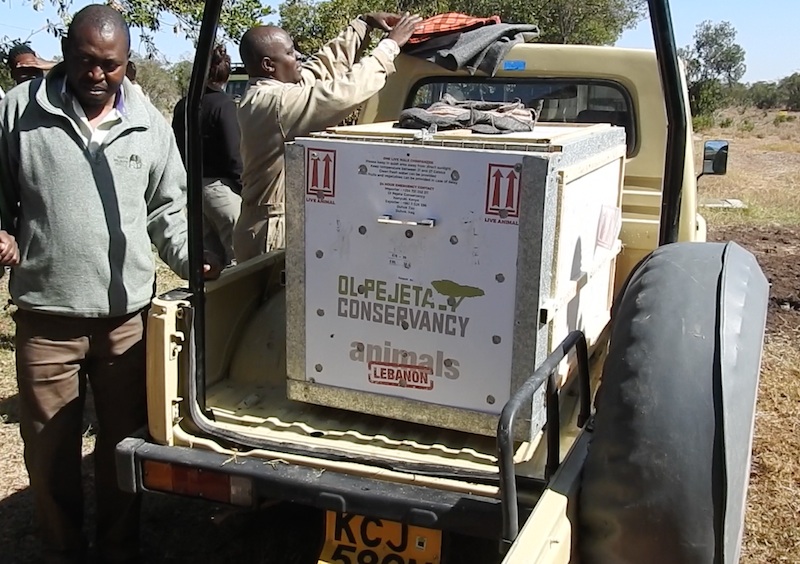
While this was going on, a Canadian high school teacher named Spencer Sekyer volunteered to help out at the Kurdistan Organization for Animal Rights Protection (KOARP), based in Duhok. Although he had come to help out at their shelter for street dogs and cats, he made several visits to the Duhok Zoo, where he encountered Manno and established quite a friendship. Spencer was there only from 23 December 2013 to 4 January 2014, but he vowed to try and free Manno, as he could see that Manno’s future would be nothing but a solitary cage.

Manno was originally kept in a small cage at Duhok Zoo. (Courtesy of KOARP)
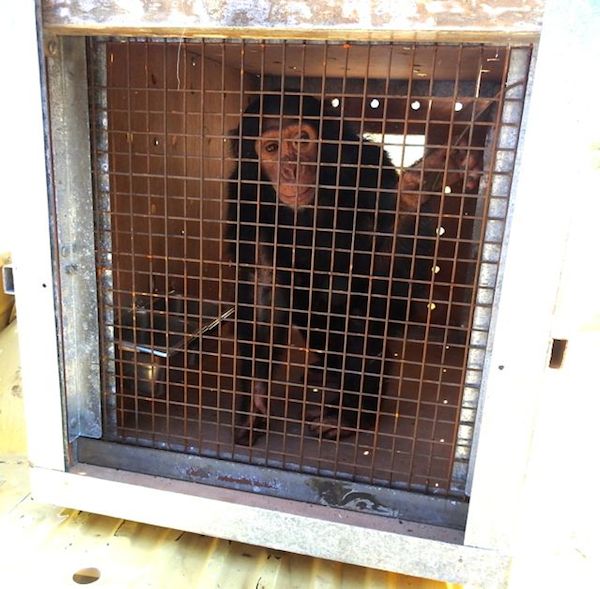
Manno was originally kept in a small cage at Duhok Zoo. (Courtesy of KOARP)


Spencer got to know the generous and energetic head of KOARP, Dr. Sulaiman Tameer, and the Duhok Zoo owner, Ramadan Hassan, during his stay. Spencer conducted a brief price survey of how much Ramadan paid for his exotic animals and established that Manno had cost USD 15,000. After returning to Canada in January 2014 Spencer began contacting all the organizations he could think of who might be able to help free Manno, without success for almost two years.

Dr. Sulaiman Tameer, on left, and Ramadan Hassan, on right, with Manno in 2014

Dr. Sulaiman Tameer, on left, and Ramadan Hassan, on right, with Manno in 2014


Spencer’s notes on wild animal prices and trade routes.

Spencer’s notes on wild animal prices and trade routes.


Back to Jason – It was eventually established that Manno fell under the KRG Ministry of Agriculture and Water Resources. The Minister agreed to meet with Jason on 19 March 2014, and Jason flew from Beirut to Erbil for the meeting with the aim of getting a seizure and agreement for relocation to a sanctuary. The Minister claimed during the meeting that he was unaware that private zoos such as the one in Duhok even existed, which demonstrates the need to publicize the existence of these facilities. There was a petition against such zoos, and a Facebook page publicizes animal welfare issues in Kurdistan, but evidently more needs to be done to sensitize the government to the issue.

The meeting went well and the minister agreed that the chimpanzee import had been illegal and that the ministry would cooperate in seizing Manno and turning him over to Jason for relocation to a sanctuary. After the meeting, however, lower level officials instructed to implement the minister’s orders used a series of excuses and delaying tactics that resulted in Jason returning to Beirut without Manno. Intensification of conflict in the region made further communications with the KRG on the subject of a chimpanzee rescue untenable, so Jason reluctantly halted his efforts.

Matters remained in limbo until September 2015, when Spencer attended a talk in Edmonton, Canada, given by Dr. Jane Goodall, the renowned chimpanzee researcher and conservationist. After the talk, Spencer met with Jane and poured out his story of Manno.

Jane Goodall decided to try and help, and her efforts started the ball rolling again.

Jane Goodall is a good friend of Sweetwaters Chimpanzee Sanctuary. When Spencer Sekyar pleaded for help to free Manno, Jane immediately thought of Sweetwaters. (Photo: PEGAS)

Jane Goodall is a good friend of Sweetwaters Chimpanzee Sanctuary. When Spencer Sekyer pleaded for help to free Manno, Jane immediately thought of Sweetwaters. (Photo: PEGAS)

NEXT – The Saga of Manno – Permits

*This account is based on information provided by Jason Mier, head of Animals Lebanon, Dr. Sulaiman Tameer, head of KOARP, Spencer Sekyer, and from information that PEGAS has gathered from personal involvement and investigations.

Manno arrives at Sweetwaters from Iraqi Kurdistan

Manno eating pumpkin seeds bought for him by adoring zoo visitors. (Photo: Spencer Sekyer)

Manno eating pumpkin seeds bought for him by adoring zoo visitors. (Photo: Spencer Sekyer)

PEGAS received an email from Debbie Cox of the Jane Goodall Institute on 1st December 2015 saying in part, “See below, this person contacted our JGI Canada office looking for help in ‘rescuing’ this young chimp from a zoo in Iraq…. I think Sweetwaters is probably the only sanctuary in Africa who has the capacity or willingness to accept him.”

The person was Spencer Sekyer, an adventurous Canadian who had met Manno in late December 2013 while volunteering at the Duhok Zoo in Iraqi Kurdistan.

Spencer Sekyar, left, met Jane Goodall in Canada and implored her to help free Manno. Jane acted.

Spencer Sekyer, left, met Jane Goodall in Canada and implored her to help free Manno. Jane acted.


Exactly one year later to the day Manno woke up to his first morning at Sweetwaters Chimpanzee Sanctuary on Ol Pejeta Conservancy.

Manno in his quarantine room.

Manno in his quarantine room at Sweetwaters.

The story of the monumental amount of work it took several dedicated people to rescue Manno from Duhok Zoo – located only 75 km from Mosul, where fierce combat is taking place to dislodge the Islamic State terror group – is one for the history books of animal welfare.

Duhok is perilously close to Mosul, where fierce fighting is taking place. Manno left for Kenya from Erbil airport.

Duhok is perilously close to Mosul, where fierce fighting is taking place. Manno left for Kenya from Erbil airport.

PEGAS would sincerely like to thank the following people for making Manno’s rescue and relocation possible, in chronological order of role:

Spencer Sekyer, Dr. Jane Goodall, Jason Mier, Dr. Sulaiman Tameer, Ramadan Hassan, Cheryl Bernard, Zal Khalilzad, Prime Minister Nechirvan Barzani, Ahmed Oathman, Solomon Kyalo, Adel Omran Badrawi, Kitili Mbathi, Samer Sawaf, Hawzhen Hussain, Marguerite Shaarawi, Ramat Hamoud and Dr. Edward Kariuki.

PEGAS would also like to thank the enormous efforts made by the Ol Pejeta Conservancy staff, especially the CEO Richard Vigne, Dr. Stephen Ngulu and Joseph Kariuki. The Kenya Wildlife Service and Kenya Department of Veterinary Services cooperated in issuing the vital CITES and veterinary import permits.

Funds from the Arcus Foundation financed the very costly relocation, for which PEGAS and Ol Pejeta (and Manno) are very grateful.

A detailed account of the Manno Saga will be posted here in the days to come.

Great apes jilted at the CITES CoP 17

The 17th Conference of the Parties (CoP) of CITES is finally over. Almost two weeks of complex discussions spoken in a code of numbers and acronyms that only experienced aficionados of the CITES process could decipher.

Many journalists and NGO blogs have summed up the outcomes of the proposals, Decisions, Resolutions, etc. for elephants, rhinos, tigers, lions, pangolins, sharks and rays, sturgeons and paddlefish, tortoises and fresh water turtles, African Gray parrots – the list goes on.

I have yet to find one that mentions great apes. Why do NGOs and animal lovers that become apoplectic when all elephants are not put on Appendix I – all commercial trade is already banned for them – say nothing when CITES decides to sweep reporting on illegal great ape trade under the carpet?

And this is after the UN Great Apes Survival Partnership launched its Great Apes Seizure Database. Over 1,800 great apes were seized from an illicit live traffic that went undetected for over a decade. If we assume 10 per cent of the specimens are seized (a high assumption rate from what PEGAS has observed), that means over 18,000 were trafficked from 2005 until earlier this year. Add onto that the fact that about 5 on average die for every one trafficked, that makes 90,000 apes!

Live great ape infant trafficking is on the rise, according to UN-GRASP

Live great ape infant trafficking is on the rise, according to UN-GRASP

 
“For too long, the illegal trade in great apes was anecdotal, and therefore difficult to judge in terms of scale and scope,” said Doug Cress, programme coordinator of GRASP. “But with the Apes Seizure Database, the numbers are plain to see. We can see it doesn’t take long to identify areas of concern in Africa or Asia, or recognize that critically endangered species are in extreme danger.”

Only BBC wrote about the database launch and new findings, with a couple of news services repeating BBC. Hundreds, if not thousands, of articles were written about the elephant and rhino proposals, and the day the proposals came up for discussion the immense Sandton Conference Centre hall was packed, with TV and video cameras lined up to record the vote.

The conference hall was packed for the elephant and rhino proposals

The conference hall was packed for the elephant and rhino proposals

 
It’s status quo ante for elephants and rhinos, but great apes are worse off, because there was a demand in Decision 16.67 that a way be found for illegal trade to be reported to CITES. With the verdict that only Parties will report seizures to CITES, taken as a result of the Secretariat’s recommendations contained in the Great Apes CoP 17 Doc. 61, CITES will still not have complete data before them at meetings and conferences.

The new GRASP Apes Seizure Database will not be reported to CITES. In fact, the Secretariat recommended that GRASP not even establish its own database and reporting on illegal trade. There was a request made earlier on that GRASP work with the IUCN/SSC Primate Specialist Group to prepare a great apes status report, but it wasn’t ready for release at CoP 17. It is scheduled to be submitted now at the 69th Standing Committee meeting early next year. Will illegal great ape trade be reported in it?
 

CITES decides not to report on illegal great ape trade

At the CITES 16th Conference of the Parties (CoP) in 2013 in Bangkok, CITES issued Decision 16.67, which requested the Standing Committee to consult with various interested parties “with a view to establishing an illegal trade reporting mechanism, and present a summary of its consultations and its recommendations at the 17th meeting of the Conference of the Parties.”

At CoP 16 the UN released Stolen Apes, which presented overwhelming evidence that illegal trade was a significant problem. Not only did it result in the loss of 3,000 great apes annually, the trade put hundreds of orphaned infants into a life of slavery and suffering.

Stolen Apes


Here we are at the 17th meeting of the Conference of the Parties in Johannesburg. What did the Standing Committee summary say? The important part stated that it “…recommended that reporting on illegal trade in great apes should be part of the new annual illegal-trade report, as presented in Annex 5 of document SC66 Doc. 30.2.”

If one examines Annex 5 (which you will find here at the end of this document) you will see that it is not an illegal trade reporting mechanism – it is a report of international trade seizures. There is a big difference between the two.

Very few Parties (countries) report great ape seizures to CITES, just look at the CITES Trade Database. Nor does the World Customs Organization or INTERPOL. Also, international seizures are a very small part of the illegal trade. GRASP estimates that only 12% of all reported seizures are international, the other 88% are in-country, although many of these probably would have entered international trade. And many seizures are not reported at all, except perhaps in the media.

A chimpanzee seized in Guinea. This is not reported to CITES, along with all other in-country seizures in great ape range States.

A chimpanzee seized in Guinea. This is not reported to CITES, along with all other in-country seizures in great ape range States.

But probably the biggest problem with a seizure report is that it obviously does not contain incidents of illegal trade in which a seizure is not made. The work of PEGAS and others has shown that there are hundreds of illegally traded great apes seen on Internet social media and Web sites and being displayed or performing in zoos and safari parks. There should be some reporting mechanism to take these examples into consideration.

1-2-4-16-for-sale-copy

How to report obvious examples of illegally traded great apes, but where no seizure has been made?

2

These orangutans are examples of smuggling, but how best to report it to CITES?

These questions about reporting should be discussed in a working group, but CITES will not allow the creation of a great apes working group. There are many issues relating to great ape trafficking that need examination in a working group so that a revision of the CITES resolution concerning great apes can be made. But the CITES Secretariat and the Parties have shown no interest in doing this.

PEGAS made an intervention at CITES CoP 17 during the agenda item on great apes, in which the reporting problem was explained and requesting that the Parties consider forming a working group, but we were ignored. UN-GRASP also made an intervention pointing out that CITES currently underreports illegal great ape trade. They were ignored.

PEGAS requested a working group at the CITES conference, but was ignored.

PEGAS requested a working group at the CITES conference, but was ignored.

The final outcome is that CITES considers that they have implemented Decision 16.67, and it was summarily deleted on the Secretariat’s recommendation. This is outrageous.

PEGAS attends the joint IPS/ASP Congress in Chicago, 21-28 August 2016

Chicago’s Lincoln Park Zoo hosted the 26th Congress of the International Primatological Society jointly with the 39th meeting of the American Society of Primatologists. This Joint Meeting marked the 20th anniversary since the most recent joint IPS/ASP meeting and was the first to be hosted by a zoological park.

PEGAS submitted an abstract of a presentation entitled ‘Illegal Great Ape Trade Persists for Use as Pets and for Stocking New and Expanding Safari Parks and Private Zoos’. It was accepted for presentation in the prestigious President’s Forum, whose theme was ‘The Global Primate Pet Trade; How Can Primatologists Working in Habitat Countries Reduce the Threat’.

1

PEGAS’s presentation gave a short history of great ape trade and how the nature of it had changed significantly since the early 20th century. Great apes were captured in the wild up to the 1970s for use in biomedical and cognitive research, to stock zoos and circuses, and to perform in television and film.

2

The PEGAS Project Manager presents a history of great ape trade

The early importers of great apes captured in the wild, mainly Europe, the Americas and Australia, stopped the practice in the late 1970s. Because there were no national laws against it, and CITES did not exist until 1975, these early imports were by default legal.

A new type of great ape trade came to the attention of CITES in the 1980s. Great apes were now supposedly protected from international commercial trade by a CITES Appendix I listing. Parties to the Convention were obligated to adopt national laws in conformance with CITES regulations. However, reports began coming in to CITES, both in the Trade Database of “legal” trades and in seizures, that suggested that there was demand for live great apes in various countries.

The increase in public interest for great ape pets was possibly stimulated by the King of Pop, Michael Jackson, adopting a pet chimpanzee he named Bubbles. MJ took Bubbles on tour with him around the world in 1988 and in the 1990s was seen with him everywhere, which generated a huge amount of media coverage.

3

Did the King of Pop inadvertently spark interest in status-seekers buying chimpanzees as pets?

In the following decade and up until recently, many celebrities have been pictured with ape pets. Did this motivate wealthy status-seekers in the Middle East and elsewhere to want chimpanzee pets?

4

Numerous celebrities have been pictured in the media with cute chimpanzees, further stimulating demand.

The illegal trade and its more organized nature emerged in the 1990s with a woman of dual Egyptian-Nigerian nationality, working with family members and an Egyptian doctor. They organized infant chimpanzee and gorilla captures in West and Central Africa for smuggling to Egypt. In 1997 the World Society for the Protection of Animals published the results of their investigation into this operation. They found that Kano in northern Nigeria was the centre of this woman’s trafficking, along with other wildlife traffickers based in Kano. They were capturing wild animals in Nigeria and neighbouring countries and shipping them out to multiple destinations.

Since then, other networks in Africa and Asia have developed that capture and sell a variety of endangered species, including great apes, for use in the exotic pet trade, private menageries of the wealthy, and for exhibition and performing in commercial zoos and safari parks.

Nigeria, the Democratic Republic of the Congo and, until recently, Guinea were central in this organized trafficking in Africa. Important branch “offices” have been set up in Mali, Côte d’Ivoire and elsewhere. In Asia, Indonesia and Thailand are key source and entrepôt countries. Egypt still acts as a transit country, but now dealers also smuggle out chimpanzees and gorillas that they have bred themselves.

The main destination countries for great ape prestige pets are the United Arab Emirates and other Gulf countries, and countries of the former Soviet Union, especially Russia. China and Thailand have large numbers of great apes that they use as photo props when babies, in entertainment shows in the 2 to 10 year old range, and then in zoo displays in cages when older.

5

Great apes are now in demand for use as photo props and as performers in wildlife facilities in eastern Asia.

In the new age of the pet trade, the Internet reigns supreme as a marketing and trading tool. Dealers in the Middle East and Southeast Asia have connections with suppliers in source countries and with buyers in destination countries. They post photographs on Instagram and Facebook and the negotiations begin.

6

Social media Internet sites are used today to market and trade great apes.

Primatologists gave talks in the President’s Forum on other species that are used in trade, ranging from lemurs and slow lorises up to gibbons. Under the leadership of Sylvia Atsalis of the University of Chicago, an Action Group has been created which will formulate a survey questionnaire that will be used to gather information in research areas from local people on the collection and trade of primates as pets, asking particularly about the motivations behind it. The Action Group also intends to develop social media messages that can be used to dissuade people from capturing primates for use as pets.

7

Many other primate species are also sold online.

PEGAS will make input to the questionnaire that will ensure that information is also collected on the use of primates in international trade. The investigations that PEGAS is carrying out of Internet social media and Web sites is showing that many primate species are being offered for sale online.

The target date for launching the questionnaire toolkit is January 2017.

Dr. Jane Goodall attended the Congress and received an International Primatological Society Lifetime Achievement Award, well deserved for her amazing contribution to the understanding and conservation of great apes. The PEGAS Project Manager held a useful one-on-one meeting with Dr. Goodall, in which various matters of mutual interest were discussed.


Dr. Jane Goodall and KWS Director General visit Sweetwaters

Renowned primatologist Dr. Jane Goodall visited Sweetwaters Chimpanzee Sanctuary on 14th July, accompanied by the Director General of the Kenya Wildlife Service, Mr. Kitili Mbathi. When asked if she would be cold riding in the back of an open safari vehicle on the chilly morning, with characteristic pragmatism she replied, “I suppose I shall just have to be.”

1

Dr. Jane Goodall and Mr. Kitili Mbathi, Director General of Kenya Wildlife Service, arrive on Ol Pejeta Conservancy on a plane chartered by PEGAS

In July 1960, at the age of 26, Jane Goodall travelled from England to what is now Tanzania and courageously entered the extraordinary world of wild chimpanzees. She was equipped with nothing more than a notebook and a pair of binoculars. But with her resolute patience and optimism, she won the trust of these initially wary creatures, and she managed to open a window into their mysterious lives, finding surprising similarities with our own. The public was fascinated and remains so to this day. Her 1971 book, In the Shadow of Man, was an international best-seller.

Today, Jane’s work revolves around inspiring action on behalf of endangered species, particularly chimpanzees, and encouraging people to do their part to make the world a better place for people, animals, and the environment we all share.

The Jane Goodall Institute (JGI), founded in 1977, works to protect the famous chimpanzees of Gombe National Park in Tanzania, where she first began her research 56 years ago, but also supports community-based conservation throughout East Africa and the Congo Basin, engaging with communities to win long-term conservation impact.

The Institute’s community-centred conservation programs in Africa include sustainable development projects that engage local people as true partners. These programmes began around Gombe in 1994, but they have since been replicated in other parts of the continent. Likewise, Jane Goodall’s Roots & Shoots, which Jane started with a group of Tanzania students in 1991, is today the Institute’s global environmental and humanitarian youth program for young people from preschool through university with nearly 150,000 members in more than 130 countries.

Jane came to Nanyuki, where Ol Pejeta Conservancy is located, to speak at Mount Kenya Safari Club to celebrate the 25th anniversary of the Kenya Roots & Shoots programme. PEGAS thought it offered an ideal opportunity for her to return to the Sweetwaters sanctuary, which was created in 1993 largely through her instigation, in cooperation with KWS and Ol Pejeta Conservancy. The aim is to provide lifelong refuge to orphaned and abused chimpanzees. The first chimpanzees to arrive were individuals that Jane had rescued from horrible conditions of captivity in Burundi.

1auruhara

Jane looks at a photograph of herself and Uruhara, a chimpanzee that she rescued in Burundi more than 20 years ago, as they share a hoot.

After obtaining enthusiastic agreement from Ol Pejeta for Jane’s visit, PEGAS contacted Alpana Patel, JGI’s representative in Kenya (also a PEGAS Steering Committee member) for her views on the visit. Would the 81-year old world traveller have the stamina and desire to combine a day visit to Sweetwaters with an evening talk and fund-raiser at Mount Kenya Safari Club? After checking with Jane’s people in the USA, yes was the resounding answer.

Jane and Kitili Mbathi arrived from Nairobi on the PEGAS charter flight right on time, and off we drove across Ol Pejeta Conservancy to the Sweetwaters sanctuary, where the CEO Richard Vigne and other staff were waiting to welcome them.

2

Richard Vigne, CEO of Ol Pejeta, welcomes Jane and Kitili to the Sweetwaters sanctuary

3

Jane poses with the Sweetwaters staff. Stephen Ngulu, veterinarian and Sweetwaters Manager on the left and Joseph Maiyo, head Caretaker, on the far right

3a

Jane advises Annick Mitchell, Ol Pejeta’s Tourism Manager, about how best to explain the mock termite mound. Dr. Goodall first revealed to the world that chimpanzees are also tool-users, using twigs to catch termites to eat

The first order of business was for Jane to open the new Education Centre at Sweetwaters, which provides informative graphics that instruct visitors about the threats to chimpanzee survival, including the capture of infants for the lucrative pet and entertainment industries.

4

Jane opens the Education Centre with a celebratory chimpanzee hoot

5

After a presentation on infant capture and trafficking, Jane asked, “How many chimpanzees are killed during these infant captures?”

I replied, “It’s estimated that 9 to 10 are killed for every infant captured.”

With a slight smile Jane remarked, “I always hear that number, but chimps are intelligent. When the shooting starts they just run away.”

She made her point, and I think some actual field research is in order on great ape poaching and capture.

For the next two hours we visited both chimpanzee groups, which live in large, fenced enclosures vegetated by natural savanna bushland on opposite sides of the Uaso Nyiro River. The river acts as a natural barrier to separate the two groups, as chimpanzees cannot swim.

Jane was anxious to see Uruhara, a chimpanzee she had rescued from Burundi more than 20 years ago (see the photograph above). When we found him and Jane offered him a banana she remarked, “I wouldn’t have recognized him, he’s aged so much.” After a moment she turned to me with a twinkle in her eye and added, “I think I’ve done a bit better.” I had to laugh and agree with her – she certainly had.

7uruhara

Jane meets up with Uruhara after more than 20 years. “I wouldn’t have recognized him, he’s aged so much.”

Encouraged by the many media journalists who had been attracted by Jane’s visit, she began expertly tossing bananas through the fence wires. Both to protect the chimpanzees from predators – there are about 70 lions and numerous leopards on Ol Pejeta – and to prevent their escape, the 250 acre sanctuary is enclosed by an electrified fence.

8

Jane expertly tosses bananas through the fence wires

Jane requested some privacy from the media and other observers because she wanted a moment alone with the Sweetwaters caretakers. Some of these dedicated and professional staff have been with Sweetwaters since the beginning and Jane wanted to hear from them how the chimpanzees had been faring, what problems there might be, to hear stories of the individual chimpanzees that she had known from many years ago and to share her thoughts and observations with them. To take time out to do this demonstrates the thoughtfulness and care for others that this extraordinary woman has.

9

Jane shares a private moment with the Sweetwaters sanctuary staff to talk about the chimpanzees

10

Richard Vigne presented Jane with an honorary chimpanzee adoption kit

We then proceeded to visit the last three Northern White Rhinos left on the planet. Kitili Mbathi had yet to see them, so was particularly interested in finding out more about their situation. Attempts are being made to breed new offspring, but the single male, Sudan, is 43 and beyond mating capabilities – his age is equivalent to over 90 years for a human.

11

12

Kitili Mbathi meets Sudan, the last male Northern White rhino on Earth

I was astounded to see Jane Goodall appear, she had walked the 300 metres or so from Morani’s restaurant, where we were to have lunch, under the hot sun to meet Sudan. The woman’s curiosity and energy know no bounds.

13

Jane also meets Sudan, and gives him an affectionate rub

During lunch at Morani’s PEGAS had the opportunity to discuss the project and what we are trying to do and hope to achieve. Jane and Kitili were both very supportive and hopefully we can cooperate closely to achieve results in various planned actions in the near future.

It was an honour and great pleasure to host two such positive, outspoken and yet modest advocates for wildlife conservation at Ol Pejeta Conservancy.


NTV Wild features PEGAS

On 5th and 9th July a Kenyan television station, Nation TV (NTV), featured a 45-minute segment on its NTV Wild programme that toured Sweetwaters Chimpanzee Sanctuary on Ol Pejeta Conservancy. Several staff were interviewed along with the PEGAS Project Manager, who explained to viewers the tragic problem of illegal great ape trade. The video of the programme can be viewed here https://www.youtube.com/watch?v=gMQqLe5CSOs.

2

Great Ape trafficking — an expanding extractive industry

This article was published in Mongabay.com on 10th May 2016. https://news.mongabay.com/2016/05/great-ape-trafficking-expanding-extractive-industry/

  • There are two main uses to which trafficked young apes are put: as pets or as attractions in commercial wildlife facilities (such as disreputable zoos, safari parks, circuses, hotels and use as photo-props).
  • The trade is facilitated by celebrities who pose with great ape pets in the press or in social media posts, which act as advertisements that say that owning an ape is “cool.”
  • Stiles has been investigating great ape trafficking for the past three years, since being invited to be a co-author of the United Nations report Stolen Apes, released in March 2013 at the 16th CITES Conference of the Parties in Bangkok.

Today his name is Manno and we believe he recently turned four years old, though he is small for his age. Manno has bright, inquisitive eyes, has a penchant for pumpkin seeds and loves to run and play. He has been living alone as the solitary chimpanzee in a small, private zoo in Duhok, Kurdistan, in northern Iraq for about three years.

“Manno turned up in 2013 with wildlife dealers in Damascus, Syria, as a traumatized baby orphan,” Spencer Sekyer told me. Spencer, a teacher in Canada, volunteered to help animals kept in the Duhok Zoo in Kurdistan in late 2014. He fell in love with Manno. “His mother was no doubt killed for bushmeat somewhere in Central Africa and the poachers sold him off to animal traffickers.”

Spencer has been trying to get Manno freed for over a year now.

Spencer showed me a colored piece of paper with prices written on it. “The owner of the Duhok Zoo paid US$15,000 for Manno, and the little chimpanzee has repaid the investment by becoming a very popular attraction. People come from all over the Duhok area to play and have their photographs taken with Manno… spending money.”

The zoo owner dresses the little chimpanzee up in children’s clothes and visitors shower him with food and drink that kids like — junk food. This probably explains why Manno is small for his age.

Manno eating pumpkin seeds bought for him by adoring zoo visitors. (Photo: Spencer Sekyer)

Manno eating pumpkin seeds bought for him by adoring zoo visitors. (Photo: Spencer Sekyer)

Two chimpanzees captured in the Democratic Republic of the Congo. Manno very likely endured this before being smuggled to Syria. (Photo courtesy of the Jane Goodall Institute)

Two chimpanzees captured in the Democratic Republic of the Congo. Manno very likely endured this before being smuggled to Syria. (Photo courtesy of the Jane Goodall Institute)

If Manno stays in the zoo, the day will come when he stops being cuddly and playful. He will grow in strength and in aggressiveness, as is normal with chimpanzees. If he is not caged up permanently first, he will attack and no doubt seriously injure someone. His future is not bright.

No bright future

In fact, the future is not bright for any great ape that is trafficked. There are two main uses to which young apes are put: as pets or as attractions in commercial wildlife facilities (such as disreputable zoos, safari parks, circuses, hotels and use as photo-props).

The trade is facilitated by celebrities who pose with great ape pets in the press or in social media posts, which act as advertisements that say that owning an ape is “cool”. The coordinator of the United Nations Great Ape Survival Partnership, Doug Cress, warned that celebrities do not realize that many of the apes were obtained illegally.

“These pictures are seen by hundreds of millions of fans, and it sends the message that posing with great apes — all of which are obtained through illegal means, and face miserable lives once they grow too big and strong to hold — is okay as long as it’s cute. But it’s not. It’s illegal, and it contributes to the destruction of already endangered species,” Cress told The Guardian newspaper.

3_Paris_Hilton_Instagram
Paris Hilton holding an infant orangutan in Dubai, a known wildlife smuggling center. Photos like this on social media create the impression that it is trendy to keep ape pets. Photo via Instagram.

I have been investigating great ape trafficking for the past three years, since being invited to be a co-author of the United Nations report “Stolen Apes,” released in March 2013 at the 16th CITES Conference of the Parties in Bangkok. The report documents an alarming situation in which more than 1,800 cases were registered of trafficked chimpanzees, bonobos, gorillas, and orangutans being lost to the forests of Africa and Asia between 2005 and early 2012.

This is only a fraction of the real number, as documented cases are those involving seizures by the authorities, and the vast majority of incidents go undetected. More tragically, for every live ape that enters the trade, at least one — the mother — and more than ten can be killed as collateral damage. The number lost is multiplied again because many infants die before reaching the intended destination.

I’ve traveled to West and Central Africa, the Middle East, and most recently made a trip to Thailand, Vietnam, and China, gathering information on this 21st century slave trade. I have also been discovering and monitoring a growing network of online wildlife traffickers, who post photos of their prized wildlife acquisitions and those for sale on social media sites. Unfortunately, recent publicity naming those involved in the illegal trade has resulted in them closing Instagram and Facebook accounts and going underground.

4. naming
Publishing the names of online traffickers simply drives them underground where they can no longer be easily monitored. Composite of images found on Instagram.

Great apes are becoming increasingly expensive. Of a trade in December last year, Patricia Trichorache from the Cheetah Conservation Fund told me, “Right now there are two baby chimps about to be shipped to Dubai … $40,000 each.” An owner flaunting a $40,000 pet on Facebook or Instagram gains instant prestige. It is common to see friends’ posts saying, “I want one sooo bad,” followed by a string of heart emojis.

Dealers also use social media sites to market their wares. The usual routine is to move to the encrypted WhatsApp or Snapchat to conduct the negotiations after the initial contact is made on a photo post.

5. For sale
Traffickers commonly post apes for sale online to solicit buyers. Image via Instagram.

In the Gulf countries, infant chimpanzees and orangutans are commonly dressed up in designer clothes, made to wear sunglasses and baseball caps to look cool, and are fed junk food and taught to smoke. I’ve even seen chimpanzees, orangutans, gibbons, and lion cubs all playing together in videos posted on Instagram. Sometimes the play goes too far and the little apes are terrorized, which only elicits laughter from the owner and his friends who gather in carpeted livingrooms to watch the “fun.”

The typical road a slave-ape takes in a commercial zoo or safari park starts with being used as a photo prop. When they get older they are usually trained to perform in some kind of entertainment show and after they reach puberty they are caged up to become a zoo attraction and to breed. Increasingly, dealers and zoos are breeding their own animals.

7b. cage
In Thailand, a large crocodile farm and zoo uses infant chimpanzees and orangutans as photo props, then cages them up for life when they get too old. Photos by Daniel Stiles.

The Egypt excess

Traffickers in Egypt were amongst the first to see the financial advantages in breeding great apes. A woman with dual Egyptian and Nigerian nationality had been trafficking chimpanzees and gorillas out of Kano, in Nigeria, and Guinea since at least the early 1990s, assisted by family members and an Egyptian pediatrician. Two of her clients run holidaymaker hotels in Sharm el Sheikh that used young chimpanzees as photo props with tourists.

Both hotel owners have since the early 2000s established wildlife breeding facilities for great apes and other animals. Chimpanzees and even gorillas are now being smuggled from these breeding centers to other countries in the Middle East and elsewhere. They often go to Damascus first to pick up a CITES re-export permit, which corrupt officials issue for a price, so that they can arrive in the destination country with documentation that makes it look like a legal trade.

A baby chimpanzee from one of the Egyptian breeding facilities was seized in the Cairo airport last year during the security check, being smuggled to Kuwait, where infant great apes are in high demand.

Dina Zulfikar, a well known Egyptian animal welfare activist, followed the case of little Doodoo, as they named him. Dina told me, “The authorities did not follow procedure. They let the trafficker go and did not file a case with the police, as the law requires.” This is an all too typical story in countries with lax law enforcement.

Poor Doodoo now languishes in the Giza Zoo in precarious conditions. Dina recently informed me that his cellmate Bobo died of unknown causes, after another chimpanzee Mouza died some months earlier. The Sweetwaters Chimpanzee Sanctuary in Kenya offered to rescue the little chimpanzee and provide him with lifelong care, but the Egyptian CITES authorities thus far have not responded to the offer. Little Doodoo could join five other chimpanzees at Sweetwaters that were seized in Kenya in 2005 after being refused entry into Egypt, trafficked by the Egyptian-Nigerian woman.

9. Doodoo in Giza
Today Doodoo languishes in a rusting cage because the Egyptian CITES authorities refuse to allow him to go to a proper sanctuary. Sweetwaters Chimpanzee Sanctuary in Kenya has offered to pay all expenses to relocate him there, to join five other chimpanzees that were rescued from Egyptian traffickers in 2005. Photo by Dina Zulfikar.
8. Doodoo
Doodoo with a zoo veterinarian shortly after he was brought to the Giza Zoo. He was found in the carry-on luggage of a trafficker smuggling him to Kuwait. Photo by Dina Zulfikar.
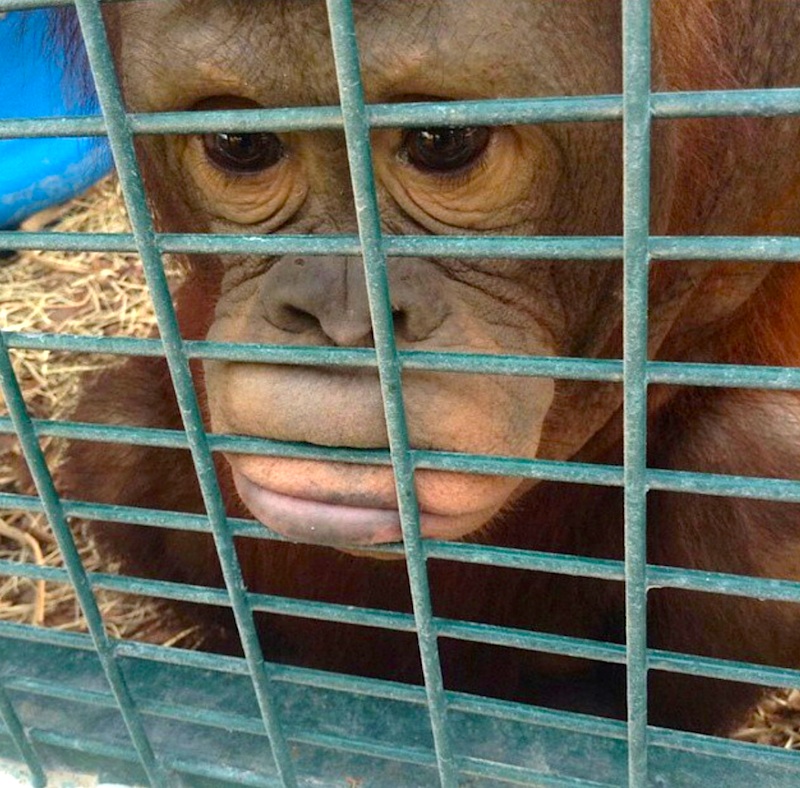
Ian Redmond, head of the U.K.-based Ape Alliance, worked with Dian Fossey and mountain gorillas in the 1980s, before Fossey’s untimely murder, recounted in the film Gorillas in the Mist. I work closely with Ian on the problem of great ape trafficking and he has tried, without success, to rescue the chimpanzees and gorillas held illegally by the Egyptian breeding facilities.

After a visit in 2015 to meet with the great ape breeders in Egypt, Ian told me, “Recent shipments out of Egypt seem likely to be infants bred at G. O.’s [name withheld] facility – if so we are faced with a different problem: essentially, a chimpanzee baby farm where infants are pulled from their mother and bottle-fed to be sold.”

10. Safaga
The wildlife breeding facility in Sharm el Sheikh is on the grounds of this hotel. When the author visited it in November 2014 he witnessed the purchase of three addax, loaded in the crate in the back of the pickup truck. Addax are listed as Critically Endangered by IUCN and are CITES Appendix I. No addax are reported exported from Egypt in 2014 or 2015, although 12 are from other countries. Photo by Daniel Stiles.

The situation has been reported to the Secretariat of the Convention on International Trade in Endangered Species (CITES), based in Geneva, but they reply that “it is up to the national CITES Management Authority to take action.”

Overlooked Fact

The number of great apes trafficked internationally every year is not large compared to some other species, but when the collateral damage is factored in we are talking about up to 3,000 lives lost from the wild each year, which is close to one percent of the great ape global population.

One important fact is overlooked when simply numbers are used to assess the significance of this extractive industry. Great apes are unlike any other species group. We humans share millions of years of evolutionary history with them and our genetic makeup is surprisingly similar — about 97% with orangutans, 98% with gorillas, and almost 99% with chimpanzees and bonobos. We all belong to the same biological family called Hominidae.

Increasingly, as more behavioral and genetic research is conducted, we are accepting more easily the fact that great apes are very much like humans in so many ways. Just recently, Jane Goodall was quoted as saying, “Chimpanzees taught me how to be a better mother,” indicating just how much great apes are similar to us.

Ian Redmond, who studies ape behavior, says that “Great ape mothers are incredibly protective of their children, which is why they are always killed when poachers go out hunting for infants to sell.”

11. mothers
All hominid mothers are incredibly protective of their children. Photos by GRASP and Daniel Stiles.

Beginning in the 1960s, the National Geographic Society was instrumental in funding the research of the Trimates — Jane Goodall, Dian Fossey, and Birutė Galdikas. These three exceptional women carried out long-term research respectively of chimpanzees, mountain gorillas, and orangutans. They made known to the world the surprising fact that characteristics previously thought of as exclusively human are shared by these intelligent, emotionally sensitive great apes.

The Nonhuman Rights Project, led by attorney Steven Wise, has been leading a mission in the United States “to change the common law status of at least some nonhuman animals from mere ‘things,’ which lack the capacity to possess any legal right, to ‘persons,’ who possess such fundamental rights as bodily integrity and bodily liberty, and those other legal rights to which evolving standards of morality, scientific discovery, and human experience entitle them.”

The project is focusing on freeing captive chimpanzees, because a chimpanzee (and other great apes), as Wise argues, “is a cognitively complex, autonomous being who should be recognized as having the legal right to bodily liberty.”

A documentary film about Wise’s work, Unlocking the Cage, premiered at the Sundance Film Festival in January to a packed house and a standing ovation. It will be shown around the world on HBO in July. This film could very well be the hominid version of Blackfish, the film that brought the suffering of captive killer whales in marine parks to the world’s attention, and which has launched a campaign to halt this appalling practice. Sea World announced recently that it would halt killer whale breeding and phase out its theatrical shows using them.

Wise and his colleagues have been battling in court to free the chimpanzees Tommy, Kiko, Hercules, and Leo from inhumane captivity, and recently they gained a huge victorywhen it was announced that not only Leo and Hercules, but all of the 220 chimpanzees at the University of Louisiana’s New Iberia Research Center, will be freed and sent to a sanctuary. Argentine courts have already ruled that an orangutan named Sandra deserved the basic rights of a “non-human person” and can be freed from a Buenos Aires zoo and transferred to a sanctuary. Likewise, New Zealand and Spain have extended personhood rights to great apes.

Legal systems are increasingly recognizing that it is immoral for nonhuman hominids to be bought and sold, put into captivity and suffer abuse for any reason. Currently, CITES treats great apes like any other animal or plant species. Although classified in Appendix I, which means that commercial trade is prohibited, great apes can be traded for “non-commercial” purposes if they satisfy certain criteria.

Creating exceptions to the prohibition on international trade in great apes tacitly accepts that it is appropriate for humans to own and imprison them. Once in captivity, it is very difficult to monitor whether they are being used for commercial purposes or are being abused in other ways.

Already, hundreds of great apes are being freed in Europe and the U.S. from biomedical research laboratories, and very soon chimpanzees from private commercial zoos in the U.S. will be liberated, due to changes in laws and understanding of the uniqueness of great apes. This is creating a huge problem of where to put them, once liberated. If all commercial wildlife facilities stretching from the Middle East to the Far East are included, it quickly becomes apparent that all great apes cannot be immediately emancipated after changes in law might come into effect.

12. Sweetwaters
Chimpanzees are free to roam and socialize as they wish in Sweetwaters Chimpanzee Sanctuary on Ol Pejeta Conservancy in Kenya. Although Sweetwaters can take 30 or more additional chimpanzees, this is not sufficient to handle all those currently held as a result of illegal trade. Photo by Daniel Stiles.

CITES must act

So what is the answer? Change should be planned, gradual, and move in stepped phases. The first step is stopping the illegal trade, which adds every year to the number that eventually will have to be freed. CITES could be instrumental in achieving this, but it is not implementing what needs to be done. Other organizations concerned with great apes also are not doing all that they could be doing. Attempts to strengthen CITES actions to crack down on great ape trafficking at the last CITES Standing Committee meeting in January 2016 were actually undermined by organizations that profess to be helping great apes.

CITES needs to put teeth into the resolution that deals with great apes. There should be a system of registration and monitoring of institutions and individuals that possess great apes, so that new arrivals and movements can be detected. Currently, great apes arrive illegally in countries and are internally transferred and re-exported with little monitoring. Zoo studbooks are often out of date and inaccurate, as my research has found. The CITES Trade Database records only a small fraction of great apes that are traded internationally.

1

17
The Orangutan Show at a safari park in the suburbs of Bangkok, Thailand, has been making use of trafficked great apes from Indonesia for years. Thai law prohibits these performances, which include boxing matches, and dozens of orangutans have even been seized and returned to Indonesia, but the safari park replaces them and carries on. There is no system of registration and monitoring in place, which would prevent such abuses. Photos by Daniel Stiles.

Will Manno and others like him ever be freed to live with others of his kind in a sanctuary, enjoying social life, natural vegetation, and security? Will the day ever come when unthinking people will realize that chimpanzees and orangutans are not playthings and objects of entertainment? They are our family members.

As Dame Jane Goodall says, “In what terms should we think of these beings, nonhuman yet possessing so very many human-like characteristics? How should we treat them? Surely we should treat them with the same consideration and kindness as we show to other humans; and as we recognize human rights, so too should we recognize the rights of the great apes.”

Author’s note: All social media photographs in this article are screen shots from accounts open to the public. In May of 2014 I began working with a project funded by the Arcus Foundation called the Project to End Great Ape Slavery — PEGAS for short. The project is sponsored by the Ol Pejeta Conservancy in Kenya and it works in association with the Sweetwaters Chimpanzee Sanctuary. See FreeTheApes.org. I am also Coordinator of the Ape Alliance Great Ape Trade Working Group. I invite readers to visit our page and sign the pledge to never use a great ape as a pet.