

Meet the Sweetwaters Chimpanzees
This slideshow requires JavaScript.
PEGAS Steering Committee
Richard Vigne CEO, Ol Pejeta Conservancy
Stephen Ngulu Deputy Manager, Ol Pejeta Conservancy
Daniel Stiles Project Manager, PEGAS
Tom Butynski Director of Research, Sustainability Centre Eastern Africa
Alpana Patel Jane Goodall Institute, Kenya
Yvonne de Jong Eastern Africa Primate Diversity and Conservation Program, Kenya-
Most Recent Posts
- Freeland Press Release March 19, 2026
- Baby gorilla seized from traffickers languishes in Turkish zoo February 14, 2026
- CITES CoP20 in Samarkand approves creation of a Great Apes Enforcement Task Force December 13, 2025
- Exposed: The big business of selling South Africa’s big cats to Ambani’s Indian mega-zoo September 22, 2025
- How DRC’s endangered chimpanzees end up in a billionaire’s Indian zoo April 11, 2025
- Discover What Happened to ‘Ham’ – The First Chimpanzee Launched Into Space March 10, 2025
- Concern: will Congo’s primate sanctuaries be used to “fill” zoos, including abroad? February 27, 2025
- Nigerian link in global gorilla trafficking February 27, 2025
- Can one baby gorilla rescued in Istanbul stop the deadly great ape traffic? December 25, 2024
- Largest Seizure of Monkeys in Africa Welcomed to J.A.C.K. Sanctuary in the Democratic Republic of Congo December 30, 2023
- Anatomy of a Sting: Update on rescued Orangutans Nobita and Shizuka December 25, 2023
- Opportunity knocks November 7, 2023
- Baby apes are being stolen for pets—and little is being done to stop it June 3, 2023
- EMPTY FORESTS: How politics, economics and corruption fuel live great ape trafficking April 18, 2023
- Explained: Why three baby chimpanzees were kidnapped from a Congo sanctuary September 27, 2022
-
Join 841 other subscribers
Freeland Press Release
Posted in Uncategorized
Baby gorilla seized from traffickers languishes in Turkish zoo
Editor’s note: This article is reprinted from Mongabay.com
13 Feb 2026
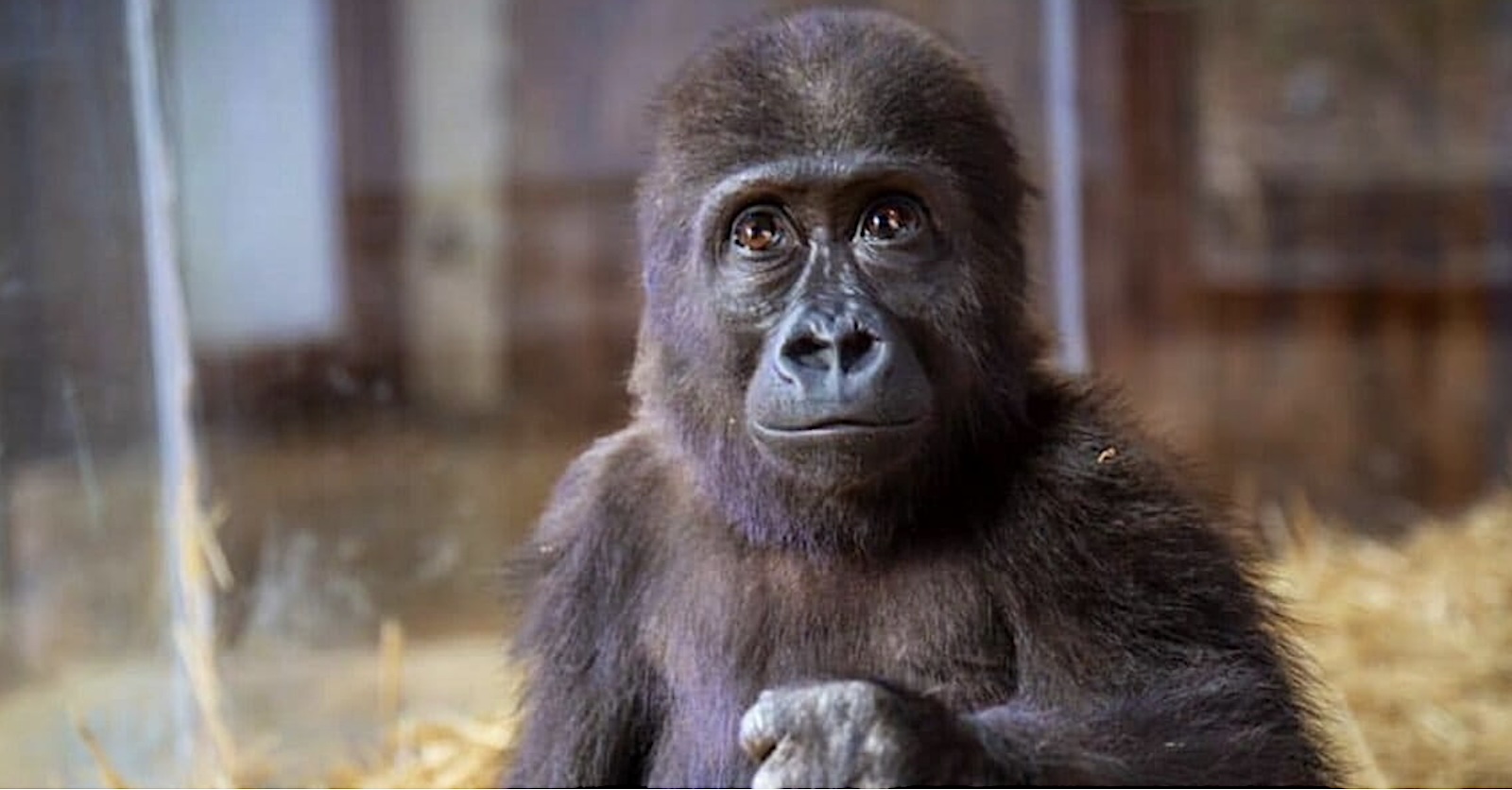
- Türkiye has refused to return a western lowland gorilla named Zeytin, who was smuggled out of Africa a year ago; Turkish authorities seized him as an infant from the cargo hold of an airplane headed to Bangkok.
- The decision marks an about-turn in Türkiye’s plans to return him to Africa, where he’d be in a Nigerian sanctuary with other gorillas, after a DNA test ruled out Nigeria as his country of origin. Turkish authorities announced he will remain in the country permanently.
- Gorillas are social animals that live in family groups, and with no other gorillas in the country, conservationists worry Zeytin will be doomed to a life of isolation in a zoo.
- Conservationists urge Turkish officials to reconsider their decision and send the baby gorilla to a sanctuary in Africa as soon as possible so he has a better chance of possible release into the wild.
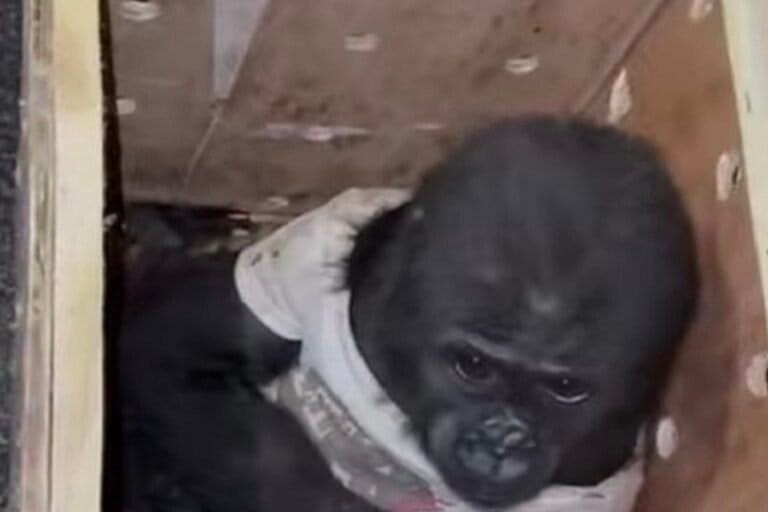
In December 2024, Turkish customs officers were flummoxed when they discovered a malnourished baby gorilla in the cargo hold of an airplane flying from Nigeria to Bangkok, transiting via Istanbul. Wearing a soiled T-shirt, the 5-month-old infant was shoved inside a wooden crate falsely declared to contain 50 rabbits. After a social media campaign, he was named Zeytin, which means “olive” in Turkish.
This critically endangered western lowland gorilla (Gorilla gorilla gorilla) was being smuggled to an animal farm in Bangkok without any export permits or paperwork. All great apes, including gorillas, are afforded the highest protection under CITES, an international treaty regulating wildlife trade, making commercial transnational trade illegal. They can be transferred between zoos or exported for scientific research but require official paperwork.
After the seizure made global headlines, Turkish authorities sent Zeytin to Polonezköy Zoo in Istanbul. Meanwhile, they said they were working to imminently dispatch him to a sanctuary in Africa, where he could possibly be released into the wild.
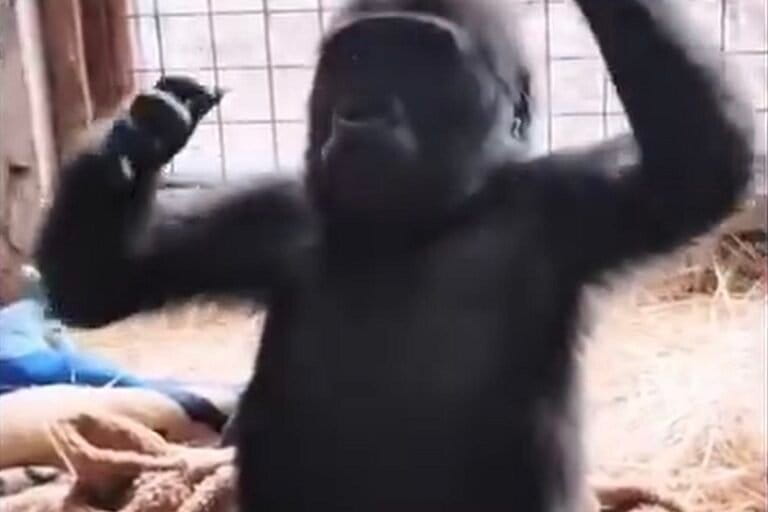
But one year on, those plans seem to have bitten the dust. As of September 2025, Zeytin was seen languishing in the same zoo, living a lonely life in a cage — the very life many thought he had escaped.
“At present, Türkiye does not have adequate facilities to meet the long-term physical, social and psychological needs of a gorilla,” said primate expert Aslıhan Niksarlı at the Jane Goodall Institute who directs Roots & Shoots Türkiye. “There are also no other gorillas in the country, which means that Zeytin continues to live in isolation.” Niksarlı has worked with the Turkish authorities since the seizure, supporting his care.
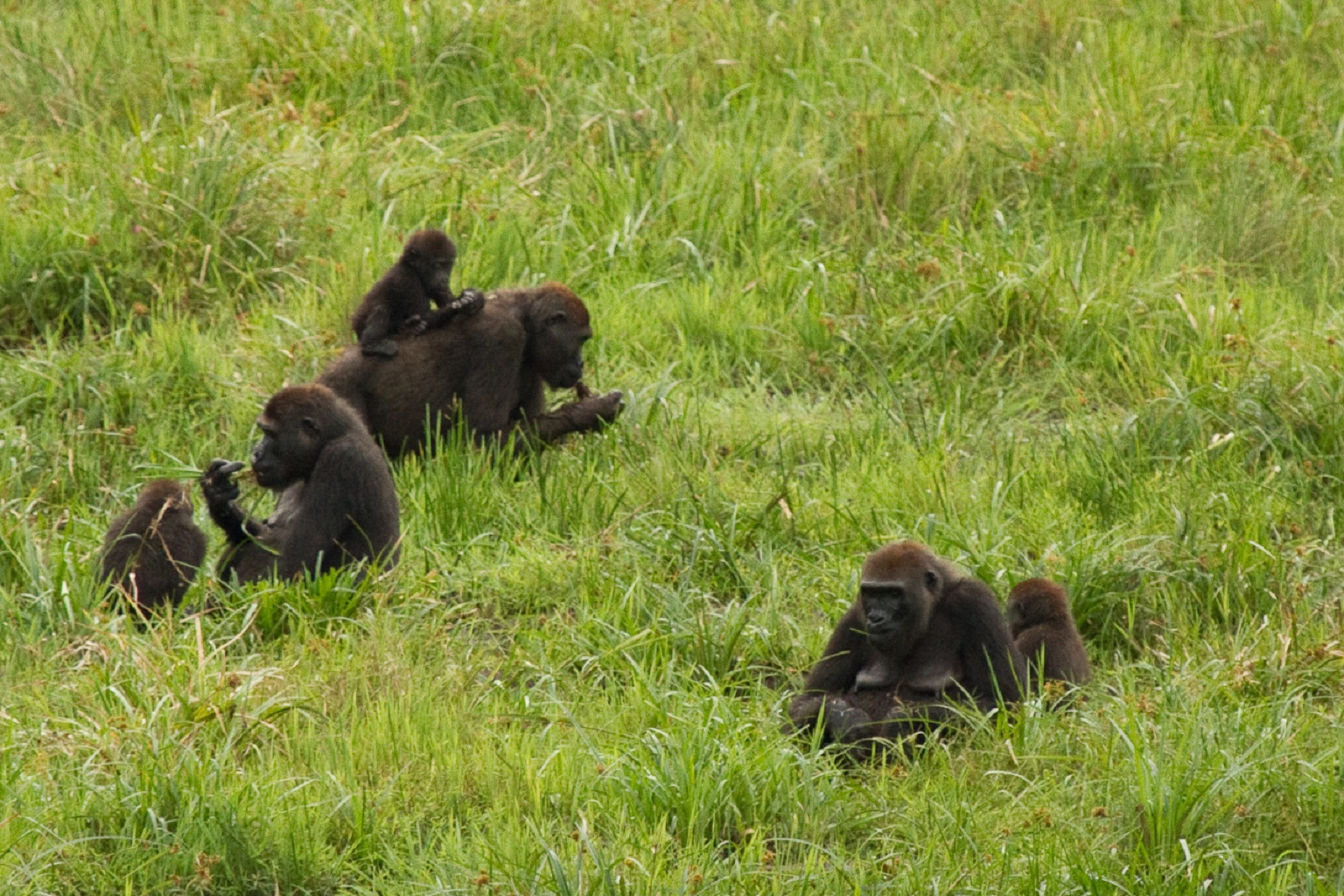
Gorillas, like humans, are social beings. They need the company of their own kind to thrive. In the wild, they live in hierarchical family groups and develop complex bonds with each other, said Jacqueline L. Sunderland-Groves, a member of an IUCN group focused on great apes.
“Zeytin’s current situation provides no opportunity to live with other western lowland gorillas,” she said. “It is never recommended to keep a gorilla alone in captivity.”
Only a tiny fraction of seized wildlife ever returns to the wild. “Reintroduction is a notoriously difficult process that takes years of careful planning, at least 5 to 10 years, and significant financial commitment,” Iris Ho, head of campaigns and policy at the U.S.-based nonprofit Pan African Sanctuary Alliance (PASA), said in an email. “Shrinking wild habitats due to human activities make it extra challenging to find suitable locations for successful reintroduction.”
But the decision to keep Zeytin locked up in a zoo will rule out reintroduction altogether. Captured as an infant, Zeytin has already missed out on the constant care he’d have received from his mother and the essential social and survival skills he’d have learned from her and other family members as a young gorilla. Without these skills, life in the wild would be impossible. He’d be forced to remain in a zoo.
“A zoo is a completely different environment to a gorilla’s natural environment, and one where Zeytin is being exposed to human pathogens, whilst at the same time gradually losing his ability to tolerate pathogens present in his natural habitat,” Sunderland-Groves said. “If he remains in Türkiye, there will be no opportunity for integration with other young gorillas or for possible reintroduction.”
A DNA test that reversed Zeytin’s future
Turkish authorities confirmed in August 2025 that they were working to send Zeytin to the Drill Ranch, a primate sanctuary in Nigeria. That sanctuary hosts primates, including great apes such as gorillas and chimpanzees and is accredited by PASA, which has a network of primate sanctuaries in Africa.
Kadir Çokçetin, general director of Türkiye’s Nature Conservation and National Parks department responsible for Zeytin’s custody and care, told local media in August that talks were in the “final phase” for his rehabilitation. Turkish Airlines would be flying him home, he said, adding, “We hope to send Zeytin back to Nigeria very soon.”
But a month later, Turkish authorities announced they’d nixed the plan, and Zeytin will remain in the country permanently. That decision followed DNA tests, which revealed he was not native to Nigeria. Officials told local media they couldn’t repatriate him under international wildlife trade rules and would rather have him live his life as a zoo attraction.
Sunderland-Groves from IUCN’s great apes group says, “Ideally, trafficked apes should be returned to the country of origin if there is suitable care available there.”
CITES recommends returning confiscated live animals to the country of export. “When the country of origin is unknown or there is no suitable sanctuary available in-country, the priority is for the animal to receive care by a reputable sanctuary located within the species or subspecies’ geographic range,” Sunderland-Groves said. Such sanctuaries not only have trained staff who can care for complex species such as gorillas but also have other individuals of the same species for socialization.
In Zeytin’s case, authorities know he was exported from Nigeria, but no one knows exactly where he came from because his traffickers weren’t arrested. Western lowland gorillas inhabit the forests of West and Central Africa, all the way from Cameroon to Angola and the Congo Basin.
At Nigeria’s Drill Ranch, Zeytin would be in the company of another young western lowland gorilla.
“Zeytin could be housed with [the juvenile] until both gorillas could be transferred to a range country sanctuary,” Sunderland-Groves said. She added that a specialized sanctuary in the Republic of Congo, which is within the western lowland gorilla’s native range, could be an ideal home for both. “They could be integrated with similar aged gorillas confiscated from illegal trade and rehabilitated for possible release into the wild.”
Conservationists urge Türkiye to send Zeytin home
Since their October decision to keep the baby gorilla, Turkish authorities have remained mum about his whereabouts and well-being, conservationists say. “I am keen to learn from the Turkish government [about] the welfare status of Zeytin since we have not seen any social media posts or other updates by the government,” PASA’s Ho said. “We also have no information about which zoo will house Zeytin following the government’s announcement last October.”
At the November meeting of CITES delegates in Uzbekistan, Zeytin’s case was mentioned during a discussion about the Great Apes Enforcement Task Force, an international network to strengthen law enforcement for gorillas, chimpanzees, bonobos and orangutans that are trafficked worldwide. Speaking there on behalf of several conservation organizations, Ho urged Türkiye to reconsider its decision to keep Zeytin in “solitary captivity indefinitely” and repatriate him to Africa so he has “a chance at reintroduction in the wild.” But there has been no commitment to do so, she said.
Mongabay reached out to CITES authorities in Türkiye and Nigeria to seek an update on Zeytin’s repatriation but did not receive a response before publication.
“Türkiye has a track record of responsible and commendable repatriation of confiscated animals to Africa,” Ho said, referring to the country’s decision to return 112 confiscated African grey parrots (Psittacus erithacus) to the Democratic Republic of the Congo in 2024. “I hope that Türkiye will reconsider its decision and repatriate Zeytin to Africa, where he belongs.”
Fueled by increasing demand for exotic pets, gorillas and chimpanzees continue to be smuggled to countries across the world, used in tourist attractions and trafficked to meet increasing demand for exotic pets, according to a recent PASA report. Some of the legally traded individuals have questionable origins, it said. How Zeytin’s case is handled could show the world’s commitment — or lack of it — to the future of our closely related cousins.
“With every great ape species at risk of extinction, each individual is a priority for conservation,” Sunderland-Groves said. “Prosecuting the individuals responsible for this criminal activity, together with returning Zeytin to a country within his subspecies range, sends a strong message that great ape trafficking will not be tolerated, and that countries are willing to cooperate to address the poaching and illegal trade that threatens our closest relatives.”
Ho said her organization stands ready to provide support to the Turkish government, should authorities choose to reconsider their decision and return the gorilla to his native Africa. “Our goal is to ensure Zeytin’s best long-term well-being and to give him an opportunity to live among his peers, with eventual reintroduction in his natural wild habitat when appropriate and feasible.”
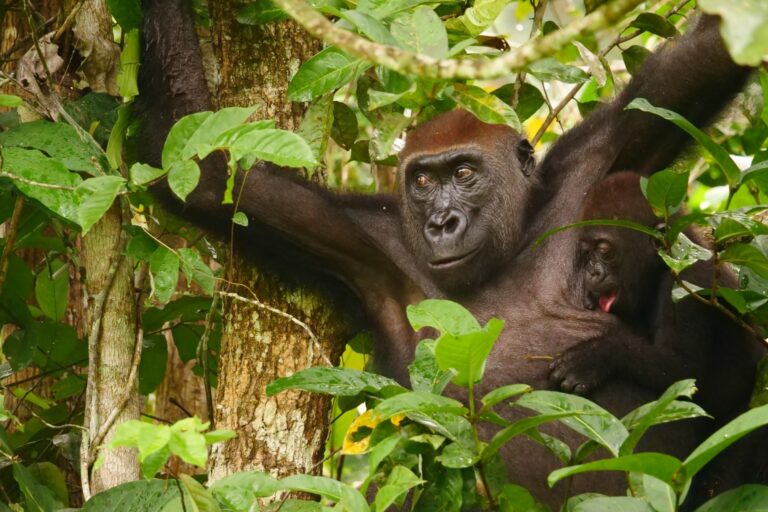
Banner image: A photo of Zeytin posted by the Turkish Ministry of Agriculture and Forestry on Facebook in December 2024. No further updates have been provided since the country announced it will not send Zeytin back to Africa. Image courtesy of Turkish Ministry of Agriculture and Forestry via Facebook.
CITES CoP20 in Samarkand approves creation of a Great Apes Enforcement Task Force

PEGAS welcomes the adoption of Uganda’s proposal for the creation of a Great Apes Enforcement Task Force at the recent CITES CoP20 in Samarkand.
The Great Apes Enforcement Task Force is a crucial, often discussed initiative under CITES (Convention on International Trade in Endangered Species) to combat the severe illegal trafficking of gorillas, chimpanzees, and orangutans, with a proposal for its re-establishment recently adopted at CITES COP20 in late 2025 to coordinate range, transit, and consumer nations for better enforcement, addressing issues like fake “captive-bred” claims and social media sales. It builds on past efforts, aiming to create collaborative strategies to stop poaching and the illicit trade in live apes and their parts, which often involves the slaughter of entire families for infants, using networks like PASA and GRASP for support.
Why it’s Needed:
- Industrial-Scale Trafficking: Great apes are heavily poached for the illegal pet trade, entertainment, and body parts, with high mortality rates for family members (5-10 apes die for one baby).
- Exploiting Legal Loopholes: Traffickers use “captive-bred” facilities and social media to launder wild-caught apes, creating a significant enforcement challenge.
- CITES Protections Overlooked: Despite all great apes being in CITES Appendix I (highest protection), illegal trade thrives, requiring better implementation and enforcement.
Key Goals of the Task Force:
- Collaborative Enforcement: Bring together countries where apes live (range states), transit hubs, and consumer nations to share intelligence and act jointly.
- Address All Aspects of Trade: Tackle illegal capture, transit through airports (like Dubai/Abu Dhabi), fake captive breeding, and online sales.
- Support Range States: Provide assistance to countries struggling with enforcement and managing confiscated apes.
Recent Developments (late 2025):
- CITES COP20 Adoption: Uganda’s proposal to re-establish the Task Force was unanimously adopted in November/December 2025, highlighting the urgency.
- Focus on Africa: The task force will specifically focus on African great apes (chimps, gorillas, bonobos) but also includes orangutans.
Organizations Involved:
- CITES Secretariat & ICCWC: Coordinating the effort.
- GRASP (Great Ape Survival Partnership) & PASA (Pan African Sanctuary Alliance): Providing expertise and on-the-ground support.
- NGOs: Groups like Jane Goodall Institute (JGI) and Liberia Chimpanzee Rescue and Protection (LCRP) advocate for action.
Posted in Uncategorized
Exposed: The big business of selling South Africa’s big cats to Ambani’s Indian mega-zoo
Ed. This is a reprint from Currency News https://currencynews.co.za/exposed-the-big-business-of-selling-south-africas-big-cats-to-ambanis-indian-mega-zoo/.
The zoo – run by the son of India’s richest man – is under investigation for claims its animals have been bought illegally. Evidence suggests some may have come from UAE-based animal import companies.
BY DANIEL STILES SEPTEMBER 1, 2025

A number of South African wild animal exporters have been supplying animal import companies in the United Arab Emirates (UAE) with birds and animals, despite questions over whether this has been done in compliance with the global treaty governing wildlife trading.
Yet the evidence obtained in this investigation shows that South African companies appear to be shipping endangered wild species directly to Vantara, including leopards, cheetahs, tigers, African grey parrots and Scarlet macaws.
Some of these animals are re-exported to Vantara, a 1,200ha area adjacent to a huge oil refinery in Jamnagar, India, which is billed as the world’s largest zoo, with an animal population running into the hundreds of thousands.
This compounds the controversy over Vantara, originally known as the Greens Zoological Rescue and Rehabilitation Centre, which is the brainchild of Anant Ambani, the son of petrochemical billionaire Mukesh Ambani, India’s richest man.
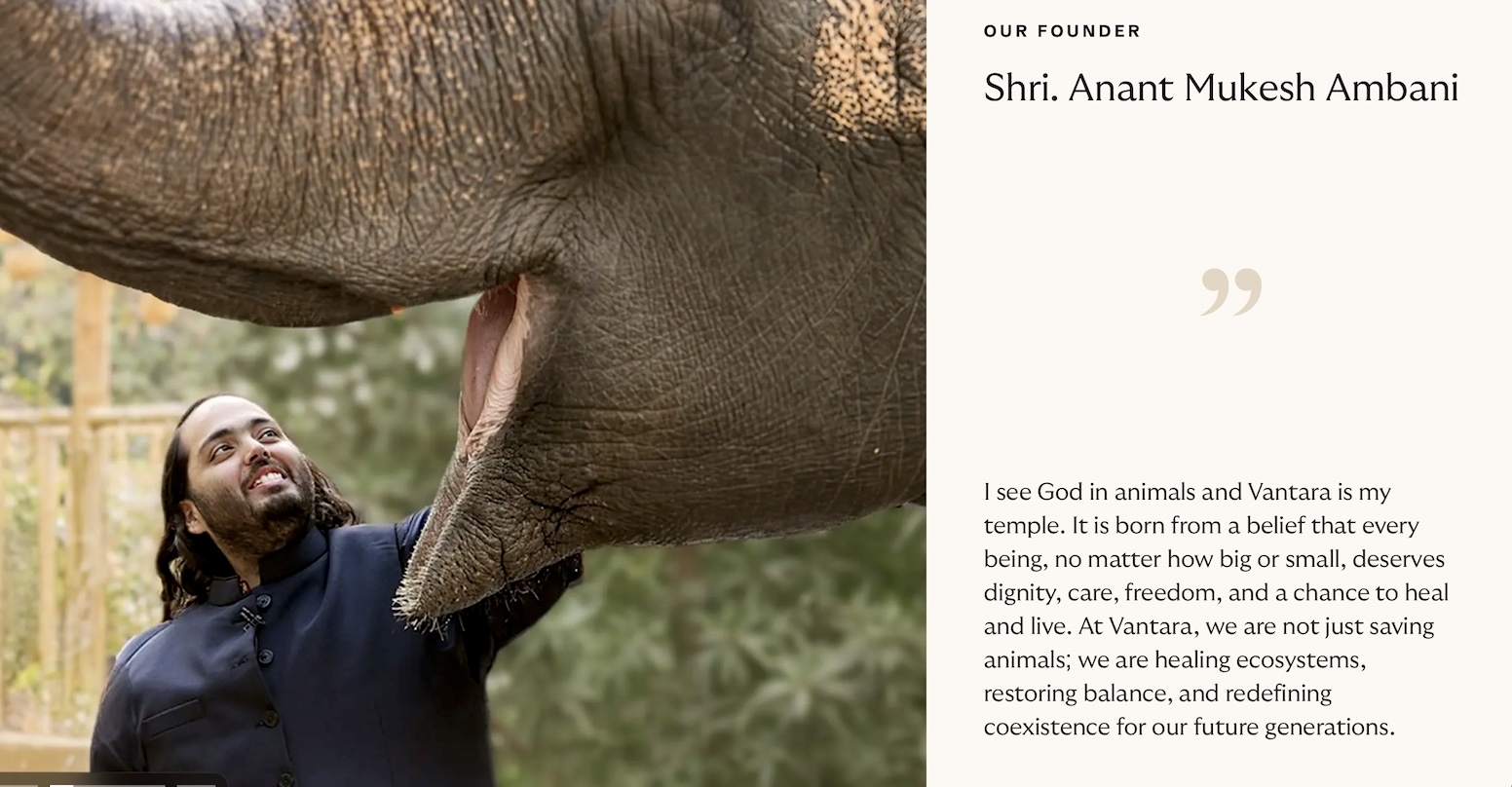
Last week, India’s Supreme Court ordered an investigation into claims that animals were being bought illegally, that wildlife laws were being flouted, and that this involved financial irregularities and possible money-laundering.
This will be a blow to a family with a reputation for living large: its home in Mumbai is a 27-storey building, and Ambani gets around in a Boeing 327 Max. Anant’s three-day wedding last year – billed as India’s “own royal wedding” – cost an estimated $600m.
But despite the allegations that Ambani has bent the rules in building his megazoo, he claims that “Vantara is a combination of the age-old ethical value of compassion with the excellence of modern scientific and technological professionalism”. Last year, he said animal care is a selfless service towards “the almighty as well as humanity”.
Yet investigations suggest a number of South African exporters, and an obscure animal shelter and zoo in the Abu Dhabi desert town of Al Ain in the UAE, have supplied thousands of exotic animals to Vantara using questionable sourcing practices.
The UAE entities – the Kangaroo Animals Shelter Center (KASC), and the Capital Zoo and Wildlife Park (CZWP) – are owned by wildlife trader Khaled Aldhaheri, and have supplied more than 7,800 animals of protected species to Vantara.
Both KASC and CZWP were unknown before February 2023, when KASC made its first shipment of exotic animals to Vantara, followed by the first shipment by CZWP in February 2024.
Aldhaheri appears to operate through three commercial animal trading companies in Abu Dhabi: Kangaroo Animals Trading, Kangaroo Est and Ekat. Kangaroo Logistics is an Aldhaheri company used to import and export animals.
Records obtained through the Promotion of Access to Information Act show that in 2022, three South African companies – the Akwaaba Predator Park, Parrot Pet Ranching and African grey parrot exporter Russelle Wheatly – exported animals and birds to Kangaroo Animals Trading.
Akwaaba Predator Park, owned by the South African Nazeer Cajee, exported five cheetahs, five leopards and 14 Bengal tigers to Kangaroo Animals Trading. In his personal capacity, Cajee also exported two white tigers and three “snow” tigers to Kangaroo Animals Trading.
Akwaaba has since been closed, but has been accused of running a lion breeding and canned lion hunting operation.
It underscored a grim truth: while South Africa has no officially registered tiger breeding facilities, it has become the world’s largest exporter of live tigers and their parts, according to the US-based non-profit Big Cat Rescue.
“These animals are bred in captivity for everything from trophy hunting to illegal bone trade, feeding demand in China and other markets,” it said.
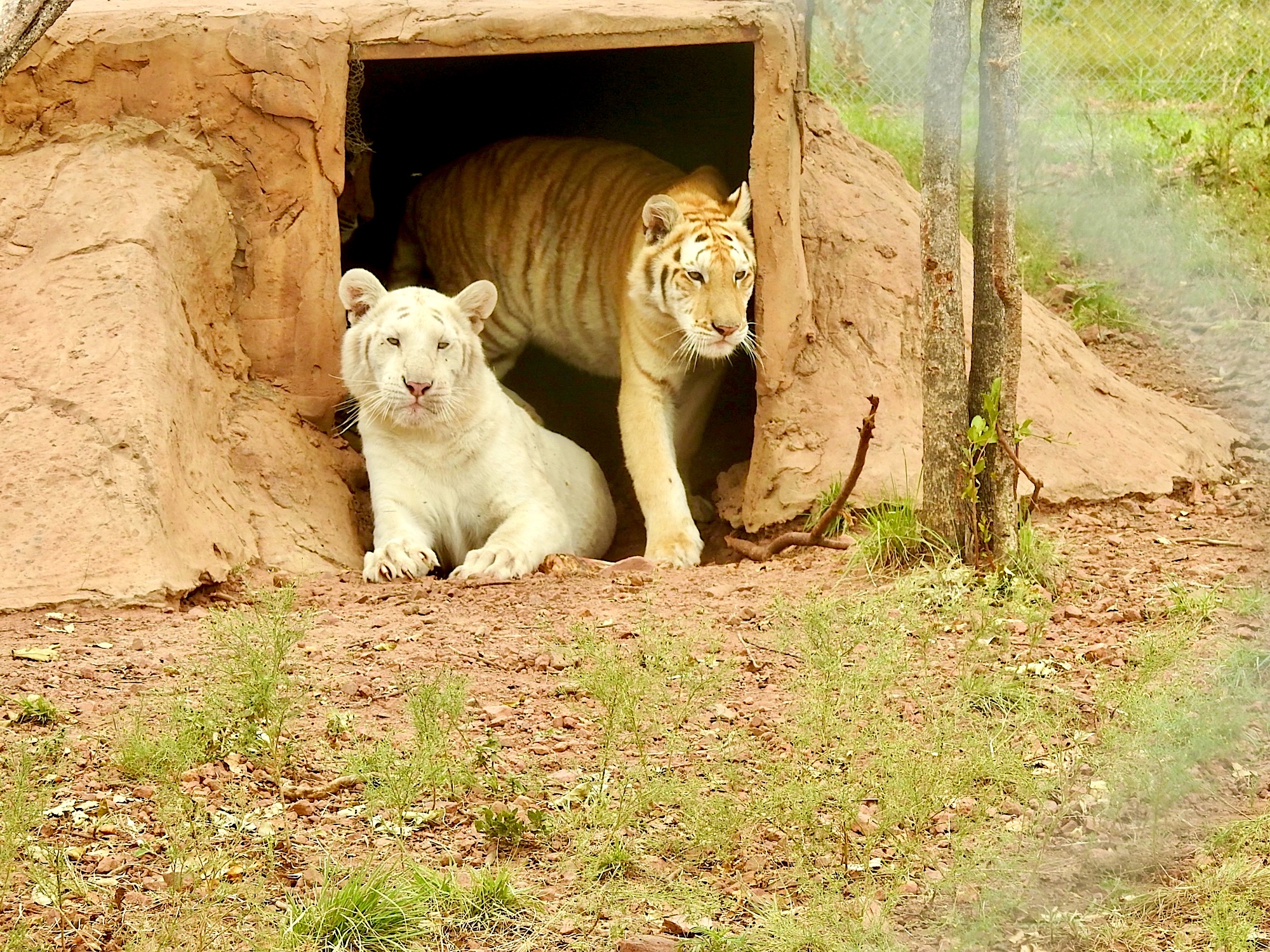
Nonetheless, this year, the Wildlife Animal Protection Forum South Africa, an animal rights organisation, published a report claiming that Vantara imported 40 cheetahs from Akwaaba, along with almost 500 other animals. But disturbingly, they could find no record of the South Africa export, except for 40 tigers and one ocelot.
The forum expressed concern about Vantara buying big cats from South Africa to become “breeding machines, exploited within the numerous animal breeding facilities (nurseries) located outside the main zoo” at Vantara.
New evidence suggests that at least five of the Akwaaba cheetahs, seven leopards and 24 tigers went to Vantara via the Kangaroo Animal Shelter. These were not distressed animals in need of rescue, but appeared to be commercial trades.
While neither Cajee or Aldhaheri responded to requests for comments, Vantara has denied this. It says all animals “received from facilities abroad are on a noncommercial basis, with prior confirmation from the CITES [Convention on International Trade in Endangered Species] management and statutory authorities of both countries”.
The UAE CITES Management Authority had not responded to a request for comment by the time of publication.
In an emailed statement, Aldhaheri confirmed that he operated KASC, but denied he was an animal trader.
“The shelter’s sole purpose is the welfare and rescue of animals, and all activities are conducted in strict compliance with UAE laws and relevant international regulations,” he said. “Your claim that I am involved in animal trade is entirely baseless.”
Yet this contradicts what Aldhaheri seems to have written on an animal trading website, where he said: “We are importer and exporter of live animals [sic]”, adding that he is “regularly selling” wildlife, and “regularly buying” exotic animals, including big cats.
This highlights a glaring loophole in the CITES rules. While highly endangered species cannot be traded commercially, they can be exported to other countries provided the shipment is classified as being for a “zoological institution”.
Aldhaheri has not yet responded to additional questions sent to him for this article. Yet he seems to have made changes to his business to make it more acceptable to Vantara.
His company, Kangaroo Animals Trading, has now been converted to the Kangaroo Animals Shelter Center, asserting that its “sole purpose is the welfare and rescue of animals”.
This is what Vantara requires as a registered rescue centre. Indian law says that “no zoo shall acquire, sell or transfer any wild or captive animal except from or to a recognised zoo”.
Exposing Kangaroo traders
Patricia Tricorache has investigated wildlife trafficking for two decades with theCheetah Conservation Fund and Colorado State University. She has reported extensively on the trafficking of cheetahs out of the Horn of Africa.
“I first heard of Khaled Aldhaheri, operating as Kangaroo Animals Trading, back in August 2022, when a source in the UAE informed me that Kangaroo was using its licence to import and sell lemurs and tigers with CITES permits and selling them ‘under the table’,” she said.
Tricorache said the firm began by trading in livestock, but later moved into more exotic species such as big cats, and Africa’s great apes.
Export records show that KASC and CZWP’s shipments to Vantara included endangered species such as a mountain gorilla, chimpanzees, Tapanuli orangutans, cheetahs, jaguars and Bengal tigers.
Yet all of these species are listed as threatened with extinction, so any trade in them is strictly regulated by CITES, a treaty ratified by both South Africa and India back in the 1970s.
This means trading in those species is only authorised in exceptional circumstances, like for scientific research, and must be accompanied by a CITES issued import and export permit. Animals seized from the illegal trade may also be exported in exceptional circumstances, such as relocation to a sanctuary, but this is clearly specified as such.
CITES trade records have yet to be made public for 2024 and 2025, so it is impossible to say how many animals were transported without permits. But what is known from trade records is that KASC and CZWP exported 77% of the endangered animals shipped from the UAE to India between 2023 and June this year.

Customs data shows CZWP exported a mountain gorilla to Vantara in 2024, but this seems unlikely to have been one in captivity.
Ian Redmond of the Ape Alliance and the Gorilla Organization, who has worked with gorillas for almost five decades, says “the only mountain gorillas in captivity in recent decades were the orphans in the Senkwekwe Centre at the Virunga National Park” in the Democratic Republic of Congo (DRC).
“They exist only in the wild in two relatively small areas of forested mountains where the DRC, Uganda and Rwanda converge. If one was exported to the UAE, then re-exported to India, it can only have been taken from the wild,” Redmond said.
And this would have entailed much slaughter. Redmond says the capture would “almost certainly” have resulted in the death of at least two adults – being the gorilla’s parents.
“As most gorilla infants die before reaching competent care, it is very likely other infants would have been captured, also by killing their parents, but didn’t make it,” he said.
Aldhaheri did not respond to a request for comment on the mountain gorilla trade.
Still, there are other red flags in the trade records.
For instance, Vantara imported a bonobo from KASC in February 2024, and there is one CITES record showing that a bonobo was imported to the UAE from Iraq in 2023. Yet Iraq’s CITES data shows no imports of bonobos – a discrepancy often seen as indicating illegal trade.
Among the 25 most threatened primates on earth, found only in the Batang Toru forest in Sumatra, Indonesia, is the Tapanuli orangutan. There are fewer than 800 in the world.

Yet the KASC supplied one to Vantara in February 2024, and the CITES trade database has a record of the UAE importing the animal from Indonesia – but, curiously, Indonesia did not report the export of that orangutan.
Orangutan conservation groups say there is only one way in which such an animal was obtained.
Andrew Gunnyon, speaking on behalf of The Orangutan Project, said: “There are no Tapanuli orangutans in captivity. The orangutan would have been poached from the wild.”
Gunung Gea of the Scorpion Foundation, a wildlife trade monitoring group based in Sumatra, concurs. “I strongly suspect that it was smuggled via eastern seaports of Sumatra crossing Malacca Straits to Malaysia, then to some other countries,” he said.
There are similar red flags around the chimpanzees which arrived in India.
While KASC exported 46 chimpanzees to Vantara, CITES reported that only 30 had been imported to the UAE by the end of 2023. None of the chimps arriving at KASC had their origins declared to CITES, barring three that arrived in Iraq from Germany in 2022 and the Tapanuli orangutan from an unknown source in Indonesia.
Indian trade records show that 36 chimps arrived in the country from the UAE in 2023, six fewer than UAE reports having exported. Strangely, India indicates that eight of the chimps originated in South Africa – yet South Africa does not report that export.
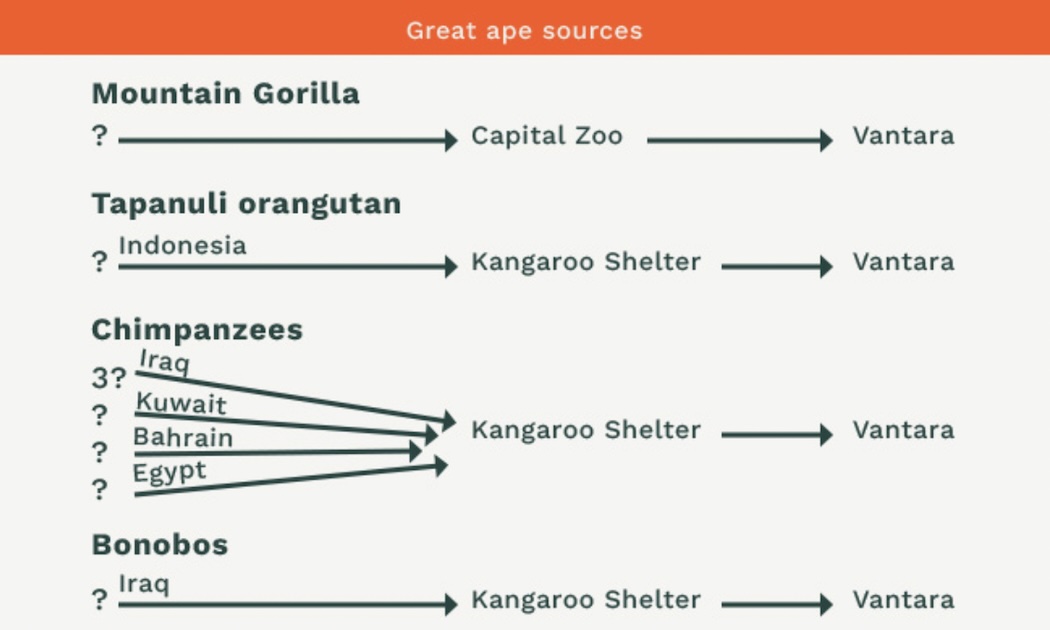
However, new questions have emerged after Tricorache shared a video that had circulated on trading groups by an Iraqi dealer, who says he sold seven of the 11 Iraqi chimps to Aldhaheri.
Four of the seven trafficked chimpanzees shown in the Iraqi’s WhatsApp chat, origin unknown. Images are screengrabs of videos supplied by Patricia Tricorache.
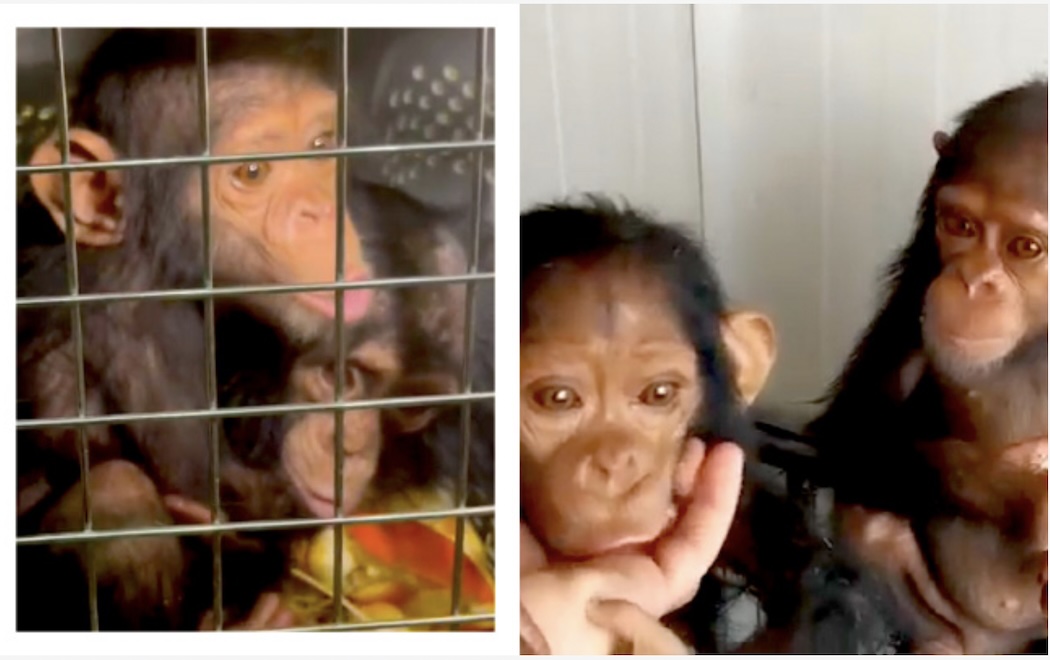
are screengrabs of videos supplied by Patricia Tricorache.
Cheetah shenanigans
There are similar problems with the cheetahs exported to Vantara, some of which came from South Africa. Of the 50 cheetahs that the UAE exported to India between 2023 and May 2025, Aldhaheri exported 38 to Vantara.
Again, this data throws up several contradictions: in 2023, the UAE reported to CITES that it had exported 10 cheetahs to India, all bearing a source code indicating they were from a CITES-registered facility allowed to breed the animals for commercial purposes.
The problem, however, is that there are no such breeding facilities registered with CITES in the UAE. So where did these animals come from?
“Under normal circumstances, cheetahs require very large spaces,” Tricorache says. “In Namibia, for example, the government dictates that the legal space to house cheetahs is one hectare per animal. If the Google Maps measurements are right, [KASC]’s space is roughly 8m x 10m, or 80m , which would be completely inadequate.”

Aldhaheri’s websites sheds little light on what’s going on.
KASC’s website is a single page with dead links and much of the site’s text is placeholder language in Latin. A Google search of the location lists KASC as a “pet shop”, while satellite images show a small building in the Al Ain industrial area that ostensibly was used to transship thousands of animals to India.

Similarly, CZWP’s website was only created in early 2025, though it is more developed. Some links are active, though most lead to external sites that have nothing to do with the zoo in the Al Ain desert.
Yet some of the animals shown on CZWP’s website include chimpanzees, orangutans, a variety of lemurs and leopards. The website also includes a phone number, which if called plays a pre-recorded message: “Our zoo will remain closed to the public until further notice.”
The website includes numerous positive reviews from supposed visitors, and coordinates of its location, which is a barren sandy region to the west of Al Ain. Its structure consists of a long shed with stalls that look more suited to livestock.

Seen together, these revelations about the suppliers to Vantara raises serious questions about the zoo’s true purpose. And much of this would run counter to the message trumpeted by Ambani’s PR machine, which is that Vantara was meant to be a sanctuary for captive animals to live in freedom with the best care.
Yet the media blitz seems to have worked. India’s prime minister Narendra Modi, for instance, has given Vantara his blessing, despite the questions over the real cost to conservation of its methods.
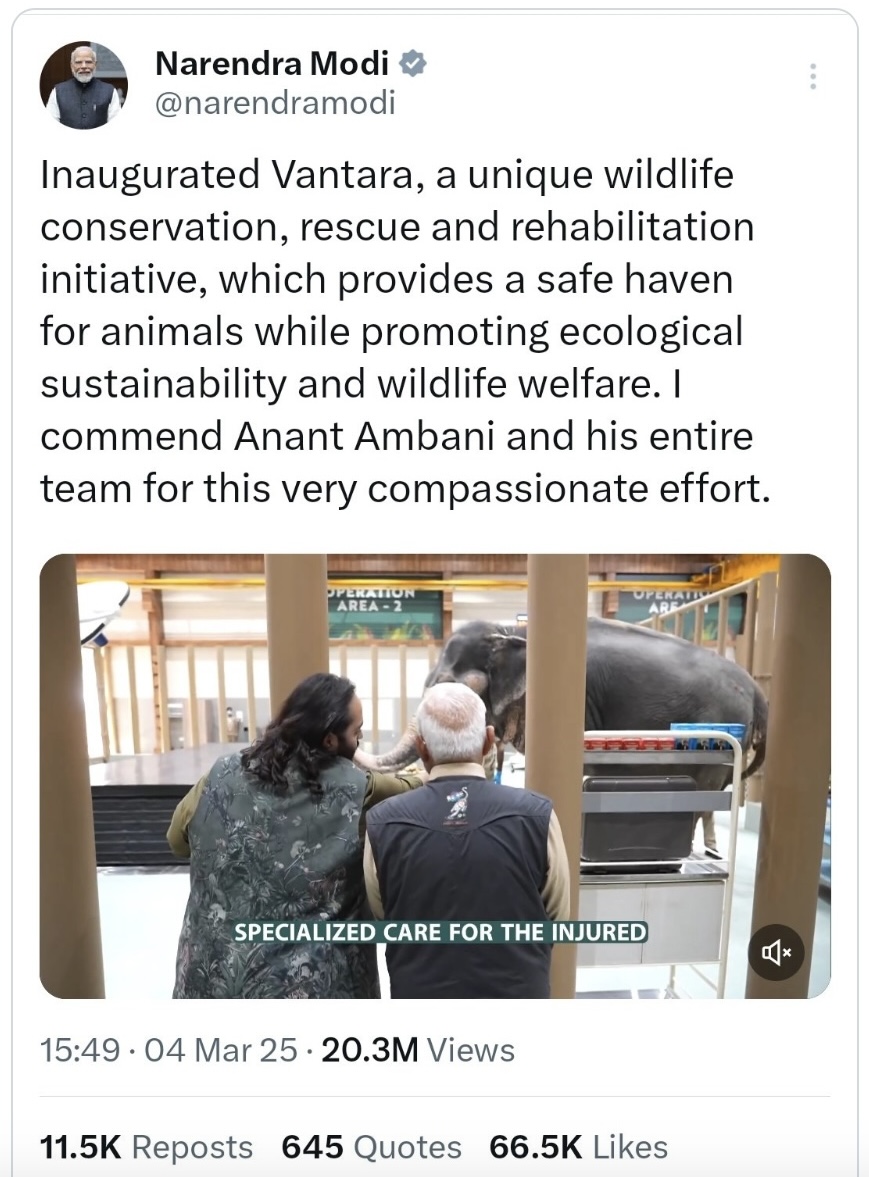
This is despite the fact that numerous sources have cast doubt on how Vantara sources its animals, arguing that many of the purchases amounted to commercial trading in exotic animals, some of it seemingly illegal.
Big Cat Rescue, the US based non-profit organisation, remains deeply sceptical of Vantara.
“While Vantara portrays itself as a sanctuary, its massive acquisitions of animals, particularly big cats, suggest something else. If these animals were truly rescued, where is the evidence of their previous suffering?,” it asks.
Instead, it says, critics fear that “Vantara is stockpiling animals for future breeding programmes – a move that could fuel the exotic animal trade, much like South Africa’s canned lion industry”.
If South Africa is indeed enabling this toxic wildlife trade, it is long past due for Dion George, South Africa’s environmental minister, to intervene.
How DRC’s endangered chimpanzees end up in a billionaire’s Indian zoo
Ed. note: Africa Geographic first published this article https://africageographic.com/stories/how-drcs-endangered-chimpanzees-end-up-in-a-billionaires-indian-zoo/.
Posted on April 10, 2025 by Daniel Stiles
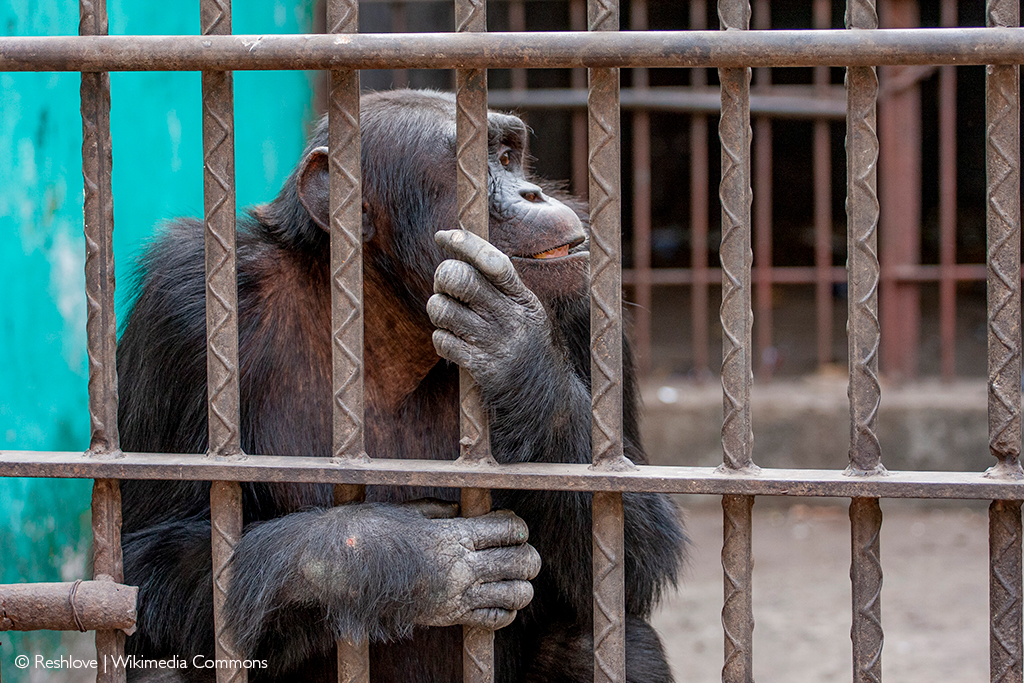
An operation involving the transfer of endangered chimpanzees from the Democratic Republic of the Congo (DRC) to India has sparked international outrage and serious questions about wildlife trafficking, corruption, and misuse of CITES permits. At the centre of the controversy is a high-profile Indian zoo project, Vantara, and DRC wildlife authorities accused of misrepresenting wild-caught animals as captive-bred to facilitate their export. Conservationists warn that this case could signal a dangerous new chapter in the global illegal wildlife trade.
The trafficking of chimpanzees from the DRC has long been a troubling issue. The country is home to vital populations of great apes, but widespread poaching – often for the bushmeat trade – frequently results in orphaned young chimpanzees being captured and sold. Sanctuaries like Lwiro Primate Rehabilitation Centre serve as a refuge for these animals, working to provide care and eventual rehabilitation. However, these efforts are threatened by corrupt practices, as highlighted by the recent attempt by DRC’s Congolese Institute for the Conservation of Nature (ICCN), the wildlife authority of the DRC, to remove chimpanzees from Lwiro, allegedly under the guise of a zoo revitalisation project.
In early January this year, the staff at Lwiro in the eastern DRC were surprised when a delegation led by the head of the Kinshasa Zoo arrived unannounced with a letter authorising them to pick up 12 chimpanzees.
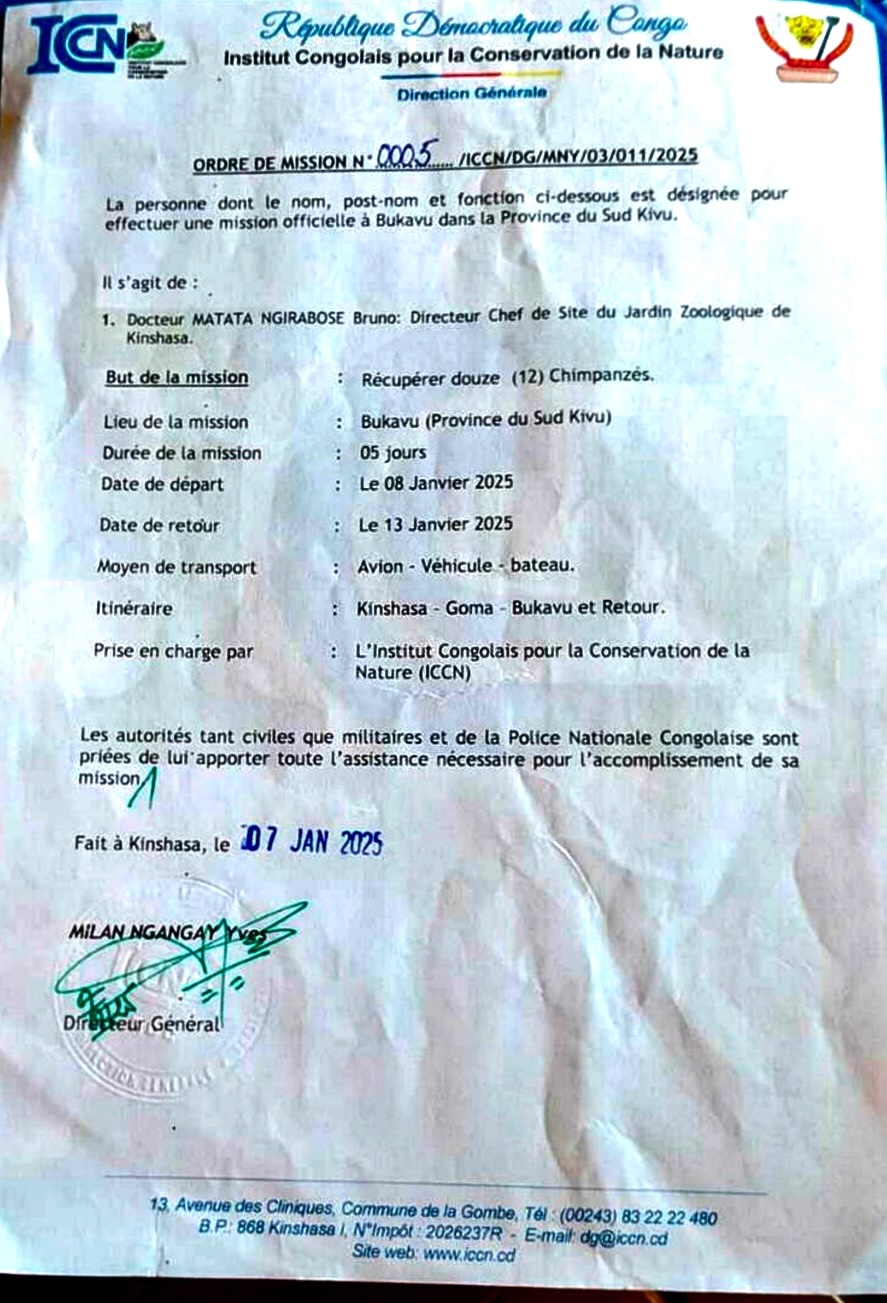
The letter was signed by Yves Milan Ngangay, Director General of ICCN, which is also responsible for the nation’s sanctuaries and public zoos.
The Lwiro sanctuary, situated in a tropical forest 45km from Bukavu, just outside Kahuzi-Biega National Park, is home to about 130 chimpanzee survivors of poaching and attempted trafficking. Many saw their mothers butchered for bushmeat before their eyes and are undergoing rehabilitation at Lwiro.
The staff courageously refused to hand over the chimpanzees, and ICCN left empty-handed. Local community and conservation groups heard about the incident and issued a strong press release on 12 January condemning the attempt to “capture 12 chimpanzees at the Lwiro Primate Rehabilitation Centre. This action, initiated by the ICCN general management, constitutes a serious threat to the conservation of these endangered primates and undermines the commitment of many international partners.”
Two days later, Ngangay released an official communique.
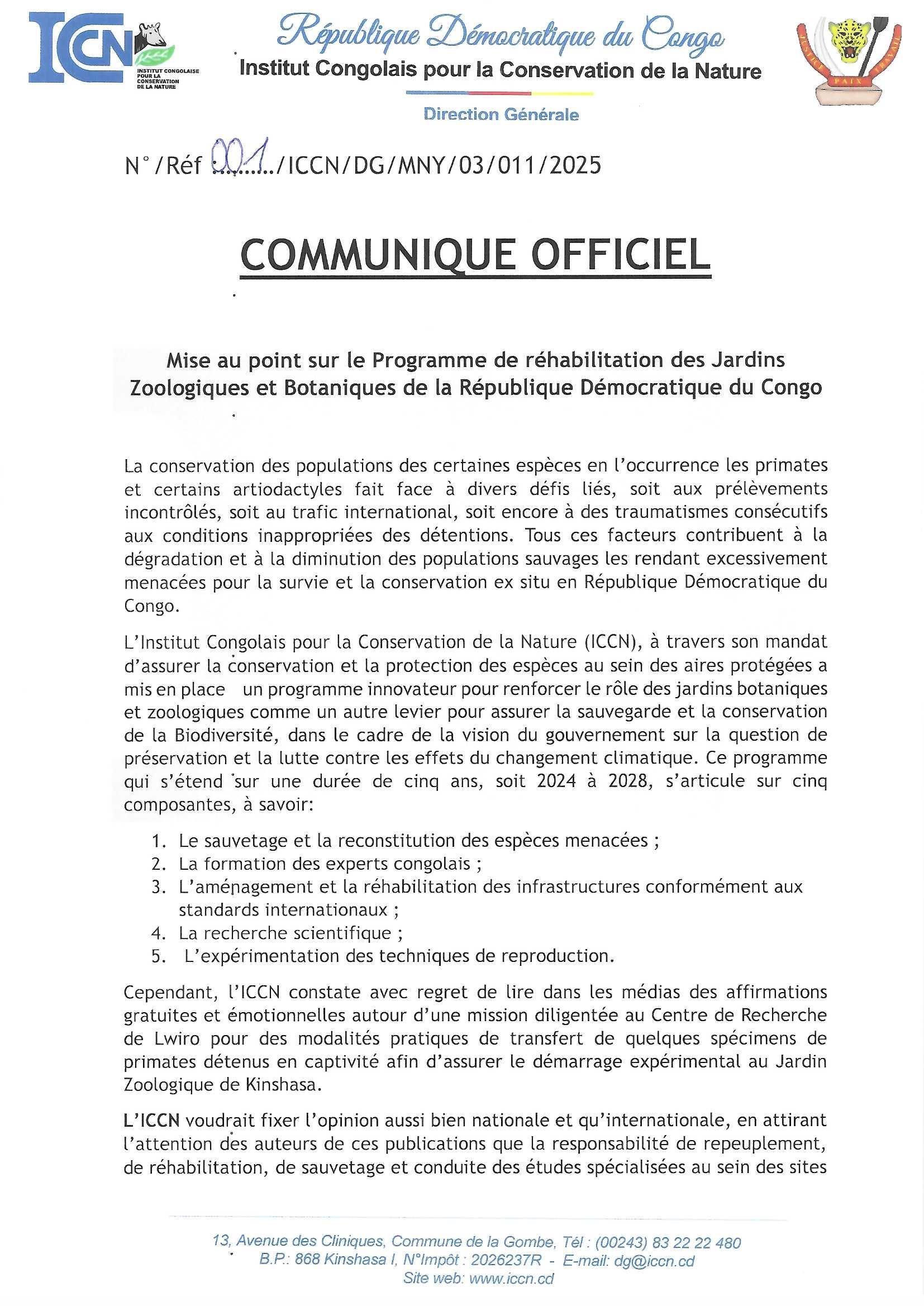
The communique announced a five-year programme to renovate the country’s zoos and botanical gardens to strengthen their role in biodiversity conservation by collecting various primate and artiodactyl (even-toed ungulate) species for research, staff training and conservation breeding.
In the communique, he criticised those who had stopped the lawful transfer of the primates to begin the “experimental” work at the Kinshasa Zoo.
Most noteworthy in the communique was that “the collection of specimens by the Institute in this vast programme can only be made from sanctuaries or else from rehabilitation centres and public and private animal parks, depending on their status and relationship with the Institute”
Several critics of the scheme have pointed out that the dilapidated Kinshasa Zoo does not have the facilities, staff or financial capacity to implement the programme presented by ICCN.
“If the mission is true, the chimpanzees will be sent to a real death trap,” warned Sara Rosenberg, a former volunteer at the Lwiro Primate Rehabilitation Center, referring to the transfer.
AG has received screenshots from videos taken on 25 January 2025 showing the zoo and chimpanzees in cages there. In the videos, the zoo indeed did appear to look in a deplorable state, with animals sitting in filthy, cramped, dilapidated cages with no items or structures offered for enrichment.

Chimpanzees turn up at Kinshasa Zoo – from where?
On 13 February this year, Ofir Drori, founder-director of the wildlife law enforcement NGO EAGLE, posted a press release on their website, seen by AG but since removed, stating that in recent months, nine chimpanzees had arrived at the Kinshasa and Kisangani zoos from unexplained sources. Drori speculated that the chimps had been collected with the intention of selling them and stated:
“Links from ICCN lead to a likely buyer of the chimps. There has been a major rise in primates and other wildlife shipping to India for the past 6 months, with a sole buyer: the so-called Greens Zoological Rescue and Rehabilitation Centre (GZRRC).” GZRRC is the original name of Vantara, which aims to be the biggest zoo in the world. It is owned by Mukesh Ambani as part of GZRCC and headed up by his son, Anant Ambani.
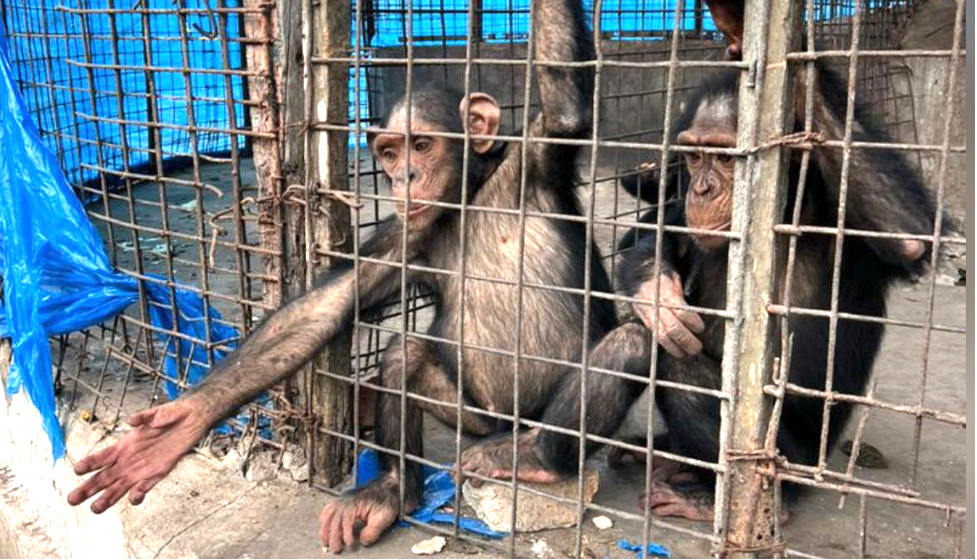
Later that day, on 13 February, the chimps were flown to India on a private jet. Our sources later confirmed that the chimpanzees had arrived at Vantara.
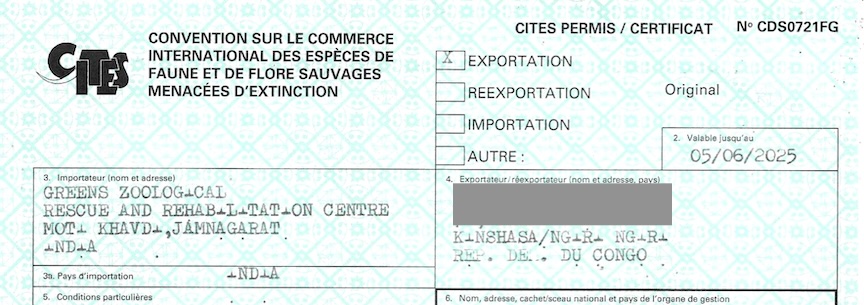
The DRC CITES export permit lists nine chimpanzees in the shipment, with a “Z” (zoo) purpose code and “C” (captive-bred) origin. To use a “C code”, the Appendix I specimens must have been second-generation born in captivity, and their progenitors must have been acquired legally.

Contacted by AG, Ofir Drori said, “There are no great ape breeding facilities anywhere in Africa, and the chimps at the Kinshasa Zoo were certainly not bred in captivity. The wild is the only logical source for them.”
The chimpanzees, therefore, were not acquired from lawful sources. This contradicts the specification made in the ICCN official communique that states collection “can only be made from sanctuaries or else from rehabilitation centres and public and private animal parks according to the laws applying to them”. The CITES permit states that the Kinshasa Zoo is the exporter. This fact also contradicts the stated purpose of collecting the chimpanzees in the first place, which was “for research, staff training and conservation breeding”.
“They were collected to sell,” said Drori.
ICCN has denied the selling of chimpanzees. In an interview with Mongabay Africa, chief site director of the Kinshasa Zoo, Matata Ngirabose Bruno, who also headed the ICCN mission that visited Lwiro, categorically said that “the zoo does not sell animals”.
It is also important to note that past instances of wildlife trafficking have involved permits allegedly falsified by the ICCN.
The probable source of the chimpanzees
ICCN documents dated 27 December 2024, seen by AG, authorise the collection of eight chimpanzees found in captivity in villages around Buta, which is in northeastern DRC about 200 kilometres north of Kisangani. They were to be transferred to the Kinshasa Zoo by 12 January 2025.
Therefore, these chimpanzees will have been present in Kinshasa Zoo when EAGLE reported the arrival of chimps from unknown sources. It also placed these chimps at Kinshasa Zoo just a month before nine chimpanzees were exported from the zoo to Vantara.
The young chimps found in captivity in villages were likely collateral damage to bushmeat hunting, and therefore, they were captured from the wild. Under normal circumstances, such recovered chimpanzees are sent to a sanctuary for rehabilitation and proper care – not to a zoo, with little capacity to offer care and rehabilitation to the young chimps.
This also brings into question the listing of the source of these chimps as “Code C” (born in captivity). The fraudulent listing of source codes as “Code C” is a well-known tactic in trafficking circles, known as a “C-scam”. Examples of the relatively common C-scam can be found in a recent report on great ape trafficking published by the Global Initiative Against Transnational Organised Crime. CITES has dealt with such cases in the past by ordering a suspension of trade by the offending parties until remedial action is taken.
Not the first shipment to Vantara
On 6 March 2025, United for Wildlife released an alert alleging that “from March of 2024 at least eight consignments of CITES-listed primates, including chimpanzees, an Appendix I species, and other wildlife were shipped on flights from the Democratic Republic of Congo (DRC) to India.”
The alert stated: “The consignments possibly contained laundered and smuggled species hidden amongst legally traded animals, including chimpanzees, bonobos, and gorillas, and permits associated with the consignments may have been falsified, according to multiple confidential sources.”
DRC CITES export permits issued between 6 December 2024 and 30 January 2025 also indicate the importer as GZRRC.
Other allegations made against Vantara
In March of 2024, M Rajshekhar published an article on Vantara in the Himal Southasian newspaper. The article highlighted numerous irregularities in the origin of Vantara’s elephants from within India. It also pointed to further irregularities in the origin of other endangered species from international suppliers who were not the usual sources of animals in need of rescue and rehabilitation. The sources appeared to be commercial exotic animal traders or sources with records associated with illegal wildlife trade.
On 6 March this year, the Wild Animal Protection Forum of South Africa issued a report that questioned the extensive range of species (36) and high number of animals (765) exported to Vantara. It highlighted various problems with the different species exported, which Vantara asserts were all rescues from detrimental circumstances.
The WAPSFA report expressed concern about Vantara’s breeding plans: “The lions and tigers exported from South Africa appear to have been purchased and exported from breeding facilities in South Africa… They will now be transformed into breeding machines, exploited within the numerous animal breeding facilities (nurseries) outside the main zoo.”
The report continued: “WAPFSA would need to be convinced, based on independent, verifiable evidence that the additional list of species exported from South Africa were saved or rescued from adverse conditions.”
Later in March, the UK-based Independent reported that Vantara had dismissed the complaint by the South African coalition as “entirely false and baseless” and said they had served them a legal notice over the report.

On 13 March, the Süddeutsche Zeitung published an investigative article that alleged many irregularities regarding the sourcing of animals at Vantara, including the probability that some had been sourced from the wild, not captivity. The article alleged that 39,000 animals were being kept in Vantara by the end of 2024.
A European wildlife dealer is quoted in the article as stating, “Regardless of which wholesaler I talk to, the supply of wild animals is bought up. The supply lists are getting shorter because everything goes to India.” The fact that this demand also leads to more wild captures was “obvious” to the animal dealer.
Further action
ICCN is currently collecting other animals listed in Vantara’s “rescue list”, including bonobos and gorillas. A concerned group of wildlife NGOs has drafted a letter to the CITES Secretariat detailing several instances of trade irregularities involving Vantara, including the chimpanzee trade reported here, and entreating amongst other measures that the Secretariat and the Standing Committee (SC) request that:
- India agrees to suspend imports of live specimens of CITES-listed species until this issue can be discussed at the 79th meeting of the CITES Standing Committee (SC79);
- Parties refrain from issuing permits to export live animals of CITES-listed species to India until this issue can be considered at SC79.
The 79th meeting of the CITES Standing Committee will be held in November this year in Samarkand, Uzbekistan, immediately preceding the Conference of the Parties. The issue around Vantara is set to be one of the most contentious items on the agenda, pitting NGOs against a powerful billionaire family.
As international scrutiny intensifies, the case of the trafficked chimpanzees highlights the urgent need for stronger enforcement of wildlife trade laws and greater transparency in both exporting and importing countries. The upcoming CITES Standing Committee meeting in Uzbekistan could prove pivotal in setting new precedents for accountability, especially when powerful private interests are involved. For now, the fate of the trafficked chimpanzees – and potentially many more endangered species – rests on whether global conservation authorities are willing to confront systemic loopholes and hold perpetrators to account, regardless of their influence or wealth.
Discover What Happened to ‘Ham’ – The First Chimpanzee Launched Into Space
Ed note: A wonderful tribute to Ham, the first hominid to travel into space, published by https://a-z-animals.com/video/discover-what-happened-to-ham-the-first-chimpanzee-launched-into-space/.
Written by Doug Shaffer
First published: March 5, 2025
On January 31, 1961, a chimpanzee named Ham became the first great ape to travel to space. His mission was crucial in proving that living beings could survive and function in microgravity. While his flight lasted only a few minutes, Ham’s journey did not end when he returned to Earth.
While Mr. Scientific’s video documents Ham’s journey from young chimp to national hero, it leaves out a few key details about the groundbreaking event.
This article provides a closer look at Ham’s life before, during, and after spaceflight.
Who Was Ham?
Ham was born in 1957 in French Cameroon. As a young chimp, trappers captured him and later sold him to a zoo in Miami, Florida. The United States Air Force then purchased Ham and sent him to live at Holloman Air Force Base in New Mexico.
While at Holloman, Ham participated in NASA’s Project Mercury, a program designed to test the safety of human spaceflight. Ham and other chimpanzees underwent rigorous training to help them survive spaceflight.
As a part of the training, scientists and researchers worked to teach him how to complete simple tasks, such as pressing levers in response to visual and auditory cues. These exercises would eventually help NASA determine whether astronauts could remain functional while experiencing extreme space conditions.
Originally, the team only identified him as “No. 65” to avoid public backlash if the mission failed. However, after his successful flight, he was renamed “Ham” in honor of the Holloman Aerospace Medical Center, where he trained.
Why Was Ham Sent to Space?
Before launching humans into space, NASA needed to ensure that the human body could endure space travel and that astronauts could perform necessary tasks while weightless. Ham’s mission aimed to provide answers to three key questions.
How Does Space Travel Affect the Body?
At the time, scientists worldwide knew very little about the biological effects of space travel. Experts were uncertain whether the human body could survive prolonged exposure to high G-forces, weightlessness, and intense reentry conditions.
By monitoring Ham’s vital signs before, during, and after his flight, NASA hoped to gather critical data on how a primate’s body responded to these stresses.
Could Astronauts Work in Space?
Survival was only part of the space travel equation. To have a successful flight, astronauts would also need to be able to complete tasks while in space to operate the craft and conduct experiments.
As a way to simulate this experience, Ham’s training involved responding to lights and sounds by pressing levers. If he could perform these tasks correctly while weightless, it would demonstrate that astronauts could function effectively in microgravity.
Was NASA Prepared for Space Flights?
Ham’s mission was a stepping stone to human spaceflight. His journey would provide crucial data on the reliability of spacecraft systems, life-support equipment, and astronaut procedures. Any malfunctions or unexpected challenges he faced would provide valuable insights for future human missions.
Ham’s Historic Spaceflight
On January 31, 1961, Ham was secured in a specially designed capsule atop a Mercury-Redstone 2 rocket at Cape Canaveral, Florida. The rocket ignited as the countdown reached zero, sending Ham soaring into space.
During the flight, Ham:
- Reached an altitude of 157 miles above Earth
- Traveled at speeds up to 5,857 miles per hour
- Experienced 6.6 minutes of weightlessness
- Successfully completed his assigned tasks, proving that cognitive function remained intact in microgravity
Despite the success of the mission, it was not without complications. A slight loss of cabin pressure occurred during the flight, but Ham’s specialized suit kept him safe.
His return to Earth was also rough as his capsule splashed down in the Atlantic Ocean, landing farther from the recovery team than expected. By the time rescuers arrived, Ham was reportedly shaken but otherwise unharmed.
The Impact of Space Travel on Ham
While Ham survived his journey into space, the experience had physical and psychological effects on the chimp.
Physical Effects
Ham endured extreme conditions, including high G-forces during launch and reentry. While his vitals remained stable, post-flight examinations showed that he had been exposed to significant stress during his mission.
While the loss of cabin pressure during flight was a concern, Ham’s specialized suit protected him, highlighting the importance of reliable life-support systems.
Psychological Effects
Reports suggest that Ham exhibited signs of distress after the mission. While he was trained to handle stressful environments, the abrupt transition from a structured training facility to the unpredictability of space travel likely left an impact.
However, after a recovery period, he resumed normal behavior, indicating that the psychological effects were temporary.
What Happened to Ham After the Mission?
After his return, Ham was celebrated as a pioneer in space exploration. However, his post-flight life was far from glamorous.
Life in Captivity
Following his mission, the team at NASA sent Ham to the National Zoo in Washington, D.C., where he lived for 17 years. While he was well cared for, his time in captivity was not without controversy.
Observers noted that he sometimes displayed signs of boredom and frustration, likely due to the stark contrast between his former training environment and life in confinement.
In 1979, he was transferred to the North Carolina Zoo, where he had more space and interaction with other chimpanzees. This change of scenery provided a more natural and social environment, significantly improving his quality of life.
Ham lived at the North Carolina Zoo until his death on January 19, 1983, at the age of 26. While a portion of his remains were studied for research, his bones were laid to rest at the New Mexico Museum of Space History in Alamogordo, near the base where he trained.
Concern: will Congo’s primate sanctuaries be used to “fill” zoos, including abroad?
Ed. note: This article is translated from French from Geo magazine.
While the Democratic Republic of the Congo is in the grip of violent clashes, the capital’s zoo plans to acquire great apes from the country’s public and private sanctuaries, alarming sources interviewed by GEO. However, the establishment itself has just sent 12 chimpanzees to a zoo in India, according to the NGO fighting against wildlife trafficking EAGLE.
NASTASIA MICHAELS Published on15/02/2025
Twelve: that’s the number of chimpanzees which the Congolese authorities had planned to transfer from the Lwiro Primate Rehabilitation Center (LPRC), located in the South Kivu province, in the east of the country, to the Kinshasa zoo described by a former volunteer as “dying”.
And it is also the number of chimpanzees coming from the Kinshasa zoo which has just been sent “in the greatest secrecy” to India, confided the EAGLE network, an NGO fighting against poaching and wildlife trafficking, to GEO on Thursday February 13.
If the violent clashes following the invasion of Goma by a militia unofficially supported by Rwanda seem not to have posed an obstacle to this international transfer, the domestic transfer project between Lwiro and the capital – which raised indignation in January, as reported by the local press and by the Point – has not been able to succeed to date either.
However, this center of primates located on the front line in the ongoing conflict (150 kilometers by road from Goma) is not the only one concerned by the risk of seeing its protégés escape it.
“Rehabilitate” Congolese zoos
Consulted by GEO, an official press release from the Congolese Institute for Nature Conservation (ICCN) reports a program of “rehabilitation” of the zoological and botanical gardens in Kinshasa and Kisangani (to the northeast), intended to receive new “specimens” whose origin is explicit: sanctuaries, rehabilitation centers and animal parks, “public and private.”
The country currently has three rehabilitation centers and sanctuaries housing chimpanzees and small monkeys (Lwiro, JACK and P-WAC) as well as a sanctuary collecting bonobos (Lola Ya Bonobo) and another housing gorillas (GRACE). However, according to the management of a sanctuary concerned, whose identity we will not mention, the situation is “more than delicate”. “With the political situation, we are taking a back seat”, laments our source.
If the Kinshasa and Kisangani zoos do not seem to have either the required personnel or the financial resources to take care of primates from shelters, the ICCN is also suspected to reserve a completely different fate for the latter. The local press had thus raised the hypothesis of the sale of animals to “foreign firms” (7sur7.cd).
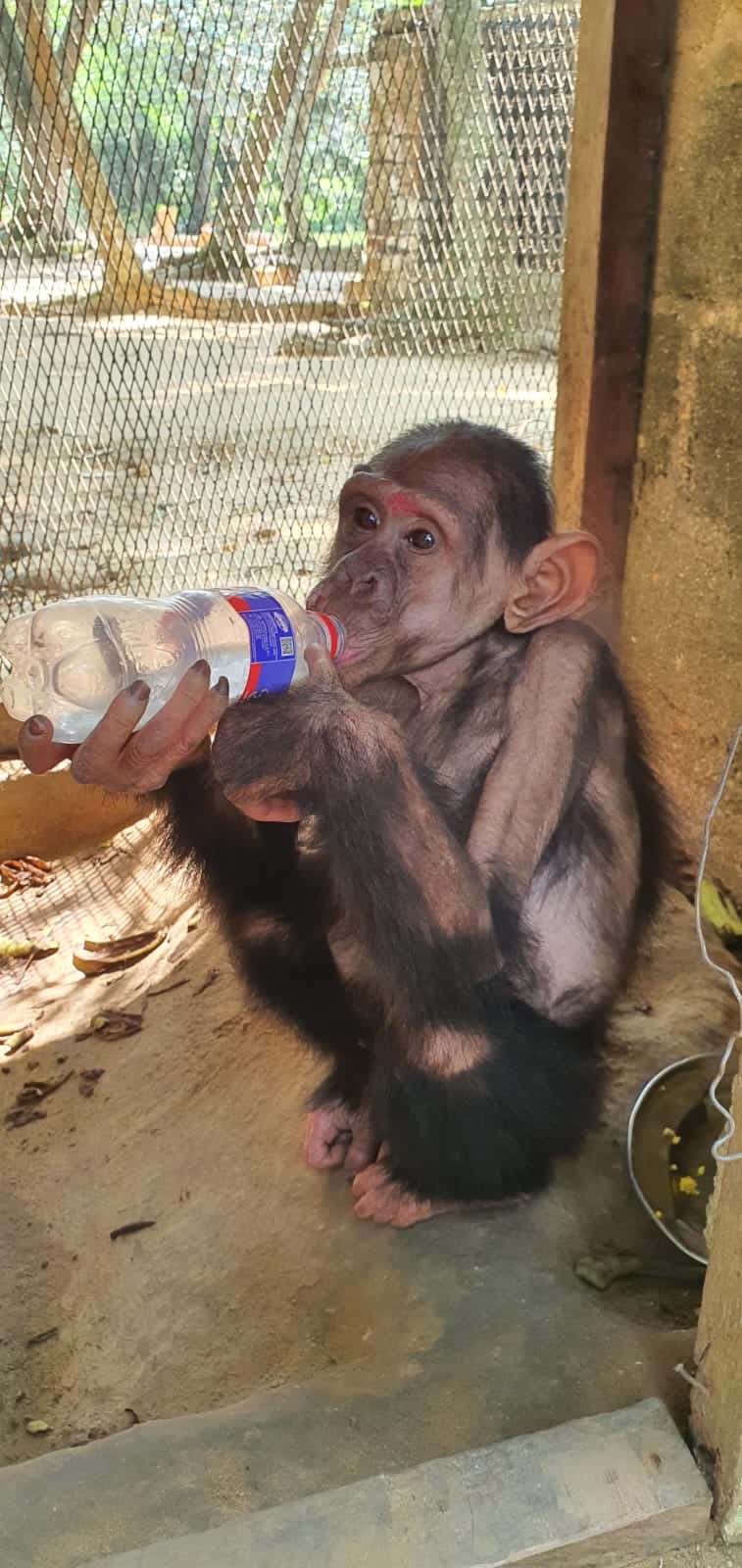
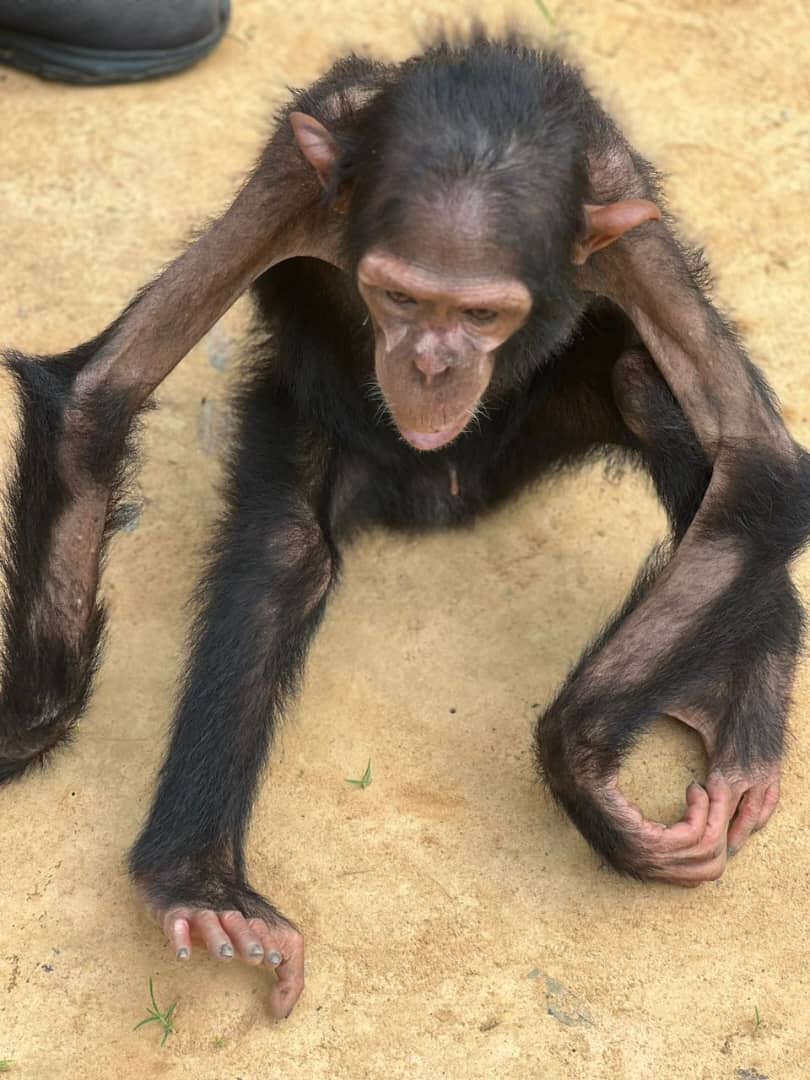
Chimpanzees photographed at Kisangani Zoo, Democratic Republic of Congo EAGLE Network
The trail of an Indian billionaire
According to the NGO EAGLE, the chimpanzees sent to India are “supposed to be routed to the Greens Zoological Rescue and Rehabilitation Center (GZRRC)”, known to the public as Vantara. A project financed by Indian multi-billionaire Mukesh Ambani, CEO of the giant petrochemicals Reliance Industries, with the ambition to make it the largest zoo in the world.
“Could ICCN’s decision to quickly collect great apes for Congolese zoos be linked to the fact that the GZRRC can easily obtain primates through transfers between zoos?”, the association already wondered in a press release published on February 10, just before being informed of the actual sending of chimpanzees to Asia.
Built on an oil refinery site, Vantara was investigated by the independent media outlet Himal (March 20, 2024), revealing in particular transactions with dubious organizations to fill its enclosures. His lions, for example, come from a South African establishment known for breeding wild animals intended for “canned hunting”, a controversial practice of trophy hunting in a closed environment.
Few images of this place have filtered out… at least until its inspiration, a certain Anant Ambani – youngest son of the richest man in Asia – made the zoo the setting for his “pre-wedding” party in March 2024. Some guests, including celebrities, then posed with a captive elephant and shared their photos on social networks.

The hidden side of animal trafficking
To try to understand the threat that could weigh on primates in Congolese sanctuaries, we contacted Cécile Neel, investigator for EAGLE, whose teams work in particular in countries neighboring the DRC. In terms of form, nothing prevents the Indian billionaire from signing a contract with the authorities to legally recover primates from Congolese zoos.
“What we know at this stage is that the (Indian) zoo has already received primates from the DRC, and that it has approval allowing it to carry out exchanges with other zoos”, summarizes Cécile Neel. However, such transactions can also be a way, she explains to GEO, to “launder” the real origin of wild animals.
“We’ve had the case of one before of a bonobo found in Armenia, whose CITES permit (Convention on International Trade in Endangered Species of Wild Fauna and Flora) indicated Guinea as the country of origin”, she illustrates, “which is obviously impossible, since bonobos only live in the DRC.”
The EAGLE network, whose Togolese branch recently seized around forty monkeys from the DRC and destined for Thailand, notes that victims are often drugged to be hidden in cages among other animals. A treatment that not all survives.
The Indian animal park already has received this year nearly thirty chimpanzees from the United Arab Emirates – “an important crossroads for trafficking in protected species” – as well as a bonobo which could come from Iraq, identified the investigator based on data from the CITES.
A dangerous precedent
On the DRC side, concern is palpable. The repopulation of zoos as envisaged by the Congolese institute would in fact constitute, to Cécile Neel’s knowledge, a first on the African continent. And would therefore create, according to her, a dangerous precedent.
Despite the attention paid to each of their protégés, as well as the time and funds devoted to their well-being in the perspective of a reintroduction in the natural environment, should the managers of the shelters concerned fear seeing the services in charge of the transfer ring their doorbell?
“If some think that given the current political situation, no one will come due to lack of logistical means, it is possible on the contrary that the threat will go unnoticed and that the project will be implemented”, fears one of them.
“Our closest cousins are threatened with extinction by trafficking and corruption, and now our investigations show that Congo’s orphaned great apes who survived their family’s massacre are once again under imminent threat from the same enemy”, said Ofir Drori, director and founder of the EAGLE network, in the recent press release.
https://www.geo.fr/environnement/inquietude-les-refuges-de-primates-vont-ils-servir-a-remplir-les-zoos-congolais-224633
Nigerian link in global gorilla trafficking
Editor’s note: This article is reprinted from Oxpecker’s Environmental Journalism.
Daniel Stiles investigates organised transnational networks smuggling great apes from Africa via Nigeria
February 7, 2025

Five-month-old Zeytin was seized in Istanbul by customs officials. Photo courtesy the Turkish Trade Ministry via Reuters
A syndicate based in northern Nigeria has emerged as part of an organised transnational network that is receiving great apes and other endangered species from traffickers in other African countries and smuggling them overseas.
This emerged from the case of “Zeytin”, one of an increasing number of endangered great apes captured in the wild and trafficked to meet demand, mainly in the Middle East, South Asia and the Far East.
On the morning of December 22 2024, Turkish Airlines flight TK624 touched down in Istanbul from Nigeria carrying a small, wooden crate in its cargo hold. The crate was in transit to Bangkok, Thailand.
The Customs Enforcement Smuggling and Intelligence Directorate at Istanbul Airport had been tracking the crate from Abuja, Nigeria’s capital, because it appeared unusual for the “50 rabbits” declared on the airway bill to be shipped at great cost from Nigeria to Thailand.
Upon opening the crate, customs agents found an infant male Western lowland gorilla, which is listed on Appendix I of the Convention on International Trade of Endangered Species (CITES), indicating that commercial international trade is prohibited. The gorilla was seized and is now being looked after at the Polonezkoy Zoo in Istanbul. A public contest resulted in the gorilla being named Zeytin, meaning “olive” in Turkish.

Pet shop
The importer has been identified as TK Farm International Trading in Bangkok, owned by Siriwat Suphakitkasem, a registered animal importer and breeder with a large pet shop in the Chatuchak Market, known for wildlife trafficking.
Suphakitkasem sells mainly small, fuzzy animals in his pet shop and exports them to various parts of the world. He also owns TK Farm in Nakhon Pathom, about 65km west of Bangkok.
Oxpeckers examined his Facebook friends list and found several names of animal traders, some linked to great ape trafficking. One lives in Kinshasa in the Democratic Republic of the Congo (DRC) and is part of a family that has been trading birds and primates, both legally and illegally, for many years.
Suphakitkasem told Thai authorities he was assisting an African citizen named David to import rabbits, and had no idea that a gorilla was the actual cargo. He said that “David” had paid TK Trading 150,000 Thai baht (about US$4,464) for the service.
The director of the Thai Wild Fauna and Flora Protection Division and CITES representative, Sadudee Punpugdee, said an investigation being carried out in Thailand revealed the documents that claimed the crate contained 50 rabbits.
“It is unlikely any fault will be attributed to any parties in Thailand. However, be assured that coordination has been initiated between CITES Thailand and CITES representatives in Nigeria and Turkey to dismantle the smuggling ring behind the discovery,” said Punpugdee.
The Thai police are actively searching for the person they believe is the actual buyer of Zeytin. Department of National Parks Chief Attapon Charoenchansa said on December 28 that investigators had made significant progress, including obtaining intelligence suggesting the involvement of a wealthy exotic animal collector from another Asian country.
“We continue to uncover more suspicious activities and leads, though we need solid evidence to prosecute the perpetrators,” Charoenchansa said.
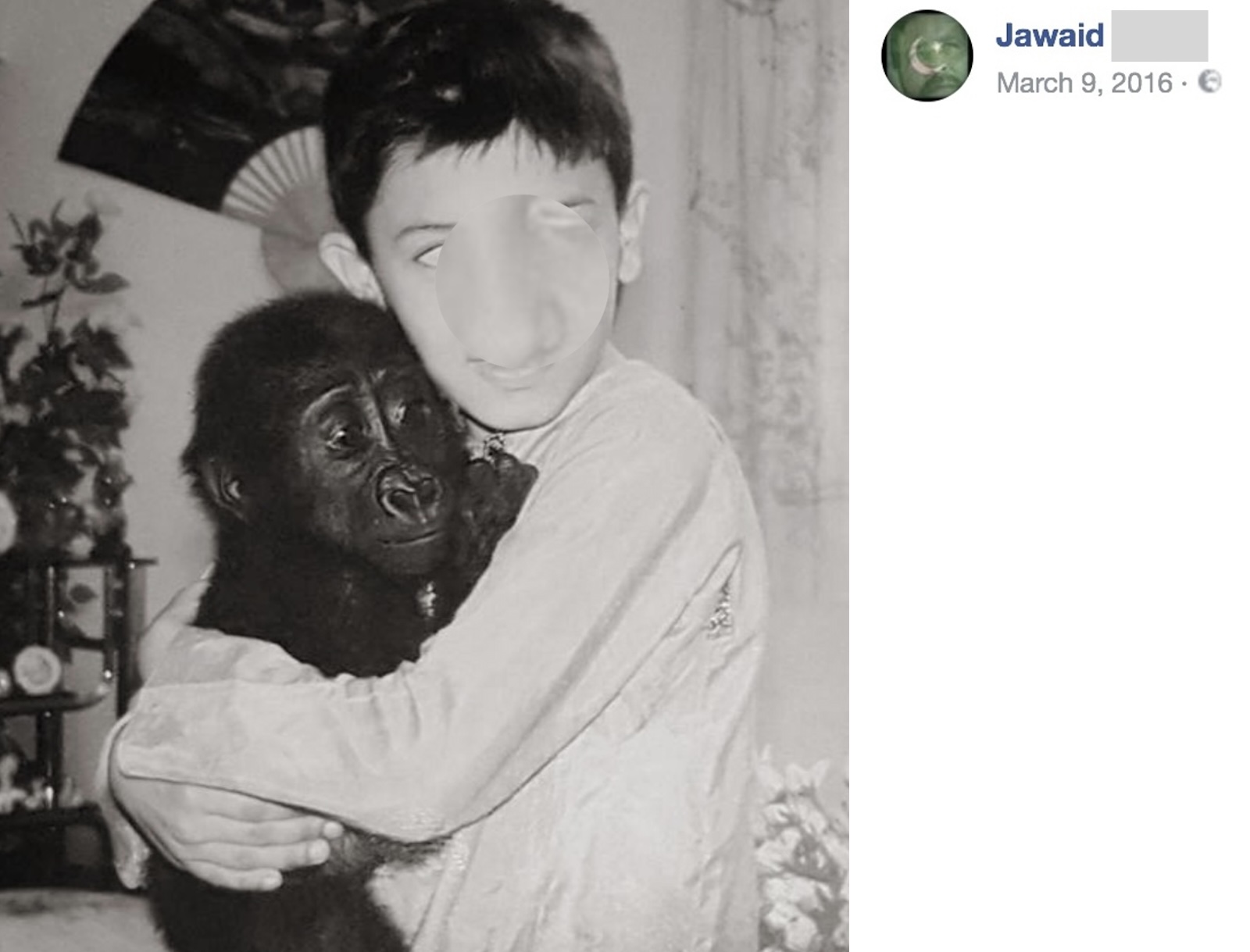
A Facebook page set up by a convicted great ape trafficker in Pakistan. Social media has helped to encourage illegal trade. Image supplied
Commercial parks
Social media and a proliferation of commercial wildlife parks have combined to drive a largely illegal trade to supply exotic animals – particularly charismatic ones – to fill privately owned wildlife business facilities. Young animals that can interact relatively safely with children are in highest demand, and are also used as exotic pets in the homes of the wealthy.
Western lowland gorillas such as Zeytin only occur in the wild in Cameroon, Central African Republic (CAR), Equatorial Guinea, Gabon, Republic of Congo and the DRC. They do not live in Nigeria, so Zeytin must have been smuggled into the country.
Investigations are under way and an exporter has been identified by company name, which could be fake. Based on past information, Kano in northern Nigeria is the most likely location of the traffickers. Gorillas and chimpanzees have been smuggled out of Kano at least since the 1990s.
An international NGO is collaborating with the Nigerian Customs Service to crack down on the Nigerian gorilla traffickers and said that they had made significant progress, but did not wish to make a statement that might jeopardise the investigation into Zeytin’s case.
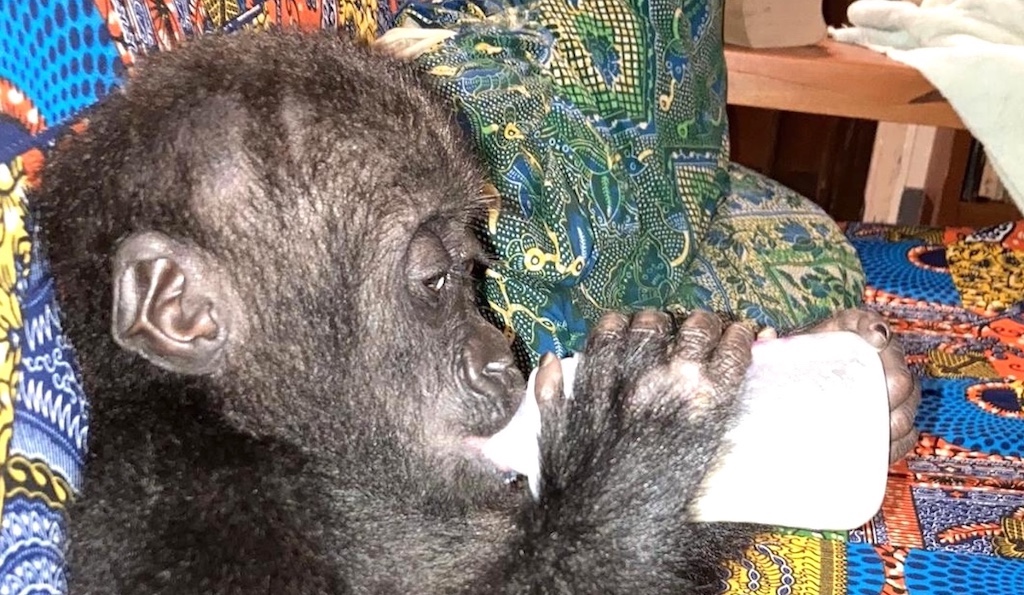
Bili was seized in 2023 from two traffickers transporting the primate from Kano. Photo: Peter Jenkins
Primate sanctuary
On August 30 2023 another baby Western lowland gorilla was seized near Lagos from two traffickers who had transported the primate from Kano. They were arrested and the gorilla, named Bili, is now at the Drill Ranch primate sanctuary in eastern Nigeria.
Oxpeckers spoke to Liza Gadsby and Peter Jenkins, founders of the Pandrillus Foundation, which operates the Drill Ranch sanctuary. “Bili is doing fine and has has gained several pounds since coming to us. She has two young chimpanzees for company and she keeps them in line,” said Gadsby.
The sanctuary has obtained a CITES import permit for Zeytin and has asked the Turkish government to repatriate him to Nigeria. “Our plan is to transfer both Bili and Zeytin together to a gorilla sanctuary in Central Africa after quarantine is completed,” said Gadsby. “There are sanctuaries there that prepare young gorillas for release back into the wild. That is our hope.”
Posted in Uncategorized
Can one baby gorilla rescued in Istanbul stop the deadly great ape traffic?
Reprinted from Animals 24-7 – Ed.

DECEMBER 24, 2024 BY MERRITT CLIFTON
ISTANBUL, Turkey––An approximately eight-month-old baby western lowland gorilla, rescued from a coffin-like wooden crate on December 22, 2024 at the Istanbul Airport in Turkey, may be the “missing link” between two of the other horrific stories in the news that day.
“Children executed and women raped in front of their families as M23 militia unleashes fresh terror on the Democratic Republic of Congo,” headlined Guardianwriter Mark Townsend from Goma, DRC, and Kigali, Rwanda, detailing the latest explosion of violence in western gorilla habitat.
The Thai connection
The other horrific story, from Georgie English, foreign news reporter for the British tabloid The Sun, detailed how “One of the loneliest gorillas in the world is set to spend her 41st Christmas trapped in a tiny concrete cage” on an upper floor of the Pata Pinklao Department Store Zoo in Bangkok, Thailand, opened in 1983 with the then-infant western lowland gorilla Bua Noi as the star attraction.
“Bua Noi” is the Thai iteration of the Swahili word bwana, meaning “boss” or “master,” but Bua Noi has never in her life been “boss” or “master” of anything.
Both the baby gorilla confiscated from traffickers at the Istanbul Airport and Bua Noi were captured from the eastern rainforests of the Democratic Republic of Congo, at probable cost of the massacre of their parents and extended families, who would have fought to try to save them, and may have ended up in the cooking pots of soldiers, loggers, or miners.
Both western lowland babies, more than 40 years apart, may have been traded westward for guns and ammunition, among other commodities in urgent need among the combatants and exploiters of central Africa.
Both were likely flown out of Lagos, Nigeria, after passage by truck through the Central African Republic and Cameroon.
The central African region, bisected by the Congo River, has been wracked by recurring mayhem overtaking both apes and humans since 1885, when King Leopold II of Belgium claimed it as the Congo Free State and ran it until 1908 as his own personal slave plantation without ever actually setting foot there.

Pongo, the first gorilla in Europe.
Master Pongo
Even before Leopold, gorilla exports had begun with Master Pongo, shipped through Angola to Berlin in 1876. Master Pongo, however, died at age three in November 1877, after just a year in captivity. The Bristol Zoo gorilla Alfred arrived at about age two in 1930. Surviving until 1948, Alfred’s popularity touched off 35 years of competition among zoos and private collectors worldwide to obtain gorillas.
The various United Nations member nations eventually adopted and ratified the 1975 Convention on International Trade in Endangered Species, putting gorillas off limits to commercial traffic, but implementing the trade ban took more than a decade.
The race to grab gorillas was actually intensified by the success of gorilla advocate Dian Fossey’s 1983 best-selling book Gorillas In The Mist and the 1988 film dramatization of the book, starring Sigourney Weaver.
Together the book and film made saving gorillas an international cause celebre––and enabled zoos quick to cash in on gorilla notoriety to claim that every gorilla obtained by whatever clandestine illegal method arrived as a “rescue.”
Fossey blamed poachers for the decline of both mountain gorillas and western lowland gorillas throughout their habitat in the mountains of Rwanda, Uganda, and the Democratic Republic of Congo.
This was accurate enough in close focus, from Fossey’s perspective at the Karasoke research station in Rwanda, but neither Fossey nor anyone else prominent at the time did much to expose the population pressures in overcrowded Rwanda, the political pressures resulting from the murderous reign of dictator Idi Amin in Uganda, 1971-1979, and the poverty and instability in the DRC that drove the poaching.
As Townsend explained in his December 21, 2024 Guardian exposé, “Eastern DRC holds huge, widely coveted reserves of precious minerals. The battle over billions of dollars worth of minerals, alongside the settling of old scores, has plunged eastern DRC into near continuous conflict,” gaining in ferocity since the 1994 massacre of at least 800,000 members of Tutsi tribe by members by Hutu tribe in Rwanda.
Since then, Townsend summarized, “More than six million people are thought to have died and a similar number forced from a swathe of the DRC, whose government has lost control in the east” to a multitude of militias, of which M23 is currently the strongest.
“Shortly after the massacre,” Townsend wrote, after newly armed Tutsi survivors fought back, “more than a million Hutus fled to DRC, including many responsible for the slaughter.
“Twice, Rwandans invaded their neighbor, ostensibly to hunt down the génocidaires.
“In turn, Hutu militias linked to the carnage started to regroup, plotting a return to Rwanda to seize power. To counter this threat, Rwanda began arming Tutsi militias – forerunners to the M23 – inside the DRC.”

(The General Directorate of Nature Conservation & National Parks photo).
Turkey tracked the flight
Meanwhile, on the morning of December 21, 2024, the Turkish newspaper Daily Sabahreported, “Customs enforcement teams from the Ministry of Trade intercepted the attempt to smuggle” the rescued baby gorilla via Istanbul Airport.
“According to a statement from the ministry,” the Daily Sabah said, “the Customs Enforcement Smuggling & Intelligence Directorate at Istanbul Airport tracked a cage-type cargo shipment departing from Nigeria, destined for Bangkok, Thailand, as part of risk analysis efforts aimed at protecting wildlife and natural habitats.
“Upon inspection, the team discovered that the cage,” actually just a wooden box with air holes in the sides, “contained a western gorilla, a species listed under Appendix I of the Convention on International Trade in Endangered Species of Wild Fauna and Flora, indicating her critically endangered status.
“The baby gorilla has been handed over to the relevant units of the Ministry of Agriculture & Forestry,” the Daily Sabah finished.
As the baby gorilla cannot be safely repatriated back to her family, probably long since massacred in her war-torn and politically unstable homeland, she will probably be kept at one of the better of around a dozen public zoos in western Turkey.
From Bangkok, Wildlife Friends Foundation of Thailand founder Edwin Wiek posted to Facebook, “Who ordered this animal and who shipped her? We need serious investigations going both ways!”
A reasonable guess might be that the baby gorilla intercepted between flights in Istanbul might have been intended for delivery to the Pata Pinklao Department Store Zoo, as a possible companion and eventual replacement for Bua Noi, who is now in late middle age as gorillas go and in an unknown state of health.
Indeed, the Pata Pinklao Department Store Zoo could reap a bonanza of naively favorable publicity by sending Bua Noi to a sanctuary before her eventual terminal decline, with no loss of patronage if another gorilla occupies her cage.
“Even the environment minister of Thailand, Varawut Silpa-archa, has made clear he wishes to see Bua Noi moved to a sanctuary,” wrote Georgie English.
“We collected donations from Bua Noi’s supporters. But the problem is that the owner refuses to sell Bua Noi,” Varawut Silpa-archa told English.

Bua Noi. Bangkok, Thailand. (Wikimedia photo)
“One of the worst zoos in the world”
“When he does agree to sell her, the price is too high. Bua Noi is considered private property so we cannot do anything to remove her,” Varawut Silpa-archa said.
People for the Ethical Treatment of Animals, International Animal Rescue, and the International Primate Protection League, among others, have campaigned unsuccessful for the Tahi government to close the Pata Pinklao Department Store Zoo and rescue Bua Noi almost since her arrival from the DRC by way of Germany at approximately age one.
“Pata Zoo is not only home to the somber gorilla, but also more than 200 other animal species including tigers, bears, and pythons,” wrote English.
“Many of the animals live in similar conditions to Bua, in what Jason Baker, PETA senior vice president for Asia, calls “one of the worst zoos in the world.”

Zira at the Granby Zoo. (Merritt Clifton photo)
Another baby gorilla died at the Pata Zoo
In August 2017 a grossly erroneous but internationally distributed news story, originating from a careless headline above an otherwise accurate report by the Australian Broadcasting Corporation, announced that Bua Noi and the other Pata Zoo animals would be freed from what Baker calls “pitifully small, barren enclosures,” on the sixth and seventh floors of the shabby shopping center tower, “denied sunshine, fresh air, and opportunities to exercise or engage in behavior that is meaningful to them.”
Some premature “victory” announcements followed, but nothing actually changed.
Subsequent to Bua Noi’s arrival, a 2009 Asian Animal Protection Network posting from U.S. gorilla rescuer Jane DeWar mentioned that, “Some time ago a baby gorilla was acquired by the Pata Zoo,” as an intended companion for Bua
Bua Noi appears to have been captured and exported from the DRA around the same time as another female baby western lowland gorilla named Zira.
International Primate Protection League founder Shirley McGreal learned in mid-1983 that Zira had been exported from Cameroon to the Granby Zoo in Quebec.
The zoo had obtained a permit for the transaction, as required by the Convention on International Trade in Endangered Species, but McGreal contended that the permit was issued in violation of the intent of CITES, if not in violation of the actual letter of the treaty.
Zira meanwhile contracted avian influenza from the exotic birds with whom she was housed. McGreal asked Quebec newspaper columnist Bernard Epps to expose Zira’s plight.
Epps, who died in July 2007, passed the assignment to then-Sherbrooke Record farm and business reporter Merritt Clifton, now coeditor with his wife Beth Clifton of ANIMALS 24-7.
Epps wrote supporting commentary while Clifton produced a series of exposés that culminated in a complete change of the Granby Zoo management and the transfer of Zira to the Toronto Zoo, where she was restored to health and raised with other young gorillas.
Meanwhile, warned Eric Kaba Tah of the German organization Berggorilla & Regenwald Direkthilfe, citing cases from the 2005-2012 time frame, “In recent years, the trafficking of Africa’s apes has evolved into a highly organized criminal activity, demonstrated by the manner in which powerful traffickers use their perfected operational skill to run the illicit trade alongside other illegal activity such as the trade in drugs.
“The connection between drugs and wildlife trafficking, and increasing prices for wildlife products,” Eric Kaba Tah wrote, “are attracting criminal syndicates with vast experience in organized crime, as is typical for drug syndicates.”
Agrees Natasha Tworoski of the Pan-African Sanctuary Association, via the PASA website, “The great ape crisis is rapidly escalating. Eastern gorillas, western chimpanzees, and Bornean orangutans were recently downgraded from endangered to critically endangered, joining Sumatran orangutans and Western gorillas. Other chimpanzee subspecies, as well as bonobos, are currently listed as endangered.
“The United Nations Environment Programme’s World Conservation Monitoring Centre and the Great Apes Survival Partnership [GRASP] have created an Apes Seizure Database in order to get a more thorough understanding of how the specific threat of ape smuggling is currently affecting great apes,” Tworoski wrote.
Through GRASP, Tworoski said, “1,800 great apes seized in illegal live traffic since 2005 were uncovered who had previously not been counted in international databases, such as those managed by CITES.
“How could the numbers be so under-reported? The majority of seizures, over 90%, took place within national borders and therefore were not counted by international conservation organizations.
“Now that Eastern gorillas, Western chimpanzees and Bornean orangutans have been downgraded from endangered to critically endangered,” Tworoski predicted, “the next step will be extinction.”

Daniel Stiles & Esmond Bradley Martin Jr.
(Facebook photo)
Prices for great apes have quadrupled
Updated Rachel Nuwer for National Geographic on May 9, 2023, “Working with a network of undercover investigators and informants, Daniel Stiles,” a wildlife trafficking investigator who formerly worked with the late Esmond Martin to document the global trade in poached elephant ivory, “found that advertisements for live baby great apes are on the rise on WhatsApp and social media.
“Since 2015,” Nuwer wrote, “Stiles documented 593 ads for great apes posted by 131 individuals in 17 countries. Prices for the animals have quadrupled compared to a decade ago, with chimps now selling for up to $100,000, bonobos for up to $300,000, and gorillas for up to $550,000.

Rising demand from China
“Most of the African apes go to China, Pakistan, Libya, or the Gulf States—especially the United Arab Emirates—where they become pets or, increasingly, attractions at private zoos.
“Some 10,000 zoos opened in China between 2013 and 2020, nearly doubling the total number, Stiles reports.
The 23-member Pan African Sanctuary Association and Stiles were severely critical, to Nuwer, of alleged Convention on International Trade in Endangered Species [CITES] indifference toward the escalating great ape trade.
Summarized Nuwer, citing Stiles, “Representatives from Niger, Ivory Coast, Kenya, and Uganda did attempt to create a CITES working group dedicated to great apes, in 2014 and 2016. But these requests, Stiles says, were ‘refused’ by the CITES representative chairing the meeting.
Iris Ho, representing the Pan African Sanctuary Association, told Nuwer that “In March 2022,” Nuwer continued, “Gabon, supported by Senegal, Guinea and Nigeria, requested—to no avail—that great apes be put on the agenda for CITES. She says the U.S. also emphasized the importance of paying attention to this issue.”
Cautioned Stiles, “If the international community does not begin to take great ape trafficking seriously, it will continue to grow, threatening the survival of our closest relatives.”
The baby gorilla rescued in Istanbul on December 21, 2024 brought global attention to great ape trafficking.
But only time will tell whether one baby gorilla can turn the great ape trafficking crisis around.
Editor’s note: Bua Noi means Little Lotus in Thai, it is not a transliteration of Bwana, which was a different gorilla imported in 1983 from a German zoo. For full information see https://medium.com/@danielstiles/the-saga-of-bua-noi-and-pata-zoo-efa8ce67ba2d/.
Posted in Uncategorized
Tagged africa, conservation, DRC, gorillas, Nigeria, Thailand, travel, uganda, wildlife
Largest Seizure of Monkeys in Africa Welcomed to J.A.C.K. Sanctuary in the Democratic Republic of Congo
Reprinted from a PASA statement.
Trafficking of African primates from Africa to Asia was thwarted with confiscated animals repatriated and sent to accredited PASA member sanctuary
December 28, 2023 – A few days before the year 2023 comes to an end and shortly before Christmas, a PASA* member sanctuary in the southern Democratic Republic of Congo (DRC), J.A.C.K., welcomed the arrival of rescued monkeys seized in Togo. The animals were confiscated from an enforcement operation earlier this month in West Africa when Togo authorities in collaboration with wildlife investigation organization EAGLE Network intercepted 40 monkeys illegally trafficked from DRC and destined for Thailand. It was the largest international seizure of monkeys in Africa. Two monkeys were found dead in their crate by the enforcement officers in Togo. On December 22nd, the surviving monkeys were welcomed to J.A.C.K. Sanctuary in Lubumbashi, DRC.
This is the second large-scale international primate rescue of J.A.C.K in recent years. Two years ago, J.A.C.K. received 23 monkeys that were smuggled from DRC and intercepted in Zimbabwe following a wildlife enforcement operation and joint repatriation effort between the Zimbabwean and DRC governments, local conservation organizations, and PASA. Currently, J.A.C.K. is caring for more than 80 monkeys of various species that have been rescued from the domestic and international illegal trade.
Co-founder and president of J.A.C.K. Franck Chantereau said, “We appreciate the collaboration between the Togo and DRC governments who promptly repatriated the animals within days upon their seizure. It was like a Christmas miracle for these vulnerable monkeys, some as young as four months old, that have found a safe haven at our sanctuary right before the holiday season. The sudden influx of such a large number of animal arrivals is a challenging task for us, but when so many lives are at stake and depend on us, we must do all that we can to bring wildlife criminals to justice and provide high quality care for the rescued animals.”
Chantereau continued, “We are grateful for the support from organizations and individual donors who help us through this difficult time, juggling between building new enclosures and administering urgent medical care for these newly rescued animals. While the enforcement operation has successfully concluded, the hard work has just begun when our sole mission is to nurse the rescued animals back to good health.”
The traffickers produced CITES permits with fraudulent information, falsely stating the species and number of the animals being smuggled. The traffickers crammed the animals in inhumane, stressed, and unsanitary conditions, leading to the deaths of several monkeys during transport while the remaining were injured or in poor condition. The commingling of the dead monkeys with numerous injured ones destined for long transport – from DRC in Central Africa to Togo in West Africa with the final destination in Thailand – raises serious international public health concerns about potential zoonotic disease spillover. Had this smuggling attempt not been stopped in Togo, these injured animals could have been disseminated in Thailand and the dead animals tossed away by traffickers without proper health safety measures.
Most of the rescued monkeys that have arrived at J.A.C.K. are of species threatened with extinction such as Black mangabeys, L’hoest monkeys, Hamlyn’s monkey, and lesulas, which were only recently discovered and can only be found in the DRC. The confiscated monkey species come from different parts of DRC indicating a coordinated and deliberate network to capture a variety of species for international demand. The poaching of these monkeys from the wild represents a threat to biodiversity of the Congo basin and shows a disturbing trend in the ongoing exploitation of vulnerable primate species due to demand for exotic pets or for unscrupulous public display.
Iris Ho, Head of Campaigns and Policy of PASA said, “This largest international seizure of primates in Africa unfortunately is not surprising to us. It is indicative of the enormous challenge facing our three members in the DRC who have rescued more great apes and monkeys this year than ever before. Our members across Africa occupy an invaluable role in wildlife conservation by being a reliable partner of law enforcement and conservation partners when confiscations of live animals occur and providing them a caring home.”
PASA and J.A.C.K. appreciate the ongoing investigation by the Congolese wildlife authority, Institut Congolais pour la Conservation de la Nature (ICCN), and will continue to liaise with the ICCN leadership to ensure that the traffickers are brought to justice soonest. We will also continue to collaborate with ICCN to undertake conservation activities to address the root cause of poaching and wildlife trafficking of live animals in the country and to assist the government to effectively comply with international conservation measures such as the Convention on International Trade in Endangered Species of Wild Fauna and Flora.
*Pan African Sanctuary Alliance (PASA) is the largest network of wildlife rescue centers and sanctuaries in Africa with 23 member sanctuaries in 13 African countries. www.pasa.org
Media contacts:
In Lubumbashi, DRCongo – Franck Chantereau, jacksanctuaire@gmail.com
In Portland, OR – Ruby Vise-Thakor, press@pasa.org
Anatomy of a Sting: Update on rescued Orangutans Nobita and Shizuka
PEGAS received quite a surprise a few days ago from seeing a press report that Nobita and Shizuka had just been repatriated to Indonesia. The two infant orangutans were seized in a joint Royal Thai Police-Freeland Foundation sting on 24 December, 2016, almost exactly seven years ago. PEGAS set up the sting.
Supposedly they were being held all this time at the Khao Prathap Chang Wildlife Breeding Centre and Open Zoo in Ratchaburi Province, a little over 100 km from Bangkok.

I say ‘supposedly’, because I visited this facility on 1st February 2020 looking for Nobita and Suzuka. The staff there told me that they had been returned to Indonesia and currently there were no orangutans in residence. I toured the entire facility, which was nothing more than an open-air zoo, including in out-of-the-way back areas, and saw no signs of orangutans. There is photographic evidence that they were there at least until September 2017, a pictorial in the Daily Mail focused on them.

The Facebook account of the orang keeper at Khao Prathap also shows the last definite photo of the “kids” in September 2017.

If they weren’t at Khao Prathap, where were they? Could they have been farmed out to a commercial facility? Just before visiting Khao Prathap I visited Samutprakarn Crocodile Farm and Zoo, which seems to have a steady supply of young orangutans and chimpanzees for visitors to play with and photograph. According to a tweet by Edwin Wiek, the taxi driver that delivered the kids to the sting claimed that they were owned by a ‘Joe’ at Samutprakarn. Were they returned to him for a stint of cuddling and photo-opping? Now, at seven, getting a bit too old for that, Joe returns them to Khao Prathap for repatriation?

I did see a young, caged orangutan at Samutprakarn in 2020. If it was one of the kids, it looked most like the female Shizuka, the gender of choice for commercial exotic animal facilities because of their docility.

PEGAS is extremely pleased that the kids have been returned home to Sumatra, but at 7 years old I don’t know about their chances of being rehabilitated for release into the forest. With great apes worth thousands of dollars each to traffickers, stopping their trading is turning out to be an extremely difficult challenge.
Opportunity knocks
Editor’s note: This article by Tracy Keeling makes some important points about increasing great ape trafficking and what CITES should be doing about it.
Opportunity knocks for wildlife trade body to step up for great apes. International demand for great apes in the zoo and pet industries is fuelling trafficking, but change could be on the horizon if CITES seizes the moment.
NOV 5, 2023

At less than one-year-old, Sana’s future is already partly decided. The tiny female chimpanzee is a trafficking survivor who has irreversible injuries. Due to these impairments, she can’t have babies on her own in the wild, as she will need to deliver by C-section. As studies also show, early trauma can scar chimpanzees throughout their lives. So Sana may grapple with social and emotional issues due to losing her family as an infant.
In other words, Sana has been robbed of a great many things in her short time on Earth. At the sanctuary where she now resides — J.A.C.K Primate Sanctuary (Jeunes Animaux Confisqués au Katanga) in Democratic Republic of the Congo (DRC) — other young non-human primates have endured similar losses. They also have peers in sanctuaries elsewhere in Africa, with rates of great ape poaching, infant capture, and trafficking attempts, variously growing in several range states since 2020, according to investigative findings published earlier this year.
Chimpanzees, orangutans, gorillas, and bonobos, are all endangered or critically endangered. So the Earth’s dominant great ape — aka humans — needs to respond forcefully to the trafficking problem and other threats going forward.
The Convention on International Trade in Endangered Species of Wild Fauna and Flora (CITES) is holding a Standing Committee meeting between 6 and 10 November. At the event, Liberia is calling on the committee to back new proposals aimed at addressing the trafficking issue, offering some hope that action could be on the horizon.
A disaster
Sana arrived at J.A.C.K, along with Marie, a rescued blue monkey, in early September. They came to the sanctuary just a week before a dismal anniversary. On 9 September 2022, kidnappers snatched three young chimps — César, Monga and Hussein — from J.A.C.K in the middle of the night. The youngsters were never to be seen again.
Ransom videos sent by the kidnappers provided the last haunting images their human caretakers have of the chimps. But Franck Chantereau, who runs the sanctuary with his wife Roxane, is determined not to let their memory fade. He circulated a petition in the lead up the anniversary, urging people to sign it in an attempt “to keep their memory alive.”
J.A.C.K opened in 2006 and relies on its dedicated teams of keepers and other staff to provide a refuge for confiscated primates.
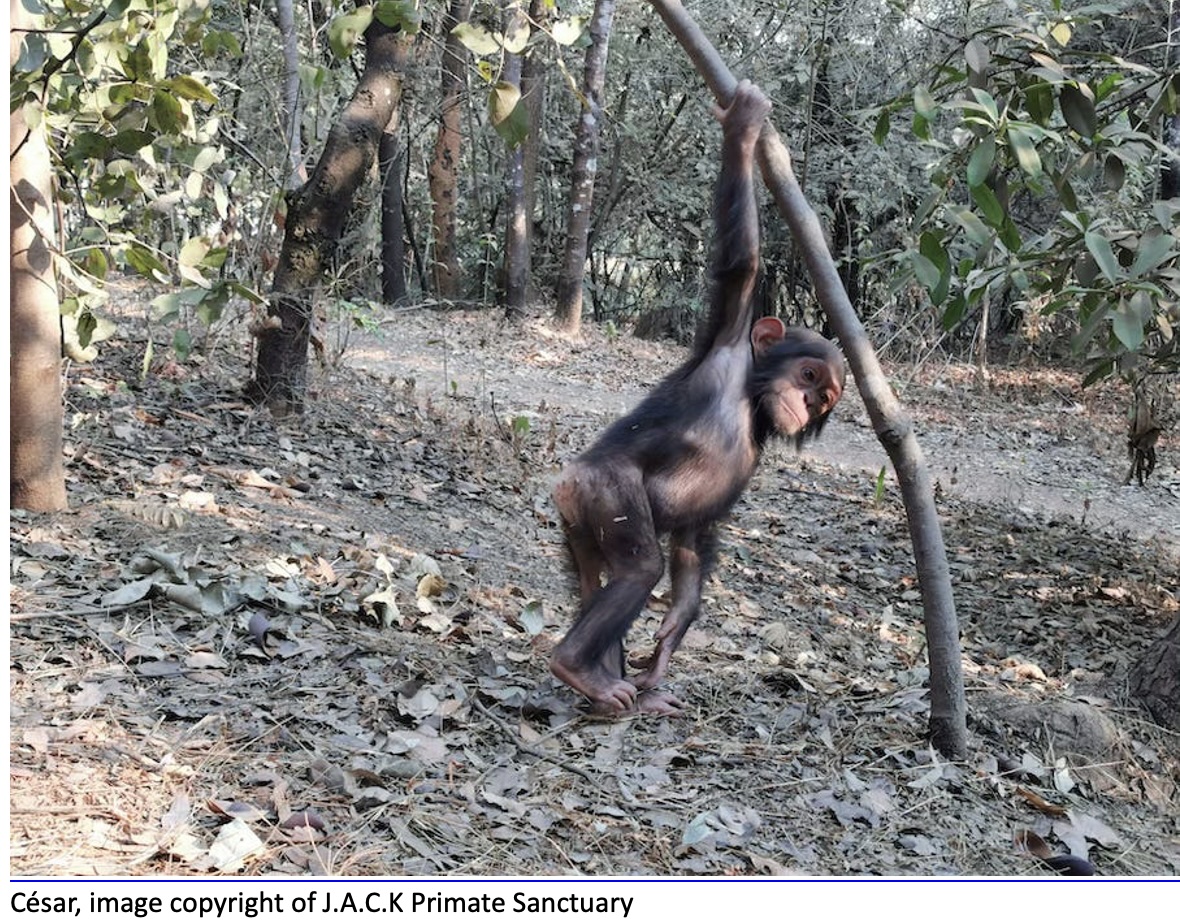
In DRC and other states where they live, primates are targeted both for their meatand for trafficking, mainly of youngsters, into the international zoo and pet trades. The problem has intensified in the last couple of years, according to Chantereau.
“It is just a disaster and it seems that the world is not taking paying enough attention to the problem,“ he says. “I don’t know what is going to be left honestly in the next five to 10 years.”
In the case of trafficking, it’s estimated that between five to 10 individual apes die for every stolen infant because people may “shoot the whole family in order to get the babies,” says Chantereau.
The Pan African Sanctuary Alliance’s (PASA) head of campaigns and policy, Iris Ho, paints a similar dire picture. PASA is a coalition of sanctuaries, wildlife centres, and other partners, that works to protect Africa’s primates. It has 23 members located in 13 African countries.
Ho says that she was aware of 27 young chimp and bonobo rescues in the DRC alone this year by mid-September, while wildlife trade investigator Daniel Stiles warns that trafficking of infant gorillas picked up in recent months. The situation is certainly at crisis levels in central Africa, according to Ho, with the same being true to some extent in west Africa.
Stiles authored a report titled “Empty Forests: How politics, economics and corruption fuel live great ape trafficking” in April. Produced by the Global Initiative Against Transnational Organized Crime (GI-TOC), it pointed to a surge in international demand for live African apes in recent decades.
Moreover, the organisations and entities meant to control illegal trade in great apes “are failing to do so,” according to the report.
Legal trade in apes
CITES has an integral role to play in addressing the issue of trafficking. It is the treaty body that regulates the international trade in many wild species, including great apes.
The body has three different appendices for species, depending on their known risk of extinction. Trade restrictions and permitting requirements for each appendix vary accordingly.
CITES lists all great apes in Appendix I, which offers the highest level of protection. Broadly speaking, commercial trade in Appendix I species, meaning trade that primarily aims to obtain financial benefit, is not supposed to occur. However, exemptions exist, including that if Appendix I species are bred in captivity, then commercial trade is possible.
To conduct such commercial trade, however, breeding facilities should be approved by their country’s CITES authorities and added to a CITES register.
There are no CITES-registered facilities for breeding great apes, the GI-TOC report highlighted. This means that no commercial trade of great apes, including captive-bred individuals, should happen.
When the necessary criteria is met, non-commercial trade can be permitted for other defined purposes, such as zoos, circuses, and reintroduction to the wild.
CITES Wildlife TradeView records show that countries reported importing 188 live great apes as “direct” trade between 2016 and 2021. Direct trade refers to animals imported straight from their country of origin. Most of the apes were alleged to be bred or born in captivity and the transactions included some individuals listed as traded for commercial purposes.
Legal pathways for illegal trade
The existence of a legal trade in endangered species can provide avenues for illegal trade to happen. This appears to be the case with great apes, according to the GI-TOC report findings.
The report said that captive wildlife facilities involving great apes may operate as both breeding outfits and private zoos, with the latter seeing a massive proliferation in recent years. It further asserted that certain “captive wildlife facilities are increasingly acting as centres for laundering wild-caught animals and illicit trade.”
In comments to National Geographic, Stiles explained, “Registered zoos provide legal cover in the guise of rescue or conservation centers. They also offer laundering facilities for animals smuggled in and sold as captive bred.”

Co-founder of Liberia Chimpanzee Rescue and Protection (LCRP), Jenny Desmond, shares these concerns. LCRP is a rescue centre in Liberia, founded by Desmond and her husband Jimmy, to protect wild and orphaned chimpanzees in the country.
Desmond says, “knowing that sophisticated criminals find creative ways to ensure their supply, the front of ‘sanctuary’ has become a way for traffickers to secure, source, and trade apes without any obstacles.”
Some traders also openly advertise apes on social media platforms, according to the GI-TOC report. It explained, “A video post of a chimpanzee infant dressed in children’s clothing, for example, can quickly reach numerous potential buyers. The trade deals are then negotiated out of public view, in private-messaging apps.”
Abuse of CITES rules
CITES characterises captive breeding of species as beneficial to wildlife, on the basis that it can lead to less exploitation of wild individuals. However, it can also be detrimental, with abuse of CITES’ relevant provisions facilitating trade in threatened species that would otherwise be forbidden.
Abuse of CITES’ captive-bred trade provisions is widespread, according to Monitor Conservation Research Society’s Chris Shepherd. It’s almost always cheaper and easier to capture wild animals than raise individuals in captivity, he says, and there is little meaningful scrutiny of captive breeding claims on the import and export sides of the trading chain.
This means that too often “the parent stock was harvested illegally or the animal that is being imported as captive bred has never been in a captive breeding facility and was directly taken from the wild,” Shepherd argues.
Rooting out illegitimate activity within breeding operations is essential because captivity-based sources make up a significant part of CITES-regulated trade in wild species.
Exporting countries reported more than 120 million direct animal trades by number — referred to as “specimens” — between 2016 and 2021. Over 68% of these specimens, excluding ranched animal trades, were allegedly born or bred in captivity, according to the body’s records. These figures include trade in various specimens, such as blood and tissue, skins, eggs, and other body parts or products derived from animals.
For direct trade in solely live individuals reported by number, captive births and breeding accounted for around 55% of the over 36 million animal trades that exporters reported during the period.
Countries also report trade in animals using other measures, such as kilograms, litres, and metres, so the above figures do not represent the entirety of trade in animals during the period.

Commercial zoos
Zoos were the destination for most traded live great apes in the CITES records. This industry enjoys its own purpose of trade category, separate to the commercial classification.
However, a 2022 brief by the South African nonprofit EMS Foundation argued that many zoos could be considered commercial entities. Citing evidence from wildlife trade investigator and filmmaker Karl Ammann, it asserted that “commercial trade in critically endangered animals continues by simply entering purpose code Z (which applies to zoos), rather than purpose code T (which applies to commercial transactions).”
That zoos can be commercial entities is in no doubt. Indeed, the CITES Secretariat communicated by email that while some CITES parties use the Z code for all zoo imports, others use the T code in some instances. The Secretariat oversees the working of the Convention.
The EMS brief also highlighted examples whereby exporters variously utilised the Z code and the T code in sales of species to the same captive breeding facility, a disconnect that should raise alarm bells.
EMS suggested that determinations on whether captive wildlife facilities fall into the zoo or commercial category should partly depend on their financial activities and what they subject the animals to, such as using them in performances.
CITES is working on providing clarity for when different purpose codes apply. But to date it doesn’t appear to be adopting a ‘follow the money’ approach to defining the zoo code.
Great Apes Task Force
At a Standing Committee meeting in November, which is made up of country delegates representing various regions, CITES will take stock of its efforts to protect great apes.
It will review a report on great ape conservation and trade prepared by the Secretariat. The report contains recommendations that encourage parties to improve enforcement measures, collaboration, information gathering, and conservation.
Meanwhile, Liberia has submitted proposals to curb illegal trade in African apes for the committee to consider. It is asking the committee to recommend them for adoption at CITES’ next conference of the parties — CoP20 — which will take place in 2025. The committee decides matters by consensus or vote.
LCRP’s Desmond says Liberia has the world’s second largest population of western chimpanzees, along with the largest intact habitat for the species. She highlights that though national laws exist to protect them, “chimpanzees are under siege in Liberia with a loss of [an] estimated 10% of our population in the past 10 years solely through the rampant bushmeat and pet trades.”
Desmond adds, “Chimpanzee trafficking is local, regional and global. It is an immense and urgent situation. Regional and international collaboration, coordination, oversight, and shared intelligence are the only way we can combat this devastating crisis.”
Liberia’s proposals include calling for the creation of an African Great Apes Task Force. CITES has targeted task forces for other groups of species, such as big cats, and established one for apes in the past.
Having a dedicated task force for African apes would enable CITES to review and improve upon its existing commitments.
For instance, one of the CITES parties’ existing commitments is strengthening “anti-smuggling measures at international borders”. Despite this, the GI-TOC report asserted that apes are often trafficked across borders – mainly by air – with China, the UAE, and increasingly Libya, among the key ultimate destinations. The apes may be concealed in shipments of other species, using mislabelled documents, it said.
J.A.C.K’s Chantereau suggests the failure of countries to stop trafficked animals getting through borders could be addressed by involving experts in the identification process at customs. He also says that a wider rollout of electronic permits in CITES, which still largely uses a paper-based permitting system, would greatly help to reduce the use of fraudulent paperwork.
A task force could dedicate attention to these sorts of issues, along with the suspected abuse of CITES’ other relevant processes, and more.
PASA’s Ho cautiously hopes the discussions at the meeting will lead to some progress after great apes were largely left off the agenda at CITES’ last conference of the parties – CoP19 — in 2022. This omission, along with the Standing Committee failing to back prior suggestions aimed at ensuring apes receive focused attention, has left them somewhat “out of sight, out of mind,” Ho says.
Holistic action
Liberia’s submission also outlines other commitments that the Standing Committee could recommend for adoption at the next CITES CoP.
These include building databases of known captive and wild apes, using artificial intelligence technology and DNA, for better detection of the origin of trafficked individuals. Databases exist to detect wildlife crime in other instances, such as the DNA database built to tackle rhino poaching.
In addition, Liberia proposes the development of strategies to ensure that ape sanctuaries meet high operational standards.
Naturally, meaningful oversight of captive care facilities would be necessary to enforce high standards, which Desmond suggests could help to thwart the laundering of great apes by illegitimate operators.
More broadly, she says high standards are critical for the welfare of individuals and to ensure that genuine sanctuaries meet the “larger responsibility” they have, namely safeguarding endangered species.
Rescue centres do this by helping individuals in their care to “recover, thrive, learn natural behaviors, live with others of their kind, retain their languages, cultures, and genetic diversity, and so much more.” In turn, what rescued apes teach their caretakers informs global conservation efforts and “feasible future reintroduction of great apes” to the wild will rely on these populations.
“Standards of welfare and care become even more important when we consider both the individual and the species,” says Desmond.

Echoing an earlier proposal from Gabon, Liberia also recommends that the task force develop “concrete strategies” with other multilateral environmental agreements (MEAs), such as the Convention on Biological Diversity, to tackle threats like habitat loss.
Illicit trade in great apes is linked to deforestation and habitat loss, along with people’s livelihoods, Ho highlights, so collaboration across MEAs is important. Deforestation makes it easier for traffickers to access great apes in their forest homes, while habitat loss can push wild apes closer to human communities. Add in insufficient livelihoods and high consumer demand and it’s a perfect storm for trafficking.
Relatedly, another of Liberia’s suggestions calls for establishing projects with relevant communities focused on sustainable livelihoods and habitat restoration.
In a further recommendation, Liberia calls for supporting range states in preventing and mitigating zoonotic diseases, via their One Health Program. As the COVID-19 pandemic made clear, the wildlife trade poses a considerable risk of diseases being transmitted from other animals to humans and vice-versa. This is a threat to people and wildlife, which the holistic ‘one health’ approach seeks to address.
Villains and heroes
The GI-TOC report spotlights corruption as another major mountain to climb in tackling great ape trafficking. Corruption is an issue as old as (human) time and not one that is easily surmountable. But for as long as the world has had villains, it’s also had heroes. Thankfully, there is no shortage of the latter in the great ape trafficking situation either.
From communities and rangers that ensure apes are safe in their homes, through to rescuers and legitimate sanctuaries that liberate and nurture survivors, many champions exist. As Chantereau puts it, “you have heroes in Africa who are risking their lives trying to protect the last great apes.”
The surviving infant apes are also heroic, as are their families who perished trying to protect them.
Mpo’s story illustrates this well. When the young chimp was seized from traffickers, he was still clutching hair of a family member, presumably his mother. He ultimately let the hair go to take food from his rescuer, which Chantereau characterised as Mpo ‘choosing to survive.’
Summing up the courage to go on in the face of these young apes’ trauma is no small feat. Chantereau says when the sanctuary receives an orphan like Mpo, “you can look at him and, in his eyes, you can see he has lost everything. You can see he is empty.”
But very, very slowly, these young apes can gain in confidence and begin to trust their human caretakers. After all they’ve suffered at the hands of humans, through both exploitation and inaction, Chantereau says “they still have the grace to forgive us.”
https://tracyk.substack.com/p/opportunity-knocks-for-wildlife-trade
Baby apes are being stolen for pets—and little is being done to stop it
Editor’s note: This article by Rachel Nuwer is based on the Global Initiative’s ‘Empty Forests’ report on illegal great ape trade. PEGAS has added a photo and links.
With baby gorillas fetching up to $550,000, the illicit trade is booming as demand for African great apes rises in China, the Middle East, and Pakistan.
BY RACHEL NUWERPUBLISHED MAY 9, 2023

PHOTOGRAPH BY SAMANTHA REINDERS, THE NEW YORK TIMES/REDUX
Great apes in Africa face the severe threats of habitat destruction and poaching for bushmeat. Now, they’re also increasingly targeted to supply international demand for pets and zoo attractions, according to a new report published by the Global Initiative Against Transnational Organized Crime. So far this problem has largely escaped the notice of most groups tasked with protecting Africa’s great apes: chimpanzees, bonobos, and two species of gorillas.
All four species are endangered—most critically—and are protected by national and international laws. But few groups or governments track ape seizures, making it difficult to know how serious a threat poaching for the live animal trade poses. Circumstantial evidence suggests the problem is significant and growing, says Daniel Stiles, an independent wildlife trade investigator in Kenya who authored the report.
“International policymakers, conservation organizations, and donor governments have not grasped the staggering extent of the illegal trade in African great apes,” says Iris Ho, head of campaigns and policy at the Pan African Sanctuary Alliance (PASA), a nonprofit coalition of 23 primate sanctuaries in 13 African countries, who was interviewed for the report.
Working with a network of undercover investigators and informants, Stiles found that advertisements for live baby great apes are on the rise on WhatsApp and social media. Since 2015, he documented 593 ads for great apes posted by 131 individuals in 17 countries. Prices for the animals have quadrupled compared to a decade ago, with chimps now selling for up to $100,000, bonobos for up to $300,000, and gorillas for up to $550,000. The new report doesn’t cover orangutans, which live in Malaysia and Indonesia.
Most of the African apes go to China, Pakistan, Libya, or the Gulf States—especially the United Arab Emirates—where they become pets or, increasingly, attractions at private zoos. Some 10,000 zoos opened in China between 2013 and 2020, nearly doubling the total number, Stiles reports. It’s easier for locally registered zoos to obtain import permits for strictly protected species than it is for individual citizens, which helps explain zoos’ proliferation. “Registered zoos provide legal cover in the guise of rescue or conservation centers,” Stiles says. “They also offer laundering facilities for animals smuggled in and sold as captive bred.”
In most countries, once a wildlife facility is registered with local authorities, he adds, “you can call them zoos, rescue or conservation centers, sanctuaries—whatever you want.”

Another sign of increasing demand is the escalating number of young apes taken in by PASA-accredited wildlife sanctuaries in Africa since 2019, Ho says. PASA sanctuaries look after more than 1,100 chimpanzees, the majority confiscated from traders. Rescued young apes require permanent care, but most PASA sanctuaries are already operating at capacity, and all are underfunded.
Stiles found that traders mainly source baby apes from the Democratic Republic of Congo and West African countries, especially Guinea. For every kidnapped baby chimp, poachers usually kill six to seven adults. Experts also estimate that five to 10 babies die from injuries, illness, or mistreatment for every animal that makes it to buyers abroad.
Traders smuggle some great apes out of Africa in legal shipments of monkeys or birds, the report notes. Increasingly, though, animals are brought to registered zoos, including in South Africa. Evidence suggests that these facilities obtain legal export permits for wild-caught great apes by falsely claiming the animals were bred in captivity.
‘I was tired of battling the bureaucracy’
Little is being done to stop this new trend in illegal trade, Stiles writes, in part because three of the most important international groups tasked with protecting great apes have yet to pay serious attention to the problem.
The Great Apes Survival Partnership (GRASP)—a United Nations alliance—includes combating illegal trade among its priorities. But according to Doug Cress, GRASP’s former leader, the group “barely functions anymore.” Cress resigned in 2016 because the UN agencies that were supposed to be supporting the effort never treated it as a priority, he says. “I was tired of battling the bureaucracy.”
Johannes Refisch, who took over GRASP’s leadership, says that “halting illegal trade is a priority.” Refisch pointed to an ape seizure database that GRASP launched in 2016 as the group’s “main instrument to better understand the drivers of illegal trade so that we can help address it effectively.”
Stiles says that when he requested access to GRASP’s database, in August 2022, he received “a ridiculous report” containing a table of seizure numbers that had no details attached about locations or dates, and no citations. “It had no data,” he says. “Totally useless.”
Refisch declined National Geographic’s request to view the database.
The International Union for Conservation of Nature (IUCN), the global authority on endangered species, is home to an expert group dedicated to great apes, but it doesn’t prioritize illegal trade, according to Stiles. This stands in contrast to IUCN specialist groups for different species, which actively report on illegal trade. “Look at pangolins,” Stiles says. “No one even knew what the heck a pangolin was until the IUCN specialist group started reporting and saying, ‘Hey, we’ve got tens of thousands of pangolins being trafficked’—and now it’s a big deal.”
“It’s insane that’s not being done with great apes,” he adds. [see https://freetheapes.org/2016/09/28/cites-decides-not-to-report-on-illegal-great-ape-trade/%5D
“The IUCN,” says Dirck Byler, of the organization’s Primate Specialist Group, “considers all threats to great ape populations as serious, and many of its members have dedicated their professional careers to reducing or reversing the threats to great apes, including efforts to reduce the illegal ape trade.”
CITES, the global treaty to ensure that international wildlife trade doesn’t threaten the survival of species, lacks a working group dedicated to great apes, Stiles reports. At last year’s CITES conference, where representatives from 183 countries and the European Union met to make decisions about trade in endangered species, great apes weren’t even included on the agenda. “Because this trade is international, it falls under the purview of CITES,” Stiles says. “But CITES is not taking action.” [see https://freetheapes.org/2017/12/03/cites-again-ignores-great-apes/%5D
Ben Janse Van Rensburg, chief of the enforcement unit at the CITES Secretariat, says that individual countries are responsible for making sure trade in protected species remains legal. In cases where concerns are raised, he says, the Secretariat “has issued a statement to provide factual background.”
CITES member countries are also responsible for setting the agenda for discussion at conferences and meetings, he says, and for establishing working groups for specific species.
Stiles counters in his report that representatives from Niger, Ivory Coast, Kenya, and Uganda did attempt to create a CITES working group dedicated to great apes, in 2014 and 2016. But these requests, he says, were “refused” by the CITES representative chairing the meeting.
Iris Ho adds that in March 2022 Gabon, supported by Senegal, Guinea and Nigeria, requested—to no avail—that great apes be put on the agenda for the CITES conference later in the year. She says the U.S. also emphasized the importance of paying attention to this issue.
Without concerted global action, the problem will only worsen, Stiles warns. Already, he’s seeing signs that great ape trade is spreading to India. “If the international community does not begin to take great ape trafficking seriously, it will continue to grow, threatening the very survival of our closest relatives,” he says.
[SEE https://www.nationalgeographic.com/animals/article/wildlife-watch-baby-great-apes-kidnap-africa/)
EMPTY FORESTS: How politics, economics and corruption fuel live great ape trafficking
The Global Initiative Against Transnational Organized Crime has released a new report on great ape trafficking.

The under-reporting of great apes seized in illegal trade incidents, both nationally and internationally, is flagged as a serious problem in bringing a true appreciation of the great ape trafficking situation to the attention of governments, international organizations, and the media. Relevant institutions in the UN system and the International Union for Conservation of Nature (IUCN) are singled out as needing improvement in their approaches concerning the illegal trade in great apes.
By far the main demand driver for removing African great apes from the wild is for bushmeat, sold in local markets or transported to urban areas. Great ape body parts, particularly skulls and hands, have a local market for use in traditional medicine or rituals, and the skulls are sometimes purchased overseas by collectors, academic institutions and artists. Several seizures have been made of great ape skulls nationally or shipped internationally.
This report deals only with live African great ape trafficking, but infant capture often results as a byproduct of bushmeat hunting. Another potential deleterious impact of the illegal great ape trade was thrust into the spotlight by the COVID-19 pandemic. The most likely cause of the pandemic is that the virus passed from an infected wild animal to humans in a food market,4 although the possibility of a leak from the Wuhan Institute of Virology is favoured by some.
Most illegal great ape imports are done without veterinary health inspections or certificates, which raises considerably the risk of introducing one or more zoo-notic diseases to humans in destination countries. The COVID-19 pandemic has raised government and public awareness about the health risks involved in the illegal wildlife trade (IWT), which may lead to better legislation aimed at controlling this frequently ignored threat.
This report describes the evolution of this recent black market, which is different in important respects from the traditional exotic animal markets that preceded it. In some countries, the political and economic interests of corrupt government and law enforcement officials facilitate the illegal trade and hinder effective actions to stop it. Even international organizations dedicated to wildlife conservation are not free from the political and economic interests that impede successful trafficking-mitigation efforts, particularly in the case of great apes.
The report can be accessed here.
Posted in Uncategorized
Explained: Why three baby chimpanzees were kidnapped from a Congo sanctuary
Editor’s note: Great ape capture in the wild and trafficking for the exotic pet trade has been rising for about two years. Prices for the infants have also been rising, providing even more incentive to the traffickers to increase their efforts. This new twist to infant capture introduces an alarming development that hopefully will be nipped in the bud. This article summarizes the situation at the time of writing. It is not over yet.
This is the ‘first incident in the world’ where baby apes have been kidnapped for ransom. The abductors have demanded a six-figure sum and threatened to harm the chimpanzees if their demands are not met
FP Explainers September 26, 2022
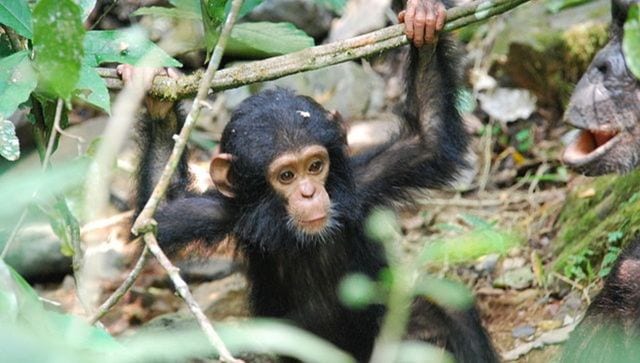
Three baby chimpanzees have been kidnapped in Congo for ransom. Image Courtesy: Wikimedia Commons (Representational Image)
In a first, three baby chimpanzees have been kidnapped from an animal sanctuary in the Democratic Republic of Congo (DRC).
The kidnappers have demanded a six-figure ransom to free the three baby chimps– Monga, César and Hussein, reported The New York Times (NYT).
“This is the first time in the world that baby apes were kidnapped for ransom,” Franck Chantereau, co-founder of the sanctuary where the kidnapping took place, told CNN.
The sanctuary – Young Animals Confiscated in Katanga (shortened to JACK in French) in Congo’s Lubumbashi – houses 40 chimpanzees and 64 monkeys of 14 species that have been rescued from Congo’s illegal wildlife trade, notes NYT.
How did the kidnapping take place and why were the chimps targeted?
Let’s take a closer look:
The abduction
As per CNN, the kidnappers broke into the sanctuary around 3 am on 9 September and took away three of the five baby chimpanzees rescued by Franck this year.
His wife Roxane Chantereau, co-founder of the sanctuary, received three texts and a video on WhatsApp showing two baby chimpanzees moving across a dirty floor covered with tumbled furniture, as per NYT.
As the video panned across the room, the third chimp was seen standing on a dresser with her arms tied over her head.
In the three voice messages, the kidnappers threatened to kill the chimpanzees unless Roxane paid the ransom money. Further, they reportedly threatened to kill her and abduct her two children.
“They told us that they had planned to kidnap my children because they were supposed to come here on vacation. But they didn’t come so the kidnappers took these three babies hostage and demanded a large amount of ransom from us,” Franck was quoted as saying by CNN.
The kidnappers claimed to have drugged the chimpanzees and threatened to hurt the hostage animals if their demand was not fulfilled.
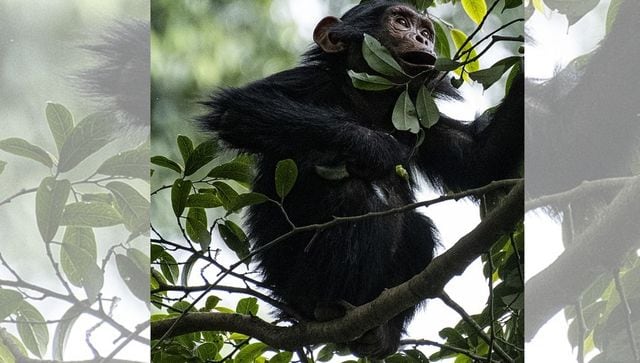
The kidnappers have demanded a six-figure ransom to release the three baby chimps. Wikimedia Commons (Representational Image)
A few days later, Roxane Chantereau again received texts from the kidnappers warning that they will decapitate one of the baby chimpanzees and sell the other two to Chinese traffickers, Franck told NYT.
He stated they have not heard from the abductors for two weeks now which is “worrying” them.
He stated the authorities have taken the case “very seriously” and “consider the robbing of these babies as a security threat for the country,” NYT reported.
Franck said the sanctuary is unable to pay the ransom money, adding that if they heed the demand, this incident is likely to occur again in the coming months. Expressing apprehension, he told CNN there is no guarantee if the chimps will be returned even after the kidnappers are paid.
The authorities are also not in favour of paying the ransom.
Calling the abduction “inhumane and unnatural”, Michel Koyakpa, media adviser to DRC’s environment minister, told CNN, “we will not give in to this kind of demand”.
Koyakpa said the search is on to find the stolen baby chimpanzees.
Notably, Congo, which has a rich biodiversity, offers sanctuaries the same legal protections as national parks.
Sanctuary targeted earlier
In 2006, months after the sanctuary was opened, a group of people had broken in and torched the baby chimps’ sleeping place, leading to the death of two of the five apes that were there then, reports CNN.
While in September 2013, the sanctuary’s education center was targeted and set ablaze by miscreants, however, there were no fatalities.
Illegal wildlife trafficking
Illegal wildlife trade is not rare in Congo. It is the only country in Africa where all four great apes– chimpanzees, bonobos, western gorillas and eastern gorillas– are found.
Congo has become a hotspot for wildlife trafficking.
The illegal trade of ivory, rhino horn, pangolin scales, and poaching of live baby chimpanzees, gorillas and bonobos has become rampant in Congo amid increase in demand for primates in China, Pakistan, Egypt and the United Arab Emirates, Franck told NYT.
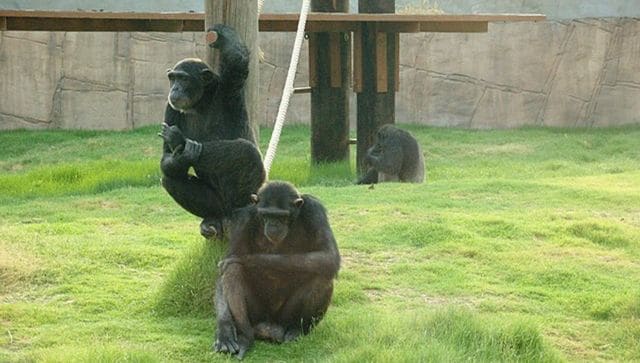
This is the first time that an ape has been kidnapped from a sanctuary in Africa for ransom. Wikimedia Commons (Representational Image)
However, this is the first time that an ape has been kidnapped from a sanctuary in Africa for ransom.
Franck said the buyers of these exotic animals are mostly rich people. He added that they do not understand the consequences of their action as to capture one baby, an entire family of up to 10 adults is killed by poachers.
Experts fear that if the kidnappers are not punished, there can be more kidnappings for ransom. “If they get away with this, these cases are going to happen over and over again,” Adams Cassinga, founder of Conserv Congo, a nonprofit group battling wildlife trafficking in DRC, told NYT.
He said the Congo government and global community must come together and send a stern message that such incidents will not be “tolerated”.
Posted in Uncategorized
Captured, trafficked and enslaved – what Bua Noi’s liberation could mean
Bua Noi, meaning Little Lotus in Thai, has festered in a bleak cage on top of a Bangkok department store for the last 33 years, deprived of sunlight and natural vegetation. She has never smelled the scents of nature that would float in on a fresh breeze in her tropical forest homeland back in Central Africa. She has never experienced the joy of having a baby. I therefore empathized as she glared at me with a ferocious scowl through the bars the first time I saw her many years ago.
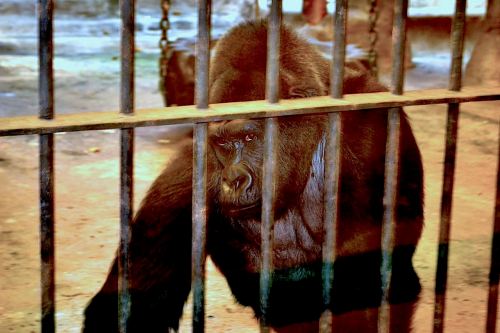
Bua Noi has the distinction of being the only gorilla in all of Thailand. This gorilla has become the standard bearer for all the thousands of captive wild animals exploited for commercial gain in Thailand. She might also be the key to freeing many more illegally captured and trafficked wild animals held in private zoos and safari parks and putting a halt to a thriving trade that threatens endangered species. A highly disputed question has been, was Bua Noi acquired legally? If not, there can be a legal case for freeing her.
Pata Zoo is the Guantanamo Bay of the world’s worst zoos – no amount of campaigning seems able to close it. Bua Noi is its star prisoner, the focus of campaigns by People for the Ethical Treatment of Animals (PETA) and the Thai animal welfare crusader Sinjira Apaitan, who has launched a Change.org petition that is closing in on its target of 150,000 signatures requesting the release of Bua Noi.
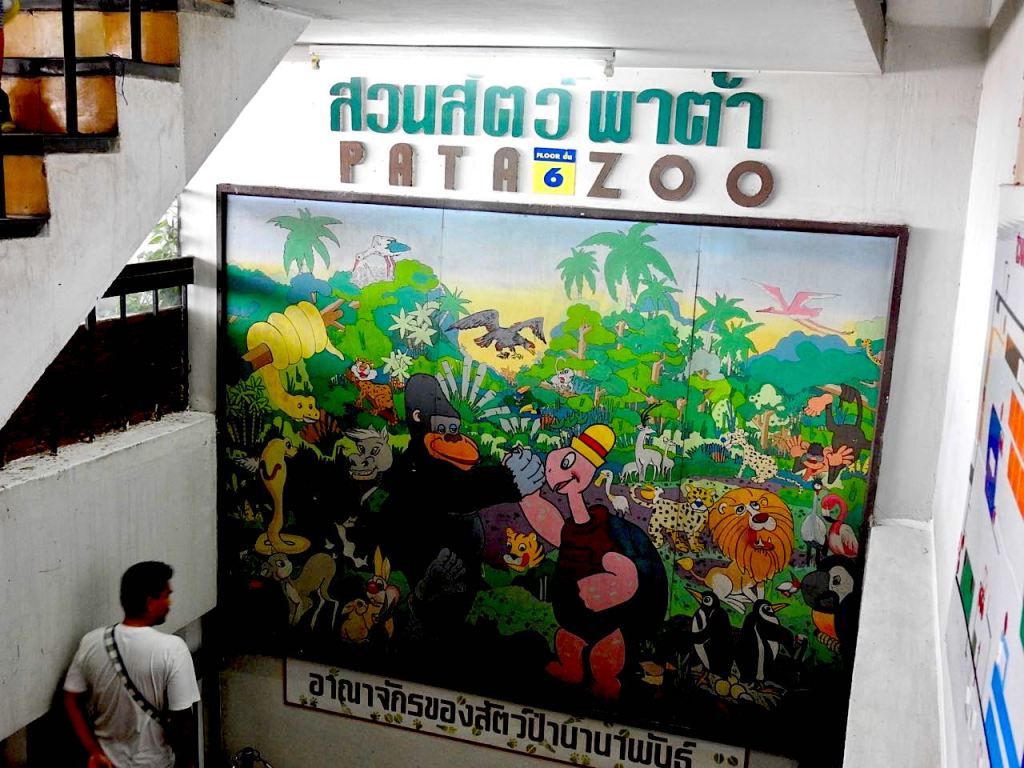
Background
Pata Zoo was opened in 1983 by Vinai Sermsirimongkol, a businessman who owned the seven-story high Pata Pinklao Department Store in the unfashionable west side of the Chaophraya River, which cuts through Bangkok, Thailand’s capital and largest city (8.2 million people). Vinai converted the top two floors into a zoo, with cabinets holding reptiles and amphibians on the sixth floor and mammals in cramped cages on the top floor, including chimpanzees, orangutans, tigers, other big cats, bears and a male gorilla that Vinai named King Kong, who arrived in 1984 with a CITES export permit from the Aachen Bird and Animal Park in West Germany. The Thai CITES import permit was issued to Siam Farm Zoological Garden, Bangkok. No further details are known, unfortunately, since this trade was not reported to the CITES Trade Database by either country, an infraction of CITES regulations, since Great Apes are Appendix I – no commercial trade from the wild.
When Vinai died, his younger brother Kanit took over and has been fighting doggedly to keep “the world’s saddest zoo” open to the public. A 2010 story in The Guardian newspaper quotes Kanit as saying that, “…the zoo is a respite for people looking to escape the concrete jungle of Bangkok and to reconnect with nature. The animals are especially popular with children.”
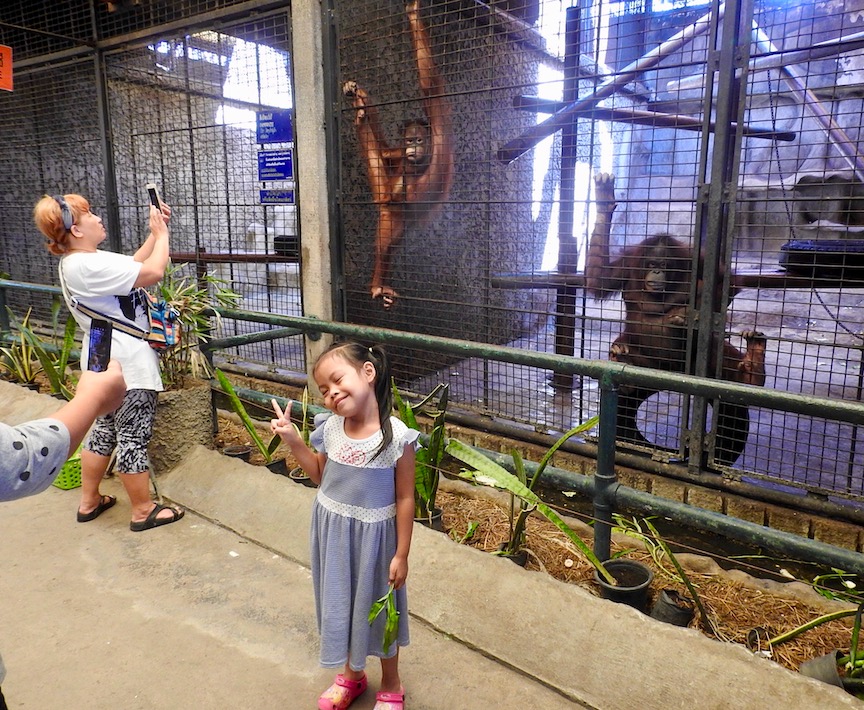
The comment about children is true, but there is nothing resembling “nature” in the concrete, barren zoo. I first visited the Pata Zoo in Bangkok in 2013 while attending the 16th CITES Conference of the Parties, a massive gathering of over 4,000 people concerned with the fate of the world’s wild plants and animals. The Convention on International Trade in Endangered Species (CITES) regulates trade in over 37,000 wild species. I had been invited to attend because I was the lead author on a United Nations report on illegal great ape trade entitled Stolen Apes that was being launched at the conference.
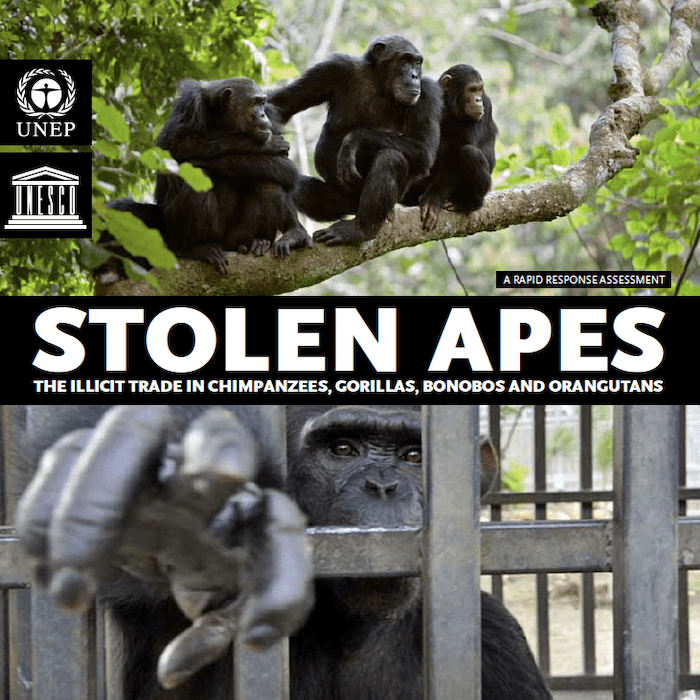
I found the zoo to be a deplorable place to hold animals, with desolate cages marred by rusted bars and concrete floors. Big cats paced back and forth in well-worn tracks or slept, while great apes reached out for bananas offered by visitors or stared forlornly through the bars. Bua Noi seemed frustrated and angry at being cooped up for 26 years (in 2013) in a prison with no vegetation. King Kong had died in 2007, so the last six years she had been alone.

I revisited the zoo in 2019 and found Bua Noi and the other great apes where I had left them six years earlier. It was heartbreaking to think that they had been there all that time, in addition to all of the years since they had arrived. There was even a bonobo (pygmy chimpanzee) in a dark cell above a chimpanzee cage, which I had not noticed before – perhaps arrived in the interim? No bonobo imports to Thailand are reported in the CITES Trade Database. No gorilla imports to Thailand are reported in the CITES Trade Database. So how could Bua Noi be a legally acquired import as the Bangkok Post reported in a 2014 story, repeated in 2020?

I knew from personal investigations that a steady stream of orangutans were smuggled into Thailand to feed its commercial zoo industry, so it would not be surprising if gorillas and bonobos were as well.

During the 2019 visit I was in Bangkok with a cameraman shooting footage for a film series on great ape trafficking entitled “Stolen Apes”. One of the series focuses on Bua Noi. A man holding a monkey who seemed to be a supervisor came up to us and asked us to stop filming. I asked him, “Where does this gorilla come from?” He replied, “She was born in a German zoo, came here legally 30 years ago.”

I could elicit no more information from him. I decided to get to the bottom of the question of from where and how Little Lotus did in fact find herself at Pata Zoo. I combed through old copies of the very informative International Primate Protection League newsletters, exchanged emails with IPPL’s founder Shirley McGreal, scoured the gorilla studbooks, used Google to search out old stories on Pata Zoo and Bua Noi on the Internet, searched various NGO websites and social media accounts of individuals named who were connected with gorilla trafficking and reviewed the TRAFFIC reports on great ape trade.
From the information amassed I have reconstructed a scenario that is consistent with known facts.
The Scenario[1]
Bibi received the order for four more baby gorillas in July 1987 from his father Walter, who was in Hohenstadt near Nuremberg in what was then West Germany. Walter Sensen moved back in 1985 from Equatorial Guinea, a former colony of Spain, to Hohenstadt because of a few brushes with the authorities, just as earlier in 1981 he had had to escape from neighboring Cameroon. Bibi replaced Walter in 1985 and now lived in Bata, a pleasant town on the Equatorial Guinea coast about 30 kilometers south of the border with Cameroon. Walter and Bibi were wild animal traffickers supplying shady zoos around the world with rare animals using their company African Animal Export. Bribes had secured them a five-year exclusive contract with the government for exports of gorillas and chimpanzees.

Bibi, real name Bernd Sensen, sent out word to his contacts in the villages of Rio Muni (mainland Equatorial Guinea) and nearby Cameroon and Gabon that he needed baby gorillas. Kurt Schafer, a known bird and animal trafficker, and Dr. Daeng of Siam Farm in Bangkok had put in an order for the four infants. By early September Bibi had the four infant gorillas, two males and two females, all under a year old. The gorilla mothers ended up as bushmeat, killed and butchered in front of their terrified infants.
Equatorial Guinea was not a member of CITES at the time and the Sensen’s had an in with the Minister of Industry, Commerce and Promotion of Enterprise, Florencio Esoro Obiang Angue, who signed a ministerial export permit number 381 for the four gorillas. Bernd submitted the permit to the Thailand CITES Management Authority in Bangkok and requested an import permit. Thailand rejected the minister’s document as not equivalent to a CITES export permit. Since gorillas were listed as CITES Appendix I, protected from commercial trade, Bernd knew that without a Thai import permit they had a problem.
Walter made some telephone calls to traders he knew and made a new arrangement. Only one gorilla would go to Thailand – it was too risky shipping all four now that the Thailand authorities were alerted – and two would go to Aritake Chojouten in Japan, a notorious animal trafficker. It wouldn’t be difficult to find a buyer for the fourth. Bibi got hold of Wabi Bello, a Nigerian trafficker who specialized in African grey parrots, to get him a certificado de origen. The Certificate of Origin had Wabi Bello’s name on it and showed that he was exporting one gorilla that weighed 10 kilograms to Siam Farm Zoological Garden, Bangkok, Thailand. The document had official-looking stamps on it, so Bibi was happy and paid Bello the agreed price.

Bernd Sensen flew with the four gorillas as personal effects to Spain on Iberia airlines, using Minister Angue’s export permit. On 9 September 1987 he shipped the baby gorilla from Spain to Bangkok with the certificado de origen and two were shipped the same month to Chojouten in Japan, where he sold them to Chiba City Municipal Zoo for US$575,000. Fraudulent documents claimed that the two gorillas were bred in Ringland Circus, a modest outfit that toured Spain, it didn’t even have a permanent home.
The Iberia airlines waybill for Bua Noi identified the recipient as Dr. Daeng, Pata Zoo, Bangkok. The Pata Zoo owner, Vinai Sermsirimongkol, paid Siam Farm the agreed price for Bua Noi, just as he had paid them for Bwana in 1984. Vinai hoped that when Bua Noi became old enough she would mate with Bwana, now renamed King Kong, and give him valuable offspring to sell and recoup his expenses.

Walter Sensen was convicted and jailed for 2 years on 14 March 1990 in West Germany for illegally shipping three gorillas from Cameroon in January 1987 to Taiwan. He was later freed on appeal and continued to export gorillas and other great apes from Central Africa, assisted by his son Bernd. The situation became so alarming that the CITES Secretariat had to issue a Notification in 1988 warning CITES Parties not to accept imports of CITES-listed species from Equatorial Guinea.
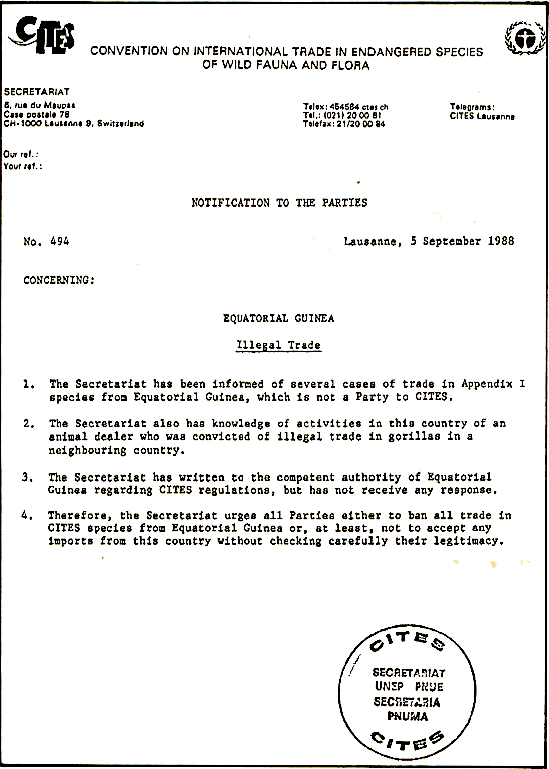
So Bua Noi was not born in a German zoo, was not imported legally from anywhere, but rather she was just one of many ill-fated gorilla and chimpanzee infants captured in the wild by bushmeat hunters who killed their mothers and sold them off to traffickers. In the 33 years that Little Lotus has been suffering in her concrete cage in Pata Zoo she has paid back the zoo owners many times over what she cost them.

What now?
Recently, Sinjira joined forces with Polish activist Joanna Sobkowicz to launch the website freegorilla.org to raise awareness of Bua Noi’s story and give updates about the campaign to free her.
“I met with Kanit in 2014”, Sinjira told me, “he promised to move all of the large animals from the rooftop by 2020. I am waiting.”

There are two possibilities of where Bua Noi could go, if freed. The first is to a wildlife sanctuary in Thailand, the second is to be repatriated back to Central Africa. As with most alternative choices, there are pros and cons with both.
In June the famous singer Cher came on board with her Free the Wild organization. Cher has written a personal letter to the Honourable Minister Varawut Silpa-Archa (Thailand Ministry of Natural Resources), requesting his urgent assistance for the rescue and release of Bua and the other primates kept at the zoo.
Gina Nelthorpe-Cowne, the co-founder of Free the Wild, said, “I can advise that things are looking very hopeful.” After the success of freeing Kaavan, a lone elephant in the Islamabad Zoo, Free the Wild should be taken seriously.
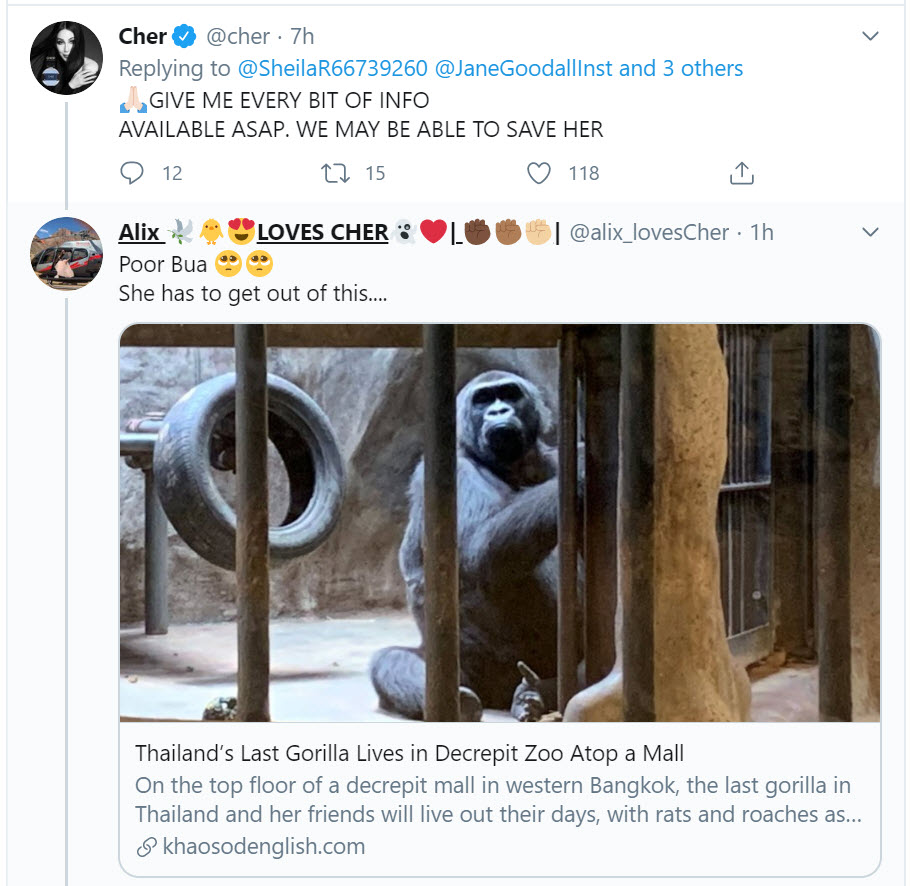
Damian Aspinall of the Aspinall Foundation is ready to sponsor and transport Bua Noi to a sanctuary in the Congo, which is actually in the general area from which she was stolen.

The alternative possibility is a wildlife sanctuary located not too far from Bangkok. The sanctuary has a good track record for looking after rescued wild animals properly and it will also accept other primates from Pata Zoo, including chimpanzees, orangutans and the bonobo.
Back to Africa might sound like the ideal solution to Bua Noi’s plight, but transport from Bangkok to Brazzaville, with layovers and plane changes, could be quite hazardous for a 33-year old female gorilla. The stress would be extreme. The maximum age for females in captivity is about 40 to 50 years, so she is probably close to the average age for mortality right now. Adjusting to life in a forest, even one where she would be supervised, could be a shock for Bua Noi, who reportedly has become attached to her two regular caregivers at Pata Zoo.
Transport from Bangkok to the sanctuary would take about two hours by road. The surroundings are pleasant, with plenty of natural vegetation, fresh air and sunlight. With luck, one or two of her regular caregivers could go with her, at least for a transitioning period, to help her adjust to her new surroundings.
And Khun Kanit Sermsirimongkol, Pata Zoo owner, could come to visit her, as he cares about Bua Noi as well. It would be a generous gesture on Khun Kanit’s part, gaining him the appreciation and respect of the international community and the Thai people.
With the verification provided here that demonstrates that Bua Noi was acquired in the wild and shipped and imported illegally into Thailand, there are good grounds to justify that she be freed.
Illegal capture of endangered species in the wild for commercial zoos and the exotic pet trade is an enormous problem. Added risks of zoonotic spillover events are only too evident with the current COVID-19 pandemic. Commercial zoos such as Pata and many others like it encourage human-animal interaction for a fee (framed selfie photos, petting, playing, etc.). Three-quarters of all emerging infectious diseases are zoonotic, according to the United Nations Environment Programme, transferred from animals to humans, facilitated by environmental destruction and wildlife crime.
It is in the best interests of both humans and animals that commercial zoos and safari parks stop importing animals captured in the wild. Closing Pata Zoo and freeing Bua Noi would help current efforts to stop this type of wildlife trade and signal to the world that change is possible.
[1] Walter Sensen has passed away, but a draft of this article was sent to Bernd Sensen asking for corrections or comments. None have been received.
Posted in Uncategorized
Anatomy of a Sting: Postscript
Tom, Joe and all the rest of the wildlife traffickers who use social media platforms to market nature’s bounty are still out there, operating almost with impunity. U.S. law gives Facebook, Instagram, WhatsApp and all of the other Internet service providers immunity from responsibility for whatever third-party users post, even if it breaks the law, because of Section 230 in the Communications Decency Act.
A compounding problem to putting a stop to the rape of nature that exotic pet trade epitomizes is the fact that most countries consider wildlife crime relatively unimportant. Even though the Royal Thai Police put a lot of effort into pulling off the Kid Op sting, the prosecutor’s office apparently did not think the case important enough to investigate further and gather all the evidence needed for a court case. For example, who was “Joe” at Samutprakarn, who supposedly owned the orangutan infants?
Samutprakarn Crocodile Farm & Zoo, not far from Bangkok, is a horror show of abused animals, including an endless string of baby orangutans, chimpanzees and tigers that pass through there, used as photo props and for degrading performances for fee-paying visitors. There are several similar facilities in Thailand that rake in money from the suffering of wildlife, most of which originate in the wild from criminal capture. Were the ‘kids’ held at Samutprakarn from the time they arrived in the Bangkok area up to their seizure in the sting of 21st December? We will probably never know.
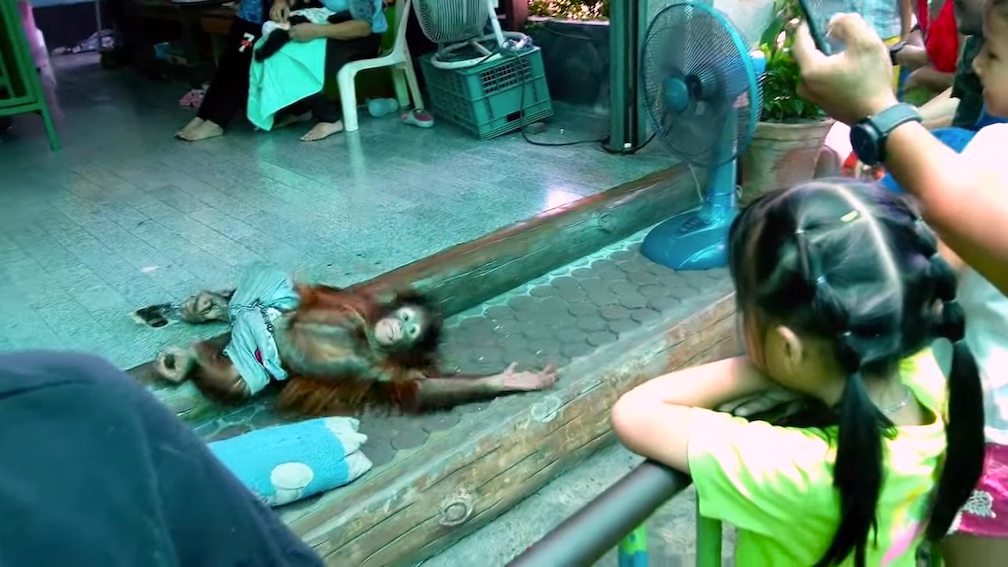
Samutprakarn often keeps orangutan or chimp juveniles chained to the floor to attract visitors.
The seized kids were named Nobita and Shizuka and are still, three years after their seizure, being held at the Khao Prathap Chang Wildlife Breeding Centre in Ratchaburi province. At the time of the sting funds were available for their repatriation to Sumatra, where they were originally captured, but three years later those funds are gone. I was repeatedly told they could be relocated to a sanctuary when the case was closed. There never was a case.

Nobita and Shizuka are still at the Thai government facility three years after their seizure. (Photo courtesy of Edwin Wiek)
Posted in confiscation, Internet, online trafficking, orangutans, Thailand, trafficking
Anatomy of a Sting – Part III
Nick, Khun Lee, Eddy and Tom
I was very occupied the next few days with my other operation in Africa. I heard from Jeffrey that nothing happened on the 30th of November, there were mis-communications between Khun Lee and Ton, Tom’s agent. Tom called Jeffrey in his room at the hotel the night of the 30th, scaring the heck out him, which he later wrote up for the NYT. Jeffrey left Bangkok on the 1st.
On 1st December I WhatsApped Freeland: “…give me an update.” They replied, “…again it was a no-show, we will need to wait and try again tomorrow.”
Since nothing seemed to be happening, I emailed Freeland on 2nd December:
“Hi R. and [Khun Lee],
I was thinking, what if I started communicating with Tom again directly? I can say I’m back in Bangkok and very keen to receive the orangs and pay the money and be done with it. What did you say to explain my absence?
I think I could sign back onto WhatsApp with my former number if you stop using it. I will have to sign on again and they will send a 6-digit code to the number, which you will receive. Then you will have to pass it on to me so I can verify.
Brief me on what has been said, and send me some screen grabs. We can say that I’m going to meet them with Mr. Lee to do the exchange.
Regards,
Xxxx”
Back then, a WhatsApp account was tied to a device, not to a SIM card. So even if the SIM card of the number the WhatsApp account was set up with was not in one’s phone, you could still operate it as long as you inserted the verification code. Since then, WhatsApp has done an update that allows it to detect the SIM card so the account will only operate with the device and SIM card together.
R. of Freeland replied immediately:
“Just to update you for yesterday, Ton lied to us and said he was delivering the kids in a black Toyota, this story later changed to ‘they will be delivered by taxi’. We waited until about 7:30, our driver was then asked to travel to Chanthaburi and would be paid 20,000 THB to deliver the Orangs. At this point we refused to proceed and called it a day.
Both [Khun Lee] and I agree that your plan would be a good idea. Please call me at your earliest convenience and we can do this while we are all together so I can pass you the 6-digit code.”
Chanthaburi? That was like a 5-hour drive southeast from Bangkok to a town only 40 km from the Cambodia border. It didn’t make any sense.
I called them and got the WhatsApp account using my Thai mobile phone number set up on my phone. I saw that Tom had sent me a message saying “Hello” at 18:35 on 29th November and another message early the morning of 30th November saying:
“Use this code to verify my WhatsApp messages and calls to you are end-to-end encrypted:
[three lines of numbered code]
No one had replied to either of Tom’s messages. Khun Lee had the SIM card, had he even put it in a phone to read Tom’s messages? That’s why Tom called Jeffrey’s hotel room the night of the 30th, no one was answering my number.
I discovered that Exoticpet88 was back online. This photo of the kids was posted 1st December:

These two were posted 3rd December:
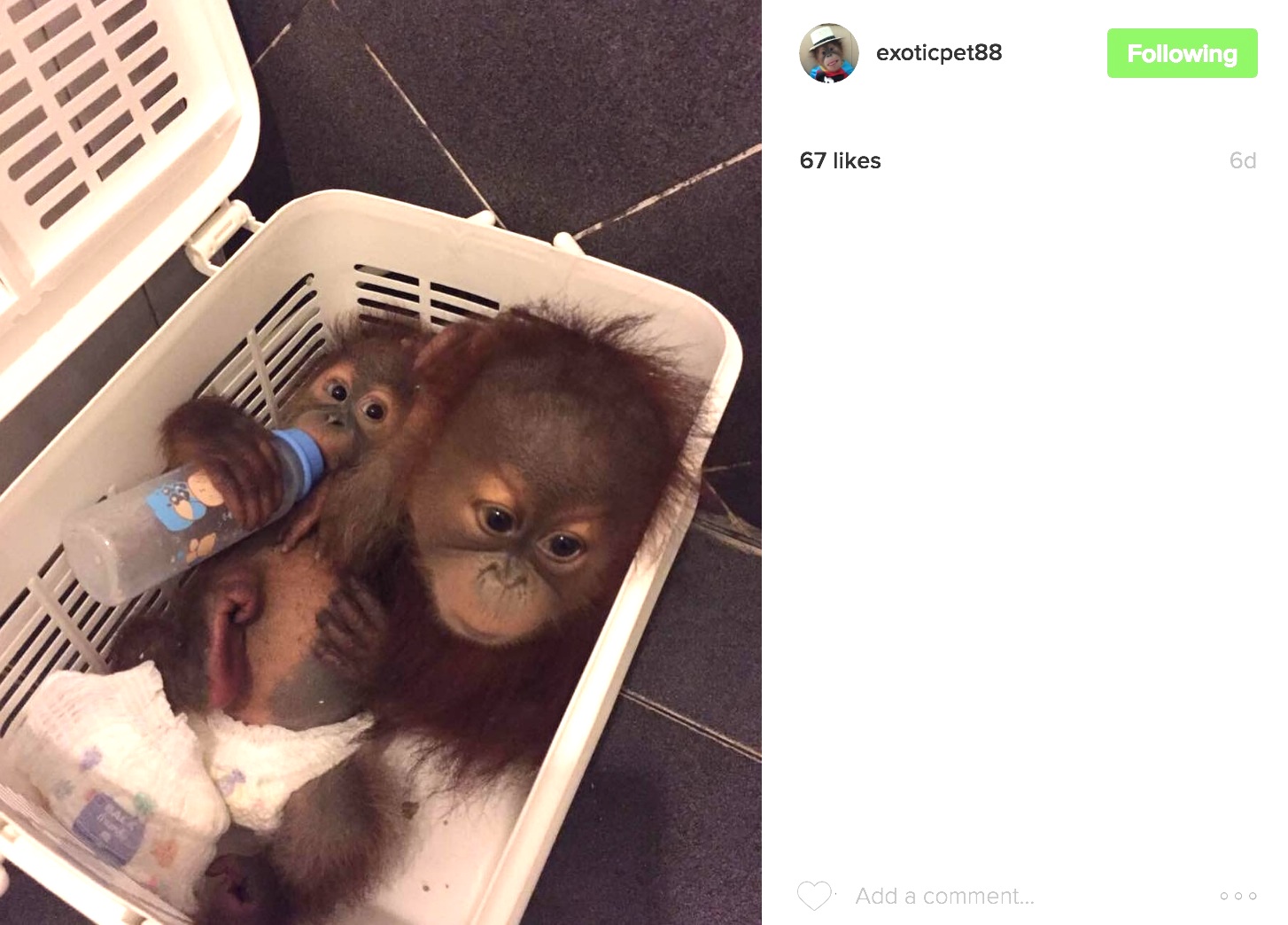

This photo was posted on @exoticpetworld on 1st December:
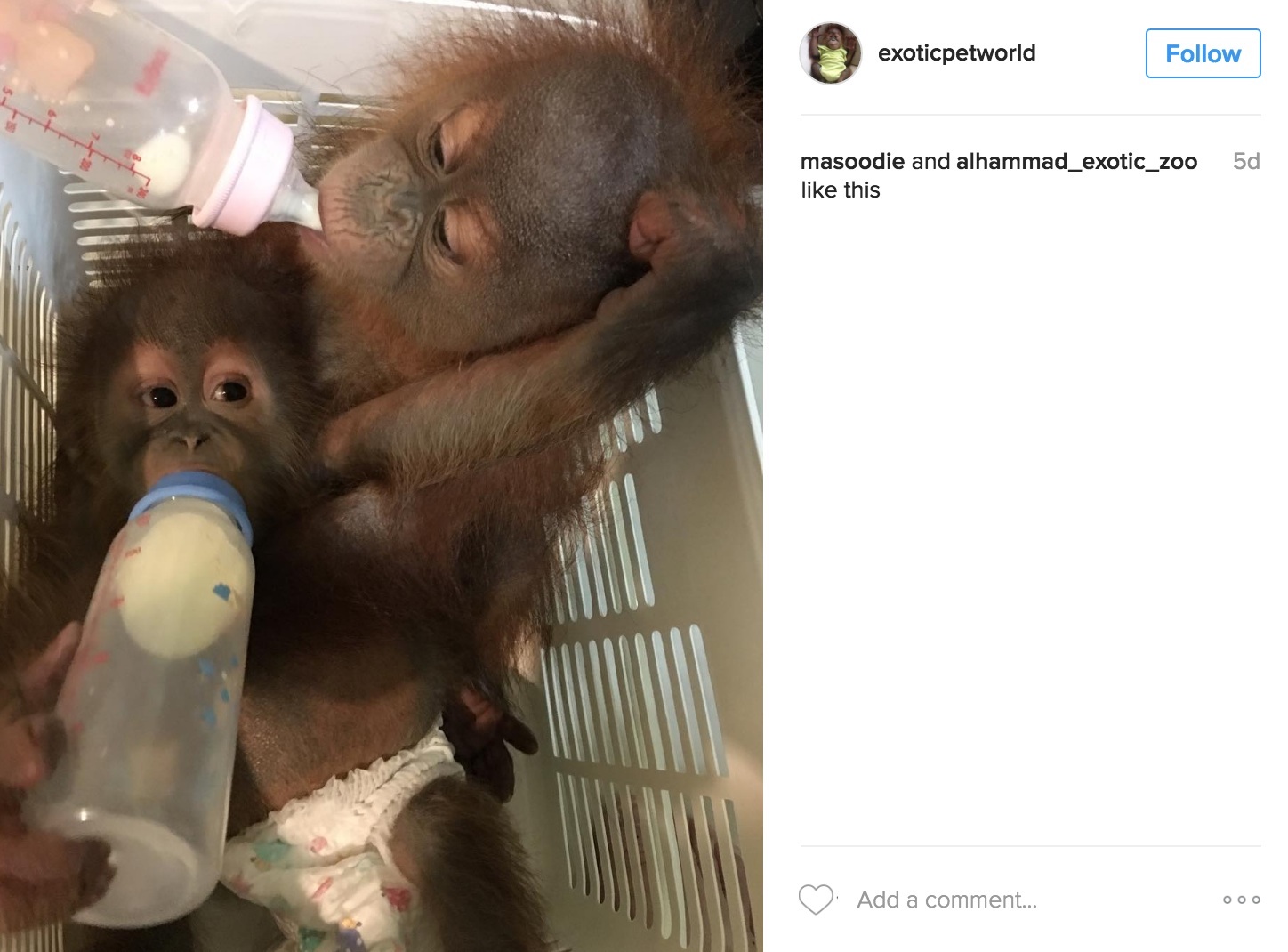
Because Nick had disappeared, Tom was advertising the kids for sale. It would be disaster if someone else bought them.
On 2nd December I WhatsApped R. at Freeland: “Exoticpet88 is back and showing the kids.”
No response, so on 4th December I emailed R.:
“Strangely, the Instagram account exoticpet88 (https://www.instagram.com/exoticpet88/) is back online. The account had no posts from 27 April, then was kicked off of Instagram in around October, I don’t know how they got back on. They are showing the kids from 1st December. The account they replaced it with is still functioning (https://www.instagram.com/exoticpetworld/) and also showing the kids.
I hope Khun [Lee] was serious about refunding me the THB 100,000. Are you going to try and arrest the bank account holder for fraud?”
No reply.
On a whim, I thought I would try contacting Tom using my +27 South Africa WhatsApp, which I had on another mobile phone:

Tom never replied to the old David WhatsApp number.
Still no reply from R., but on 6th December I was copied an email from the head of Freeland to Jeffrey, offering to collaborate on future sting operations to generate stories. One line caught my eye: “You saw [Lee] and [E.] in action during the on-the-job training support.” So Inspector X was being trained, he wasn’t an experienced police operative. I thought he looked young. The head of Freeland concluded: “Meanwhile, believe it or not, Op Kid continues in SE Asia. Hopefully more to come, but lets see.” He didn’t sound overly optimistic.
I received nothing more until 8th December, when R. sent a WhatsApp for me to call. I spoke with R. and with Khun Lee. I tried to formulate a plan of how Khun Lee could act as my agent in Bangkok to conclude the deal with Tom in my absence, me pretending to be in Phuket. I would contact Tom with my usual WhatsApp, saying that after no one had delivered the kids as agreed, I went back to Phuket. I would say I left the $17,150 with Khun Lee to pay for the kids. So if Tom was still in Bangkok, I would authorize Khun Lee to meet with Tom, make sure the kids were in good health, and give him the cash and take the kids. I would fly up to Bangkok and bring the kids back to Phuket.
Talking to Khun Lee about setting up how the sting would go was like an old Abbott and Costello skit, “who’s on first?”, except there was no humor in it. It was almost as if he didn’t want a concrete plan of who would do what, where and when. The call concluded with no clear understanding of what the next steps would be.
I contacted Tom on 15th December:

Nick: Lee is an idiot I don’t know what is wrong with him. I am trying to get my money back from him. When you didn’t show up Sunday or Monday 2 weeks ago I left money with him. I got fed up and left Tuesday. Lee has over $17,000 of my money. Why didn’t you meet to give kids and take money? I only get nonsense answers from Lee
Tom only replied with a photo:

[Next Day]
Nick: Ohhh they look adorable! Can I send someone to see them? If everything looks good I’ll fly up and we’ll finish it
Tom: Ok
Tom: Give me the number of your person .
Nick: Let me find someone I have to ask them. Do they have to go very far from Bangkok?
Tom: Just a bit . but we can easily work it out to see your kids .
Tom: Did you get your money back , Sir ?
Tom: Mr. Lee , Sir . your 17,000 $ .
Nick: Lee said he would give my money when I came up again
Tom: Ok.
[I didn’t want Khun Lee to run the op, so contacted Noi to see if she was in Bangkok. She wasn’t, she had left the country for something. But she sent me these screenshots from after the blown meeting of 1st or 2nd December, it wasn’t clear from R.’s communications which day the attempted meet took place:

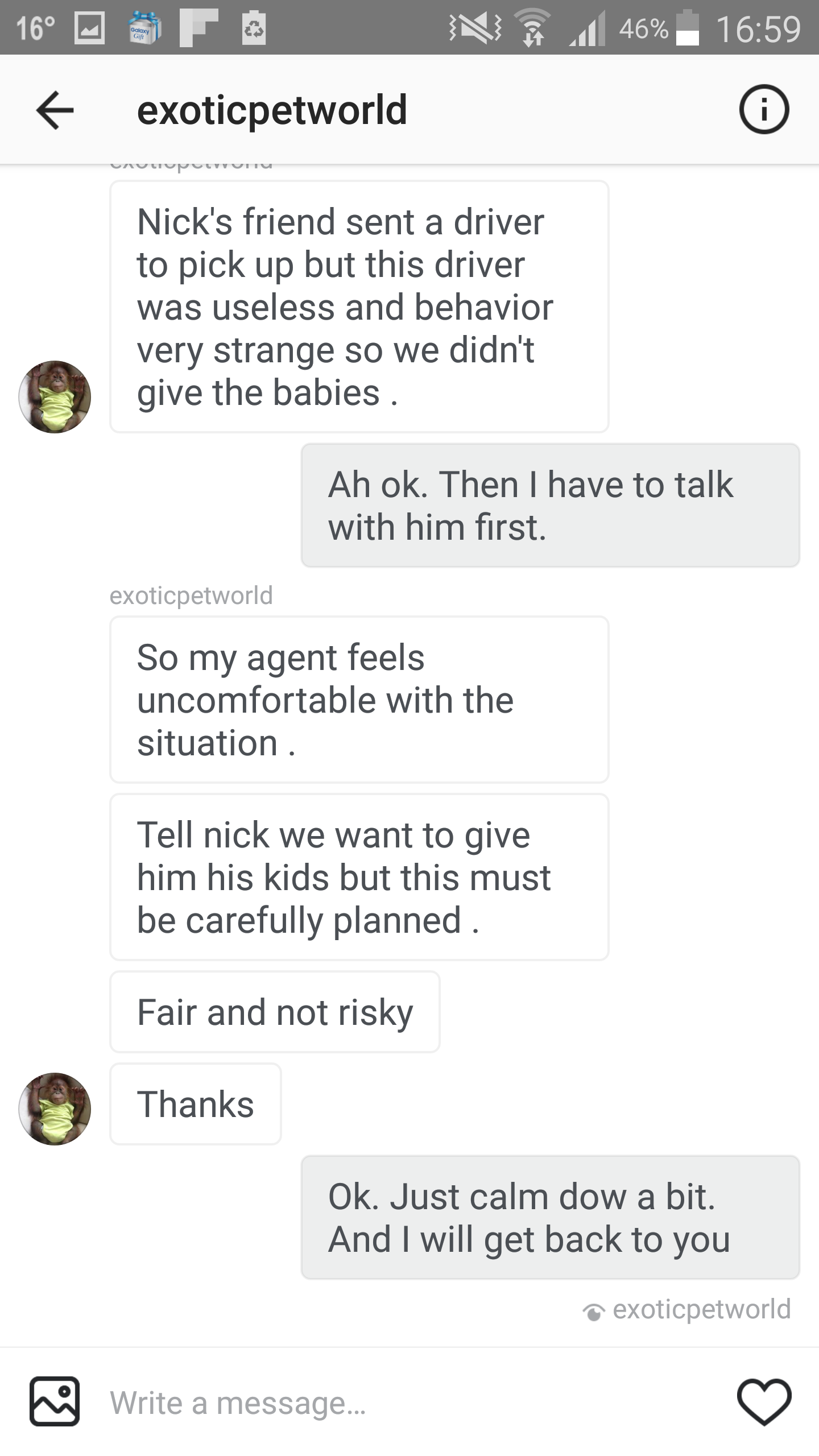
This was the result of Khun Lee’s great management skills. I sent these screenshots to R. and said someone else should manage the sting meet for Freeland. R. said ‘Eddy’ would do it, one of their Thai operatives.
[Two days later]
Tom: Hi
Tom: Any update yet , Sir ? Holidays are approaching and I think we should plan as soon as we can .
Nick: I finally found someone who said they can contact you tomorrow. I don’t know that many people in Bangkok I had to ask Noi. She refused but said she knew someone who had time
Tom: Ok
Tom: So he will come to see the kids and take it ?
Tom: In fact I can send down the kids for you too but we have to manage how I should get paid and safe for both of us .
[Next day]
Nick: Noi said this guy can go look to see if kids are healthy and if they are I’ll come to pay and take them. His number is +66 64 275 xxxx
[This was Eddy’s number]
Tom: Ok
Tom: Let me forward the number now .
Nick: Ok
Tom: Noi told me you were inspired to get otans babies because you saw them in phuket zoo , rite ?
Nick: Yes. I was there with Jeffrey and they looked so cute
Tom: Great .
Tom: They got two babies , rite ?
Nick: Yes the keeper told me they got them from a zoo in Bangkok
Tom: But kept in the zoo is not good for them .
Tom: Really
[This was rich coming from an ape slaver.]
Nick: I think they were born in a zoo so what to do?
Tom: If they were captive born then should be OK . safari world in Bangkok got lots of jubenile otans when I was there
Tom: And at least ten little babies they got .
Tom: They breed them quite successful .
[More useful intel on Tom, he had inside info at Bangkok Safari World]
Nick: Really?
Tom: Yes
Tom: A lots of them .
Tom: My agent talked to Eddy today .
Tom: Eddy will go and meet your kids in the next couple of days .
Nick: I should have asked if they wanted to sell. Can they sell to individuals? Is eddy noi’s friend?
Tom: Eddy is nois contact .
Nick: Ok fine I hope he goes soon
[I was trying to distance myself from Eddy, in case Tom asked me any questions about who he was. If asked, my story was that Noi just gave me the phone number with no name.]
Tom: They can’t sell to private person .
Nick: What I thought
Tom: In fact Eddy could take back the kids for you if you want .
Tom: He can go inspect , inform you and take it back if you want .
Nick: Lee would have to give him the money. Let me think about it and find out from Noi more about who eddy is
Tom: Ok , Sir .
[Next day]
Tom: Hello
Nick: Hello
Tom: Have you spoken to Noi about Eddy ?
Tom: My guy in bkk is on stand by for you
Nick: She hasn’t answered my call maybe she’s busy. I sent her message to call me
Tom: Ok
Nick: Noi called me and said Eddy is very trustworthy. He will go look at the kids and if they are in good health he will let me know and I will tell Lee to deposit the money. Should it go into the same account as before?
Tom: Yes , Sir .
Tom: Ok
Tom: I will tell my local guy to set up meeting with Eddy , Sir .
Nick: Wonderful
Tom: Will.update
[I was in communications with R. and another Freeland staff member coordinating the meet between Eddy and Tom’s agent. We were all on the same page. It was disappointing that Tom would not be there for the sting, but hopefully his agent would be able to spill the beans on the network and the true identities of Tom and others.]
[Next day, 21 December 2016]
Nick: Hello Tom. Eddy is not answering his phone. Did he pick up the kids?
Tom: My guy is waiting for him since one hour .
Tom: He said he is on the sky train
Nick: Ok I’ll try to be patient
Tom: Ok
Tom: Eddy called you back yet ?

[Tom’s guy never took the kids to a vet. The deal was supposed to be a handover of the kids to Eddy, Eddy would inform Lee, and Lee would deposit the final payment. I received a call from Freeland that the courier had been arrested and the kids seized by the police. I later discovered that the sting had been held in a mall parking garage. Why? What happened to the plan to make the arrest in the vet’s office? I was never to receive an answer to my question.]
Nick: Noi told me kids were seized. What do l do?
[No reply]
On 25th December I sent a last message:
Nick: Merry Christmas Tom
The +855 81 number went dead, never to return to service, and the Exoticpet88 and Exoticpetworld IG accounts disappeared from the Internet.
There was considerable media coverage of the sting (selected):
AP on youtube https://www.youtube.com/watch?v=QCHe8zYIDsE
http://www.bangkokpost.com/news/general/1167496/baby-orangutans-rescued-in-thai-police-sting
https://www.freeland.org/post/exotic-wildlife-trafficking-ring-broken-in-asia
http://www.bbc.com/news/world-asia-38409849
http://www.dailymail.co.uk/news/article-4063418/Baby-orangutans-rescued-Thai-police-sting.html
baby-orangutans/vp-BBxsilS / https://www.msn.com/en-us/news/politics/thai-police-rescue-two-baby-orangutans/vp-BBxsilS
http://www.khou.com/features/baby-orangutans-rescued-in-thailand/376899269
http://thailand-uk.com/forums/showthread.php?21750-Baby-orangutans-rescued-from-Thai-taxi
http://globalheadlines.ddns.net/news/baby-orangutans-rescued-from-thai-taxi
http://www.entirenewslink.com/baby-orangutans-rescued-from-thai-taxi/
http://hottestnews.xyz/sciencenature/baby-orangutans-rescued-from-thai-taxi/
http://www.bta.bg/en/gallery/image/3837244
http://www.abc.net.au/news/2016-12-23/thai-police-rescue-two-baby-orangutans/8144566
http://www.bkgnews.com/sciencenature/baby-orangutans-rescued-from-thai-taxi/
Video of Bangkok trafficker and orangs https://www.facebook.com/edwin.wiek/videos/10153985145382443/
Freeland sent me some photos of the bust.

I only found out later that there was only a taxi driver in the car, no ‘agent’ of Tom’s – unless the driver was the agent.

The kids were taken to a government wildlife holding facility outside of Bangkok.

I tried for weeks to get news from Freeland of what was happening with the case, but no one would give me a straight answer, just saying it was in progress. I didn’t even know if anyone had been arrested or if a prosecution was planned. I thought at least Jirapat, the person in whose bank account I had made the deposit, could be prosecuted. I only found out from tweets on Edwin Wiek’s Twitter account later what happened.

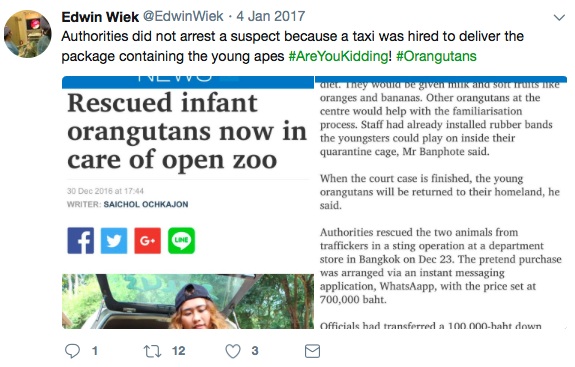
Nothing. No arrests, no prosecutions, no investigation. The only good outcome, other than preventing the trafficking of the kids, was Jeffrey’s New York Times article, which came out almost a year after the sting:
End of Part III.
Posted in Uncategorized
Anatomy of a Sting – Part II
PART II – Nick and Tom
After coming to a dead-end as David with Tom, I decided to try another tack. I contacted a friend in Thailand whom I’d worked with previously on illegal wildlife trade investigations and asked her if she would assist with this online exotic pet probe. I’ll call her Noi, the fake name we agreed to use. She agreed. I gave her instructions of how to approach Tom using private messaging through the @exoticpetworld IG account. The account had recently posted this orangutan infant:
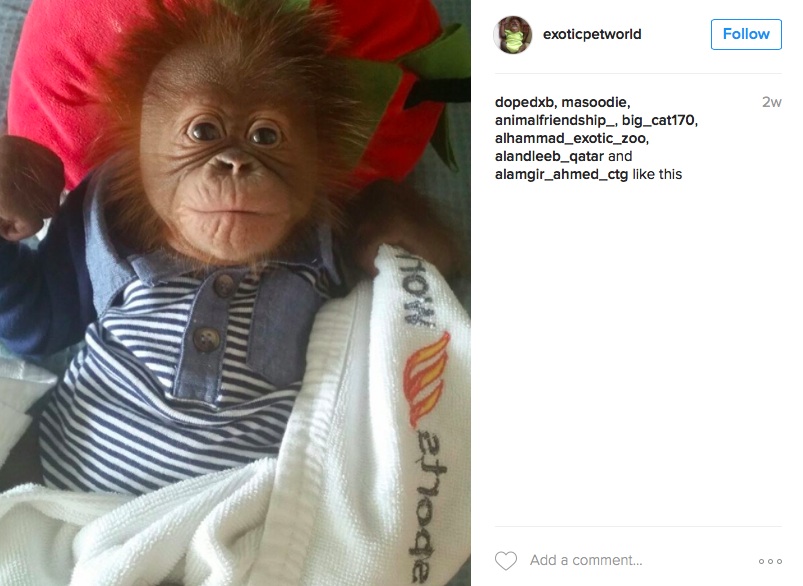
Noi made first contact:

I did not suggest that Noi describe the New York Times journalist and I as a ‘homo couple’, she came up with that herself. I only told her to say that two men who lived together in Phuket wanted an orangutan pet. Phuket is an island in the south of Thailand. I’d been there earlier in 2016 and saw two newly arrived infant orangutans at the local zoo that were being used as photo props, so thought that using them would be a good cover story.

Here he was asking about the zoo license again, so it appears that this is standard operating procedure. I wondered now whether some of this exotic animal supplier’s clients used zoos as a cover for illegal import. I knew that Thailand had some notorious private zoos such as Samutprakarn Crocodile Park & Zoo, Bangkok Safari World and Pata Zoo that had wild animals coming and going in and out of their facilities, often under questionable circumstances.
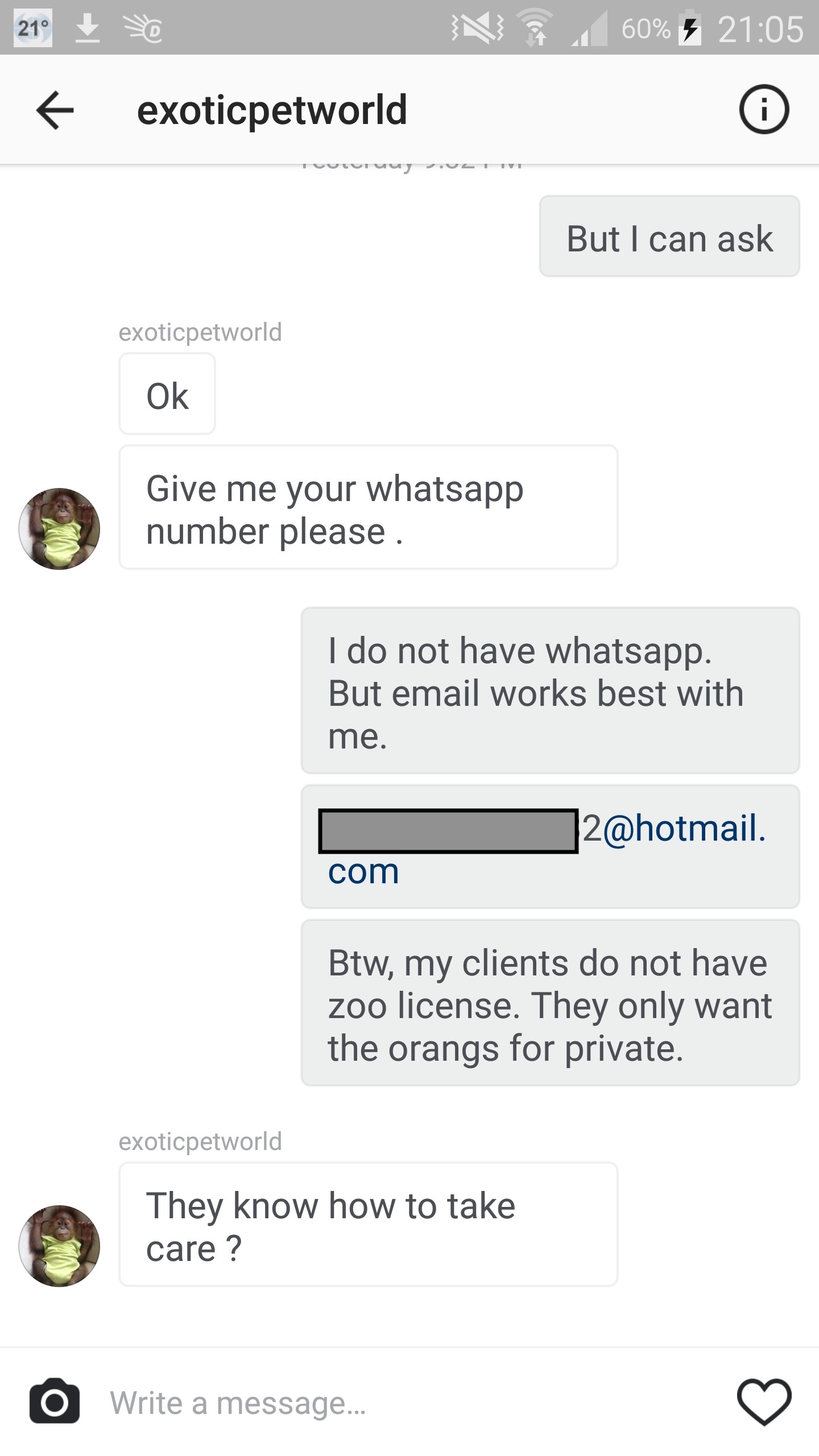


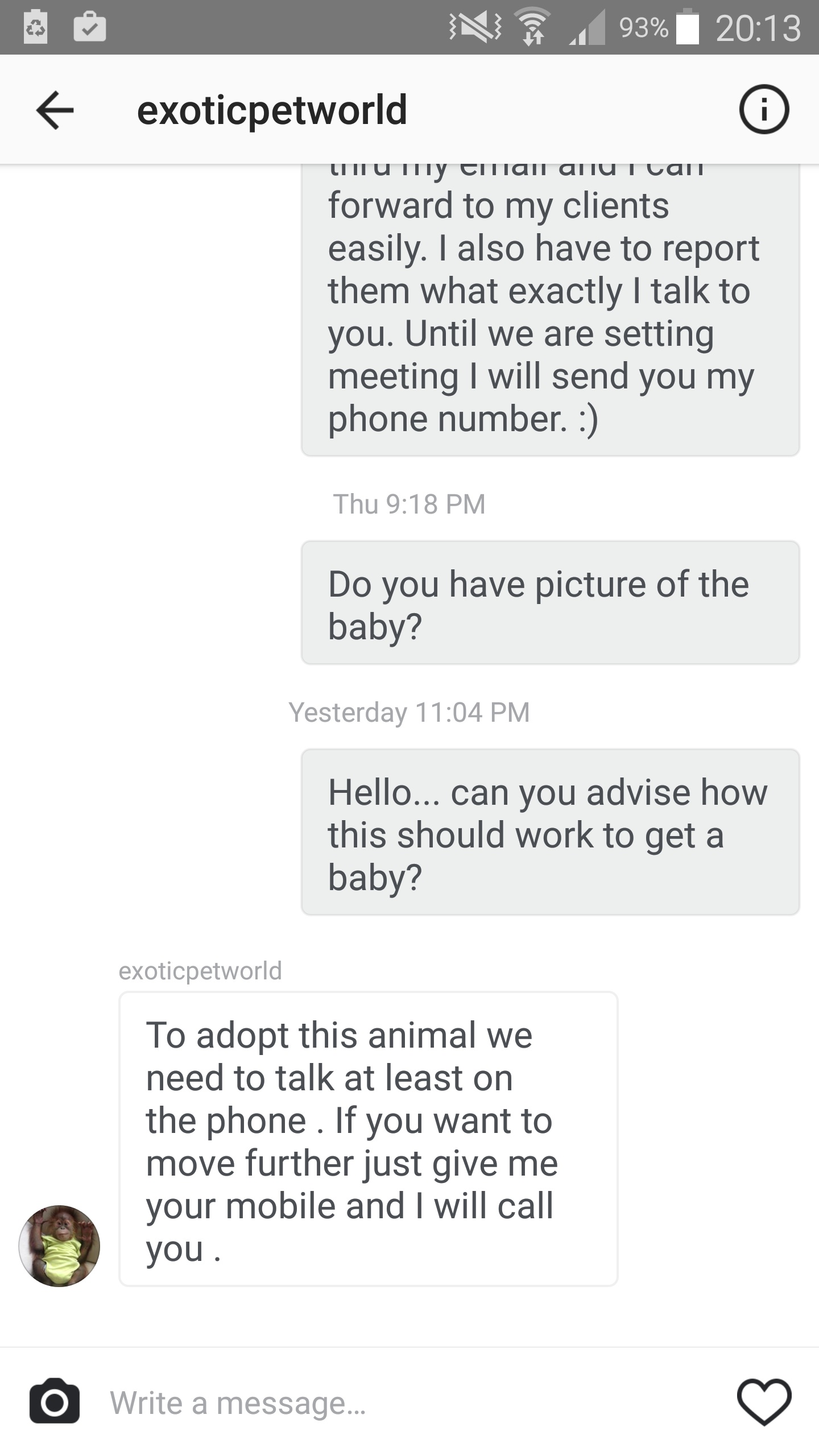

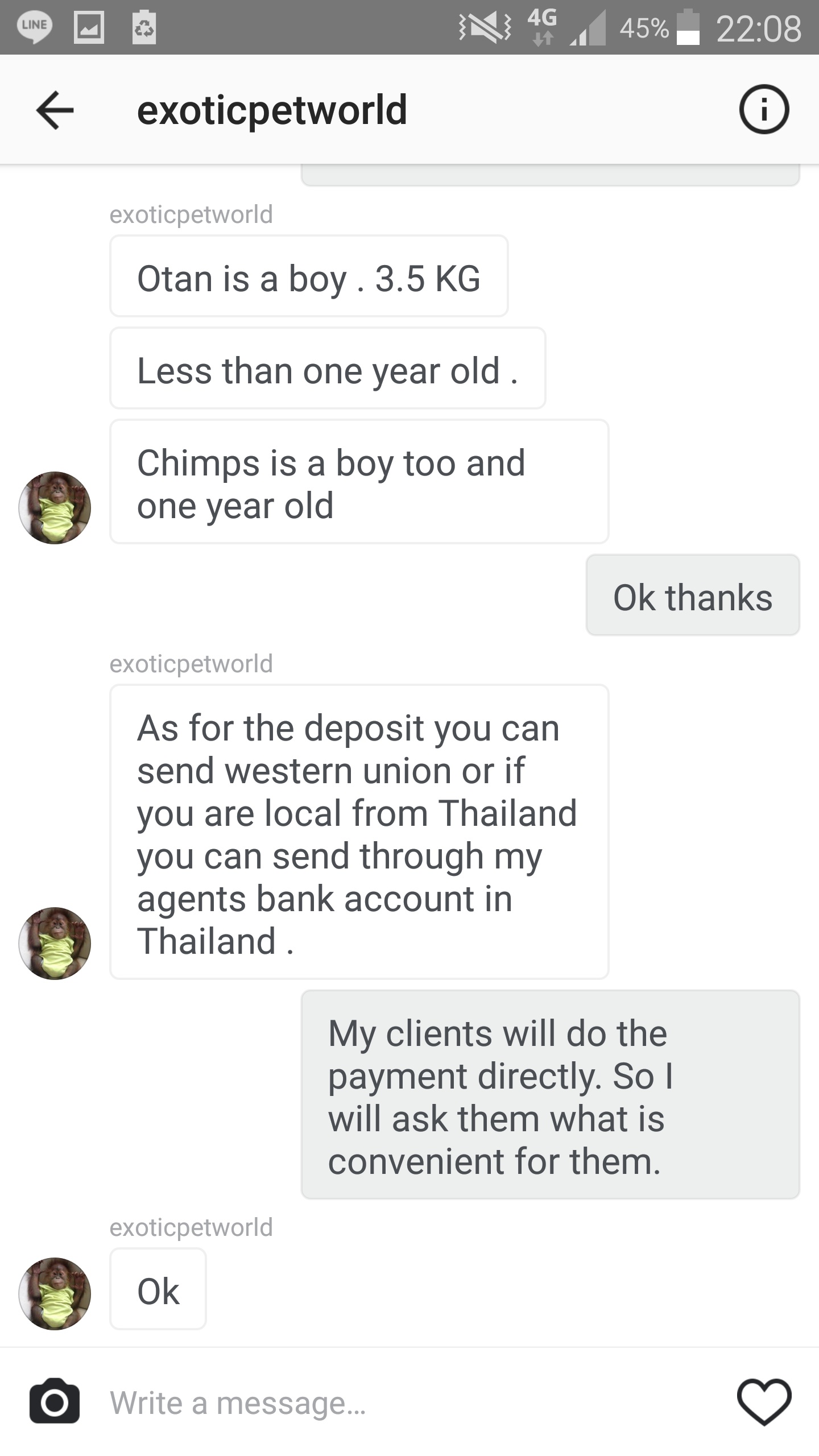
Exoticpetworld now sent six photos of orangutans and chimps, all from old Exoticpet88 posts. He told Noi that one was $12,000, including delivery to Thailand. He gave the name of his Thai associate and a Bangkok Bank savings account number into which I should deposit the down payment. Noi replied:


Tom of Exoticpetworld wanted the 50% deposit as a guarantee that this was not a ‘snooper’ operation or sting. He was calling the deal an ‘adoption’, to disguise the fact that it was an international commercial transaction and therefore illegal, as all CITES Appendix I cross-border trades require export and import permits, not to mention veterinary certificates, Customs clearances and tax declarations on profits. Noi thought that the apes might already be in Thailand. I asked Noi to send him a message in Thai asking this, which she did on 12th November. He answered with a ‘?’, which indicated that he wasn’t Thai and could not understand it. Noi asked Tom how delivery of the ‘kid’ could be made. He replied:

Tom was pressuring Noi to speak on the phone, but she was afraid she would blow it and refused. I asked her to try to set up a meeting on 18th November in Bangkok to inspect the orangutan. The NYT journalist was ready to hop on a plane once I had everything set up.

I decided that it was time to go to Thailand. I emailed Edwin Wiek of the Wildlife Friends Foundation Thailand to explain the sting operation and asked if his rescue centre could take the orangutans after seizure, but he never replied. I was in communications with the Freeland Foundation, based in Bangkok, and they agreed to organize Thai police involvement and collaborate in the sting. They had done this type of thing previously with a slow loris trafficking gang.
I arrived in Bangkok on 16th November, bought a local Thai mobile network SIM card and contacted Tom’s +855 81 number via WhatsApp:
Nick: Hello I am person who asked anxxxxxxxx32 to look for orangutan for adoption
[Next day]
Nick:: Helloooo anybody home?
Tom: Hello sir
Nick: Oh you’re so polite, that’s nice. I’m just so tired going through Noi to agree on getting our lovely new kid. I talked it over with my partner and he is so suspicious and careful he’s like an old lady. Is there anything you can do to make him believe you will give us the baby when we deposit the money? We don’t know you or even where you are. Maybe you will run away with our money. You know there are lots of people who do nasty things like that. I’m not saying you do. I hope you understand. We really want to get Otan as soon as possible, we even bought baby clothes already

Nick: Not really. Yes I know. But we would really look after it like a real child. I googled all kinds of things about what orangutans eat, what kind of diseases they get and all kinds of things. Our house girl will bath it every day. Any advice you have please tell me
Tom: They are easy to take care . but sometimes they could get moody …just like kid.
Tom: Are you now in phuket ?
Nick: We had a cat for a really long time but it ran away. It was really moody. We don’t mind moody. Yes am in Phuket
Tom: I got a good friend in phuket . he’s retired wealthy aussie hippie .may be I should arrange a meeting with him to confirm you and me are legit person .
Nick: Let me ask my partner, he’s a shy guy. Where in Phuket does hippy live? Can we meet him in Patong?
Tom: Let ask if he’s in phuket now . where are you guys from ?
Nick: I’m from Canada my partner is an American. But he is very nice for an American not noisy and pushy like those foul rednecks that support Trump
Tom: Trump is a cancer
Nick: Worse
Tom: Sorry buts no other word .
Nick: Trump hates people like me
Tom: My brother used to study at [name of school] in Vancouver .
[I had never heard of the school, but googled it and replied]:
Nick: Oh wow!! That’s a good art school. Is he doing design? What kind?
Tom: Film director
Nick: Exciting! What kind of films?
Tom: Very indie
Tom: Let me call u tonight , sir
Nick: Best kind. Ok will talk later I have to go out now anyway
Tom: Ok
[Next day]
Nick: Good morning
Nick: Helloooo
Tom: Hello sir
Tom: I have spoken to my friend in phuket but he’s in Dubai now
Nick: Ecuse my delay I was swimming. So what do we do?
Tom: Instagram : XXXXXXXX007 [It was an Instagram account of a very wealthy Thai man who owned a chimpanzee pet. He seemed to be a jet-setter who travelled to Europe and the U.S. with his pretty girlfriend and he owned some very expensive cars. There was no indication on his Instagram or Facebook account of whether he worked or not and there was nothing that suggested he was in the exotic animal business. Maybe Tom had sold him the chimp].
[Next day]
Tom: Hello
Nick: Good morning Tom how are you?
Tom: This afternoon I will send you photos of one boy n one girl for you to decide .
Tom: You have seen that one IG account I sent you last night, Nick ?
Nick: Yes I looked the chimp looked big but nice and he seemed very happy
Tom: Yah . he’s very lucky ape.
Nick: I’m so excited can’t wait to see photos
Tom: Ok.
Tom: Here we go , Sir
Tom sent these:


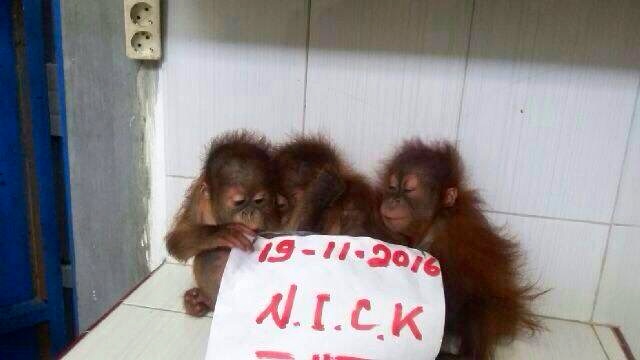
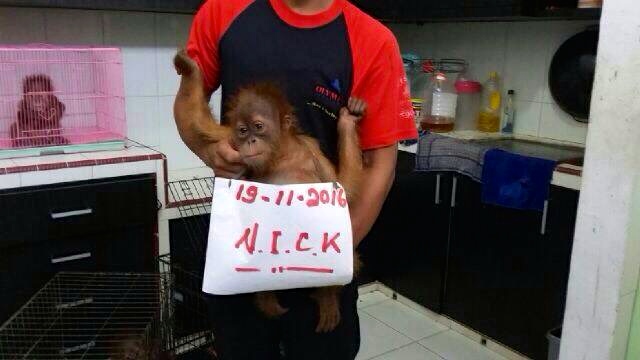
Nick: Incredible!!! When can we see?
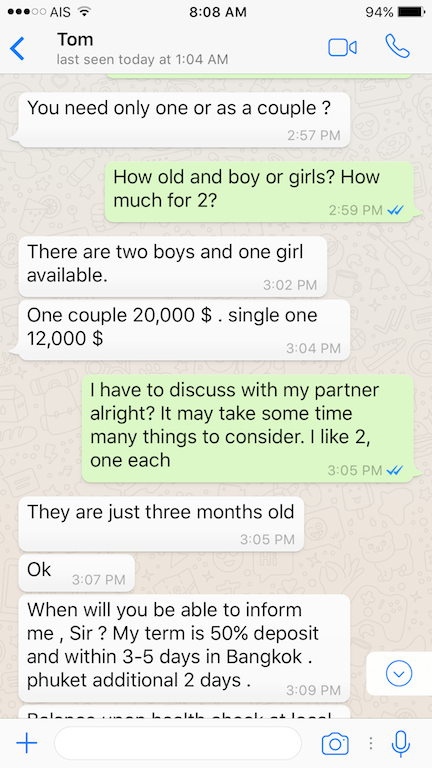
Tom: Balance upon health check at local vet .
Nick: Ok will let you know asap
Tom: Thank you , Sir
Tom: My suggestion is as a couple if you may want to breed them .
Nick: Oh I never thought of that. Another thing to discuss. My partners not here now I’ll see him in a couple of hours but will let you know tonight cause I don’t want them going to China
Tom: Noted
Nick: To save time I’m going to see my partner I know where he is
Nick: I sent him the photos he’s thrilled!
Tom: Ok.
[Tom called me on WhatsApp audio to warn me not to share the photos or discuss what we were doing with anyone. I told him I wouldn’t. He asked me where I came from in Canada, I told him a small town in Alberta. He wanted to know if I would pay the 50% deposit, I said I would ask my partner. I contacted the NYT journalist and asked him what name he wanted to use. He said ‘Jeffrey’. We resumed on WhatsApp text]:
Nick: Don’t worry not sharing or telling ANYBODY
Tom: Thank you
Nick: Am so tired. Jeffrey insists since we don’t have any assurance that the kids would be delivered that he’s only willing to deposit $1000. Or if they are not too far away we could go and take money with us. We see them, pay 50% and see them shipped to Phuket. Sorry he’s very difficult
Tom: Completely understood from your point of view although if the kids are local and native in Thailand then we can do like jeffry said . but they are not local breeded and have to be shipped to Bkk from far away so since this is our first contact it’s not easy for both of us .
Tom: Are you guys looking for one or a couple ?
Nick: We decided on two, depending. Are the girl and boys related? Or different parents? If unrelated we can take girl and boy. This might make them more stable when they get older. Assuming they get along (:
Tom: They are from different parent and not related .
Tom: Let me figure what is the most fairest solutuon for both of us ,Sir .
Nick: Ok take your time
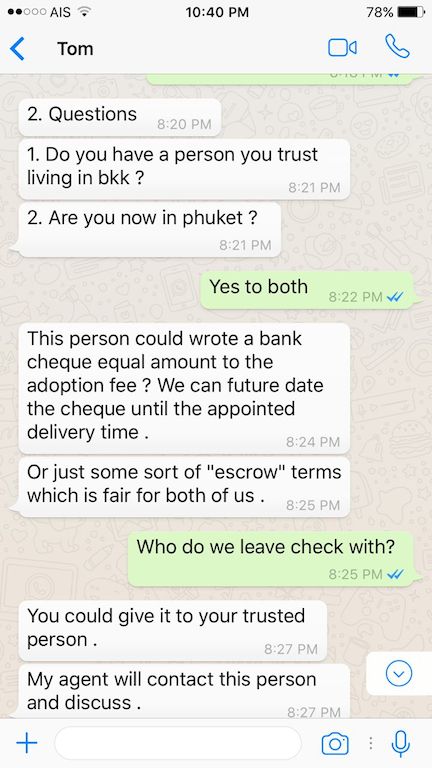

Tom: I will keep them both for you .
Nick: Thank you tom you are very kind
Tom: My pleasure . i believe you and jeffey will take good care of them .
Nick: Promise
Tom: Hi Nicolas . I have spoken to my breeder on your terms . This is the best thing I can work out with him . he will accept 100,000 THB deposit for one couple of male and female . once they arrived bkk we can go to see the vet together . after the health check you could pay the balance . then you could either take them direct back to phuket or we can arrange shipping for you . please discuss with Jeffry and let me know please .this is the best solution I can come across with him .
Tom: If placing deposit tomorrow you can come to Bkk next Friday for pick up , Sir .
Nick: Deposit is in bank in Bangkok the one you gave before?
Tom: Yes , Sir .
Nick: Tomorrow Sunday will do Monday
Tom: Ok
Tom: Thank you for trusting me
[I did not want to turn over any money to wildlife traffickers for ethical and legal reasons. But previous negotiations with wildlife traffickers always ended at this point. Not a single one would agree to meet for an “inspection” or any other reason I could think of using as a cover story, without money up front first. Without a physical meeting it was impossible to set up a sting.
I discussed it both with my project sponsors and with people at Freeland. Thai baht 100,000 was about USD 2,850. Was it worth that much to put a major wildlife trafficker out of business? When trying to set up the sting in Indonesia I had been in communications with an Indonesian NGO. They had pulled off a sting that netted two traffickers, but it had cost $3,000 in lost deposit money.
Tom said he was coming personally to Bangkok and that we would meet. Freeland assured me that he would be arrested in the veterinarian’s office when the health check was made and the transaction concluded. Tom would be caught red-handed with the orangutan infants and cash payment, open-and-shut case. Jeffrey the NYT journalist would be there to witness and write about the whole affair. I wrote my sponsor that it was “high risk, high gain”. He replied, “Go for it.”]
[Next day]
Tom: Kids are already on the move to Bkk , Sir .
Nick: Fantastic. Where do we meet in Bangkok Friday?
Tom: I will inform you again which doctor my agent will be contacting.
[The ‘doctor’ was the vet who would do the health inspection. We needed to know as early as possible who this would be and where he was located in order to arrange the details of the sting.]
Nick: Ok
Tom: You have to prepare and start buying powder milk and other baby stuffs
Nick: Will do. Any special kind?
Tom: Any baby milk will do the job
[I flew to Phuket so I could deposit the down payment in a Phuket bank, strengthening my cover story.]
[Next day]
Tom: Please do send me your bank deposit slip once payment has being instructed, Sir .
[I haggled more with Tom, trying to get out of making a bank deposit. We’d brought on board a Thai staff member of Freeland, a retired senior Royal Thai Police officer, to act as a contact in Bangkok with a Thai associate of Tom’s, the man in whose bank account I was supposed to make the down payment deposit. I said a ‘friend’ (the Freeland Thai staff member) would leave the 100,000 baht cash at the vet’s office, as we needed to know where it was. Tom was not pleased.]
Tom: Please tell your friend you are not getting baby hamster from a zoo shop.
Nick: Oh Tom I’m so sorry I tried to convince him but he says if deposit left with your vet then no risk to you.
Tom: I understand you friend s idea but also the things is no vet would to get involve in this kind of business .
Tom: How do you want me to proceed , dear Nicolas .
Tom: Seller could disappear with money…no objection but also buyer could reject to take as well. This happend to be few times with Arab peoples.
Tom: I am a good Muslims
[Two more facts learned about Tom, he was not Arab and he was Muslim. This pointed more strongly than ever to him being Indonesian or Malaysian. He also admitted that ‘this kind of business’ was so shady that no veterinarian would get involved in it.]
Nick: I want to be fair of course. I’ve been arguing with my ex friend and Jeffrey about it. We won’t reject if kids are healthy. Even if they have small health problem we can still take if it’s treatable. Are you with kids?
Tom: No , Sir . I don’t have them with me . should I have my agent to call you thai friend and work out somethings ?
Nick: I thought you were coming with them and would meet us in vets office in Bangkok? No?
Tom: Yes ,we will meet .
Tom: But I want to solve the deposit issue at first cuz they are already on the way.
Tom: Otherwise I have to return them back first until things are set .
Nick: My friend said he can talk to your agent but he’d prefer doing tomorrow is that alright? Maybe he can give deposit to him
Tom: Ok
[I received an email from Freeland informing me that they had prepared a confidential report for me containing ‘closed-source and open-source information’ to help me decide on the best course of action. They would give it to me at a meeting we had scheduled in the Foreign Correspondent’s Club in a couple of days. Freeland also wanted a screenshot of my communications with Tom to pass on to the Natural Resources Environmental Crime Suppression Division of the Royal Thai Police that they could use to open a case file. I sent a few which showed Tom giving the prices and asking for a 50% deposit.]
[Next day]
Nick: Good morning. What number should my friend call? He has agreed to pay the deposit for me. I’m coming to bkk tomorrow
Tom: Ok. Let me get his number for you .
Tom: It’s +66 651xxxxxx.
Tom: His name is Ton
Nick: Ok wonderful. My friend is Kuhn Lee, I’ll pass on number
Tom: Ok
Tom: Jelly fish
Nick: What?
[What did jelly fish mean? Was it some sort of code word, or just a typo? I sent Ton’s number to Freeland’s Thai undercover staff, whom we’re calling Kuhn Lee (Mr. Lee). Lee called Ton’s number and was told that now the ‘kids’ were arriving Sunday, not Friday as previously agreed.]
Nick: Lee said kids arriving Sunday now what happened?
Tom: It’s always five working days after receiving the deposit .
Tom: And we don’t have transport connection everyday .
Tom: Today is Tuesday afternoon and I am still waiting for your deposit .
Tom: Kids were send off Sunday evening but last night I let them stop before crossing border
Nick: I don’t know why Lee didn’t make arrangements to pay deposit with Ton I asked him to do that. Lee is a bit difficult sometimes. Lee says he will give 100,000 cash to Ton after work tomorrow. Could they meet in bkk somewhere? Because kids not coming until Sunday I won’t come until Friday now
Tom: You got the bank account , Sir.
Nick: Ah ok he puts in bank. Ok I’ll tell him
Tom: Thank you
[Now, what to do? I had come to Phuket to establish my cover, but hadn’t had to prove it yet, Tom did not seem concerned where I was. I decided that if a bank deposit had to be made, I might as well do it here in Phuket.]
[Next day]
Nick: Good morning Tom I hope you are doing fine. I decided to deposit the 100,000 baht myself here in Phuket. What day will the kids arrive? I hope soon. You said they were already almost here. I don’t want the kids to suffer too much in a car or whatever. Is someone feeding them properly and giving them water? Can you send a photo so I can see they are alright. Jeffrey wants to see. Thank you
Tom: Hi Nicolas . if receiving your deposit today they should be in bkk on Monday at latest and don’t worry they are all well treated.they stop over near Malaysian border at my courier farm .please notify me once you paid in so I can continue the trip .
Nick: Why does it take so long if they are so close?
Tom: Malaysia Indonesia border
[I looked at a map to reconfirm what I thought – there is no land border between Malaysia and Indonesia, except on Borneo island.]
Nick: There isn’t one what do you mean?
Nick: You mean on Borneo?
Tom: No
Nick: Where else is there a border?
Tom: You are asking typical snooper question .
Nick: Tom I’m not a snooper but you’re saying strange things. I’m not stupid
[I was beginning to worry that this was a deposit scam, not unusual in the nefarious world of wildlife trafficking. Many animal photo ads on e-commerce or social media sites were simply just downloaded from the Internet, the person posting the photo did not actually have the animal. After receiving the deposit, the ‘seller’ was never heard from again.]
Nick: I’m in front of the Patong Bangkok bank right now I can even send you photo. It doesn’t open until 10
Tom: No problem
Tom: It’s just few minutes
Tom: Call me
Tom: Bad signal
Nick: Yes
Tom: There are no land border
Tom: But by boat
Nick: Except in Borneo I know my geography
Tom: Johor baru
[This was at the tip of the Malaysian peninsula opposite Singapore island. The otans must be coming from Borneo or Java, if they were actually passing through Johor Baru.]
Nick: You promise on the Prophet (peace be upon him) that you send kids? You said you’re a good Muslim
Tom: Yes , Sir
Tom: I promise
Nick: Ok thank you Tom I’ll deposit now. I’ll have $17,150 for you in cash in Bangkok. Give me address when you can of where we meet. We will take kids there I’ve arranged transport
Nick: You want cash right?
[I hoped the offer of this much cash would be enough to lure Tom to Bangkok.]
Tom: Ok
Nick: Can we use your cage or we buy one to bring?
Tom: No cage
Tom: They go in basket
Tom: I will arrange for u
Nick: Ok am in bank waiting for person
Tom: Ok
Nick: Here is deposit receipts


Tom: Ok. Thank you .
Tom: No need to worry , Sir . see you on Monday .
Nick: Thank you my friend
[I felt terrible depositing that money for the use of wildlife traffickers, but the thought of putting them out of business gave me the motivation to do it and carry on. The Exoticpet88 gang had captured and sold thousands of endangered animals and birds from at least 2012 up to now, and Tom’s IG account was posting animals for sale again, such as the pair of orangutan infants below. Were these the two ‘kids’ now on their way to Bangkok?]

[I returned to Bangkok and that night met with Freeland people at the Foreign Correspondent’s Club. They did not give me the report as promised, which apparently contained useful information, because of reservations held by Khun Lee. I was told they would give me the report when the case was closed. What good would it do me then? This was the first of several seemingly counter-productive and illogical acts by Khun Lee.
The Royal Thai Police were on board and we would hold a strategy session in a couple of days to lay out the detailed roles of each person. Jeffrey had made arrangements to fly to Bangkok on Friday.]
[Next day]
Tom: Expect your kids to be in bkk on Sunday at latest .
Tom: Will update .
Tom: Be prepared so sleepless night ….
Nick: Thank you thank you I was going to contact you tomorrow I didn’t want to hound you. We still meet Monday?
Tom: I think yes
Tom: Let me keep you up to date every evening
Tom: Should be OK
Nick: I’m so excited! I can’t wait. Thank you so much
Tom: Did you bought milk and etc.
Tom: Hot water boiler
Tom: Pampers
Tom: Three or four milk bottles
Tom: They will need the bottles every three or four hours
Nick: Not yet but now you reassured me so we will. I looked at pampers (we call them diapers) but not sure which ones to get
Tom: I will get for you
Tom: They are about 3-4 KGs
Tom: So it new born size
Nick: There are also different formulas for different ages, will buy the ones for 1 year old. Ok for pampers small ones
Tom: Welcome sleepless night …. For the next few months …
Tom: Yes
Tom: I think it’s fine
Nick: Oh dear I hope they don’t cry like human babies
Tom: Not like that…..
Tom: Worse…. Hahaha….
Tom: Just kidding
[I was bonding well with Tom, building trust, he seemed as excited as I was pretending to be about the imminent ‘adoption’ of my new kids.]
Nick: Whew good. NO oh good kidding.
Tom: I always enjoy watching them sleeping
Nick: We can’t wait.
Tom: Yah ….
Nick: Should they sleep in a baby crib or what?
Tom: I know that feeling
Tom: No need
Tom: Mine always use to sleep with me n my wife has n the same bed
[More information about Tom, he owned otans himself and he was married.]
Nick: Really? Ok we’ll try that
Tom: My wife will buy some nice baby dress for your kids .
Tom: They will bond to you and jeffey for the next couple of years
Nick: Oh thank you Tom that’s so kind of you. Jeffrey and I have been talking about what to get you
Nick: We’ll spend lots of time with them and hug them a lot
Tom: No need Sir . me n my wife will come to visit your kids in phuket from time to time .
Tom: Speak you tomorrow .
Tom: Yah ….
Tom: Happy happy
Nick: Ok sleep well
[I had to remind myself that this character was responsible for the capture of innumerable orangutan and gibbon babies in the forests of Southeast Asia and selling them into slavery, not to mention all of the other animals and birds from all over the world that showed up on their IG pages. I wanted to see him behind bars.
Freeland emailed me, they found the Facebook account of the person who owned the bank account I’d deposited the down payment into. They had his address as well.]

[The police had obtained the bank records of the ATM use of the bank account owner and it showed that within 24 hours the entire 100,000 baht had been withdrawn.]
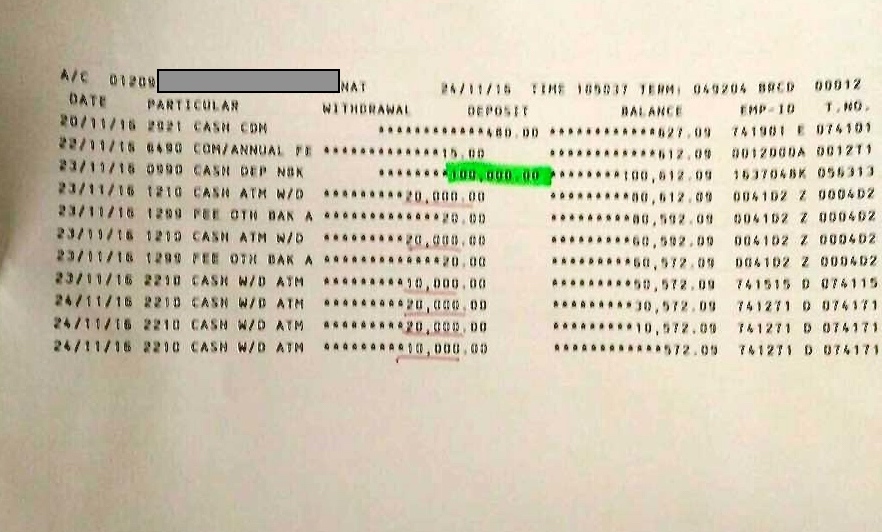
[Next day]
Nick: Hello Tom any news?
Tom: On the way , Sir
Nick: Ok thanks
[Next day]
Tom: Your kids are now at Malaysia/Thailand border waiting for transfer courier
Tom: If lucky then tonight ID not tmr
Nick: Oh my!! Can’t wait!! Thank you Tom!!
Tom: Please book your flight after my confirmation . no need to book in advance , Sir
Nick: ok
Tom: Also you told me you want to take back your kids by yourself ?
Nick: Yes we’ve hired a car and driver in bkk
Tom: Are they any control on the way back to phuket ?
Tom: How many hours drive ?
Nick: Not that I know of but even if there is we can put a blanket over kids. I heard 12 hours
Tom: Ok
[Next day]
Nick: Hello Tom how are things going?
Tom: If my courier can cross border in to Thailand tonight it will arrive Bangkok tomorrow . he is checking if his border officer he work with has got his shift today , Sir . if he can cross he will call me and I will inform you ASAP.
[Aha! Another key bit of info, they had a corrupt Thai border officer working with them, this was common practice with wildlife and other illegal product smugglers.]
Nick: Ok good luck but come soon! Jeffrey is going crazy
[As was I, I had to leave Thailand soon as I had another operation underway on another continent that absolutely required my presence on 30th November. It was now the 27th. Jeffrey and I went to Bangkok Safari World this morning and I introduced him to the orangutan show, in which thin, bedraggled orangutans simulated a rock band, with a bikini-clad go-go dancer, and a boxing show. On the taxi drive out Jeffrey was on the phone with a Congolese army general he was interviewing for a story on Joseph Kabila, the DRC president. The general knew that Kabila kept a pet chimpanzee at his farm outside of Kinshasa, in answer to a question Jeffrey threw in at my prompting.]

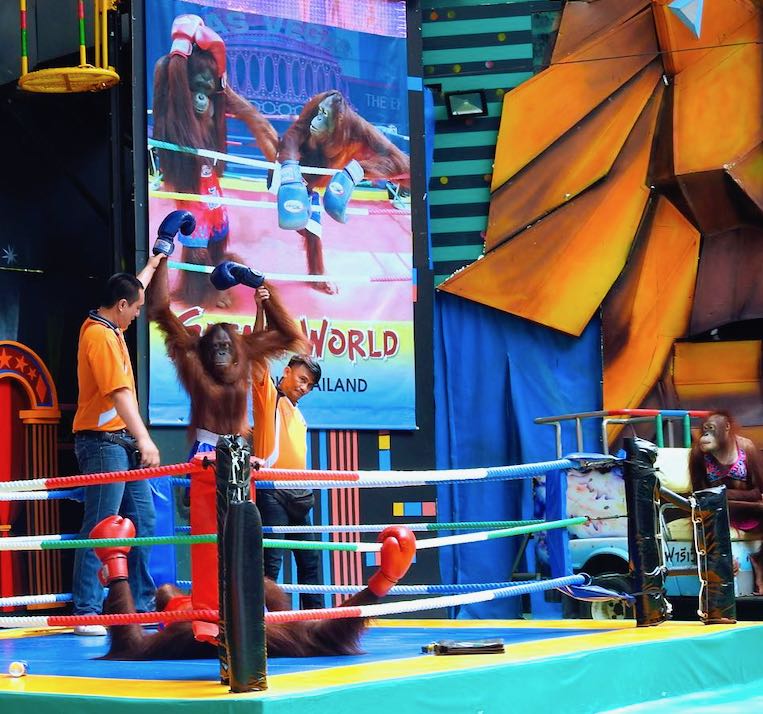
[That night we held a strategy session in my hotel room with three Freeland staff – R. and two former senior Thai Royal Police officers (E. and Khun Lee) – a current member of the Natural Resources Environmental Crime Suppression Division (whom Jeffrey dubbed Inspector X), a cameraman to record everything, Jeffrey and myself.]

“Khun Lee” had drawn up an organizational chart of the actors and locations for the strategy meeting, but it made no sense to me and had nothing to do with what we needed to do when the exchange meeting would be held in the vet’s office.

Inspector X, designated to make the arrest, the cameraman and “Khun Lee” in my hotel room.
[Next day]
Nick: Good morning Tom hope you are well. Jeffrey and I are In Bangkok now did it go well at the border?
Tom: Hi . tonight I will arrive thai side . may be my agent can let you video chat with you boy and girl .
Tom: Do you have Skype ID ?
Nick: I don’t have Skype but maybe I could create an account. We can meet tomorrow then?
Tom: Yes , pls create one . tentative arrival is tomorrow morning in bkk .
Nick: So excited can’t wait. So we meet tomorrow we don’t want to stay in Bangkok. What time?
Tom: Tonight my courier will inform when they start departure . where do you stay in bkk ?
Nick: We’re in sukhumvit
Tom: Ok
Nick: Nana area
Tom: You can send me your address and location my courier will come to see you there and bring the kids .
Nick: You said we meet to get health check
Tom: Yes , he will take you to see the vet together .
Nick: So he doesn’t bring kids here? Don’t think we can bring into hotel
Tom: No problem . can go in with baskets . which hotel is it ?
Nick: [name of hotel]
Tom: Oh …they got nice congee.
Tom: It’s next to soi nana .
Nick: Haha! Yes I tried it. This morning I had nasi goreng
Tom: Great . so late late tonight I will update , Sir .
Nick: Wonderful we await your call with baited breath
Tom: Waiting for courier
Nick: Oh where are they?
Tom: Hatyai
[This was disappointing as Hat Yai was only just across the Malaysian border in southern Thailand.]
Nick: So far! So we meet tomorrow
[Tom sent this photo now. The date and time were correct]:

Tom: Hi . my local courier just tried to contact you on your mobile .
Tom: What’s your room number , Sir . he wanted to stop by and explain you how to meet and how to take care of your kids .
Nick: Am out to dinner with Jeffrey will be back at hotel in about an hour
Tom: Ok, let know when you are back . what’s your room number ?
[I couldn’t give him my room number as then he could check the name of the occupant and discover my real identity.]
Nick: We meet in lobby not room
Tom: Ok
Tom: Is it possible to have noi coordinate with my man because his English is not good .
Tom: My agent
[Tom sent a photo of his agent. He didn’t look Thai, more Central Asian or Middle Easterner.]
Nick: Noi is not here we’ll just meet him now in Hxxxxxxx bar we’re there
Nick: He goes into lobby and take elevator to B level
Tom: Let contact him again , Sir . he said he went to front desk and asking for Mr. Nicolas Shies but they couldn’t find you on the check in database so he left .
Nick: Well we are here. My name is not Schies
Nick: Or shies
[I had scribbled a fake name on the bank deposit slip.]
Tom: Ok. It was shown on the paying slip so I told him to ask for you sir .
Tom: Your kids will leave tonight around midnight and will probably get in late afternoon , Sir .
Tom: You brought milk and other stuffs or should he buy for you ?
Nick: Is the courier coming?
Nick: He doesn’t need to do anything
[Tom was trying to establish what we looked like and if we were real before making the delivery meet.]
Tom: I am trying to call him now
Tom: I couldn’t get through his number so I think he is on the way back home .if you don’t see him at the lobby waiting then tomorrow.
Tom: When kids arrive I will notify you , Sir .
Nick: Ok we wanted to buy him a beer
Tom: Haha very kind . I will have some beers in phuket soon with you two . havent been there for so long .
Tom: In fact hatyai is on your way back to phuket , isn’t ?
[Tom called now at 10;30 p.m. by normal mobile phone service and asked me if I wanted the kids delivered to Phuket. I said that Jeffrey and I were in Bangkok now and we had a car and driver already booked, plus we wanted the kids’ health cleared by a vet before paying the balance and taking delivery. I asked if Tom was going to meet us in the morning at the vet’s office with the kids. He said Ton his agent would get hold of us in the morning with instructions.
It was after 11 p.m. on 28th November, I had to leave the next night to go where I needed to be on the 30th. Jeffrey and I discussed it in the hotel bar, wondering if Tom’s agent wasn’t still around. I went to Thailand thinking that the exchange meet could be made on the 18th. Ten days later it looked like I would not be part of the sting. Jeffrey had to leave the night of 1st December to be at a Bar Mitzvah in Chicago, his home town, on 3rd December. I sent Tom another WhatsApp message.]
Nick: Tom I’ve been talking this over with Jeffrey and we decided you’re playing games with us. You keep changing the story. We have to meet tomorrow and take the kids. We have the money so let’s just do this
[No reply. At 11;30 p.m. I sent another message.]
Nick: Tom can we talk?
[No reply]
[Next day, 29 November]
[I called Tom’s number in the morning, no reply. I had to leave that night so decided that it was too late for me to take any active part. I informed Freeland that they should try to conclude the sting either today or on the 30th with Jeffrey in the vet’s office, as originally agreed. I turned over my Thailand SIM card to Freeland for them to continue using it for communications with Tom, which of course could only be text messages. That afternoon I received an email from R. my contact at Freeland:
Hi Xxxx,
Just wanted to let you know they we will actively pursue the case through Mr. Lee. We hope the fish will take the bait and we have a successful resolution to this case.
Will keep you updated with all ongoings.
Kind regards,
R.
I replied that I was still keenly interested in the case and would be willing to help out any way that I could, and for them to keep me updated.
A few hours later I was in a plane flying to Africa, hoping that Freeland could pull off the sting with Jeffrey present.]
End of Part II
Posted in online trafficking, orangutans, Thailand, trafficking
Anatomy of a Sting – Part I
by
Nick

Editor’s note: This comprehensive account describes the prodigious effort it took to set up relations with a large-scale exotic pet trafficker based in Southeast Asia and pull off a sting operation. Exoticpet88, the name of an Instagram account, was reputedly run by a kingpin animal trafficker named Joe. The account advertised a wide range of wildlife species for sale, with most of the animals or birds being captured in the wild. Exoticpet88 operated a farm on the outskirts of Jakarta, Indonesia, where it held the animals before shipment. The network was made up of field wildlife collectors in Southeast Asia and wildlife suppliers further afield in Africa and Latin America, inferred from the species seen in online posts. They had particularly strong connections with traders and buyers in the Middle East and South Asia.
It took 5 months of effort, with dead-ends, stops and starts, shifts in undercover identities, and great persistence to finally lay a trap aimed at catching the head of the Exoticpet88 network in the act of illegally selling two infant orangutans. The undercover investigator used various aliases and this narrative describes how others assisted in the operation. The investigator last used the alias Nick and this is his story.
PART I – David and Joe
I first heard of Exoticpet88 in late December, 2015, when Patricia emailed me with a screenshot of his Instagram account as it appeared on a mobile phone. She wrote, “Instagram account exoticpet88 … is apparently a man who calls himself Joy [sic] in Thailand. He exports all kinds of animals to the Arab countries via the Oman airport. He sends gibbons with dogs in crates, so the dogs’ barking veil the gibbons. He is one of many Thai dealers, I’m told, that do the same. They take animals from all over Southeast Asia (gibbons, lorises, orangs, etc.). He even has a picture of a clouded leopard on the attached image.”

I first met Patricia Tricorache of the Cheetah Conservation Fund electronically in June, 2015, when she emailed me out of the blue asking if I knew anything about cheetah cub capture and trafficking from the Horn of Africa. I said I didn’t, but that I’d seen quite a few posts on social media of cheetahs either being offered for sale or being flaunted by proud owners, mainly in the Gulf. Since we were both engaged in investigating illegal wildlife trade, me with great apes and her with cheetahs, we agreed to collaborate. Soon after that, she began sharing with me a very large collection of material that she had amassed from years of work. I had only started looking at Facebook and Instagram accounts in March of that year, so Patricia’s information provided me with a huge boost.
I reciprocated by sending her the account links of cheetahs I came across, after checking first with her Excel spreadsheet that listed those she had already found. We soon had an active exchange system running, demonstrating the truth of the adage that ‘two heads are better than one’.
Over time I developed my methodology of how I would find new traffickers, figure out who was linked with whom, who was a dealer, who an exotic pet owner (i.e. buyer), who was both, and discerning the networks of suppliers, middlemen, clients and those who collaborated closely with one another. It took a while to determine the composition of the interlinked wildlife trafficking networks based in South, Central and Southeast Asia, the Middle East and Africa. Americans, Europeans and Hong Kong Chinese also appeared in the exchanges, but not mainland Chinese. I thought this odd, until I discovered that China does not allow Facebook or Instagram to operate. Chinese use mainly Weibo, Alibaba, Taobao (owned by Alibaba) and WeChat to conduct the trafficking business.
The way I recorded the information I found online also evolved over time. After about a year I had down pat how I would crop the screen grab to include the photo, the name of the account, any important comments on it (which might mean more than one screenshot if I had to scroll down) and the date. I would label the screenshot in a numbered sequence with the date of the post DD/MM/YR. I downloaded mainly great ape posts, but I also started collecting information including contact emails and mobile/WhatsApp numbers, other social media accounts, posts of financial transactions (some of the traffickers actually posted bank transfer and deposit documents), visits to other countries, group photos, Friends and Followers of interest, and any other photos that might provide useful information about activities, identities and locations. I discovered that re-posts of the same animal photo on different accounts was fairly common, which created problems for identifying who made the original post and when it was made. Some ‘for sale’ advertisement posts were also deleted after a sale was made, creating more difficulties in recording everything that was going on, as I must have missed many of those. I made up a couple of Excel databases, one with the names and data by country, the other with the names and numbers of each species seen to get a count.
The work was extremely time-consuming and as the number of persons-of-interest (POI) increased, it became progressively more difficult to monitor all of the existing POIs and add new ones. Some of the POIs had multiple Facebook (FB) and/or Instagram (IG) accounts in different names, and determining that took time. Accounts would also close from time to time, I was never certain of the reason, and sometimes I could find a new one pop up owned by the same POI as a recently closed account.
Back to Exoticpet88
Patricia gave me access to her screengrabs of Exoticpet88. Most were crops of the photos only, but some were whole page screen grabs so I could see the photo, name of the account, a few comments and how long ago it was posted. One of these proved that the account owner was based in Jakarta and strongly suggested he was selling chimpanzees. Where were they coming from? The screengrab was dated 14 July 2014 and it was 87 weeks old, so posted around April 2012. There were other posts of chimpanzees, infant orangutans, all kinds of monkeys, big cat cubs, red pandas, reptiles (including crocodiles) and colorful birds. On many of his posts and in his profile he gave his email address. In early 2016, the Exoticpet88 account disappeared from Instagram.

“I am in Jakarta”. Exoticpet88 was selling chimpanzees. Where were they coming from?
I made some enquiries and was told that Joe had quit the exotic pet trading business. Some time earlier I had come across a Kuwaiti who announced he was quitting the business. His IG moniker was @exoticpet, plus other accounts with a variation on the name. Was there a connection with @exoticpet88?

An IG account owned by a Kuwaiti animal trafficker.
In August 2016 I decided to contact the old @exoticpet88 email address with an alias name email account I had set up for other purposes years earlier, so if @exoticpet88 checked it he would see it was old and not one set up recently just to contact him.
I wrote, “Hello, are you still in business? I’m looking for something.”
Three weeks later a ‘Joe TK <exoticpet88@gmail.com>’ replied:
I’d struck pay dirt! Over two weeks later I replied, “Am looking for young otans.” In previous communications with Indonesian traffickers some referred to orangutans as ‘otans’, so I thought using the term would show Joe that I was not a novice.
The next day he replied, “Give me your cell number pls”.
Two days later I responded, “Use WhatsApp +XXXXXXXXXX”, giving him a WhatsApp number from a country I was not in, to help hide my identity. As I travelled around I opened WhatsApp accounts on different devices with the country codes and numbers of the different countries. As long as we stuck with WhatsApp I was okay, but if he wanted a cell phone call I was dead, unless I was actually in the country of the number at the time.
Joe got back to me the next day with the message below.

A zoo license? I guessed he was being careful, trying not to appear to be what he was – a big-time exotic pet trafficker, as his IG handle indicated. Our conversation progressed as shown below. I’m the green-coloured text.
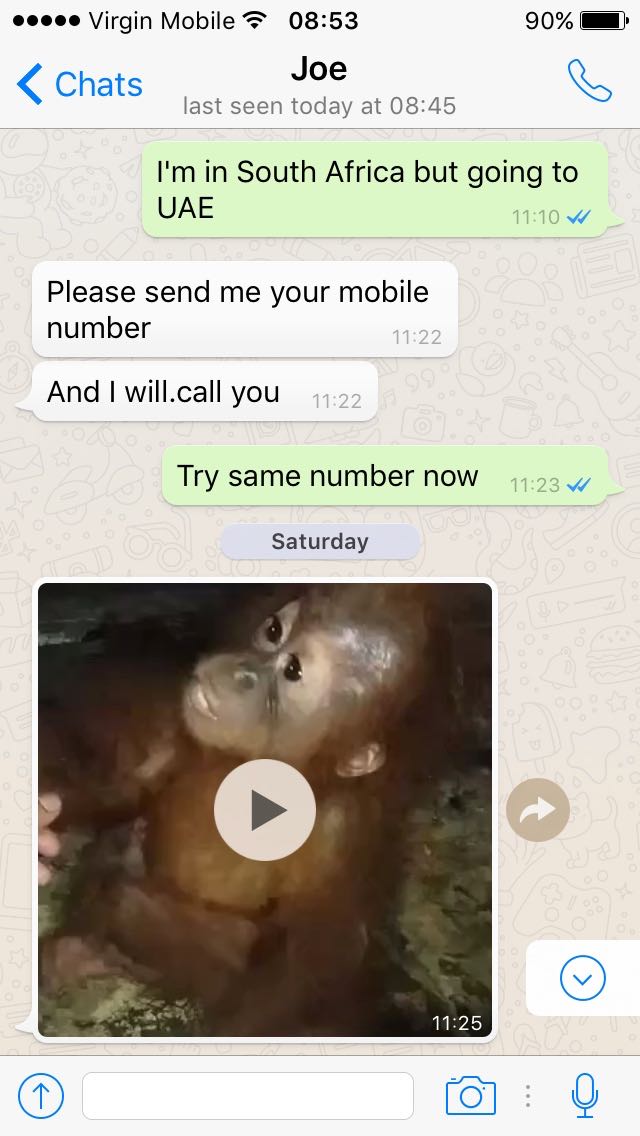
The person I thought was Joe called me by mobile service network, not WhatsApp audio, I imagine to confirm that I actually was in South Africa. I was using a +27 country code SIM card and just happened to be in South Africa at the time. The man spoke reasonably good English with what sounded like a Malaysian or Indonesian accent. He said that Joe was no longer running @exoticpet88, but that he was. He said for me to call him Tom. After speaking briefly, he sent me a video of a young orangutan he said was for sale. He asked me if I knew a wildlife trader in South Africa named Eddy. I said I didn’t. I later passed the name on to someone who studied wildlife trade based in South Africa with TRAFFIC. He hadn’t heard of any Eddy either.
His mobile number was +855 81 followed by six numbers. I went online to see if I could trace it, using Truecaller and a reverse caller number lookup app, plus just using a Google search. Nothing. A +855 area code is both the country code for Cambodia and a toll-free number that can be purchased for use in the USA and Canada. But there was no ‘81’ city code for Cambodia and the only five mobile prefixes in the country were +855 11, 12, 15, 16 and 18. No 81. All the North American +855 numbers require seven following numbers, and Joe’s was eight. Indeed a mystery.
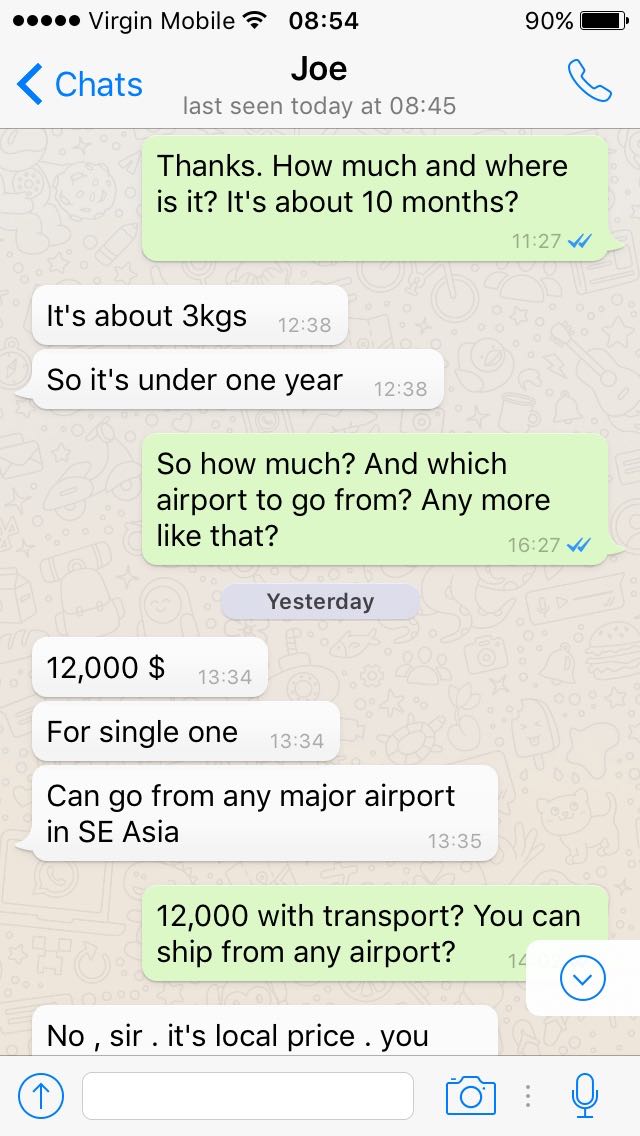


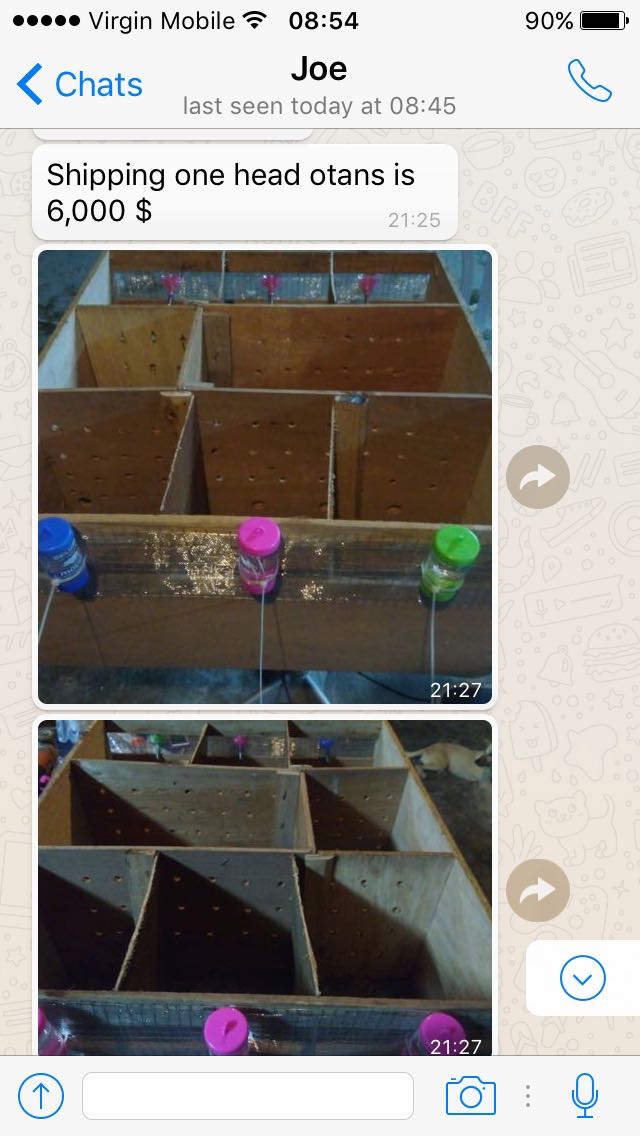
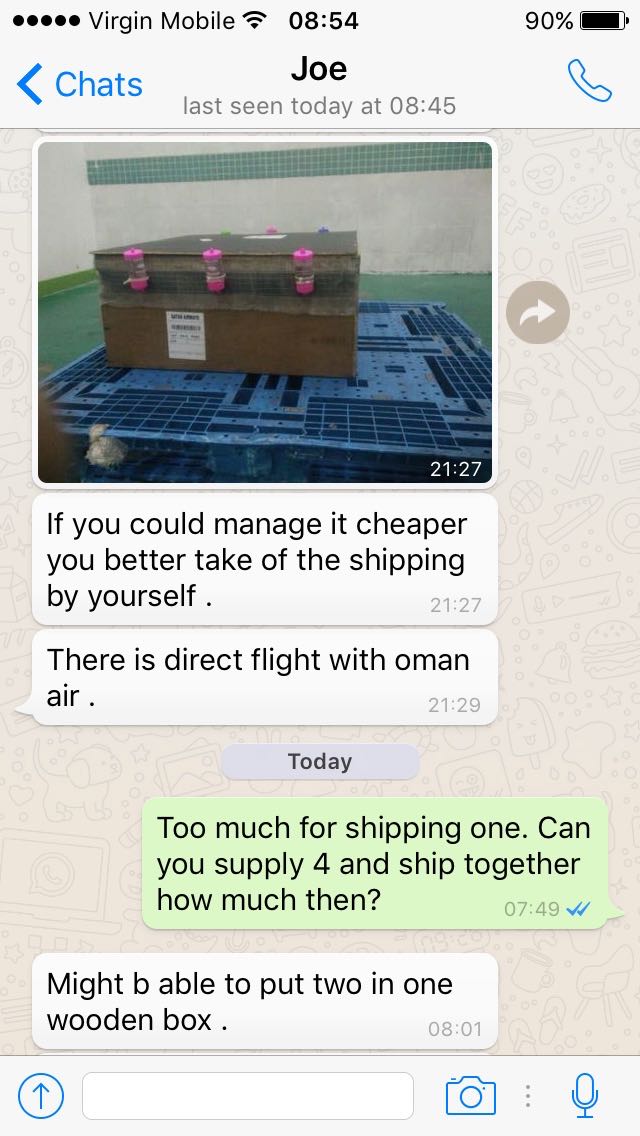
It was now the 3rd of October, I was leaving South Africa on the 5th. There was a New York Times journalist very interested in doing a story on great ape trafficking and he was eager to go along with me to witness the sting and arrest, but it was difficult setting a time when he could go to Indonesia. That explains my “am checking with partner and buyer” above. I flew to another country on the 5th and contacted Tom on 6th October with the South African WhatsApp number.


I had found that Tom or his associates had set up a new IG account in September or October 2016 called @exoticpetworld and many of the posts were re-posts from @exoticpet88.

This post of an orangutan infant posted on 10th October 2016 was first posted on @exoticpet88 in 2014.
It looked like Tom and/or his associates were reviving the online business.


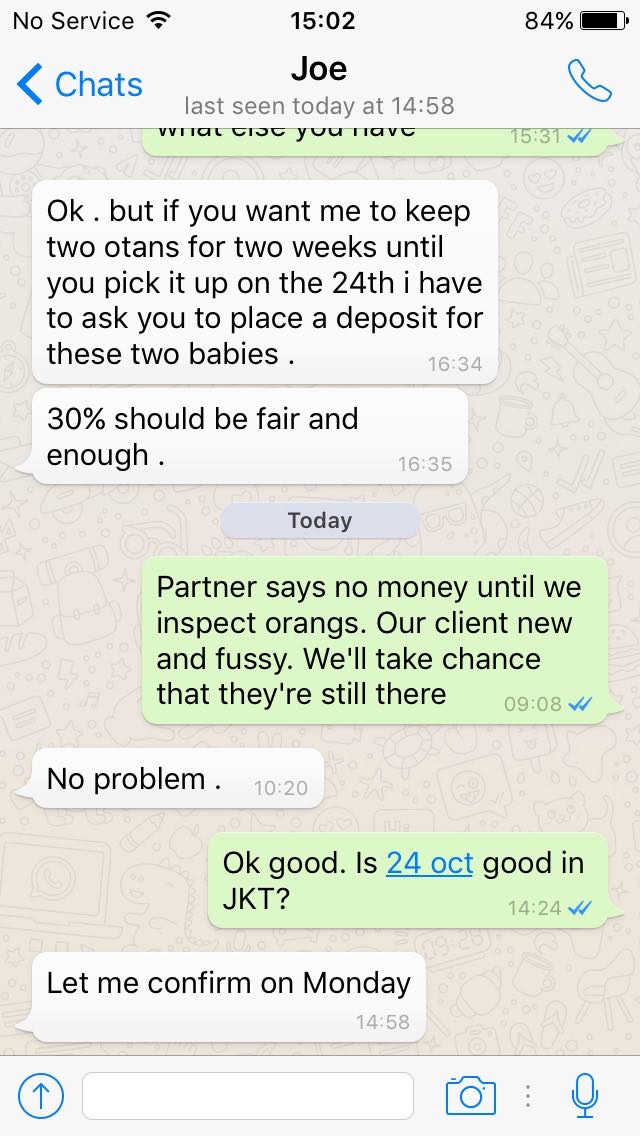

Otans selling quickly to China was not good news. I knew that there was a rapidly expanding zoo and safari park industry there, orangutans were popular.
I was in Dubai 18-22 October to collect information about wildlife traffickers operating there from various sources that I had developed over the previous two-and-a-half years. I replaced the South African SIM card with a UAE one.


I traced the number to Byat Juma bin Byat, one of the owners of Amazonpet, a major exotic animal trafficker in the UAE. I had recently visited their two pet shops in Al Warsan, on the outskirts of Dubai, and had been monitoring their ads of great apes, gibbons, tiger and lion cubs and other endangered species for a couple of years. I had even posted comments on their IG account asking to buy chimpanzees, but no reply, and then on 19th October while in Dubai I sent a message by WhatsApp to the number advertised on their IG account asking to buy an ape pet. They replied that they only had reptiles. I thought it was too risky to contact them again with the same UAE number and a different cover story. By 23 October, when Tom sent me the number, I had already left Dubai and could not therefore buy a new UAE SIM card. Bad timing.

Six months earlier, in March 2016 Amazonpet posted this photo, along with many others around the same time, of apes, big cats, etc., so their WhatsApp message to me that they sold only reptiles rang hollow.
My exchange with Tom ceased for the time being.
End of Part I
Posted in Uncategorized
Indonesian traffickers’ transaction method of selling illegal wildlife: Rekber
PEGAS has been monitoring online social media accounts for over three years, finding wildlife dealers who sell great apes captured in their forest habitats to the highest bidder. Dealers in Indonesia are amongst the most active of these ape traffickers, especially of the lesser apes (gibbons and siamangs).
The Facebook or Instagram posts of Indonesians are always in Bahasa Indonesia, the local language. PEGAS struggles with Google Translate to try to figure out what they are saying. One word, even in very short comments, keeps recurring when an animal is offered for sale: ‘rekber’, often with the word ‘wajib’. ‘Wajib’ is translated as ‘required’, but no translation could be found for ‘rekber’.
Here are many examples of both adverts and transaction instructions:
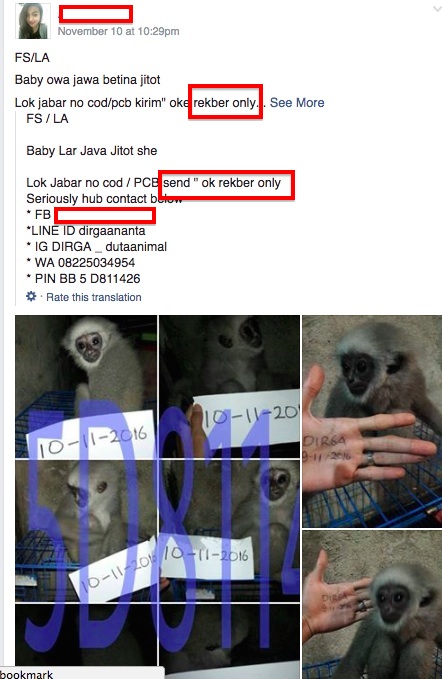
The fact that business PIN numbers are almost always given by dealers indicates that CITES Appendix I species – supposedly protected from commercial trade – are being trafficked with a veneer of legality.

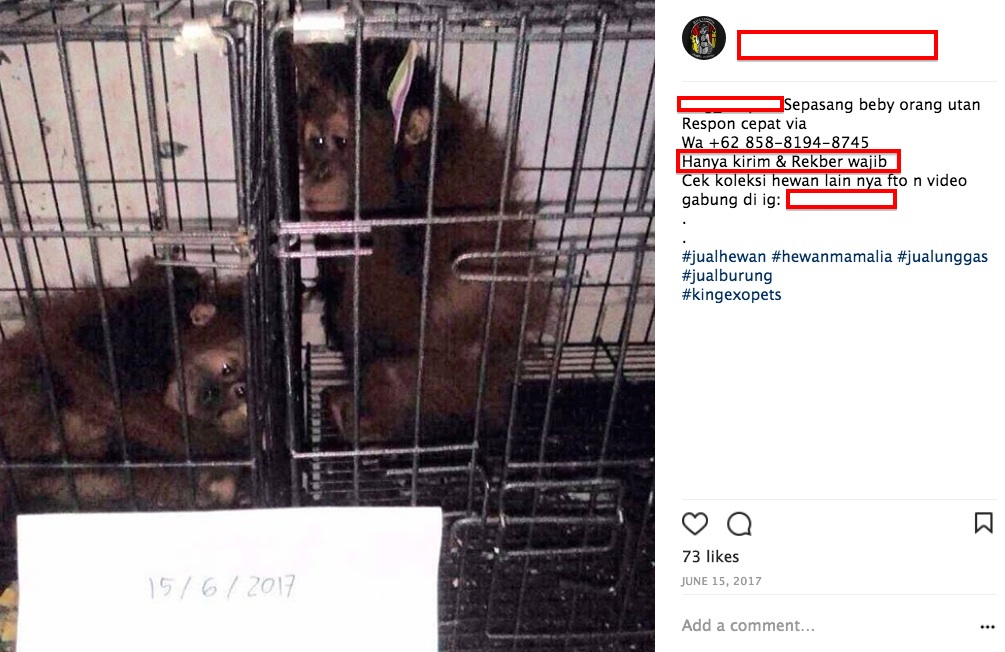


PEGAS got lucky when a big Indonesian wildlife trafficker gave a short tutorial on what ‘rekber’ meant and how it operated. The word is an abbreviation of ‘rekoning bersama’, which means ‘joint account’. There are several private rekber services comprised of individuals or companies that have set up bank accounts to act as escrow services. They make money by charging a service fee for the financial transaction (e.g. RekBer CeperzBank, ceperzbank.com; RekBer IndoBank, http://www.rekberindobank.info; MangRekBer, http://www.mangrekber.com).
Here is how it works: the dealer and buyer agree on a price, for example, for two orangutan infants, let’s say Rupiah 140 million (~USD 10,000). They go to an online Rekber service. The service cannot release funds to the seller (i.e. dealer) until the buyer gives the thumbs up. Then, (1) the seller deposits the agreed price into the account, (2) the service informs the seller that the funds are there, (3) the dealer ships the orangutans, (4) the buyer informs the service that he has received what he paid for and (5) the service releases the funds to the dealer.

A schematic diagram showing how RekBer works
So Indonesian banks are facilitating illegal wildlife trade, albeit without direct knowledge of what is being traded. These services are not registered as banks, which means that they operate largely on trust between the buyer and seller and the service entity. Regulatory steps need to be taken to ensure that Rekber services are not used for trade in illegal commodities, or for illicit financial flows in the form of tax evasion and money laundering.
Posted in online trafficking, Uncategorized
Ape Only Walks Upright After Spending 9 Years Stuck In This Cage
ELIZABETH CLAIRE ALBERTS wrote a wonderful story in The Dodo on Poco, one of Sweetwaters Chimpanzee Sanctuary’s most famous residents. We reprint it here.
He might look different, but he’s the sweetest chimp — and loves to show off for visitors at his new sanctuary home.
It’s been more than two decades since Poco the chimpanzee was rescued — but anyone who visits Sweetwaters Chimpanzee Sanctuary, where Poco now lives, is reminded of where he came from. Poco spent nine horribly long years locked inside a tiny cage, which is now displayed on the sanctuary grounds.
Poco’s cage used to be suspended from a shop roof in Bujumbura, Burundi. He was kept there to attract customers, who would buy bananas and other snacks to feed him. While no one really knows how the shop owner got Poco in the first place, rescuers believe he was stolen from the wild when he was 3 years old.
Poco was never let out of his metal prison, which forced him to live standing in an upright position. Not only would this have been uncomfortable, but it’s unnatural for a chimp to stand like this. Poco was also exposed to the sun and wind and rain.
In the early 1990s, things finally changed for Poco. Authorities managed to confiscate him from the shop owners, and transferred him to a rescue center run by the Jane Goodall Institute (JGI) in Burundi. After spending two years being rehabilitated at the JGI center, civil war broke out in Burundi — and Poco was transferred to the Sweetwaters Chimpanzee Sanctuary in Kenya, which is run by Ol Pejeta Conservancy.
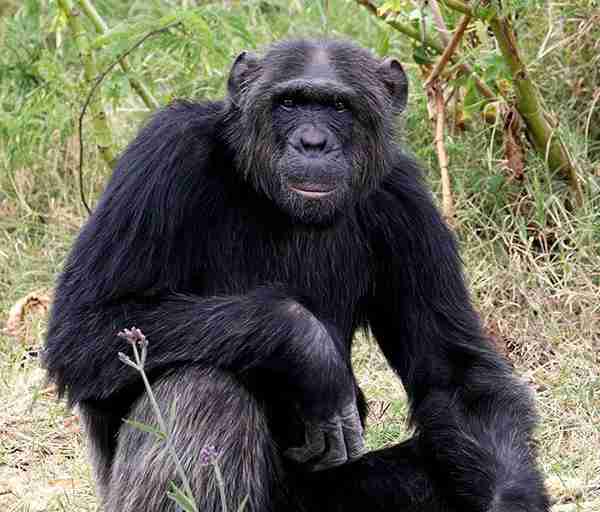
Poco’s time at the JGI rescue center had helped him move forward, but he still had a lot of emotional healing left to do when he arrived at Sweetwaters.
“When he got to Ol Pejeta it was emotional to see him still traumatized by hearing human voices,” Roxanne Mungai, communications and marketing administrator for Ol Pejeta Conservancy, told The Dodo.
But with time, Poco blossomed into a happy, healthy chimp. He loved the space and freedom to move around at the sanctuary, and he enjoyed meeting the other rescued chimps.
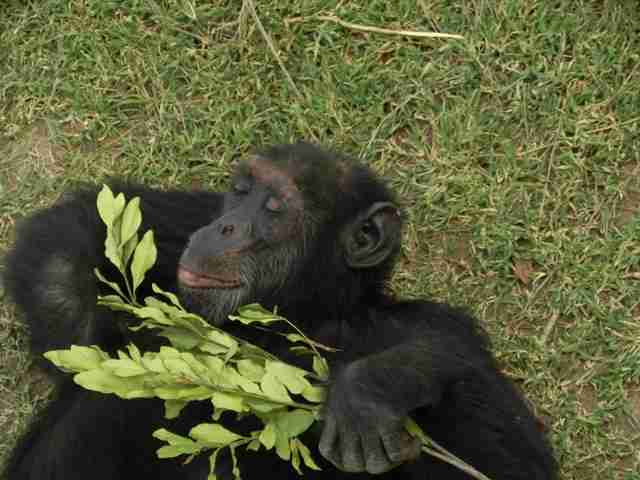
“He was introduced to a healthy population of chimpanzees who he observed and interacted with, and learnt to behave like a chimpanzee,” Mungai said. “It was amazing that despite his tough nine years in the cage, he [was] relatively healthy enough to be rehabilitated.”
“He enjoys fishing for honey and other treats at the enrichment structures put up at the Sweetwaters Chimpanzee Sanctuary,” Mungai added. “He is good friends with one of our older chimpanzees called Max.”
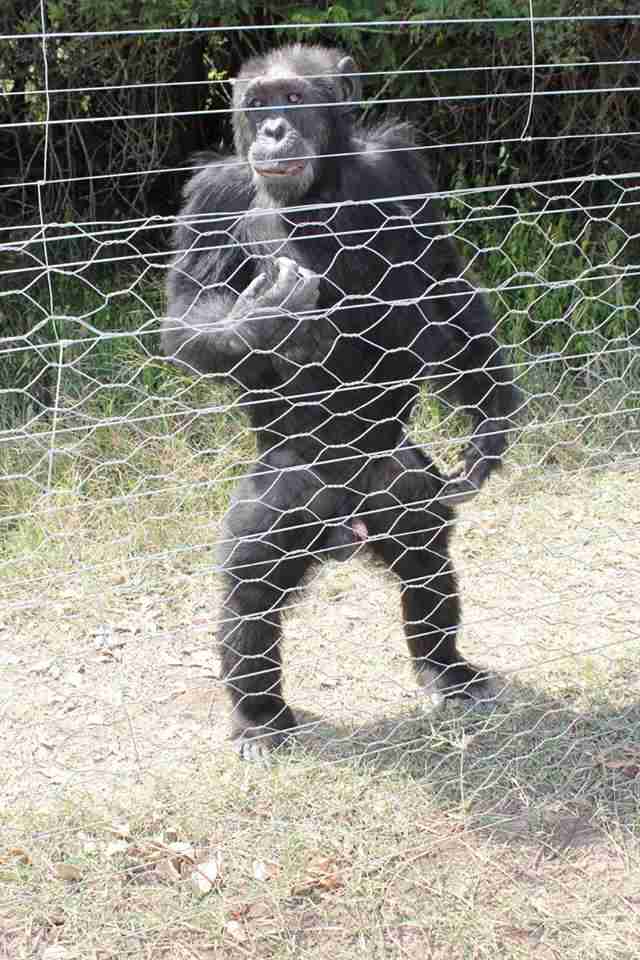
Poco still stands in an upright position, which is how he stood in his cage — and this is how visitors identify Poco from the other 36 chimps living at the sanctuary.
“Poco is always a favorite among our visitors and is identified by his unique ability to stand on his hind legs,” said Mungai, adding that Poco oftens stands this way to show off.
“He really likes people and will strut or throw sticks to get the attention of visitors,” a spokesperson for Ol Pejeta Conservancy wrote on Facebook. “Poco is one of our more gentle chimpanzees, and his bipedal swagger ensures he stands out from the crowd!”
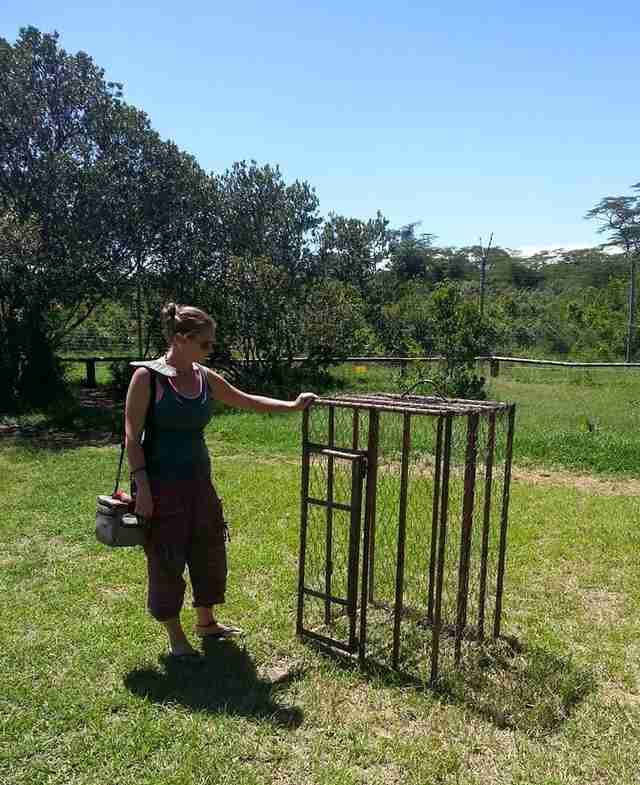
While Poco was lucky to be rescued, wild chimps continue to face numerous threats— people are rapidly destroying the forests in which they live and poaching them for their meat. Wild chimps are also captured and sold into the entertainment industry or as pets.
The sanctuary keeps Poco’s cage out on display to this day to help spread awareness about the issues wild chimps face.
“They [visitors] get emotional hearing about his story and how he overcame being enslaved,” Mungai said. “We can only say he was strong and lucky.”
Posted in Uncategorized
Intrepid Saudi mountain climber and humanitarian visits Sweetwaters sanctuary: makes plea to stop chimpanzee trade
Raha Moharrak is not only a unique person in the Arab world, she is unique anywhere. She is the first Arab and youngest woman to have conquered the summits of the highest mountains in all seven continents – the Seven Summits – including Mt. Everest and the tallest free-standing mountain in the world, Mt. Kilimanjaro.
Speaking about her impressive success, she said: “I really don’t care about being the first, so long as it inspires someone else to be second.”

“I really don’t care about being the first, so long as it inspires someone else to be second.”
Raha was bitten by the adventure bug at an early age growing up in Jedda, Saudi Arabia. Her father, a successful entrepreneur originating in the poor south of the country on the Yemen border, allowed the headstrong young girl to pursue her interests and gain a good education. She has a degree in Visual Communication from the American University in Sharjah and is now pursuing an MBA at the Synergy University in Dubai, where she works as a graphic artist.
“I am an adventurer first and a graphic artist second,” she told PEGAS. But after learning of her travel schedule how she finds time to work is a mystery.
But adventure is not Raha’s only pursuit – she also seeks worthy projects to support. She picks each project carefully, ensuring that the cause she supports is a worthy one.
As part of her many interests, a concern for animal welfare led her to join the Middle East Animal Foundation in Dubai. A partner and friend of PEGAS, Debbie Lawson, also a MEAF member, introduced Raha to PEGAS’s work, which immediately raised her interest and curiosity. She decided to visit Ol Pejeta Conservancy and the Sweetwaters Chimpanzee Sanctuary to learn more about the plight of great apes and the illegal exotic pet trade that threatened their survival in the wild. She thought that perhaps she could help in raising awareness about the issue, which was little understood by the world.
My coincidence, a documentary filmmaker that PEGAS was working with from the U.S. was planning to visit Ol Pejeta at about the same time. PEGAS thought bringing the two together could result in producing an effective public service announcement (PSA). It worked out, and Colin Sytsma, the filmmaker, and Raha came together at Ol Pejeta in March 2018.
As many visitors do, Raha fell in love with Manno, the adorable young chimpanzee that PEGAS helped rescue and relocate from a private zoo in Iraqi Kurdistan to Sweetwaters in late 2016. Manno seemed intrigued with Raha and in an instantaneous meeting of the eyes a bond was forged between the two.

“He has these beautiful amber eyes. I can’t fathom how somebody could see that, shoot the mother, … and send the baby off to someone to purchase….”.
“He has these beautiful amber eyes,” Raha said. “I can’t fathom how somebody could see that, shoot the mother, … and send the baby off to someone to purchase….”.
PEGAS hopes that Raha’s message is listened to and heeded, especially in her part of the world where great apes are such popular pets.
Posted in chimpanzee, PEGAS
Bo and Bella arrive from Guinea Bissau
It all started on 18th January, 2016, over two years ago, when PEGAS received an email from Gregg Tully, Executive Director of the Pan African Sanctuary Alliance.
Gregg asked, “Can you help with this case?”
Attached was an email from Maria Joana Ferreira da Silva that began:
“My name is Maria Silva. I am a post-doctoral researcher working in Guinea-Bissau. There is a huge crisis in Guinea Bissau of captive chimps … that live in horrible conditions and need to be rescued.”
PEGAS received confirmation from Richard Vigne, CEO of Ol Pejeta Conservancy, and Dr. Stephen Ngulu, manager of Sweetwaters Chimpanzee Sanctuary, that they would be happy to receive chimps from Guinea Bissau.
Maria Joana informed us that there was one particular chimpanzee, named Bo, who was ready to go. Bo had been seized by the authorities from a man who was trying to sell her after killing her mother for bushmeat. She was being kept at Cufada Lagoon National Park. They thought she was about three years old.

Bo, now around four or five years old, has spent the last two years at the Cufada Lagoon National Park waiting for relocation to Sweetwaters.
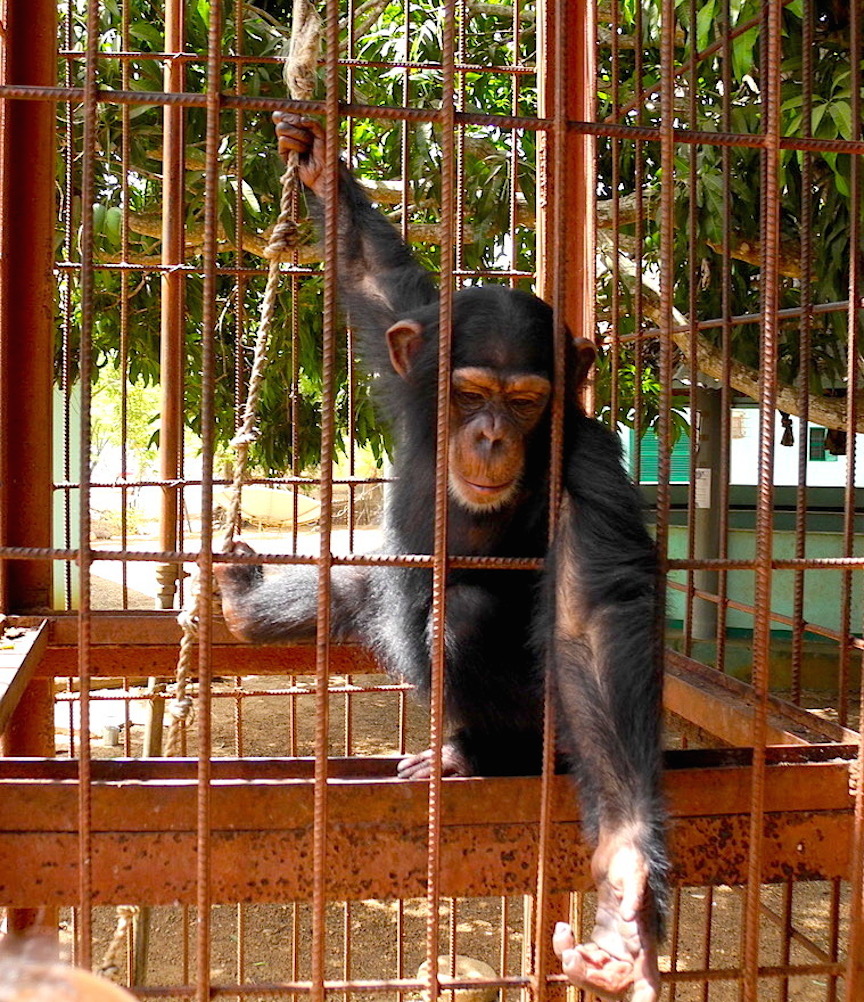
Bo has received many visitors and likes humans, but now she will have to learn how to be a chimpanzee.
Following on that initial email some hundreds of them ensued, along with Facebook and WhatsApp messaging and Skype calls, involving dozens of people – Maria Joana, Guinea Bissau national parks and CITES people, the Guinea Bissau European Union delegation (they had generously offered to cover transport costs), Kenya Wildlife Service and Kenya Department of Veterinary Service staff, Portuguese volunteer veterinarian Pedro Melo who took bio-samples from Bo, Hank Nephuis of the Biomedical Primate Research Centre in the Netherlands which analyzed the samples and issued a health report, and many other supporters who helped out in various ways.
PEGAS was at the center of this maelstrom of communications, which was hampered by the fact that Internet service in Guinea Bissau was spotty and the country was experiencing considerable political instability during this period, not to mention language difficulties (Guinea Bissau is Portuguese-speaking).
Later on another young chimp was added, Bella, a shy and sensitive female who found herself in the same painful situation as Bo – orphaned victim of bushmeat hunting and target of the exotic pet trade.
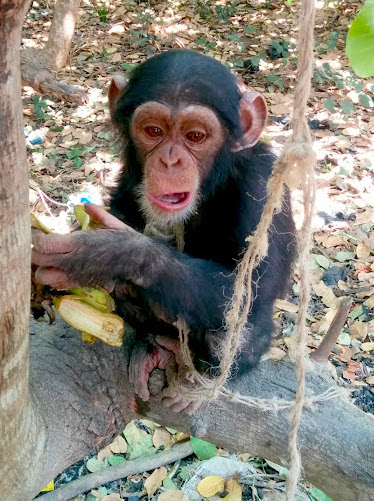
Bella, perhaps three years old.

Due to various causes it took ages to obtain the CITES import permit, the
veterinary import permit, then the CITES export permit and finally the veterinary certificate of good health two days before shipping. PEGAS would like to thank in particular:
Maria Joana Silva, who pushed the rescue and relocation from day one to the successful conclusion.
Ms Aissa Regalla, Coordinator of Species and Habitats in the Instituto da Biodiversidade e das Áreas Protegidas (IBAP) (Institute of Biodiversity and Protected Areas), the Guinea Bissau wildlife service, who helped obtain the necessary paperwork.

Aissa Regalla of IBAP came to care a lot for Bo.
Pedro Melo, wildlife veterinarian, who flew to Guinea Bissau from Lisbon to take the samples needed for the veterinary tests, and who supervised the shipping from Bissau to Dakar and then ensure that the crates got onto the Kenya Airways flight from Dakar to Nairobi.
Helena Foito and Carla Da Silva-Sorneta, European Union Delegation.
Fai Djedjo, Guinea Bissau CITES Focal Point.
Richard Vigne, Stephen Ngulu and Samuel Mutisya of Ol Pejeta Conservancy, who were kept busy writing letters and emails for all of the permits and shipping documents required, and who carried out the transport from Jomo Kenyatta International Airport to Ol Pejeta.
Ramat Hamoud of Airfreight & Logistics Worldwide, who handled the complicated clearing of the chimps at the Nairobi airport.
After more than two years of work, Bo and Bella finally touched down on Kenyan soil at 5:13 a.m. on 26th April, 2018. Karibuni Kenya!
Here are a few photos of the arrival and transport to Sweetwaters Chimpanzee Sanctuary.

KQ 513 landed at 05:13 carrying Bo and Bella across the African continent.

The entire trip, with transit in Dakar, took 18 hours.
I arrived at 06:15 at Kenya Airways cargo to find no one there, except two sleepy staff, who knew nothing about any cargo arriving from Guinea Bissau. Luckily I had the Airway Bill scan on my phone to show.
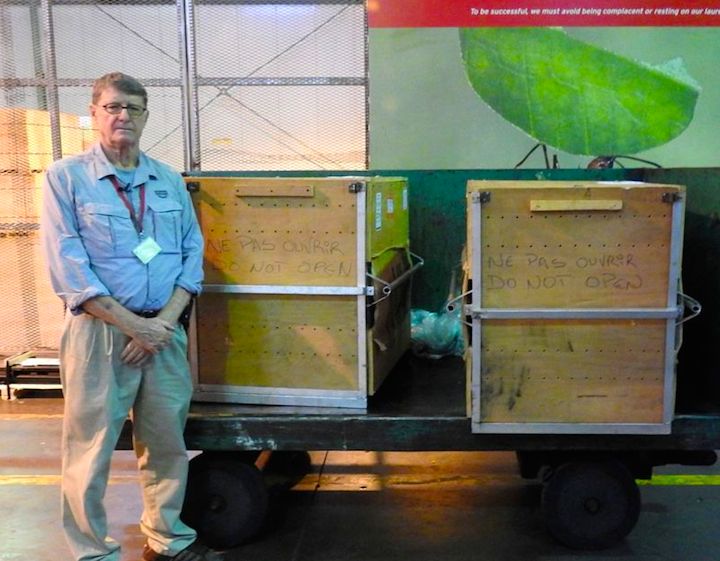
While the staff were checking their computer for information on the chimp crates, I walked out into the cargo area and found the crates right there a few meters from the office door.

Some time later Stephen Ngulu, Sweetwaters manager, arrived with Dr. Rashid, the airport veterinarian. KQ Cargo would not allow Dr. Ngulu to take possession of the crates without a letter from Ol Pejeta authorizing it. Richard Vigne, CEO, was in New York, so his deputy Samuel Mutisya rushed a letter to KQ Cargo by email.

Ramat Hamoud, the clearing agent, arrived later and began the laborious clearing process. We took the chimps to the airport animal holding facility for the veterinary formalities.
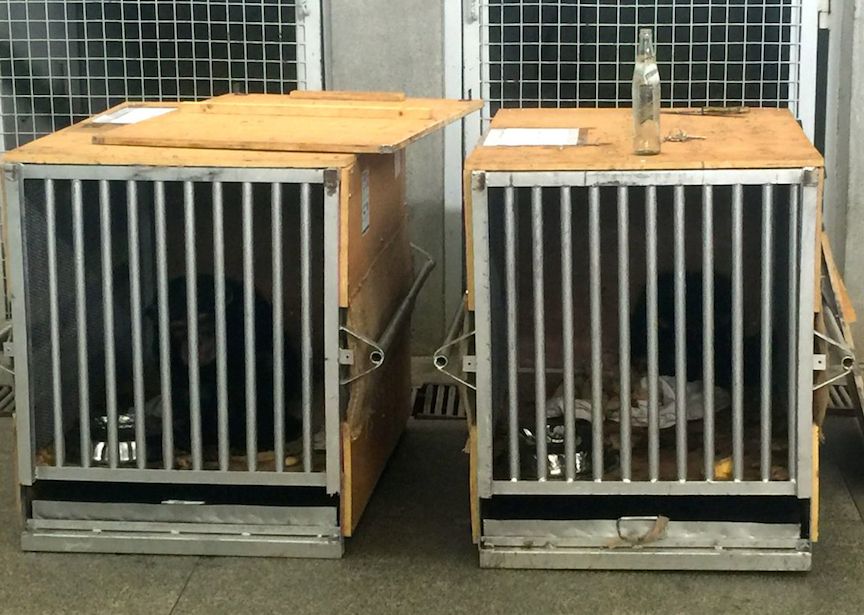
The doors were opened so we could see how they were doing (I actually peeked earlier in the cargo shed).

Bo offered me his finger, first touch!

Bo looked in remarkably good spirits after what must have been a tiring and confusing experience. And it wasn’t over yet.
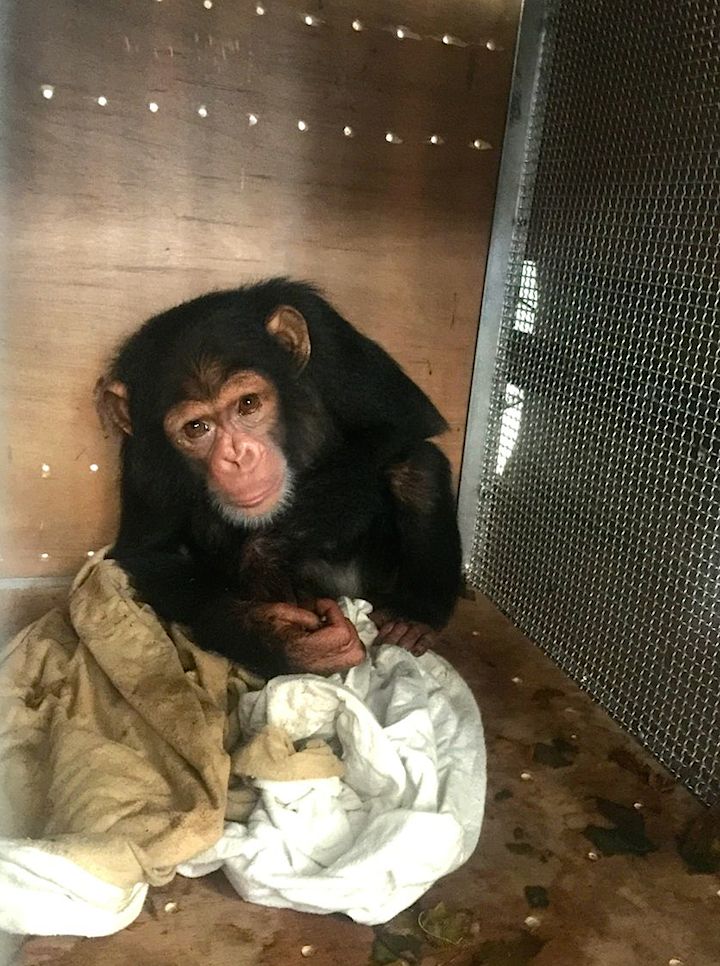
Bella was a bit more subdued, but she came around later and became quite friendly. Her face had the clear color of a Central African chimp.

Bo had a mango to celebrate her arrival.
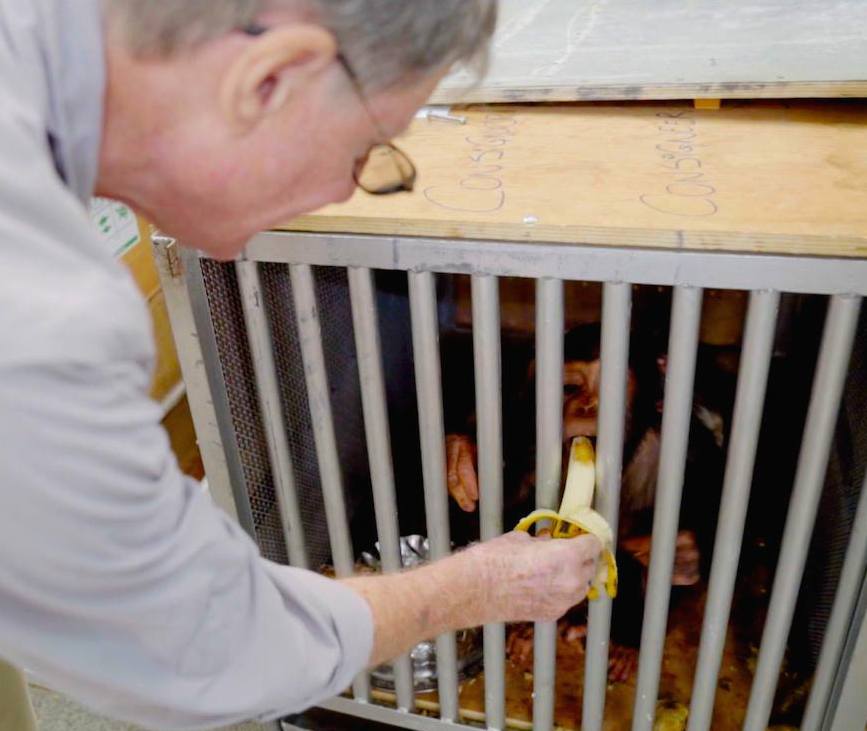
Bella had no food left in her cage, so I went to a nearby cantine and found the last three bananas. Bella scoffed two in no time, I gave the other to Bo.

After more than seven hours in the airport we left for Ol Pejeta. Ramat was still doing paperwork, but they let us leave.
The chimps didn’t arrive at the Ol Pejeta chimpanzee quarantine house until 5:30 p.m.
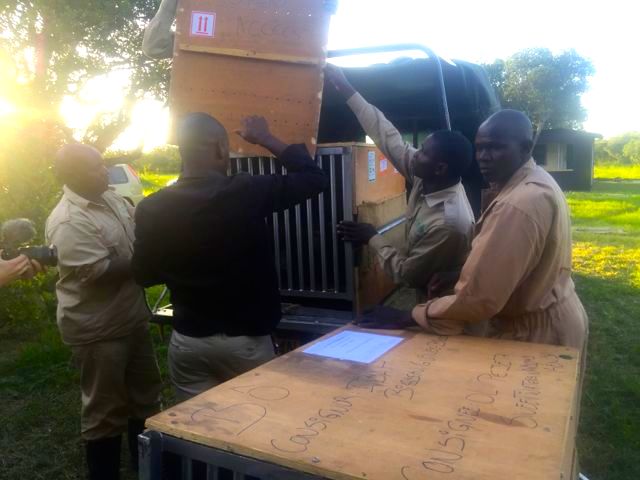

Unloading at the quarantine house, directed by Joseph Maiyo, caretaker supervisor (man in hat).
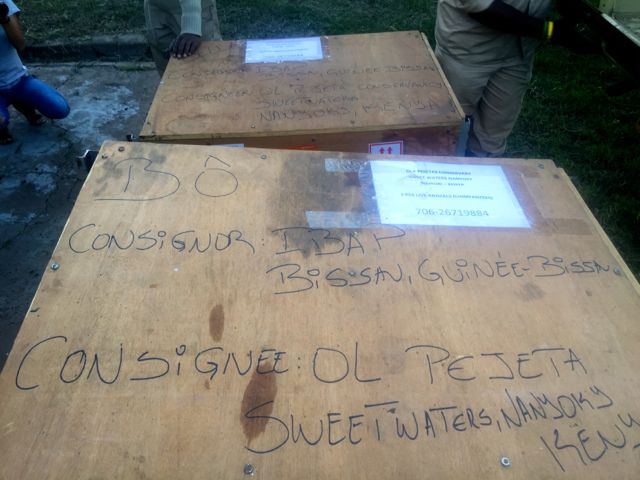
In the upper left hand corner of the crate tops you can see ‘Bo’ and ‘Bella’ marked

Clean straw for sleeping nests had been put in the rooms.

Bo checks out his new home.
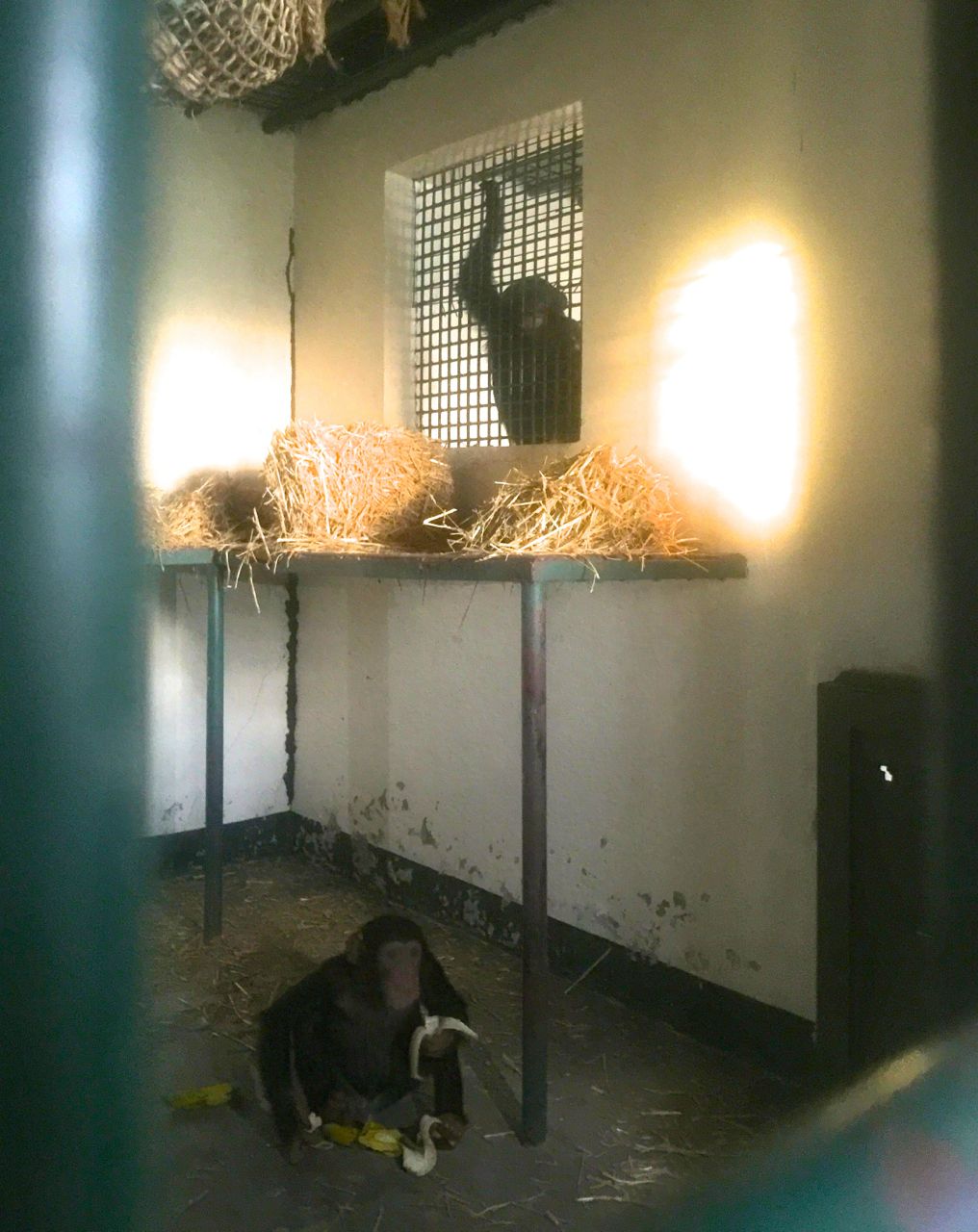
While Bella munches bananas, Bo watches from the window. We hope they will get to know each other through the window.
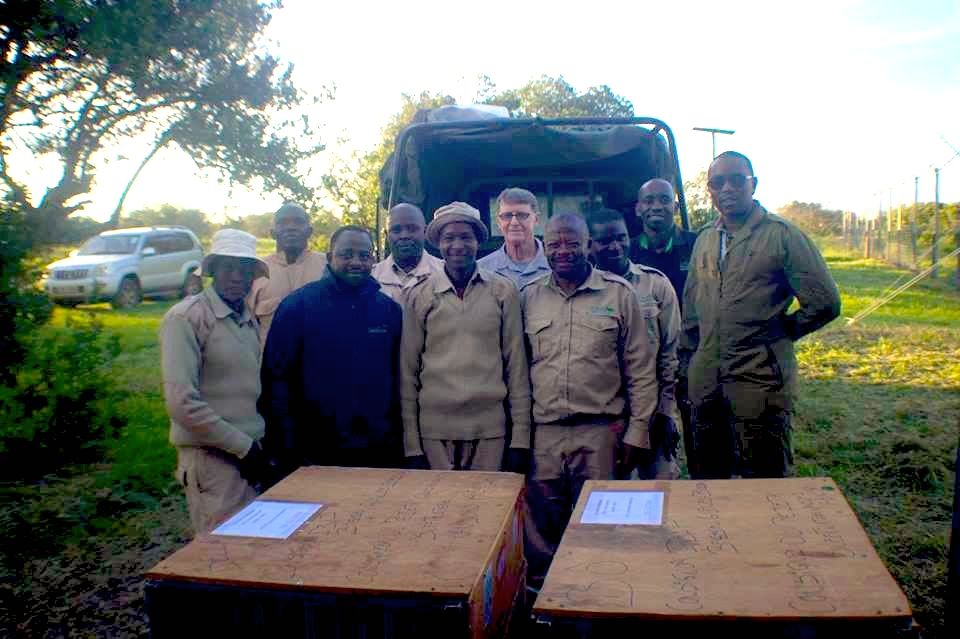
The team, very happy to have new guests at Sweetwaters Chimpanzee Sanctuary.
Bo and Bella will now enjoy five-star accommodation for the next three months in quarantine. Once out, we hope that they will be introduced easily to the New Group. They will join Manno, the young chimp rescued from a private zoo in Iraqi Kurdistan and brought to Sweetwaters on 30th November 2016.
Facial Recognition: a new tool in great ape illegal trade investigations
PEGAS has identified and was until recently monitoring over 125 social media sites that have posted 315 individual great apes (a minimum number) either for sale or already purchased. In addition, PEGAS has visited zoos and safari parks in several Middle Eastern and eastern Asian countries that are exploiting hundreds of great apes commercially, ranging in age from infants to old adults. They act as fee-paying photo props with visitors, entertainment performers or as simple zoo attractions when they get older.

From sale online great apes are exploited for many commercial purposes

Photo props when young
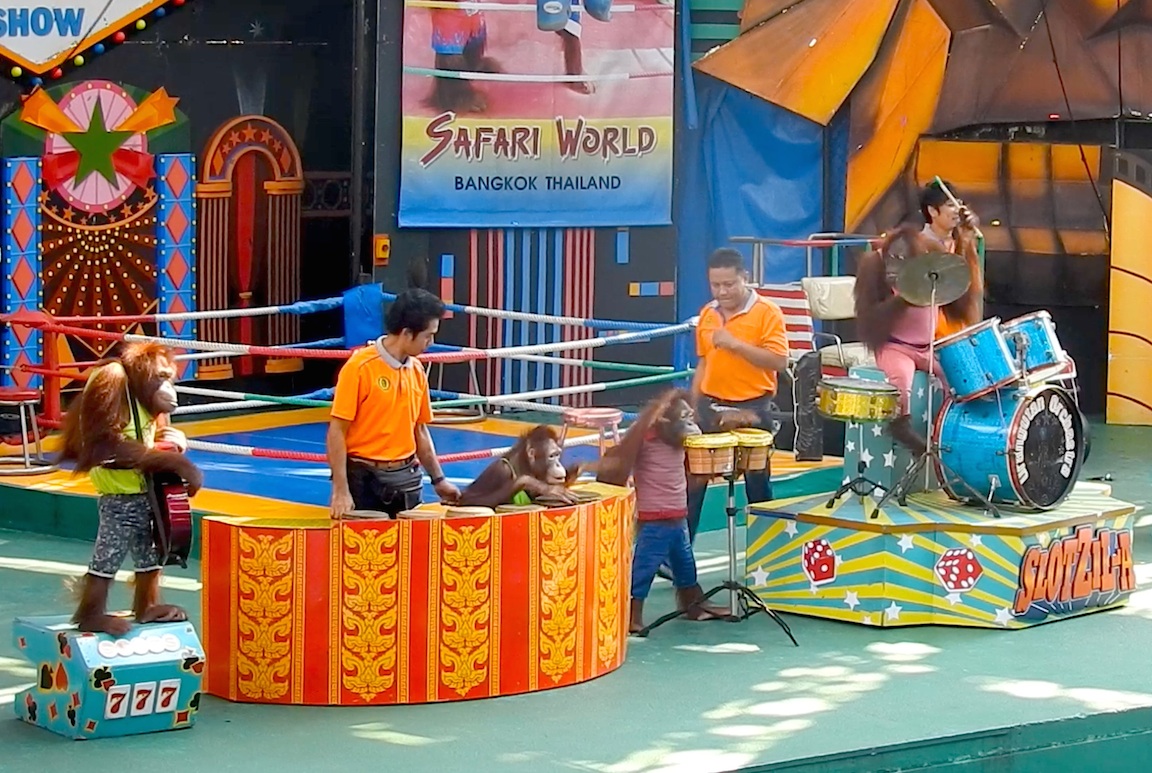
Entertainer when a juvenile

Caged up when older, which can last 40 years
All of the great apes online and a high proportion of those seen in the zoos and safari parks were obtained illegally, many stolen from the wild. All of them have been moved from point A to point B, and many have been moved to point C and D and beyond, as they are bought and sold for various money-making purposes. These apes suffer tremendously in these callous moves, which are done in part to cover up the fact that they were imported illegally into the destination country by the first buyer. The second or third buyer can show sales records to the authorities, but when asked for CITES, Customs or veterinary import documents, they just say, “Go talk to the importer”. That’s where it usually stops, as the authorities do not have the time or resources to go find the importers.
If these great apes could be positively identified by some simple, non-invasive technology, that could be the breakthrough that wildlife trade investigators have been dreaming of. Identification using DNA or microchips has proven too difficult and expensive to carry out on a large scale. An ape facial photograph, akin to a police mug shot, could be the solution.
Wildlife dealers and owners post thousands of photos of great apes, most of them recurrences of the same ape. They are seen on multiple accounts as they are shared. It is not easy to determine if the same individual ape is posted on multiple accounts, unless the photos are identical duplicates. A facial recognition tool would enable the positive identification of each individual, as long as the face was showing at a good angle.

Are these the same or different chimps?

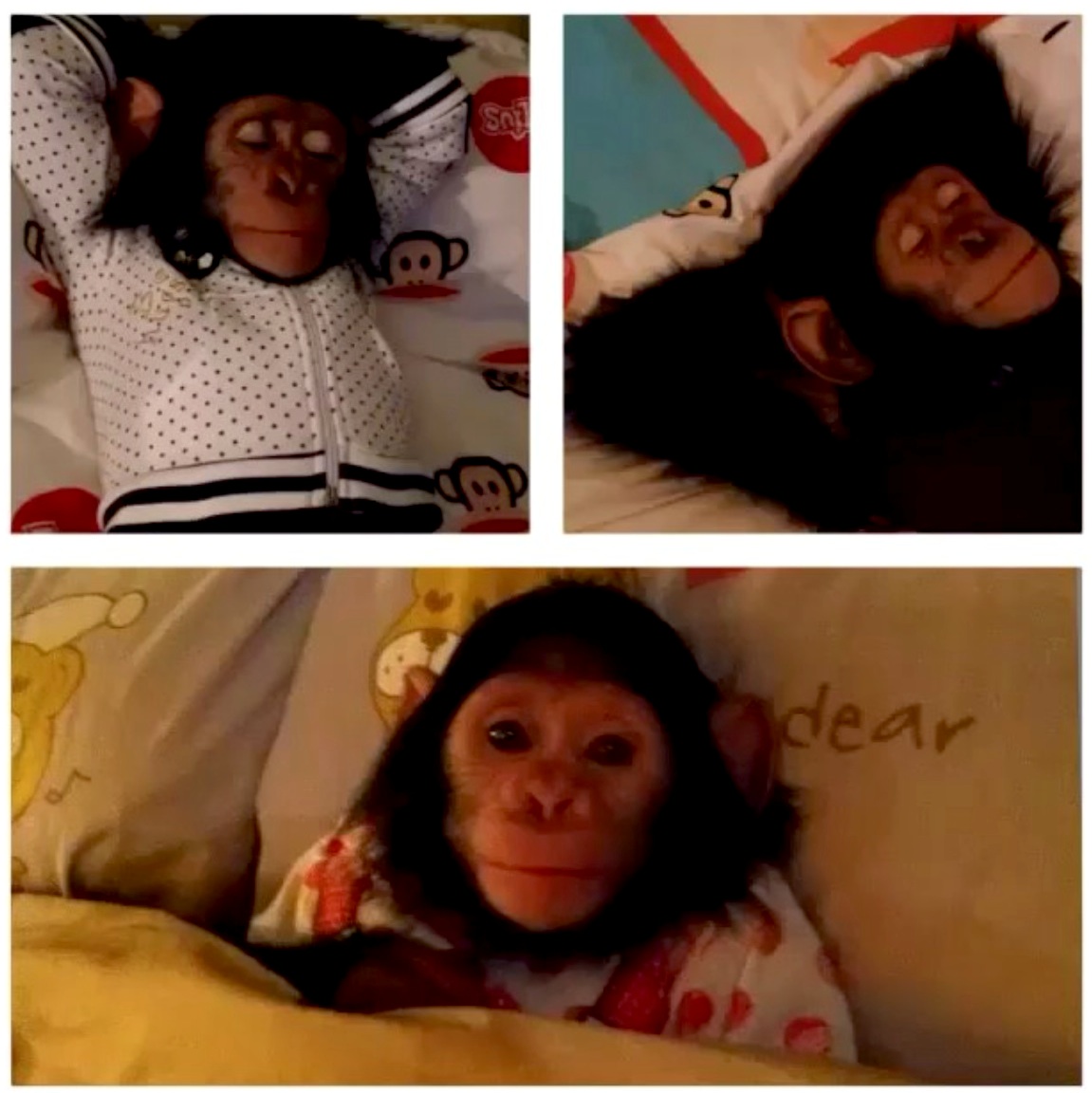
If we can positively identify an individual ape from its photo, it will be possible to track apes from seller to buyer online, and even from seller to buyer in zoos and safari parks, if the seller posted online the photo of that individual. It will also be possible to track movements of apes in zoos and safari parks, which may signal illegal arrivals, departures and replacements. This technology could even be used for prosecutions, depending on its accuracy.
Dr. Anil Jain, distinguished biometrics professor at Michigan State University, and his team modified their human facial recognition system to create LemurFaceID, the first computer facial recognition system that correctly identified more than 100 individual lemurs with 98.7 percent accuracy.
“Like humans, lemurs have unique facial characteristics that can be recognized by this system,” Jain said. “Once optimized, LemurFaceID can assist with long-term research of endangered species by providing a rapid, cost-effective and accurate method for identification.”
Dr. Jain and postgraduate student Debayan Deb have volunteered to adapt the LemurFaceID methodology to chimpanzee faces. If that proves successful, PEGAS hopes that they can repeat it with an orangutan face ID application in future.
PEGAS is now working with dedicated wildlife conservationist Alexandra Russo, who has generously volunteered to lead the development of the ChimpFaceID initiative. Using a more advanced method than was used with the lemurs, titled PrimNet, based on Convolution Neural Network (CNN) architecture, the Michigan State team will analyze and test their technology on hundreds of chimp face photos that we are now collecting in collaboration with the Jane Goodall Institute, members of the Pan African Sanctuary Alliance and others.

“I have brought together volunteers working at Sweetwaters Chimpanzee Sanctuary on Ol Pejeta Conservancy, Kenya, at Tchimpounga in the Congo, Tacugama in Sierra Leone and in the USA at Chimpanzee Sanctuary Northwest in Washington State and Save the Chimps in Florida to provide the photos,” said Alexandra Russo, nicknamed Allie.
Allie went on to say, “The Max Planck Institute provided photos for an initial test of the PrimNet system, but it needs to be further tested and perfected to achieve a higher rate of correct identifications.”

Although still in its initial stages, several organizations have shown interest in PrimNet for use in illegal wildlife trade investigations and for monitoring of great ape population numbers and distribution in the wild. We hope to be able to present an exposition of the application’s potential as part of Bio-Bridge Initiative at the 14th Conference of the Parties of the Convention on Biological Diversity in Egypt in November 2018.
If the PrimNet technology works to the high 90s percent accuracy, investigators might one day be able to track an infant ape captured in the forests of Africa or Asia to a dealer selling it online in the home country to a dealer in the destination country and even on to the buyer. The photos, along with other evidence gathered in the course of investigations, could be used to arrest and prosecute the dealers, facilitators and even the buyer.
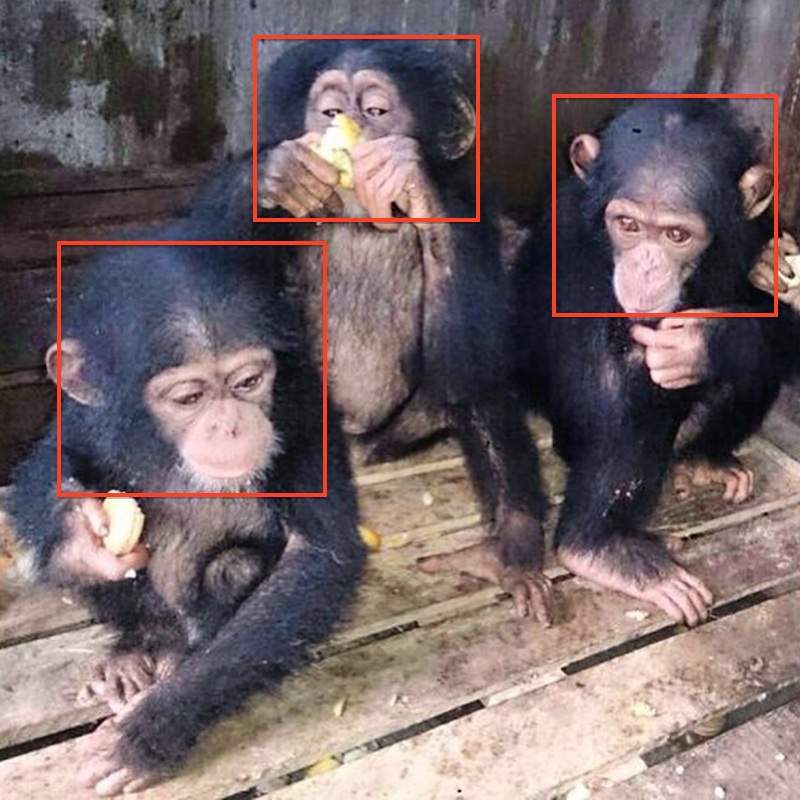

One day we may be able to positively identify chimp faces at point of origin, to dealer, to buyer.
 Project to End Great Ape Slavery (PEGAS)


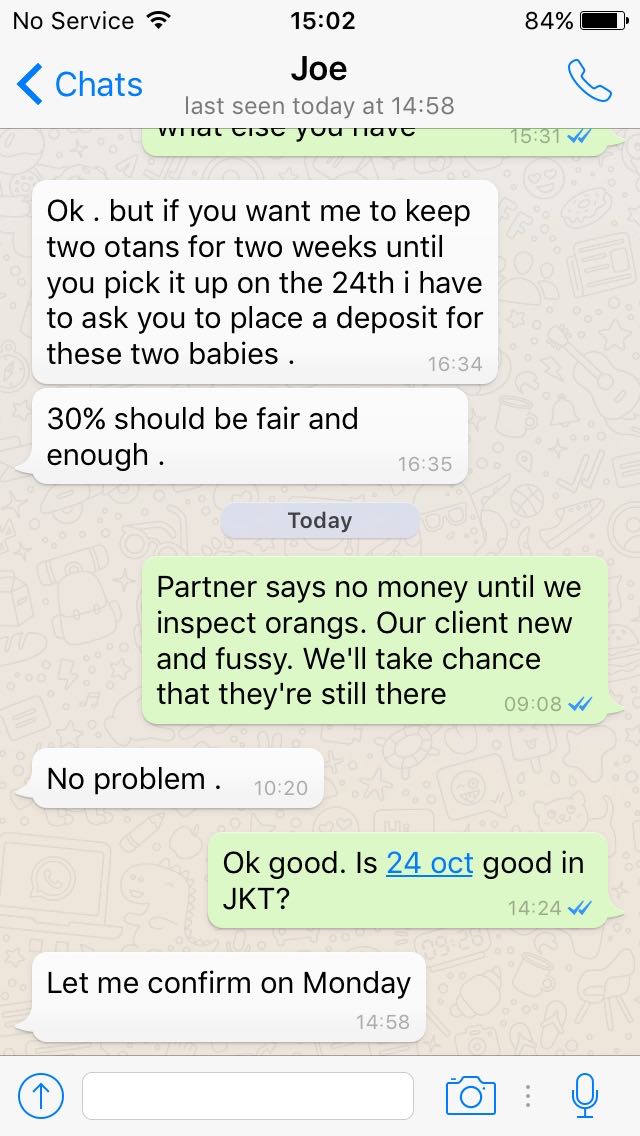
VIEW THE COMMENTS