Tag Archives: UAE

Exposed: The big business of selling South Africa’s big cats to Ambani’s Indian mega-zoo

Ed. This is a reprint from Currency News https://currencynews.co.za/exposed-the-big-business-of-selling-south-africas-big-cats-to-ambanis-indian-mega-zoo/.

The zoo – run by the son of India’s richest man – is under investigation for claims its animals have been bought illegally. Evidence suggests some may have come from UAE-based animal import companies.

BY DANIEL STILES SEPTEMBER 1, 2025

A number of South African wild animal exporters have been supplying animal import companies in the United Arab Emirates (UAE) with birds and animals, despite questions over whether this has been done in compliance with the global treaty governing wildlife trading.

Yet the evidence obtained in this investigation shows that South African companies appear to be shipping endangered wild species directly to Vantara, including leopards, cheetahs, tigers, African grey parrots and Scarlet macaws.

Some of these animals are re-exported to Vantara, a 1,200ha area adjacent to a huge oil refinery in Jamnagar, India, which is billed as the world’s largest zoo, with an animal population running into the hundreds of thousands.

This compounds the controversy over Vantara, originally known as the Greens Zoological Rescue and Rehabilitation Centre, which is the brainchild of Anant Ambani, the son of petrochemical billionaire Mukesh Ambani, India’s richest man.
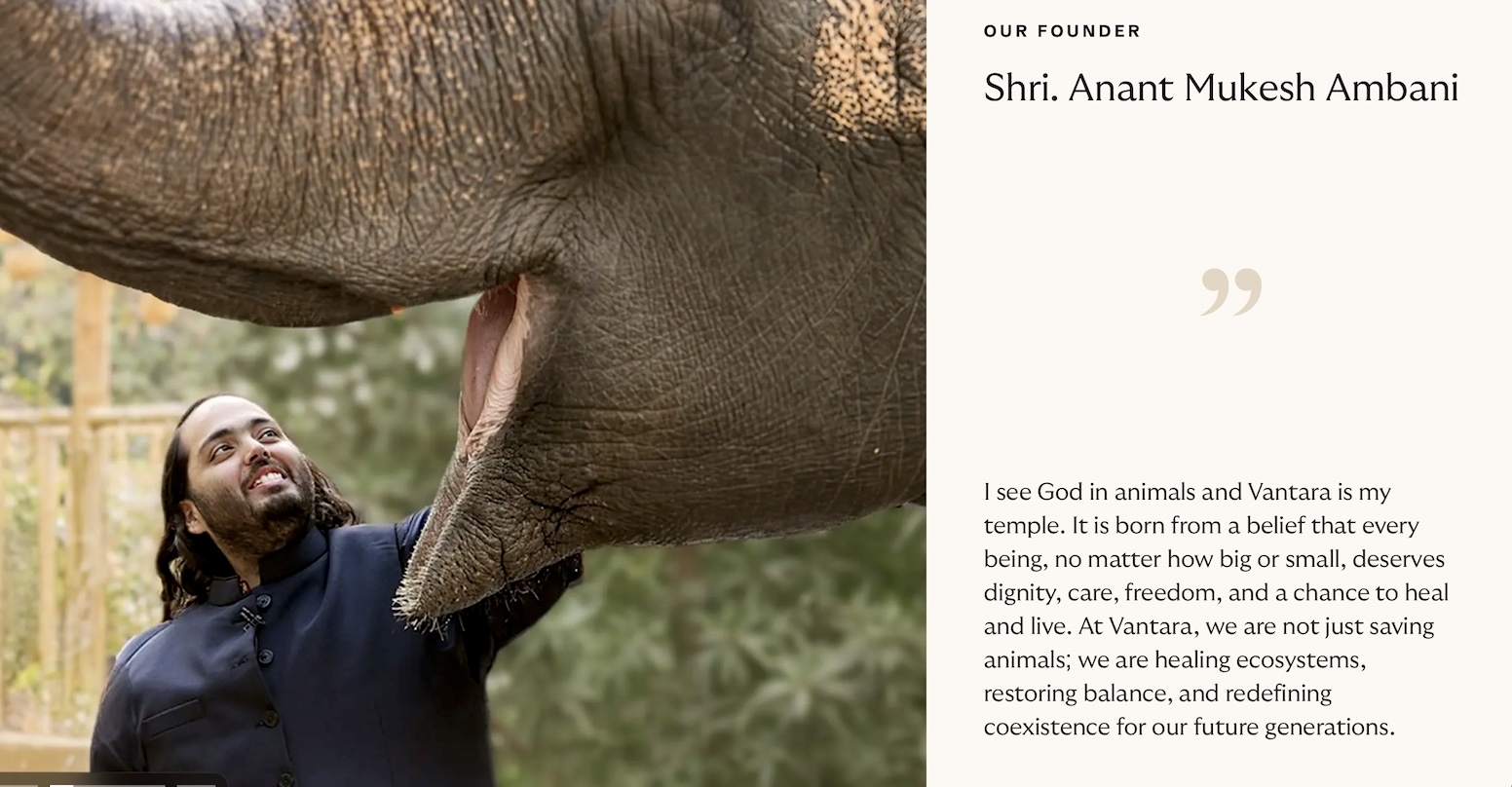
Last week, India’s Supreme Court ordered an investigation into claims that animals were being bought illegally, that wildlife laws were being flouted, and that this involved financial irregularities and possible money-laundering.

This will be a blow to a family with a reputation for living large: its home in Mumbai is a 27-storey building, and Ambani gets around in a Boeing 327 Max. Anant’s three-day wedding last year – billed as India’s “own royal wedding” – cost an estimated $600m.

But despite the allegations that Ambani has bent the rules in building his megazoo, he claims that “Vantara is a combination of the age-old ethical value of compassion with the excellence of modern scientific and technological professionalism”. Last year, he said animal care is a selfless service towards “the almighty as well as humanity”.

Yet investigations suggest a number of South African exporters, and an obscure animal shelter and zoo in the Abu Dhabi desert town of Al Ain in the UAE, have supplied thousands of exotic animals to Vantara using questionable sourcing practices.

The UAE entities – the Kangaroo Animals Shelter Center (KASC), and the Capital Zoo and Wildlife Park (CZWP) – are owned by wildlife trader Khaled Aldhaheri, and have supplied more than 7,800 animals of protected species to Vantara.

Both KASC and CZWP were unknown before February 2023, when KASC made its first shipment of exotic animals to Vantara, followed by the first shipment by CZWP in February 2024.

Aldhaheri appears to operate through three commercial animal trading companies in Abu Dhabi: Kangaroo Animals Trading, Kangaroo Est and Ekat. Kangaroo Logistics is an Aldhaheri company used to import and export animals.

Records obtained through the Promotion of Access to Information Act show that in 2022, three South African companies – the Akwaaba Predator Park, Parrot Pet Ranching and African grey parrot exporter Russelle Wheatly – exported animals and birds to Kangaroo Animals Trading.

Akwaaba Predator Park, owned by the South African Nazeer Cajee, exported five cheetahs, five leopards and 14 Bengal tigers to Kangaroo Animals Trading. In his personal capacity, Cajee also exported two white tigers and three “snow” tigers to Kangaroo Animals Trading.

Akwaaba has since been closed, but has been accused of running a lion breeding and canned lion hunting operation.

It underscored a grim truth: while South Africa has no officially registered tiger breeding facilities, it has become the world’s largest exporter of live tigers and their parts, according to the US-based non-profit Big Cat Rescue.

“These animals are bred in captivity for everything from trophy hunting to illegal bone trade, feeding demand in China and other markets,” it said.
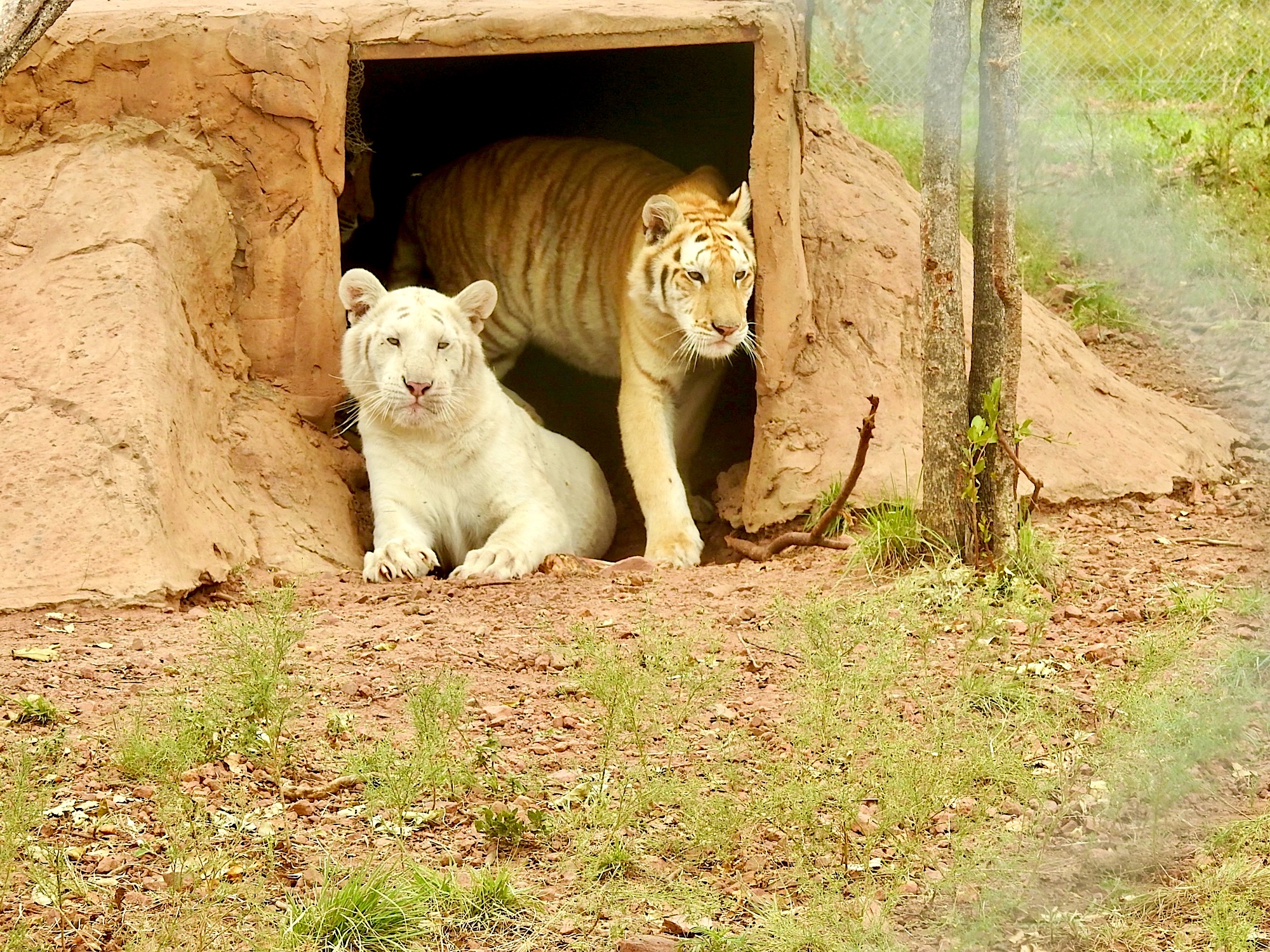
Captive bred tigers at South Africa’s Mystic Monkeys and Feathers wildlife park, one of the exporters to Vantara.

Nonetheless, this year, the Wildlife Animal Protection Forum South Africa, an animal rights organisation, published a report claiming that Vantara imported 40 cheetahs from Akwaaba, along with almost 500 other animals. But disturbingly, they could find no record of the South Africa export, except for 40 tigers and one ocelot.

The forum expressed concern about Vantara buying big cats from South Africa to become “breeding machines, exploited within the numerous animal breeding facilities (nurseries) located outside the main zoo” at Vantara.

New evidence suggests that at least five of the Akwaaba cheetahs, seven leopards and 24 tigers went to Vantara via the Kangaroo Animal Shelter. These were not distressed animals in need of rescue, but appeared to be commercial trades.

While neither Cajee or Aldhaheri responded to requests for comments, Vantara has denied this. It says all animals “received from facilities abroad are on a noncommercial basis, with prior confirmation from the CITES [Convention on International Trade in Endangered Species] management and statutory authorities of both countries”.

The UAE CITES Management Authority had not responded to a request for comment by the time of publication.

In an emailed statement, Aldhaheri confirmed that he operated KASC, but denied he was an animal trader.

“The shelter’s sole purpose is the welfare and rescue of animals, and all activities are conducted in strict compliance with UAE laws and relevant international regulations,” he said. “Your claim that I am involved in animal trade is entirely baseless.”

Yet this contradicts what Aldhaheri seems to have written on an animal trading website, where he said: “We are importer and exporter of live animals [sic]”, adding that he is “regularly selling” wildlife, and “regularly buying” exotic animals, including big cats.

This highlights a glaring loophole in the CITES rules. While highly endangered species cannot be traded commercially, they can be exported to other countries provided the shipment is classified as being for a “zoological institution”.

Aldhaheri has not yet responded to additional questions sent to him for this article. Yet he seems to have made changes to his business to make it more acceptable to Vantara.

His company, Kangaroo Animals Trading, has now been converted to the Kangaroo Animals Shelter Center, asserting that its “sole purpose is the welfare and rescue of animals”.

This is what Vantara requires as a registered rescue centre. Indian law says that “no zoo shall acquire, sell or transfer any wild or captive animal except from or to a recognised zoo”.

Exposing Kangaroo traders

Patricia Tricorache has investigated wildlife trafficking for two decades with theCheetah Conservation Fund and Colorado State University. She has reported extensively on the trafficking of cheetahs out of the Horn of Africa.

“I first heard of Khaled Aldhaheri, operating as Kangaroo Animals Trading, back in August 2022, when a source in the UAE informed me that Kangaroo was using its licence to import and sell lemurs and tigers with CITES permits and selling them ‘under the table’,” she said.

Tricorache said the firm began by trading in livestock, but later moved into more exotic species such as big cats, and Africa’s great apes.

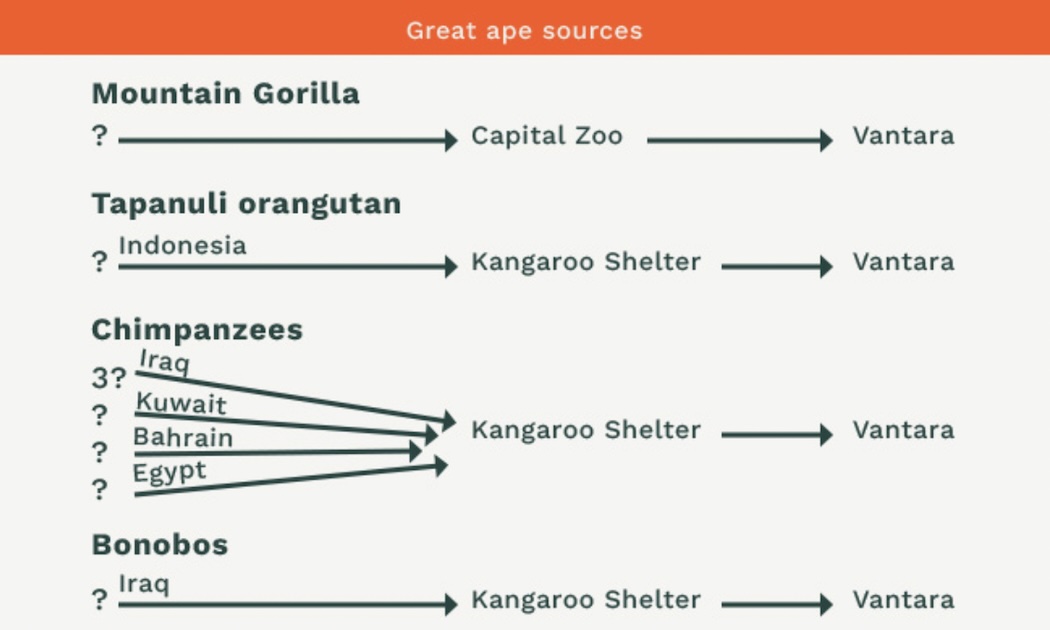
Export records show that KASC and CZWP’s shipments to Vantara included endangered species such as a mountain gorilla, chimpanzees, Tapanuli orangutans, cheetahs, jaguars and Bengal tigers.

Yet all of these species are listed as threatened with extinction, so any trade in them is strictly regulated by CITES, a treaty ratified by both South Africa and India back in the 1970s.

This means trading in those species is only authorised in exceptional circumstances, like for scientific research, and must be accompanied by a CITES issued import and export permit. Animals seized from the illegal trade may also be exported in exceptional circumstances, such as relocation to a sanctuary, but this is clearly specified as such.

CITES trade records have yet to be made public for 2024 and 2025, so it is impossible to say how many animals were transported without permits. But what is known from trade records is that KASC and CZWP exported 77% of the endangered animals shipped from the UAE to India between 2023 and June this year.

Customs data shows CZWP exported a mountain gorilla to Vantara in 2024, but this seems unlikely to have been one in captivity.

Ian Redmond of the Ape Alliance and the Gorilla Organization, who has worked with gorillas for almost five decades, says “the only mountain gorillas in captivity in recent decades were the orphans in the Senkwekwe Centre at the Virunga National Park” in the Democratic Republic of Congo (DRC).

“They exist only in the wild in two relatively small areas of forested mountains where the DRC, Uganda and Rwanda converge. If one was exported to the UAE, then re-exported to India, it can only have been taken from the wild,” Redmond said.

And this would have entailed much slaughter. Redmond says the capture would “almost certainly” have resulted in the death of at least two adults – being the gorilla’s parents.

“As most gorilla infants die before reaching competent care, it is very likely other infants would have been captured, also by killing their parents, but didn’t make it,” he said.

Aldhaheri did not respond to a request for comment on the mountain gorilla trade.

Still, there are other red flags in the trade records.

For instance, Vantara imported a bonobo from KASC in February 2024, and there is one CITES record showing that a bonobo was imported to the UAE from Iraq in 2023. Yet Iraq’s CITES data shows no imports of bonobos – a discrepancy often seen as indicating illegal trade.

Among the 25 most threatened primates on earth, found only in the Batang Toru forest in Sumatra, Indonesia, is the Tapanuli orangutan. There are fewer than 800 in the world.

Yet the KASC supplied one to Vantara in February 2024, and the CITES trade database has a record of the UAE importing the animal from Indonesia – but, curiously, Indonesia did not report the export of that orangutan.

Orangutan conservation groups say there is only one way in which such an animal was obtained.

Andrew Gunnyon, speaking on behalf of The Orangutan Project, said: “There are no Tapanuli orangutans in captivity. The orangutan would have been poached from the wild.”

Gunung Gea of the Scorpion Foundation, a wildlife trade monitoring group based in Sumatra, concurs. “I strongly suspect that it was smuggled via eastern seaports of Sumatra crossing Malacca Straits to Malaysia, then to some other countries,” he said.

There are similar red flags around the chimpanzees which arrived in India.

While KASC exported 46 chimpanzees to Vantara, CITES reported that only 30 had been imported to the UAE by the end of 2023. None of the chimps arriving at KASC had their origins declared to CITES, barring three that arrived in Iraq from Germany in 2022 and the Tapanuli orangutan from an unknown source in Indonesia.

Indian trade records show that 36 chimps arrived in the country from the UAE in 2023, six fewer than UAE reports having exported. Strangely, India indicates that eight of the chimps originated in South Africa – yet South Africa does not report that export.
However, new questions have emerged after Tricorache shared a video that had circulated on trading groups by an Iraqi dealer, who says he sold seven of the 11 Iraqi chimps to Aldhaheri.

Four of the seven trafficked chimpanzees shown in the Iraqi’s WhatsApp chat, origin unknown. Images are screengrabs of videos supplied by Patricia Tricorache.
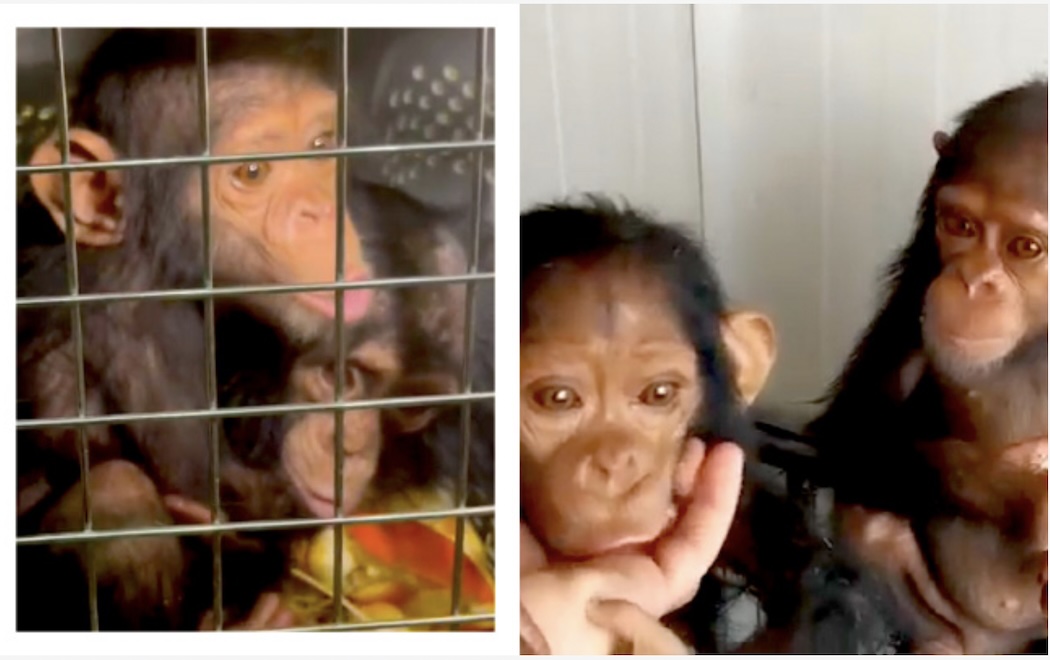
Four of the seven trafficked chimpanzees shown in the Iraqi’s WhatsApp chat, origin unknown. Images
are screengrabs of videos supplied by Patricia Tricorache.

Cheetah shenanigans

There are similar problems with the cheetahs exported to Vantara, some of which came from South Africa. Of the 50 cheetahs that the UAE exported to India between 2023 and May 2025, Aldhaheri exported 38 to Vantara.

Again, this data throws up several contradictions: in 2023, the UAE reported to CITES that it had exported 10 cheetahs to India, all bearing a source code indicating they were from a CITES-registered facility allowed to breed the animals for commercial purposes.

The problem, however, is that there are no such breeding facilities registered with CITES in the UAE. So where did these animals come from?

“Under normal circumstances, cheetahs require very large spaces,” Tricorache says. “In Namibia, for example, the government dictates that the legal space to house cheetahs is one hectare per animal. If the Google Maps measurements are right, [KASC]’s space is roughly 8m x 10m, or 80m , which would be completely inadequate.”

Aldhaheri’s websites sheds little light on what’s going on.

KASC’s website is a single page with dead links and much of the site’s text is placeholder language in Latin. A Google search of the location lists KASC as a “pet shop”, while satellite images show a small building in the Al Ain industrial area that ostensibly was used to transship thousands of animals to India.

Similarly, CZWP’s website was only created in early 2025, though it is more developed. Some links are active, though most lead to external sites that have nothing to do with the zoo in the Al Ain desert.

Yet some of the animals shown on CZWP’s website include chimpanzees, orangutans, a variety of lemurs and leopards. The website also includes a phone number, which if called plays a pre-recorded message: “Our zoo will remain closed to the public until further notice.”

The website includes numerous positive reviews from supposed visitors, and coordinates of its location, which is a barren sandy region to the west of Al Ain. Its structure consists of a long shed with stalls that look more suited to livestock.

This ramshackle set of structures in the desert are hardly suitable for housing great apes and big cats.

Seen together, these revelations about the suppliers to Vantara raises serious questions about the zoo’s true purpose. And much of this would run counter to the message trumpeted by Ambani’s PR machine, which is that Vantara was meant to be a sanctuary for captive animals to live in freedom with the best care.

Yet the media blitz seems to have worked. India’s prime minister Narendra Modi, for instance, has given Vantara his blessing, despite the questions over the real cost to conservation of its methods.
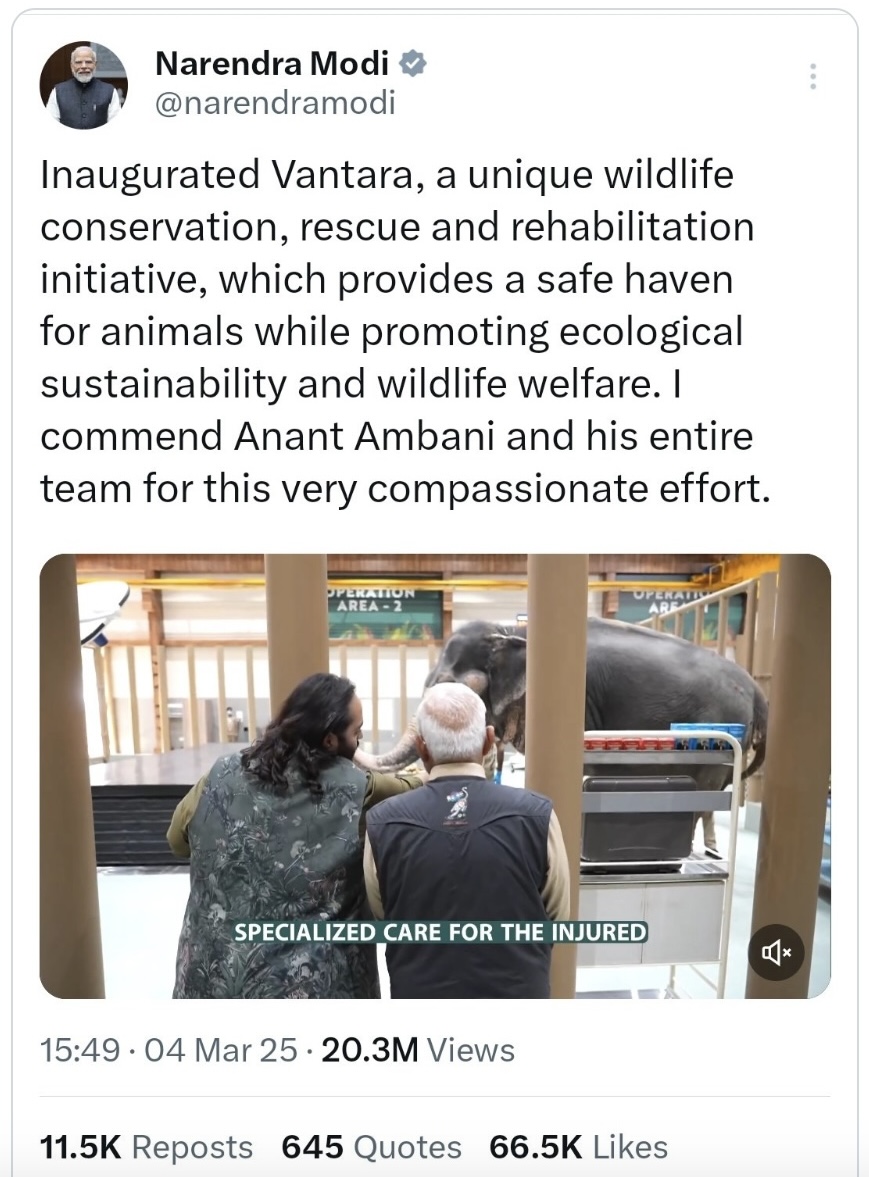
This is despite the fact that numerous sources have cast doubt on how Vantara sources its animals, arguing that many of the purchases amounted to commercial trading in exotic animals, some of it seemingly illegal.

Big Cat Rescue, the US based non-profit organisation, remains deeply sceptical of Vantara.

“While Vantara portrays itself as a sanctuary, its massive acquisitions of animals, particularly big cats, suggest something else. If these animals were truly rescued, where is the evidence of their previous suffering?,” it asks.

Instead, it says, critics fear that “Vantara is stockpiling animals for future breeding programmes – a move that could fuel the exotic animal trade, much like South Africa’s canned lion industry”.

If South Africa is indeed enabling this toxic wildlife trade, it is long past due for Dion George, South Africa’s environmental minister, to intervene.

United Arab Emirates – research into illegal wildlife trade

PEGAS recently completed eight days of investigations into wildlife trade in the UAE, focusing on great apes. A local NGO assisted greatly.

The UAE is made up of seven emirates, each with its own local government headed by a hereditary sheikh. The federal government is based in Abu Dhabi and the federal President is Sheikh Khalifa bin Zayed Al Nahyan and the Vice President and Prime Minister is Sheikh Mohammed bin Rashid Al Maktoum, Ruler of Dubai.

Map of the UAE. The red line shows the places that PEGAS visited.

Map of the UAE. The red line shows the places that PEGAS visited.

PEGAS visited the following facilities and individuals:

  • The Dubai Zoo – director of the new Dubai Zoo and Safari Park and a Dubai Zoo veterinarian.
  • Sheikh Butti bin Juma Al Maktoum Wildlife Centre, Dubai – the manager.
  • A Pet Care Clinic, Dubai – The veterinarian owner
  • Al Ain Zoo, Abu Dhabi – a veterinarian and a species coordinator.
  • Arabia’s Wildlife Centre, Sharjah – a South African weekend manager, spoke to us on short notice.
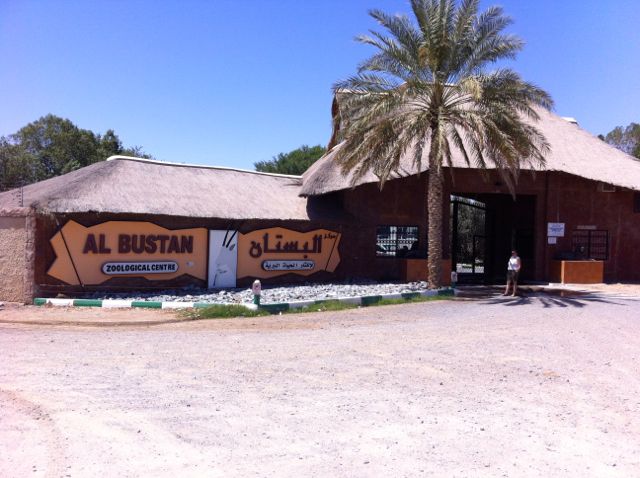
  • Al Bustan Zoological Centre, Sharjah – Closed to the public, but spoke with the guard and later had correspondence with the manager.
  • Sharjah Birds and Animal Market
  • Environment Agency, Ministry of Environment and Water, Abu Dhabi – Dr. Shaikha Al Dhaheri, Executive Director, Terrestrial and Marine Biodiversity Sector and Pritpal Soorae, Unit Head, Terrestrial Assessment and Monitoring, Terrestrial & Marine Biodiversity Sector.
  • We tried to meet with Dr. Ahmed Esmaeil Al Hashmi, head of CITES-UAE and Director, Biodiversity Department, Ministry of Environment and Water, Dubai, but he said that he would have to obtain clearance from the Ministry of Foreign Affairs, which never came.

Dubai Zoo

The current small and cramped Dubai Zoo will be closing down near the end of the year and the animals will be moved to the new, much larger grounds out of town on the road to Sharjah. Press reports indicated that the new zoo and safari park would hold over 1,000 animals, but the new director said the actual number would be closer to 3,000. Many additional animals will have to be legally sourced from zoos and animal dealers. Elephants are also planned, but PEGAS received conflicting information about whether they would be from Asia or Africa.

Dubai safari park

A sign for the new safari park in the Dubai Zoo.

There are currently 7 great apes in the Dubai Zoo, all held in old cages with concrete substrate and few enrichment amenities. Two gorillas said by the zoo to be of the eastern lowland subspecies (Gorilla beringei graueri) arrived as undocumented infants, which the veterinarian said were the result of illegal trade confiscations. The CITES Trade Database contains no reports of any kind involving any gorilla subspecies for the UAE. The International Studbook for the Western Lowland Gorilla (Gorilla g. gorilla) confirms that the two in Dubai were captured in the wild from an unknown source. The male, Digit, was thought to have been born in 1994 and arrived in the zoo in October 1996. The female Diana was born about 1999 and arrived in January 2000.

Diana is in a particularly bad state and shows signs of severe depression, including grooming herself to the extent that she has pulled out quite a bit of hair on her arms. According to the new director, she has tried to interact with the male, but is rebuffed. The director thinks it’s because the male was captured so young he has not learned how to behave towards females.

Digit the male does not seem too badly off, but Diana shows signs of deep depression.

Diana shows signs of deep depression.

5gorilla

The male does not look so badly off.

PEGAS and a local NGO have made a plea to free the gorillas and relocate them to a sanctuary. Debby Cox of the Jane Goodall Institute (JGI) is assisting in assessing whether this would be possible. The director said that he wishes to have replacement gorillas in place before the Dubai municipality, which owns the zoo, would allow relocation of Digit and Diana. The new zoo plans call for a one-acre (0.40 ha) gorilla enclosure, which could house several gorillas comfortably.

The first order of business is to conduct DNA testing of the gorillas to confirm what subspecies they belong to. Additionally, the Congolese CITES and wildlife authorities (ICCN) must agree to request the return of the gorillas, if indeed they originated in the DRC, and agree that they go to a sanctuary, and a gorilla sanctuary must agree to take them.

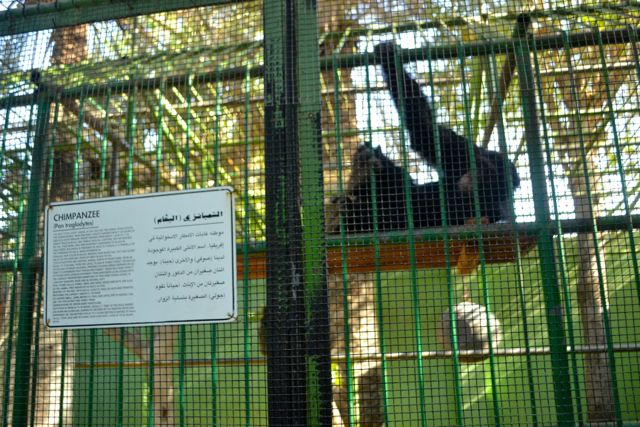
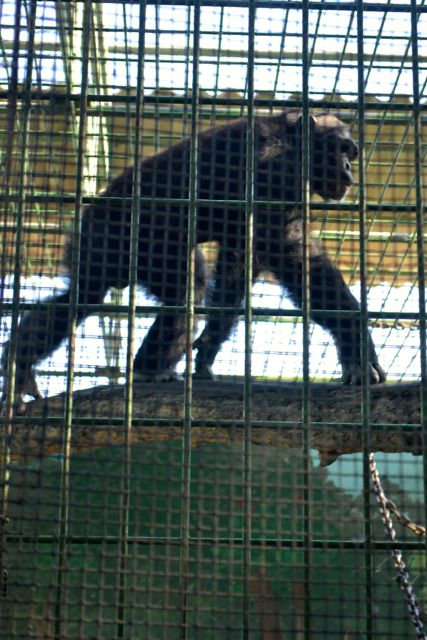
The zoo has 4 chimpanzees, 2 each in two cages. None of them are listed in the European zoos chimpanzee studbook. Since 1990, when the UAE joined CITES, only two chimpanzees are reported in the CITES Trade Database as being imported for zoos, one in 1992 and one in 1999. Therefore, at least two of the Dubai chimpanzees were imported illegally. A local NGO will assist PEGAS to work with the zoo to see if more can be learned of the chimpanzees’ origins and when they arrived.

The four chimpanzees are held in two squalid cages.

The four chimpanzees are held in two squalid cages.

6Dubai25


PEGAS requested that the chimpanzees be freed on the grounds that they were imported illegally and are living in poor circumstances, and has offered to assist their repatriation to an appropriate sanctuary in Africa. As with the gorillas, unless replacements can be found, this most likely will not occur. The new Dubai Zoo director intimated that he wishes to display a large group of chimpanzees in the new facility under construction.

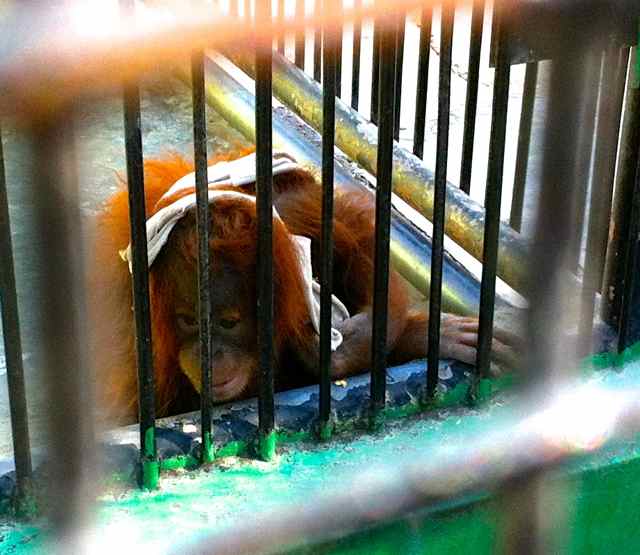
There is one baby orangutan that the zoo veterinarian said was dropped off as a 4-5 month-old infant by an unknown person. It appears to be about 2 years old now. There are no records of orangutan imports to the UAE in the CITES Trade Database. It, too, is a victim of trafficking.

The baby orangutan is in a barren cage alone with no enrichment. PEGAS saw it rolling around trying to play.

The baby orangutan is in a barren cage alone with no enrichment. PEGAS saw it rolling around trying to play.

7orang


Sheikh Butti bin Juma Al Maktoum Wildlife Centre

The manager was kind enough to take us on a complete tour of the 17-hectare private breeding centre and wildlife park. The centre has no great apes and does not plan to acquire any. He did know of people who owned great apes, however, and provided information on routes and methods that he was aware of for smuggling illegal wildlife from Saudi Arabia, Oman and the sea into the UAE.

The Sheikh Butti Wildlife Centre is a well-managed private wildlife breeding centre.

The Sheikh Butti Wildlife Centre is a well-managed private wildlife breeding centre.

A Pet Care Clinic

The veterinarian owner treats the pets of many wealthy Emiratis and expat residents, including royal family members. The royal families import exotic animals at will, often using their own jet planes. They are not subject to normal CITES and other procedures and there are no authorities that can use legal means to halt the trade. He has made attempts to create awareness about animal welfare issues, but has been warned that he will be made to leave the UAE if he says anything negative about the government. This is a situation that affects all expatriate residents. He knew of illegal pet trading, but could say little specific about it. He did not think that great ape ownership was very common in the UAE.

Al Ain Zoo

The zoo has one gorilla and 7 chimpanzees. The western lowland gorilla, named Lady, was born about 1974 in Cameroon, according to the gorilla studbook, and was captured in the wild. She came to Al Ain Zoo in May 1978 with a male named Maxi, who died around 2006. The male is not in the studbook. Lady is kept in a fairly large enclosure with a grass and earth substrate and good enrichment amenities. There are no bars to the enclosures at Al Ain, but rather a number of reinforced glass windows are set in artificial “rock” walls for viewing. Lady lives in isolation, except for a rabbit that has been put in the enclosure for company. A large group of local boys was taunting the gorilla during the PEGAS visit.

Lady is a western lowland gorilla that arrived at Al Ain Zoo in 1978. She has been alone since about 2006.

Lady is a western lowland gorilla that arrived at Al Ain Zoo in 1978. She has been alone since about 2006.


9al ain

A group of young boys was taunting Lady at the time of the visit.

The chimpanzees are divided up into two groups, one consisting of 4 that is on view to the public, and 3 others that are kept out of view. All 7 are listed in the European chimpanzee studbook. The origin of 6 is unknown, while one is an in situ birth. The arrival dates do not correspond with any reported dates in the CITES Trade Database, thus all were imported outside of CITES procedures, all but one imported before the UAE joined CITES. The one enclosure on view to the public appeared to be well-maintained with good substrate and enrichment amenities.

11al ain

The chimpanzees looked content and healthy.

The spacious chimpanzee enclosure contained four animals.

The

The spacious chimpanzee enclosure contained four animals.

As with the Dubai Zoo, the Al Ain Zoo is currently expanding to become a more than 900 hectare wildlife park and resort, dedicated to wildlife conservation education. Hundreds of new animals are being imported to stock the open drive-through safari park, including several white rhinos that have already arrived from South Africa. PEGAS was told no new great apes or elephants are planned to be imported, even though a large, new ape house was being constructed. We asked to be informed if staff at Al Ain hear anything about great ape trade from the dealers they do business with.

An idealized vision of the new Al Ain safari park.

An idealized vision of the new Al Ain safari park.

Arabia’s Wildlife Centre

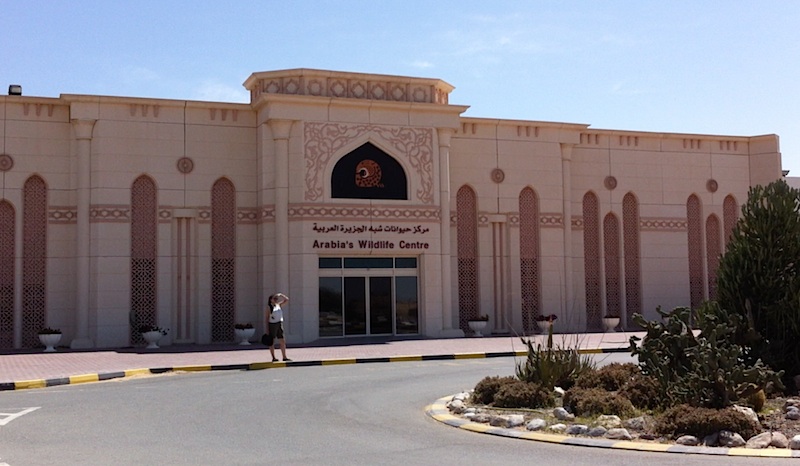
PEGAS and MEAF visited this facility on a Friday (the weekend) before it opened at 2 p.m. A workman telephoned the weekend manager, who drove to meet us. He informed us that the centre had no primates other than indigenous hamadryas baboons. The centre breeds wild species found in Arabia and supplies other vetted facilities on request. He said that the centre receives complaints from people about neighbours who keep noisy or dangerous exotic pets, but they advise people to contact the authorities in Sharjah.

The Arabia's Wildlife Centre has no great apes.

The Arabia’s Wildlife Centre has no great apes

Sharjah decreed a new law last November that outlawed private ownership of exotic animals that had been imported illegally. Since the amnesty for handing in animals expired in late December, the centre has been receiving a rash of exotic pets turned in to the government or anonymously dumped at the gate. Since most of them cannot be used for breeding and there is a lack of space to keep them, they are euthanized. They even found a baboon dressed in designer clothes and with a meticulously shaved beard chained to the gate.

As with other informants in the UAE, the manager was reticent to share information about wildlife traffickers and illegal trade, but said that he knew it occurred on a regular basis. The new Sharjah law might curb it.

Al Bustan Zoological Centre

This privately-owned zoo is not open to the public, but the guard at the gate said that chimpanzees had recently been brought and left there by private owners. PEGAS subsequently got into contact with the manager to find out the circumstances surrounding the chimpanzees. The two animals appear to be the result of illegal import as infant pets at least 15 years ago. They were originally kept in the house, but as they grew up and became dangerous they were moved out into an enclosure on the grounds. With the new law, the owners decided to dispose of the pair at Al Bustan.

The Al Bustan Zoo is privately owned.

The Al Bustan Zoo is privately owned.


It is closed to the public, but the guard said that chimpanzees had recently arrived there.

It is closed to the public, but the guard said that chimpanzees had recently arrived there.

PEGAS has offered to relocate the chimpanzees to Sweetwaters. The zoo is owned by an advisor to the President of the UAE. The manager said that he would consult with the owner and inform PEGAS of what they decided to do. PEGAS has requested Al Bustan to inform us of any future great ape arrivals.

Sharjah Birds and Animal Market

This infamous pet market has received considerable negative press and sparked campaigns to close it. Mammals, reptiles and birds are crammed into small cages and sold like they were inanimate commodities, not live creatures. It used to contain many exotic species, but since the new law, very few remain. PEGAS saw no primates in a tour of the market. It was deemed a waste of time to enquire about buying great apes, as con men abound there and they would simply spin a tale about how anything wanted could be obtained. It is hoped the absence of exotic animals will be long-lasting.

Environment Agency

PEGAS and a local NGO met with the Executive Director, Terrestrial and Marine Biodiversity Sector, and Pritpal Soorae, Unit Head, Terrestrial Assessment and Monitoring, Terrestrial & Marine Biodiversity Sector. Dr. Al Dhaheri briefed us on the new bill that aims to regulate the possession and trade of predatory, dangerous and semi-dangerous animals and protect people from harm and from spreading animal diseases. She confirmed that great apes were included. The bill has passed many of the lower level stages of approval and is now with the federal cabinet. The Environment Agency expects the bill to become law before the end of 2015 and this will provide the legislative foundation upon which to enforce regulation of the illegal pet trade.

PEGAS raised the issue of airports such as Dubai and Abu Dhabi being used as both destination and transit points for illegal wildlife trade, for example chimpanzees and bonobos that are known to have transited Dubai to go to Armenia. Dr. Al Dhaheri said that the government does not have legal authority to seize anything in transit, but if something illegal was found they would notify the destination country authorities. The government has recently been communicating with the national airlines (Emirates, Etihad and Air Arabia) and obtaining agreements from them not to carry illegal wildlife products. There are a number of royal family, cargo and low-cost airlines registered in the UAE, it is unknown if these were also contacted.

PEGAS has not revealed all of the information that was communicated by the different informants because of requested confidentiality, and because it could compromise ongoing investigations. A trafficker was also found that operates out of Dubai and India and who has posted online numerous great apes, other primates, wild cats, exotic birds, etc. Investigations are ongoing.


Dubai Crown Prince imports 7 elephants from Zimbabwe

In an update to an earlier news post regarding the capture of baby elephants in Zimbabwe for sale to the UAE, China and possibly other countries, PEGAS learned recently during a visit to the UAE that Dubai Crown Prince Sheikh Hamdan bin Mohammed bin Rashid Al Maktoum was the importer of the 7 elephants that the UAE reported to the media.

Sheikh Hamden, importer of the 7 Zimbabwe elephants

Sheikh Hamden, importer of the 7 Zimbabwe elephants


PEGAS was told that the 7 elephants had been held in captivity for some time and that they were not part of the group of baby elephants captured in the wild. There is at least one female adult in the group.

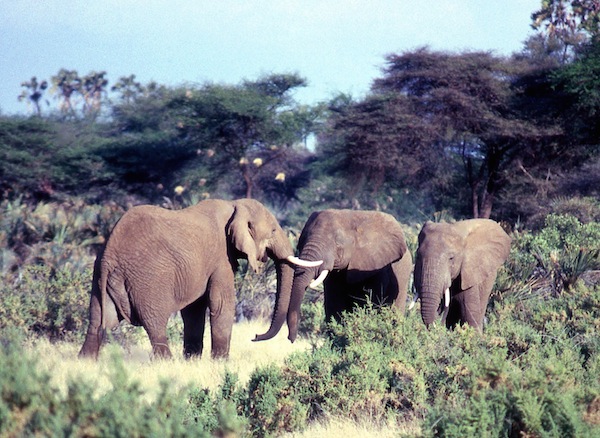
Elephants in the wild, where they belong

Elephants in the wild, where they belong


The elephants are being held as part of a private collection of wildlife. It is common for wealthy Emiratis to have private zoos and breeding centers, and many individuals keep exotic pets such as cheetahs, tigers and great apes. PEGAS will be publishing a news item shortly on the results of a nine-day visit to Dubai, Abu Dhabi and Sharjah, all Emirates in the UAE. Wildlife trade is rife, though the government is taking steps to curb the fashion trend of owning exotic wild animals. The royal families, naturally, are exempt.

Update 7 April 2015

PEGAS continues to receive erroneous claims that baby elephants from Zimbabwe are still destined for the UAE and that no elephants have  yet been sent. The UAE government has yet again substantiated the version PEGAS reported above on 25 March. The elephants are already in the UAE.

Fazza photographing one of his Zimbabwean elephants

Fazza photographing one of his Zimbabwean elephants