
Ed note: A wonderful tribute to Ham, the first hominid to travel into space, published by https://a-z-animals.com/video/discover-what-happened-to-ham-the-first-chimpanzee-launched-into-space/.
Written by Doug Shaffer
First published: March 5, 2025
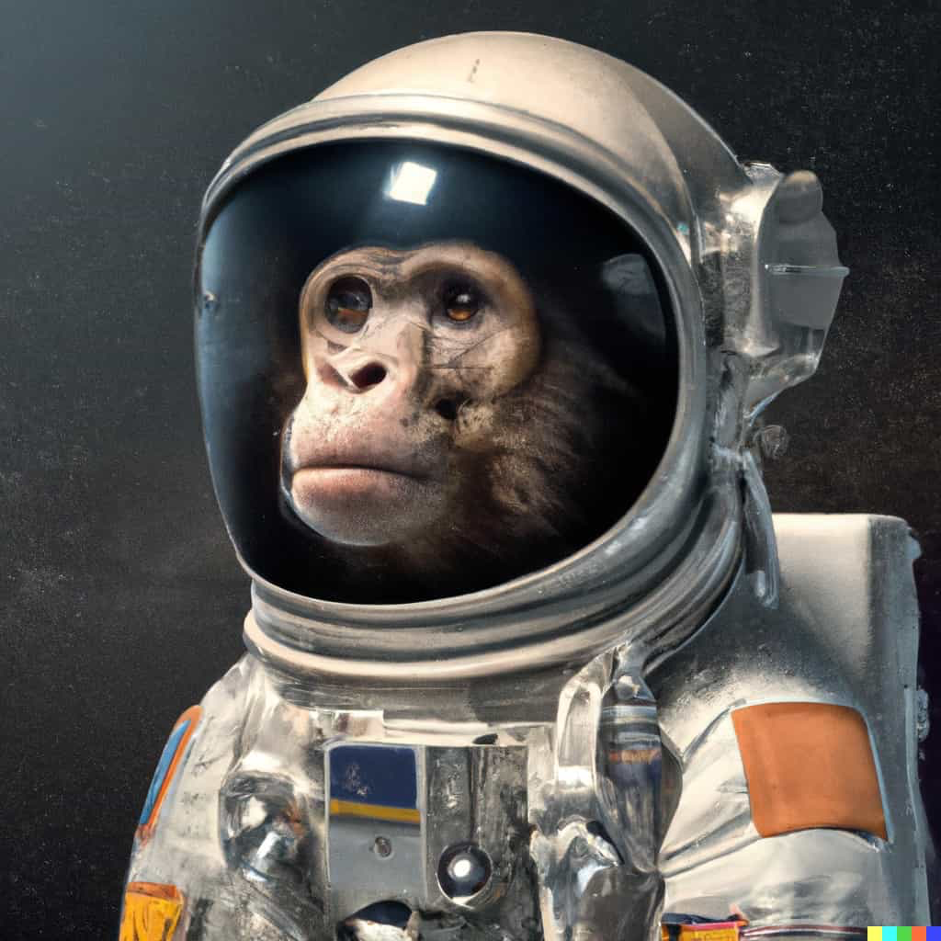
On January 31, 1961, a chimpanzee named Ham became the first great ape to travel to space. His mission was crucial in proving that living beings could survive and function in microgravity. While his flight lasted only a few minutes, Ham’s journey did not end when he returned to Earth.
While Mr. Scientific’s video documents Ham’s journey from young chimp to national hero, it leaves out a few key details about the groundbreaking event.
This article provides a closer look at Ham’s life before, during, and after spaceflight.
Who Was Ham?
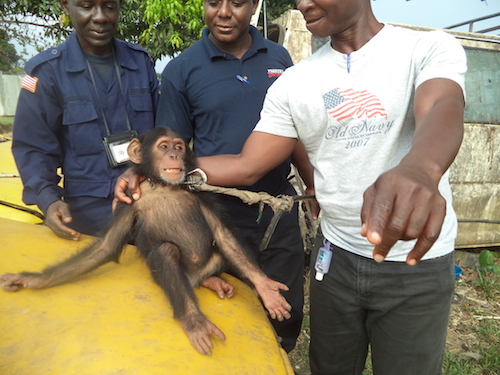
Ham was born in 1957 in French Cameroon. As a young chimp, trappers captured him and later sold him to a zoo in Miami, Florida. The United States Air Force then purchased Ham and sent him to live at Holloman Air Force Base in New Mexico.
While at Holloman, Ham participated in NASA’s Project Mercury, a program designed to test the safety of human spaceflight. Ham and other chimpanzees underwent rigorous training to help them survive spaceflight.
As a part of the training, scientists and researchers worked to teach him how to complete simple tasks, such as pressing levers in response to visual and auditory cues. These exercises would eventually help NASA determine whether astronauts could remain functional while experiencing extreme space conditions.
Originally, the team only identified him as “No. 65” to avoid public backlash if the mission failed. However, after his successful flight, he was renamed “Ham” in honor of the Holloman Aerospace Medical Center, where he trained.
Why Was Ham Sent to Space?
Before launching humans into space, NASA needed to ensure that the human body could endure space travel and that astronauts could perform necessary tasks while weightless. Ham’s mission aimed to provide answers to three key questions.
How Does Space Travel Affect the Body?
At the time, scientists worldwide knew very little about the biological effects of space travel. Experts were uncertain whether the human body could survive prolonged exposure to high G-forces, weightlessness, and intense reentry conditions.
By monitoring Ham’s vital signs before, during, and after his flight, NASA hoped to gather critical data on how a primate’s body responded to these stresses.
Could Astronauts Work in Space?
Survival was only part of the space travel equation. To have a successful flight, astronauts would also need to be able to complete tasks while in space to operate the craft and conduct experiments.
As a way to simulate this experience, Ham’s training involved responding to lights and sounds by pressing levers. If he could perform these tasks correctly while weightless, it would demonstrate that astronauts could function effectively in microgravity.
Was NASA Prepared for Space Flights?
Ham’s mission was a stepping stone to human spaceflight. His journey would provide crucial data on the reliability of spacecraft systems, life-support equipment, and astronaut procedures. Any malfunctions or unexpected challenges he faced would provide valuable insights for future human missions.
Ham’s Historic Spaceflight
On January 31, 1961, Ham was secured in a specially designed capsule atop a Mercury-Redstone 2 rocket at Cape Canaveral, Florida. The rocket ignited as the countdown reached zero, sending Ham soaring into space.
During the flight, Ham:
- Reached an altitude of 157 miles above Earth
- Traveled at speeds up to 5,857 miles per hour
- Experienced 6.6 minutes of weightlessness
- Successfully completed his assigned tasks, proving that cognitive function remained intact in microgravity
Despite the success of the mission, it was not without complications. A slight loss of cabin pressure occurred during the flight, but Ham’s specialized suit kept him safe.
His return to Earth was also rough as his capsule splashed down in the Atlantic Ocean, landing farther from the recovery team than expected. By the time rescuers arrived, Ham was reportedly shaken but otherwise unharmed.
The Impact of Space Travel on Ham
While Ham survived his journey into space, the experience had physical and psychological effects on the chimp.
Physical Effects
Ham endured extreme conditions, including high G-forces during launch and reentry. While his vitals remained stable, post-flight examinations showed that he had been exposed to significant stress during his mission.
While the loss of cabin pressure during flight was a concern, Ham’s specialized suit protected him, highlighting the importance of reliable life-support systems.
Psychological Effects
Reports suggest that Ham exhibited signs of distress after the mission. While he was trained to handle stressful environments, the abrupt transition from a structured training facility to the unpredictability of space travel likely left an impact.
However, after a recovery period, he resumed normal behavior, indicating that the psychological effects were temporary.
What Happened to Ham After the Mission?
After his return, Ham was celebrated as a pioneer in space exploration. However, his post-flight life was far from glamorous.
Life in Captivity
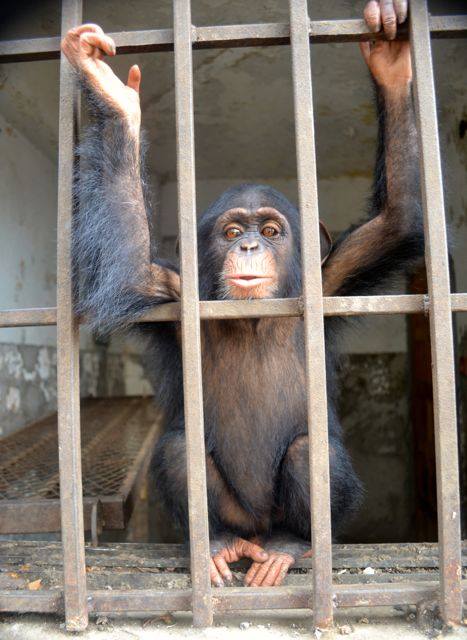
Following his mission, the team at NASA sent Ham to the National Zoo in Washington, D.C., where he lived for 17 years. While he was well cared for, his time in captivity was not without controversy.
Observers noted that he sometimes displayed signs of boredom and frustration, likely due to the stark contrast between his former training environment and life in confinement.
In 1979, he was transferred to the North Carolina Zoo, where he had more space and interaction with other chimpanzees. This change of scenery provided a more natural and social environment, significantly improving his quality of life.
Ham lived at the North Carolina Zoo until his death on January 19, 1983, at the age of 26. While a portion of his remains were studied for research, his bones were laid to rest at the New Mexico Museum of Space History in Alamogordo, near the base where he trained.

 Project to End Great Ape Slavery (PEGAS)